A Moment Frozen in Time: The Essence of Renoir’s “Gabrielle in the Garden at Cagnes”
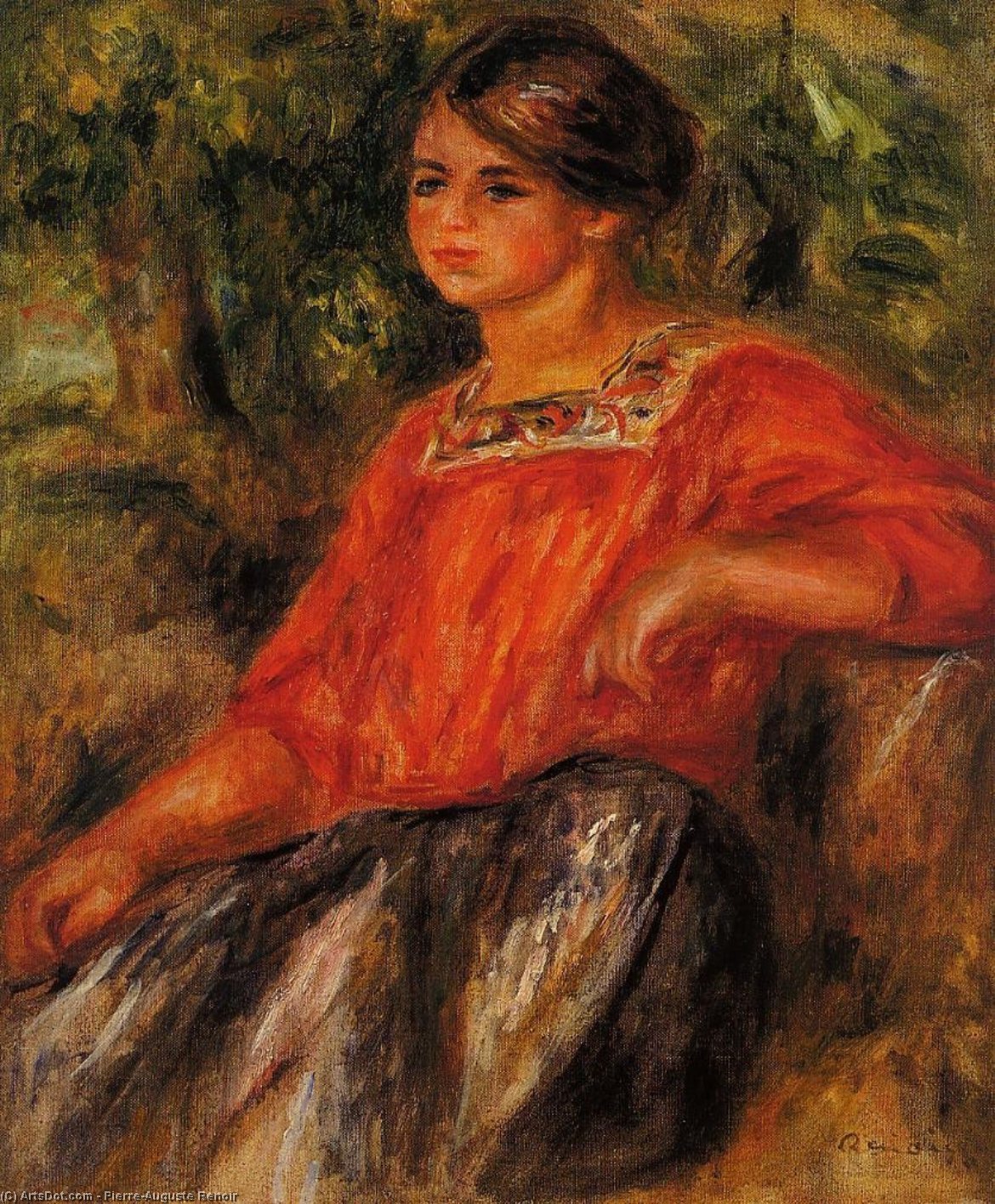
Pierre-Auguste Renoir's "Gabrielle in the Garden at Cagnes," painted in 1911, isn’t merely a depiction of a woman seated amongst foliage; it’s an immersion into a fleeting moment of profound tranquility and quiet contemplation. The painting captures a pivotal point – a pause within the rhythm of life – where the subject, Gabrielle, exists almost suspended between observation and inner thought. Renoir masterfully employs his signature Impressionistic techniques to achieve this effect, layering soft brushstrokes and vibrant colors that seem to shimmer with an ethereal light. It’s a scene brimming with warmth, inviting the viewer into a private sanctuary of beauty and grace. The composition itself is carefully orchestrated: Gabrielle's posture, her hand placement, and the dappled sunlight filtering through the trees all contribute to a sense of effortless elegance and understated power.
At first glance, the painting presents a simple tableau – a woman in a red dress, seated on the grass. However, closer inspection reveals a wealth of subtle details that elevate the work beyond mere representation. The choice of red is particularly striking; it’s not a bold, assertive hue but rather a warm, inviting shade that complements the surrounding greens and browns. Renoir's use of light is equally masterful, creating an atmosphere of diffused radiance that softens the edges of the forms and imbues the scene with a dreamlike quality. The trees themselves aren’t rendered with photographic precision; instead, they are suggested through loose brushstrokes and variations in color, conveying a sense of movement and vitality.
The Language of Impressionism: Technique and Style
“Gabrielle in the Garden at Cagnes” is a quintessential example of Renoir’s late Impressionistic style. He abandons the rigid outlines and precise details of earlier works, opting instead for loose brushstrokes and an emphasis on capturing the fleeting effects of light and color. This technique—known as *plein air* painting—allowed him to directly observe and translate the nuances of nature onto canvas. Notice how he uses broken color – small dabs of paint applied side-by-side rather than blended together – to create a sense of shimmering luminosity. The background, rendered with rapid, gestural strokes, appears almost blurred, further emphasizing Gabrielle’s presence as the focal point of the composition.
Renoir's mastery lies in his ability to evoke atmosphere and emotion through purely visual means. He doesn’t attempt to depict reality with photographic accuracy; instead, he strives to capture the *impression* of a scene – its mood, its light, its feeling. The painting is not about Gabrielle as an individual but rather about the experience of being present in that garden, enveloped by beauty and tranquility.
A Window into the Belle Époque: Historical Context
To fully appreciate “Gabrielle in the Garden at Cagnes,” it’s essential to understand the historical context in which it was created. The painting dates back to 1911, a period known as the Belle Époque – a time of optimism, prosperity, and artistic innovation in France. Impressionism had already established itself as a dominant movement, challenging traditional academic conventions and paving the way for modern art. Renoir, along with Monet, Pissarro, and other leading artists, embraced this spirit of experimentation, pushing the boundaries of painting technique and subject matter.
Renoir’s work during this period often celebrated beauty, particularly feminine sensuality, reflecting a broader cultural fascination with the pleasures of life. “Gabrielle in the Garden at Cagnes” embodies this aesthetic sensibility, portraying a woman of grace and composure amidst a picturesque setting. The painting can be seen as a meditation on leisure, beauty, and the restorative power of nature – themes that resonated deeply with audiences during the Belle Époque.
Symbolism and Emotional Resonance
Beyond its technical brilliance, “Gabrielle in the Garden at Cagnes” is rich in symbolism. Gabrielle’s gaze, directed off-camera, suggests a state of introspection or perhaps a longing for something beyond the immediate scene. Her hand placement – resting on her knees – conveys a sense of quiet contemplation and inner peace. The garden itself can be interpreted as a metaphor for the human soul – a space of refuge, growth, and renewal.
Ultimately, “Gabrielle in the Garden at Cagnes” is a painting that invites viewers to slow down, breathe deeply, and appreciate the simple pleasures of life. It’s a testament to Renoir's ability to capture not just a scene but also an emotion – a feeling of serenity, beauty, and timeless grace. For those seeking a piece of art that speaks to the soul, this painting offers a profound and enduring experience.


 Pirkti atspaudą
 Pasidalinti
 Dalintis
 Išsamiau

 Atsisiųsti
 Panašūs eksponatai
 Rentgeno nuotrauka
 Automatinė diorama

 Skaityti daugiau






































 Stiklo variantas prieinamas tik pasirinkus dydį iki 110 cm



