

Paveikslėlyje: · Su rėmu:
 Peržiūrėti realaus dydžio版
 Pasidalinti
 Dalintis
 Išsamiau
 Vadovas

 Atsisiųsti
 Panašūs eksponatai
 Rentgeno spindulių nuotrauka
 Automatinė diorama
 问答
问答 Statistika
- 46.0 x 37.0 cm


€ 240
Rankų darbo aliejinės reprodukcijos
Rankiniu būdu tapytas aliejus ant droblio jūsų pageidaujamame dydį ir rėmuose – tai mūsų menininkų pagal užsakymą sukurtas darbas. ( Perjungti į spausdinamus版作品 Perejti prie skaitmeninių vaizdų)
Dydis
·Standartinis dydis
pagal užsakymą
CM
INCH
Pasirinkite iš mūsų nustatytų dydžių, atitinkančių originalaus meno kūrinio proporcijas.
Kraunami dydžiai...

plotis
aukštis
Įveskite jums reikiamą plotį ir aukštį, kad paveikslas atitiktų jūsų rėmą ar sieną. Kadangi šis darbas yra rankinio darbo, siekiant išgauti kitokios formos dydį, paveikslas gali būti šiek tiek didesnis (nuo kraštų bus palikta daugiau erdvės) arba mažesnis – pasirinkite jums patogiausią variantą. Prieš pradedant tapyti, atsiųsime jums skaitmeninį maketą patvirtinimui. Šioje puslapio nuotraukoje matomas vaizdas nėra galutinis rezultatas – jį parodys tik sukurtas maketas.
 Skaityti daugiau
Baigiamasis etapas
·
Baltas apasutojimas €1

Išblėstantis šonas €1

Išplėstinis €1

P118B €10

P118H €10

P118W €10

P438Z €10

P508JH €12

P508YH €12

P805H €10

P805Z €10

P919BZ €10

P919G €10

P919XJ €10

P959ZH €10

P968JZ €12

W106C €8

W218G €10

W218JH €8

W218Y €10

W307PJ €10

W316G €10

W316PJ €8

W316Y €10

W398PJ €8

W4111J €10

W500HY €15

W500JH €15

W692G €12

W849H €8

W940BG €15

W953PJ €8

H24-GOLD €30

H24-SILVER €30

H36-GOLD €45

H36-SILVER €45
Siunčiama saugiame vamzdelyje, paruošta patys sukomentuoti jūsų rėmeliais.
Virš 105 cm rėmas siunčiamas kaip rinkinys profesionaliam rėmininkui — skaitykite detales.
Papildomos paslaugos
nebūtinaKą apima papildomos paslaugos?
Pavyzdžiai, ką galima pakeisti: pakeisti veidą nuotrauka su klientu; pridėti augintinį (pvz., pakeisti kucingą šuniu); įtraukti paslaptingą žinutę fone; pakeisti fono kraštotvę ar elementus.
Gavus užsakymą, TopImpressionists.com komanda susisieks su klientu el. paštu dėl nurodymų ir pateiks preliminarią maketą.
Gavus užsakymą, TopImpressionists.com komanda susisieks su klientu el. paštu dėl nurodymų ir pateiks preliminarią maketą.
Pristatymas visame pasaulyje () per 3–4 savaites, o ne įprastai – per 5 savaites. (12 lapkritis). Kokybė lieka nepakeičiama.
Apsauginis lakas
Pavadinimo lentelė
Išgraviruotos bronzinės plokštelės detalės
This elegant plaque features the artist's name and the title of the artwork, finely engraved for a timeless presentation.
It is made from bronze with a refined, elegant finish. The text is precisely laser-engraved for a sharp and permanent result. Measuring 9x2 cm, the plaque is compact yet easy to read. It's built to be durable and scratch-resistant, offering a professional, museum-quality look. Mounting is simple thanks to the included adhesive backing.
Skaidrios akrilo plokštelės informacija
The plaque includes essential engraved details such as the artist's name, the title of the artwork, the date it was created, the type of media used-like oil on canvas or watercolor-a brief description of the piece, and a QR code that links to the complete artwork information.
It is crafted from clear acrylic, offering a sleek, modern appearance. The text is UV-engraved in black to ensure strong visual contrast. With a size of 10x15 cm, it ensures optimal readability. It comes equipped with two metal hooks for secure wall mounting. The plaque is designed to be weather-resistant, making it suitable for various environments, and it includes interactive features that work seamlessly with smartphone scanning.
Juodos akrilo plokštelės informacija
This elegant plaque includes engraved information such as the artist's name, the title of the artwork, the date it was created, the type of media used (like oil on canvas or watercolor), a short description of the artwork, and a QR code for quick access to more information.
The plaque itself is made from refined black acrylic with a premium finish. The text is laser-engraved in white for high contrast and readability. Its size is 10x15 cm, designed to be easy to read. It comes with two metal hooks for professional mounting. The design is sleek and fits any interior style. It is also weather-resistant and durable, with built-in digital integration for mobile compatibility.
Stiklo variantas prieinamas tik pasirinkus dydį iki 110 cm
 Stiklo variantas prieinamas tik pasirinkus dydį iki 110 cm
- Nemokamas greitasis pristatymas visame pasaulyje
- Aukštos kokybės lininis drobė
- Pilnas siuntimo draudimas
- Muitinės mokesčių grąžinimo garantija
- Tikro spalvų atitikimo garantija
- 100 dienų grąžinimo politika (tik esant įtaigoms)
- 100% pinigų grąžinimo garantija
- Nuolaida dideliems užsakymams


Kolekcinio objekto aprašas
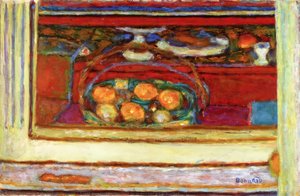
Experience Pierre Bonnard’s ‘Fruit Bowl’ (1914). A vibrant still life showcasing oranges, apples & bananas in his signature Impressionistic style. Hand-painted reproduction available.
Autoriaus biografija
Intimizmo meistras Pierre Bonnardas šviesą įamžino tokiais kūriniais kaip „Valgomasis kambarys“. Atraskite jo ryškius, emocingus šedevrus jau šiandien.
Apie paveisdelį
A Still Life of Quiet Intensity: Pierre Bonnard’s ‘Fruit Bowl’ (1914)
Pierre Bonnard's Fruit Bowl, painted in 1914, offers a poignant glimpse into the artist’s evolving approach to depicting domestic scenes. Measuring 46 x 37 cm, this intimate composition transcends a simple representation of fruit; it is a carefully constructed meditation on light, color, and the quiet beauty of everyday objects. Executed with Bonnard's signature meticulous brushwork and his masterful manipulation of tonal values, the painting speaks to a period of profound artistic experimentation within the Nabis group, of which he was a key member.
The Nabis Influence and Bonnard’s Palette
Bonnard's association with the Nabis – “The Prophets” – profoundly shaped his artistic vision. This group sought to create religious art through the use of color, drawing inspiration from Spanish mysticism and the works of William Morris. Fruit Bowl reflects this influence in its deliberate avoidance of academic realism. Instead of striving for photographic accuracy, Bonnard prioritized conveying atmosphere and emotion through a vibrant, almost hallucinatory palette. The dominant hues – rich oranges, deep reds, and muted greens – are not merely descriptive; they are imbued with symbolic weight, reflecting the Nabis’s interest in exploring spiritual themes through color.
- Color as Symbol: Bonnard's use of orange is particularly noteworthy. It evokes warmth, vitality, and perhaps even a hint of religious fervor, aligning with the Nabis movement’s exploration of spirituality.
- Tonal Modulation: The subtle shifts in tone – from the luminous highlights on the oranges to the darker shadows within the bowl – create a sense of depth and volume, drawing the viewer into the scene.
Composition and Technique – A Study in Detail
The composition of Fruit Bowl is deceptively simple yet remarkably effective. Bonnard’s close-up perspective forces the viewer to confront the individual elements—the oranges, apples, and banana—with a heightened sense of detail. His brushstrokes are visible, adding a textural quality that enhances the painting's tactile appeal. The arrangement of the fruit itself is not random; it suggests a carefully considered balance, reflecting Bonnard’s meticulous observation skills honed during his early work in caricature.
Historical Context and Emotional Resonance
Painted in 1914, just months before the outbreak of World War I, Fruit Bowl offers a poignant reflection on a world on the brink of upheaval. The painting’s serene subject matter – a commonplace scene transformed into something extraordinary through Bonnard's artistic vision – can be interpreted as a quiet resistance to the impending chaos. The work embodies Bonnard’s ability to find beauty and meaning in the ordinary, a characteristic that resonates deeply with viewers today. It evokes a sense of nostalgia for a simpler time, inviting contemplation on themes of domesticity, memory, and the fleeting nature of beauty.
A Timeless Masterpiece – Reproduction Options
TopImpressionists offers meticulously crafted hand-painted reproductions of Pierre Bonnard’s Fruit Bowl, ensuring that you can experience the full impact of this remarkable artwork. Each reproduction is created using traditional techniques and archival materials, guaranteeing its longevity and preserving the original painting's vibrant colors and exquisite detail. Whether for your home or office, a TopImpressionists reproduction of *Fruit Bowl* will be a timeless addition to any collection.
Klausimai ir atsakymai
Ar „Fruit Bowl“ spalvos atrodo ryškios ar švelnios?
„Fruit Bowl“ – Pierre Bonnardas pasižymi Vivid spalvų intensyvumu.
Ar „Fruit Bowl“ kūrijas Pierre Bonnardas žinomas에도 kitais vardais?
Pierre Bonnardas taip pat žinomas (a) pavadinimais Pjero Bonaro, Pierre Bonnard.
Ar „Fruit Bowl“ – Pierre Bonnardas yra ryškus ar tamsus kūrinys?
Visapusiškai „Fruit Bowl“ įtvirtinta kaip bright. Perceptinis ryškumas apibūdina, koks kūrinys atrodo šviesus ar tamsus.
Trumpos faktinės datos ir meno viktorina
Apie Pierre Bonnardas

Pierre Bonnardas
1867 - 1947, Prancūzija
Autoriaus biografija
Šviesos Pamirštas Pasaulis: Pierre’o Bonnardo Žygytis
Pierre’as Bonnardas, gimęs 1867 metais Paryžiaus priemiestyje Fontenė prie Rozo, nebuvo skirtas meniško gyvenimo. Jo tėvas, aukšto rango Karo ministerijos pareigūnas, sūnui numatė teisės karjerą. Jaunas Pierre atkakliai sekė teisininkų kelią, 1888 metais įgijęs licenciją, tačiau jo širdis ilgosi kažko kito – spalvų ir formų viliojančio pasaulio. Ši dvejopumas, tarp lūkesčių ir aistros susidūrimas, subtiliai paveikė jo meninę kelionę, suteikdamas darbams unikalų jintymą. Jis pirmiausia bandėsi karikatūrų kūrime, lavindamas stebėjimo įgūdžius, kurie vėliau išaugo į nuostabiai atvaizduotus namų interjerus. Tačiau būtent Žiuljano akademijoje Bonnardas tikrai rado savo kelią, susitinkantis su bendamiais, kurie dalijosi jo augančiu nepritarimu akademinėms konvencijoms ir priėmė Paryžių apėmusį avangardinį dvasios. Šis susitikimas nuvedė jį į „Nabių“ grupę – menininkų, kurių tarpe buvo Maurice’as Denis, Paulius Sérusier ir Édouard Vuillard – kurie siekė įpūsti menui dvasingumo ir simbolizmo, peržengdami tiesioginį atvaizdavimą link vidinės patirties tyrinimo.„Nabių“ Metai ir Jintymo Kultivavimas
Bonnardo asociacija su „Nabiais“ buvo kertinis akmuo. Grupės pabrėžtas plokščias formas, ryškios spalvų paletės ir atsisakymas tradicinės perspektyvos giliai rezonavo su jo meniniais jausmais. Įkvėptas japonų gravūrų – jų elegantiškomis linijomis ir harmoninėmis kompozicijomis – bei simbolistinio judėjimo tyrimais dėl subjektyvių emocijų, Bonnardas pradėjo kurti savo unikalų stilių. Jis nebuvo suinteresuotas didžiosiomis naratyvomis ar istorinėmis alegorijomis; vietoj to jis pasuko į vidų, sutelkdamas dėmesį į kasdienio gyvenimo tylias akimirkas: moteris voniojasi, šeima susirenka prie vakarienės, saulėje pamirštas sodas. Tai nebuvo tik scenų atvaizdai, bet jausmų distiliatai – atminties ir atmosferos sukeliami įspūdžiai. Šis dėmesys jintymam pelnė jam „Intimist“ etiketę, terminą, puikiai apibūdinantį jo darbų emocinį atgarsį. Jo paveiklai ne apie *ką* yra pavaizduota, bet apie tai, *kaip jaučiasi* esant tądienio akimirkoje. Jis dirbo iš atminties, kruopščiai piešė ir tada persakydavo tuos įspūdžius ant drobės su nepaprastu jautrumu šviesai ir spalvai.Spalva kaip Emojis: Spalvininkas Virtuoza
Bonnardo spalvų meistriškumas yra, be abejo, jo apibrėžiančia savybe. Jis ne tik *naudojo* spalvas; jis jį *jautė*, leisdamas jam diktuoti paveikslų nuotaiką ir atmosferą. Jo paletė buvo ryški, tačiau niuansuota, dažnai naudojant nuspėjimus spalvų derinius, kurie sukūrė spindinčio šviesumo jausmą. Jis garsiai perskaitė baigtus drobelius, subtiliai koreguodamas spalvas per kelis darbus, kad pasiektų tobulą harmoniją – tai bylojo apie jo įsipareigojimą spalviniam balansui. Tai nebuvo realistinis atvaizdavimas; tai buvo siekis užčiuopti subjektyvią spalvos patirtį, jos gebėjimą sužadinti emocijas ir atmintį. Jis atsisakė tiesioginės stebėjimo, pageidaujant dažniau piešti iš prisiminimų, leidžiantis į jo scenas įpūsti sapnų kokybę. Jo peizažai nebuvo tik vietų vaizdai, bet emociniai atsakymai į juos – filtruojami per asmeninės patirties prizmą.Vėlesnis Gyvenimas ir Patalpintas Palikimas
Bonnardas subrendęs, jo meninis dėmesys vis labiau perkelti į spalvos ir šviesos tyrinimo kryptimi. Jis praleido vis daugiau laiko Pietų Prancūzijoje, sužavėtas Viduržemio jūros kraštovaizdžio ir jo intensyvaus šviesumo. Jo santykis su Marthe de Meligny, jo žmona ir nuolatinė mūza, išliko centrinis jo gyvenime ir darbe. Ji dažnai pasirodo jo paveiksluose, dažniausiai pavaizduota voniojantis arba užsiimanti kasdieniais darbais, jos buvimas spinduliuoja tylią malonę ir jintymą. 1912 metais jis įsigijo „La Roulotte“ Vernonete, netoliese Giverny, sukurdamas glaudžius ryšius su Claude Monet. Šis artumas Impresionizmo meistrui dar labiau paskatino Bonnardo tyrinimus dėl šviesos ir spalvos, nors jis visada išlaikė savo atskirą meninę viziją. Jis tęsė dažyti iki netrukus prieš mirtį 1947 metais, palikdamas kūrinių rinkinį, kuris ir toliau žavi ir įkvepia. Bonnardo įtaka vėlesnėms kartoms menininkų yra neatsiejama. Jo dėmesys subjektyviai patirčiai, spalvų meistriškumas ir kasdienybės šventimas paliko nenusakomą pėdsaką moderniajame mene. Jis parodė, kad grožį galima rasti ne didžiose gestuose ar herojiniuose pasakojimuose, bet kasdieniame gyvenime – pamirštas šviesoje ir įkvėptas emocijomis.Žymūs Darbai & Kolekcijos
- Moteris Žiūrėdama Į Raštus (1890): Ankstyvas pavyzdys jo „Nabių“ įtakoto stiliaus, kuriame parodytos plokščios formos ir ryškūs spalvų deriniai.
- Valgomasis (1913): Tipinis Intimist scenas, užčiuopiantis namų gyvenimo šilumą ir jintymą.
- Vaisinė Dubenėlė (apie 1933 m.): Parodo jo stilizavimo meistriškumą, ryškiomis spalvomis ir spindinčio gylio jausmu.
- Almondo Medis Žydėjimo (1947): Vienas iš paskutinių paveiklų, baigtas likus vos keletui dienų iki jo mirties, parodydamas jo nuolatinį tyrinimus dėl šviesos ir spalvos.
- Musée Marmottan Monet, Paryžius, Prancūzija
- Art Institute of Chicago
- Museum of Modern Art, Niujorkas
- Tate Modern, Londonas
Trumpa informacija apie Pierre Bonnardas
- Artistic Movement Or Style: Post-Impressionizmas, Intimizmas, Les Nabis
- Artists Or Movements Influenced By This Artist: ['Modernizmas']
- Artists Who Influenced This Artist:
- Paul Gauguin
- Hokusai
- Date Of Birth: 1867
- Date Of Death: 1947
- Full Name: Pierre Bonnardas
- Nationality: Prancūzų
- Notable Artworks:
- Moteris rombiniame sijone
- Pokalnis su vaisių
- Moteris su šiaunuoju sklobioja
- Miglėtingas miglų medžio žydėjimas
- Place Of Birth: Fontenay-aux-Roses, Prancūzija
panašūs kūriniai




Tyrinėkite meno kūrinius, suskirstytus pagal temas, stilius ir savybes.


Pierre Bonnardas
Fruit Bowl
() ·
Su rėmu: · Rankiniu būdu tapyta aliejumi ant lineno
Viso suma