


 Peržiūrėti realaus dydžio版
 Siųsti
 Dalintis
 Išsamiau
 Vadovas

 Atsisiųsti
 Panašūs eksponatai
 Rentgeno spindulių nuotrauka
 Diaporama
 Statistika
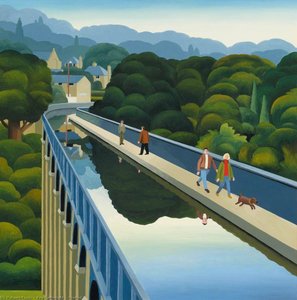
Canal Boathouse
 1992
1992 46.0 x 46.0 cm
 The British Postal Museum - Archive
Discover the serene landscapes & still lifes of reg cartwright, a British artist known for capturing rural England's beauty with detailed realism.
 Rodyti daugiau
Šiame puslapyje rodomas meno kūrinys yra saugomas autorių teisių įstatymais, todėl neturime teisės legaliai kurti ar parduoti jo identiškos reprodukcijos. Ši apsauga užtikrinama remiantis tokiais tarptautiniais susitarimais kaip Bernės konvencija ir pagal nacionalines įstatymų nuostatas, įskaitant tas, kurias nurodo JAV autoriškos teisės įstatymas – 17-asis skyrius.
Kaip pagarbią ir teisėtą alternatyvą, mes siūlome pagal užsakymą rankomis dažytus paveikslus, įkvėptus originalo. Mūsų įgudę ir profesionalūs menininkai kruopščiai tiria originalo stilių, nuotaiką ir meninę esmę, kad sukurtų naują, unikalią kūrinį, kuris sukelia tą paties jausmą – išlikdamas tuo tarciau originaliu, savarankišku kūrybiniu darbu.
Šis metodas visiškai atitinka autorių teises, nes jame nėra kūrinio kopijavimo ar dubliavimo. Tai yra kūrybinė reinterpretacija – naujas paveikslas, kurį įkvėpė originalas, tačiau kuris nėra jo identiškas.
Rankų darbo aliejinės reprodukcijos
Rankiniu būdu tapytas aliejus ant droblio jūsų pageidaujamame dydį ir rėmuose – mūsų menininkų darbas pagal užsakymą. ( Perjungti į spausdinimą Perejti prie skaitmeninių vaizdų)




































Standartinis
individualaus dydžio
CM
INCH
Pasirinkite iš mūsų nustatytų dydžių, atitinkančių originalaus meno kūrinio proporcijas.
Loading sizes...

plotis
aukštis
Įveskite jums reikiamą plotį ir aukštį, kad paveikslas atitiktų jūsų rėmą ar sieną. Kadangi šis darbas yra rankinio darbo, siekiant išgauti kitokio formos dydį, paveikslas gali būti šiek tiek didesnis (nuo kraštų bus palikta daugiau erdvės) arba mažesnis – pasirinkite jums patogiausią variantą. Prieš pradedant tapyti, atsiųsime jums skaitmeninį maketą patvirtinimui. Šioje puslapio nuotraukoje matomas vaizdas nėra galutinis rezultatas – jį parodys tik sukurtas maketas.
Ką galima pakeisti (pavyzdžiai): Pakeisti veidą į kliento nuotrauką; Pridėti augintinį (pvz., pakeisti katę šunimi); Įtraukti paslėptą žinutę fone; Pakeisti fono kraštovaizdį ar elementus.
Gavus užsakymą, TopImpressionists.com komanda susisieks su klientu el. paštu dėl instrukcijų ir pateiks maketo pavyzdį
Gavus užsakymą, TopImpressionists.com komanda susisieks su klientu el. paštu dėl instrukcijų ir pateiks maketo pavyzdį
Pristatymas visame pasaulyje () per 3–4 savaites, o ne įprastai – per 5 savaites. (21 spalis). Kokybė lieka nepakeičiama.

Nemokamas greitasis pristatymas visame pasaulyje

Aukštos kokybės lininis drobė

Pilnas siuntimo draudimas

Muitinės mokesčių grąžinimo garantija

Tikro spalvų atitikimo garantija

100 dienų grąžinimo politika (tik esant įtaigoms)

100% pinigų grąžinimo garantija

Nuolaida dideliems užsakymams
 Stiklo variantas prieinamas tik pasirinkus dydį iki 110 cm

Canal Boathouse
Reprodukcijos technika
Reprodukcijos dydis
-


Visų pasirinktų variantų kaina
€ 235
Autoriaus biografija
Reg Cartwright: A Quiet Master of British Pastoral
Reg Cartwright, born in Leicester in 1938, is a quietly compelling figure within the landscape of British contemporary art. His career, spanning over seven decades, has been marked by a dedication to capturing the subtle beauty and enduring character of rural England – not through grand vistas or dramatic storms, but with an intimate focus on everyday objects and the quiet rhythms of the countryside. Cartwright’s work isn't about shouting; it whispers, inviting contemplation and a deep appreciation for the understated elegance of the natural world.
Cartwright’s early life offered little indication of his future artistic path. After attending Gateway grammar school, he initially pursued a pattern-making role in a shoe factory, a seemingly conventional route that ultimately proved unsatisfying. National service followed, and then a period working in advertising, experiences which, paradoxically, provided him with the foundational skills – particularly in design and composition – that would later inform his painting. It was within the bustling environment of Frank Gayton Advertising that he truly began to hone his artistic eye, absorbing techniques and developing a keen understanding of visual hierarchy and balance.
The Evolution of Still Life
Cartwright’s artistic trajectory shifted decisively in 1976 when he embraced full-time painting. Initially exploring various mediums, he quickly found his voice within the realm of still life. This choice wasn't a rejection of landscape, but rather a deliberate narrowing of focus that allowed him to delve into the intricacies of form, texture, and light with unparalleled precision. He’s often described as a “cubist” in his approach, not in the revolutionary sense of Picasso or Braque, but in his ability to deconstruct familiar objects – plates, jugs, flowers, fish – and rearrange them within a carefully constructed composition. This process isn't about creating abstract representations; it’s about revealing the inherent beauty and complexity of these commonplace subjects.
Influences on Cartwright’s work are subtle yet discernible. The traditions of British landscape painting, particularly the quiet realism of artists like Constable and Turner, undoubtedly played a role. However, he also draws inspiration from the precision of Dutch still life painters – masters of light, shadow, and meticulous detail – as well as the understated elegance of 20th-century European modernists. His work possesses a unique blend of these influences, resulting in a style that is both deeply rooted in tradition and refreshingly contemporary.
Technique and Style
Cartwright’s technique is characterized by its remarkable control and restraint. He works primarily in oil on canvas, employing a muted palette dominated by earthy tones – browns, greys, ochres, and subtle greens – that evoke the textures and colors of the English countryside. His brushwork is often delicate and precise, meticulously building up layers of paint to create a sense of depth and luminosity. A key element of his style is his masterful use of light; he captures the fleeting effects of sunlight on surfaces with remarkable accuracy, creating an illusion of three-dimensionality that draws the viewer into the scene.
He frequently incorporates elements of landscape – often estuaries or coastal scenes – as a backdrop to his still lifes. These landscapes aren’t rendered in grand detail but rather serve as subtle anchors, grounding the compositions and reinforcing the connection between the objects within and the natural world outside. The effect is one of quiet harmony and understated beauty.
Recognition and Legacy
Cartwright's work has been exhibited widely throughout the United Kingdom and internationally, including shows in London, Cambridge, New York, and Japan. He’s received numerous awards and commissions, including the ‘Mother Goose Award’ for illustration and recognition from the MSIA (Museum of Society Illustrators). His paintings are held in private and public collections across the globe, testament to their enduring appeal.
Today, Reg Cartwright remains a vital voice within British contemporary art. His work speaks to a deep appreciation for the beauty of the everyday, inviting viewers to slow down, observe closely, and find solace in the quiet rhythms of rural England. He is an artist who has quietly, yet powerfully, captured the essence of a disappearing world – a testament to his skill, dedication, and profound understanding of the art of observation.
Reg Cartwright
1938 -
Trumpa informacija apie kūrėją
- Artistic Movement Or Style: British Modernism
- Artists Or Movements Influenced By This Artist: ['Cambridge Contemporary Art']
- Artists Who Influenced This Artist:
- Cubism
- Still life painters
- Date Of Birth: 1938
- Full Name: Reg Cartwright
- Nationality: British
- Notable Artworks:
- Viaduct
- Blue Still Life
- Estuary Still Life
- Place Of Birth: Leicester, UK