Atelieris — Nemokamas pristatymas visame pasaulyje — Pristatymo laikas – 2–6 savaitės
Paveikslas iš nuotraukos Trokimų sąrašas Krepšelis
Peržiūrėti realybėjePeržiūrėti realybėje Peržiūrėti ARPeržiūrėti AR Pirkti rankomis tapytą paveikslą Pirkti rankomis tapytą paveiksląPirkti vaizdą Pirkti vaizdą PasidalintiPasidalinti
IšsamiauIšsamiau Pridėti į mėgstamiausius Pridėti į mėgstamiausius AtsisiųstiAtsisiųsti Panašūs eksponataiPanašūs eksponatai Rentgeno nuotraukaRentgeno nuotrauka Automatinė dioramaAutomatinė diorama

Caryatid

Risto Stijović (1894-1974) was a Yugoslav & Serbian sculptor, considered Montenegro's most important artist. Known for modernist sculptures of animals, female figures, and unique wood carvings inspired by Balkan nature & culture. Explore his legacy!

Giclée / Meno spausdinimas

Muziejų lygio „giclée“ arba drobos spausdinimas: greita gamyba ir lankstios apdailos parinktys. (Pirkti rankomis tapytą paveikslą Pirkti rankomis tapytą paveiksląPirkti vaizdą Pirkti vaizdą)

Standard
custom
CM
INCH

Pasirinkite iš mūsų nustatytų dydžių, atitinkančių originalaus meno kūrinio proporcijas.

plotis
aukštis

Galite nurodyti savo matmenis, kad vaizdas atitiktų konkretų rėmą ar erdvę. Jei pasirinktas dydis nesutaps su originalaus paveikslėlio proporcijomis, mes arba apkirpsime kūrinį, arba išplėsime vaizdą naudojant veideliu atspindėtą arba vientisą šoną. Skaitmeninis maketas bus išsiųstas jums patvirtinti prieš pradedant gamybą.
Atkreipkite dėmesį, kad ekrane matomas vaizdinys neatspindi tikrojo apkirpimo ar išplėtimo. Tik maketas tiksliai parodytų galutinę kompoziciją.
Nors galima rinktis ir individualius dydžius, rekomenduojame pasirinkti vieną iš išanksti nustatytų matmenų, kad būtų išlaikytos originalios proporcijos.

Pristatymas visame pasaulyje () per 2 weeks, o ne įprastas 4/5 savaičių laikotarpis. (15 rugpjūtis)

why_choose_icon
Nemokamas greitasis pristatymas visame pasaulyje
why_choose_icon
Aukštos kokybės lininis drobė
why_choose_icon
Pilnas siuntimo draudimas
why_choose_icon
Muitinės mokesčių grąžinimo garantija
why_choose_icon
Tikro spalvų atitikimo garantija
why_choose_icon
60 dienų grąžinimo politika (tik esant gamyklinėms defektams)
why_choose_icon
100% pinigų grąžinimo garantija
why_choose_icon
Nuolaida už kelias reprodukcijas

Visų darbų kaina

$ 69

reproduction

Caryatid

Giclée / Meno spausdinimas

Reprodukcijos matmenys

-

Galutinė kaina

$ 69

Kolekcinio eksponato aprašymas

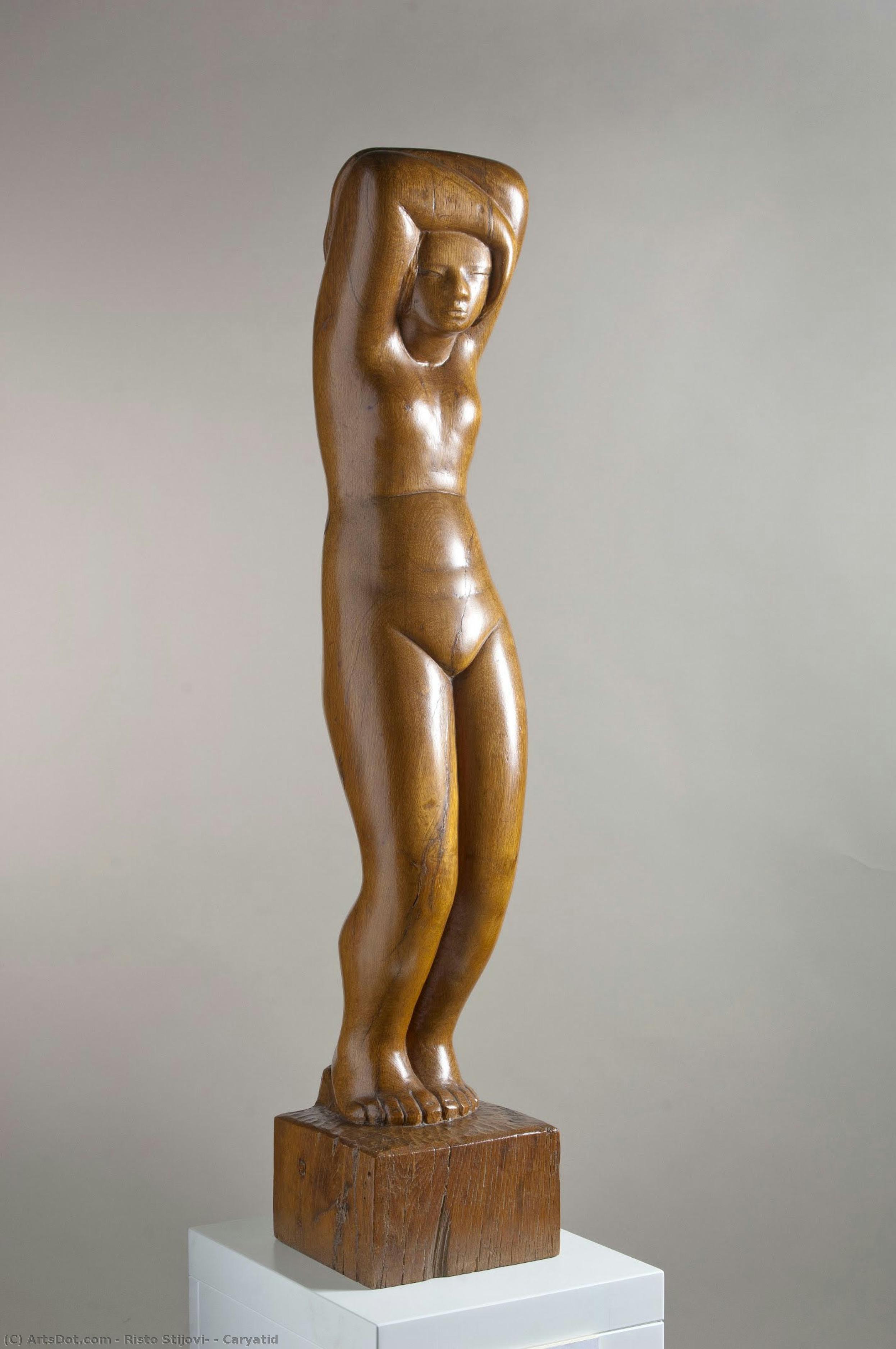
One of the caryatids that Stijović carved in wood from 1930, and one of his best sculptures, it is the only one from that series which has constantly been on public display since 1961. “I gave that caryatid to Josić [Mladen] as soon as I made it”, he once said. Beljanski bought it immediately after the war. It was exhibited at the XXV Biennale in Venice in 1952, when the author dated this sculpture to 1931. In spite of the unreliability of human memory, this year has been accepted as the time of its creation. All the characteristics of Stijović’s sculpture are concentrated in this nude female figure: a synthetic form made up of stylized shapes, the merely hinted anatomy and surfaces polished to perfection, simultaneously reflecting the author’s skill in following the particular form of wood, but also in respecting the nature of the material. An advocate of the female body as a source of inspiration, the sculptor, revealing through sculpting the imagined form hidden under the layers of wood, gave the sculpture a rounded appearance with soft, fluid lines, and was able in the process to preserve the solidity of form and remain true to the idea of full form. Although not interested in depicting movement, which is implied by the very name of the sculpture, with this particular Caryatid, Stijović showed an unusual interest in depicting a body stopped in motion, as if performing some rhythmic movements or a soundless dance; this figure gains an additional dimension due to the light which does not rest even for a second, changing instead with every shift in the observer’s viewpoint, as if flowing down the refined curves of the nude. The sculptor himself said that in the case of the Caryatid he had, as usual, made three sketches: from the profile, from the back and from the front. The ballerina, Sonja Stanisavljević, friend of Nataša Bošković, posed for him and according to Stijović’s reminiscences from 1970, she was “the most beautiful young woman in Belgrade. I don’t know, if I have ever seen a more perfect creature, someone as beautiful as she was.”

Autoriaus biografija

Risto Stijović: A Life in Sculpture

  • Born: Podgorica, Montenegro (1894)
  • Died: 1974
  • Nationality: Yugoslav & Serbian

Risto Stijović was a highly original and significant sculptor from Yugoslavia, widely regarded as the most important artist from Montenegro. His work, deeply rooted in Yugoslav nature and culture, established him as a master of sculpting animal figures and a key figure in modernist sculpture.

Early Life and Education

  • Stijović's artistic journey began in 1912 when he enrolled at the Serbian School of Fine Arts under the tutelage of Đorđe Jovanović.
  • His education was interrupted by World War I, during which he served in the Serbian Army. He endured a harrowing experience being imprisoned in Banjica concentration camp during World War II – an event that profoundly impacted his life and artistic expression.
  • Following the war, Stijović continued his studies in France, first at Marseille art school with a French government scholarship, then at the École des Beaux-Arts in Paris. He married Jeanette in 1922 while living in Paris.

Artistic Career and Style

  • Stijović's artistic career is characterized by his unique modernist style, influenced by contemporary movements and artists like Picasso, Matisse, Pompon, and Maillol. He exhibited alongside these masters in the early 1920s.
  • He is particularly celebrated for his sculptures of animal figures, demonstrating a remarkable mastery of form and detail. His work also encompasses female nudes, portraits, reliefs, architectural decorative sculptures, and monumental public sculptures.
  • Stijović’s preferred materials included wood, bronze, marble, and gypsum. He developed a distinctive plastic style, carefully shaping the material while respecting its inherent structure.
  • A notable work is Caryatid (1931), a wooden sculpture housed at the Pavle Beljanski Memorial Collection in Novi Sad, Serbia.

Major Achievements and Legacy

  • Stijović’s contributions to art were recognized internationally, notably with the Grand Prix – a gold medal at the World Exhibition in Paris in 1937, where he represented Yugoslav sculpture.
  • He held professorship at Third Male Gymnasium in Belgrade and became a regular member of the Serbian Academy of Sciences and Arts (SANU) in 1965.
  • His legacy extends beyond his individual works; Stijović is credited with founding the modernist expression in sculpture within Montenegro, inspiring generations of artists.
  • The Gallery Risto Stijović in Podgorica preserves and showcases his work, highlighting his significant contribution to Montenegrin art.

Collections and Recognition

  • Narodni Muzej, Belgrade, Serbia
  • Museo del Novecento, Milan, Italy
  • Pavle Beljanski Memorial Collection, Novi Sad, Serbia
  • Numerous private collections worldwide
risto stijović

risto stijović

1894 - 1974 , Montenegro

Trumpa informacija

  • Artistic Movement Or Style: Modernist sculpture
  • Artists Who Influenced This Artist:
    • Michelangelo Buonarroti
    • Pablo Picasso
  • Date Of Birth: October 8, 1894
  • Date Of Death: December 20, 1974
  • Full Name: Risto Stijović
  • Nationality: Yugoslav, Serbian
  • Notable Artworks:
    • Caryatid
    • Dositej Obradović
  • Place Of Birth: Podgorica, Montenegro
© TopImpressionists.com — Visos teisės saugomos  ·  100% Rankų darbo · Užtikrintas meistriškumas · Nemokamas pristatymas į viso pasaulioES
VISA MASTERCARD