

Paveikslėlyje: · Su rėmu:
 Peržiūrėti realaus dydžio版
 Pasidalinti
 Dalintis
 Išsamiau
 Vadovas

 Atsisiųsti
 Panašūs eksponatai
 Rentgeno spindulių nuotrauka
 Automatinė diorama
 问答
问答 Statistika
- 47.0 x 32.0 cm


€ 240
Rankų darbo aliejinės reprodukcijos
Rankiniu būdu tapytas aliejus ant droblio jūsų pageidaujamame dydį ir rėmuose – tai mūsų menininkų pagal užsakymą sukurtas darbas. ( Perjungti į spausdinamus版作品 Perejti prie skaitmeninių vaizdų)
Dydis
·Standartinis dydis
pagal užsakymą
CM
INCH
Pasirinkite iš mūsų nustatytų dydžių, atitinkančių originalaus meno kūrinio proporcijas.
Kraunami dydžiai...

plotis
aukštis
Įveskite jums reikiamą plotį ir aukštį, kad paveikslas atitiktų jūsų rėmą ar sieną. Kadangi šis darbas yra rankinio darbo, siekiant išgauti kitokios formos dydį, paveikslas gali būti šiek tiek didesnis (nuo kraštų bus palikta daugiau erdvės) arba mažesnis – pasirinkite jums patogiausią variantą. Prieš pradedant tapyti, atsiųsime jums skaitmeninį maketą patvirtinimui. Šioje puslapio nuotraukoje matomas vaizdas nėra galutinis rezultatas – jį parodys tik sukurtas maketas.
 Skaityti daugiau
Baigiamasis etapas
·
Baltas apasutojimas €1

Išblėstantis šonas €1

Išplėstinis €1

P118B €10

P118H €10

P118W €10

P438Z €10

P508JH €12

P508YH €12

P805H €10

P805Z €10

P919BZ €10

P919G €10

P919XJ €10

P959ZH €10

P968JZ €12

W106C €8

W218G €10

W218JH €8

W218Y €10

W307PJ €10

W316G €10

W316PJ €8

W316Y €10

W398PJ €8

W4111J €10

W500HY €15

W500JH €15

W692G €12

W849H €8

W940BG €15

W953PJ €8

H24-GOLD €30

H24-SILVER €30

H36-GOLD €45

H36-SILVER €45
Siunčiama saugiame vamzdelyje, paruošta patys sukomentuoti jūsų rėmeliais.
Virš 105 cm rėmas siunčiamas kaip rinkinys profesionaliam rėmininkui — skaitykite detales.
Papildomos paslaugos
nebūtinaKą apima papildomos paslaugos?
Pavyzdžiai, ką galima pakeisti: pakeisti veidą nuotrauka su klientu; pridėti augintinį (pvz., pakeisti kucingą šuniu); įtraukti paslaptingą žinutę fone; pakeisti fono kraštotvę ar elementus.
Gavus užsakymą, TopImpressionists.com komanda susisieks su klientu el. paštu dėl nurodymų ir pateiks preliminarią maketą.
Gavus užsakymą, TopImpressionists.com komanda susisieks su klientu el. paštu dėl nurodymų ir pateiks preliminarią maketą.
Pristatymas visame pasaulyje () per 3–4 savaites, o ne įprastai – per 5 savaites. (6 lapkritis). Kokybė lieka nepakeičiama.
Apsauginis lakas
Pavadinimo lentelė
Išgraviruotos bronzinės plokštelės detalės
This elegant plaque features the artist's name and the title of the artwork, finely engraved for a timeless presentation.
It is made from bronze with a refined, elegant finish. The text is precisely laser-engraved for a sharp and permanent result. Measuring 9x2 cm, the plaque is compact yet easy to read. It's built to be durable and scratch-resistant, offering a professional, museum-quality look. Mounting is simple thanks to the included adhesive backing.
Skaidrios akrilo plokštelės informacija
The plaque includes essential engraved details such as the artist's name, the title of the artwork, the date it was created, the type of media used-like oil on canvas or watercolor-a brief description of the piece, and a QR code that links to the complete artwork information.
It is crafted from clear acrylic, offering a sleek, modern appearance. The text is UV-engraved in black to ensure strong visual contrast. With a size of 10x15 cm, it ensures optimal readability. It comes equipped with two metal hooks for secure wall mounting. The plaque is designed to be weather-resistant, making it suitable for various environments, and it includes interactive features that work seamlessly with smartphone scanning.
Juodos akrilo plokštelės informacija
This elegant plaque includes engraved information such as the artist's name, the title of the artwork, the date it was created, the type of media used (like oil on canvas or watercolor), a short description of the artwork, and a QR code for quick access to more information.
The plaque itself is made from refined black acrylic with a premium finish. The text is laser-engraved in white for high contrast and readability. Its size is 10x15 cm, designed to be easy to read. It comes with two metal hooks for professional mounting. The design is sleek and fits any interior style. It is also weather-resistant and durable, with built-in digital integration for mobile compatibility.
Stiklo variantas prieinamas tik pasirinkus dydį iki 110 cm
 Stiklo variantas prieinamas tik pasirinkus dydį iki 110 cm
- Nemokamas greitasis pristatymas visame pasaulyje
- Aukštos kokybės lininis drobė
- Pilnas siuntimo draudimas
- Muitinės mokesčių grąžinimo garantija
- Tikro spalvų atitikimo garantija
- 100 dienų grąžinimo politika (tik esant įtaigoms)
- 100% pinigų grąžinimo garantija
- Nuolaida dideliems užsakymams


Kolekcinio objekto aprašas
Experience the ethereal grace of Sandro Botticelli's Renaissance drawings for Dante's Divine Comedy, where delicate lines and theological depth invite you to explore a profound visual masterpiece.
Autoriaus biografija
Atraskite Sandro Botičėlį (1445–1510), ankstyvojo Renesanso meistrą, žinoma dėl „Veneros gimimo“ ir „Pavasario“. Tyrinėkite jo elegantišką stilių, mitologines temas ir palikimą meno istorijoje!
Apie paveisdelį
A Visual Echo of Dante’s Epic Journey
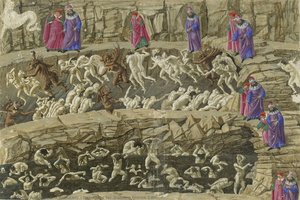
In the delicate interplay of line and light, Sandro Botticelli’s Drawings for Dante’s Divine Comedy offer far more than a mere illustration of a literary masterpiece; they serve as a profound intellectual and artistic dialogue between poet and painter. Created around 1495-1496 under the prestigious patronage of Lorenzo di Pierfrancesco de’ Medici, these works emerged during the height of Florentine humanism. Botticelli did not simply seek to replicate the narrative beats of Dante's Inferno, Purgatorio, and Paradiso; instead, he wrestled with the monumental challenge of translating complex theological allegory and philosophical contemplation into a visual language. The result is a series of works that capture the very essence of the soul's journey through the afterlife, inviting viewers to wander through landscapes of both profound terror and celestial grace.
The composition of these drawings presents a captivating tapestry of religious and mythological elements. Within the frame, one might encounter angels poised atop rolling hills, their ethereal presence acting as silent sentinaries over the human drama unfolding below. A diverse crowd of figures—some gathered in solemn lines, others scattered in moments of individual struggle—populates the scene, creating a sense of rhythmic movement that guides the eye across the panel. This arrangement creates an intriguing visual experience, where the boundaries between the earthly and the divine become beautifully blurred, making it an ideal centerpiece for those seeking art that provokes deep thought and conversation.
Mastery of Line and the Florentine Spirit
Beyond their narrative purpose, these drawings reveal Botticelli’s unmistakable stylistic signature, characterized by a graceful fluidity and an almost otherworldly luminosity. While many of his contemporaries in Florence were moving toward bolder, more muscular forms, Botticelli maintained a devotion to disegno—the art of precise, expressive drawing. His technique, often utilizing tempera on poplar panels, allows for subtle tonal gradations that lend the figures a soft, breathing quality. The meticulous attention to detail, from the delicate folds of drapery to the emotive, searching expressions on the faces of celestial beings, demonstrates a mastery of form that serves as the foundation for his more famous paintings.
For the discerning collector or interior designer, these works represent a pinnacle of Renaissance elegance. The fine, rhythmic linework provides a sense of structural clarity, while the delicate coloration offers a warmth that can elevate any sophisticated space. Whether placed in a sunlit study or a grand gallery, a high-quality reproduction of these drawings brings with it the intellectual fervor of the Medici era. They are not merely decorations but windows into a period where art and literature were inextricably linked, offering an enduring sense of beauty, mystery, and historical depth that continues to inspire the modern eye.
Klausimai ir atsakymai
Ar „Drawings for Dante´s Divine Comedy“ – Sandras Botičelis yra paveikslas, piešinys ar grafika?
Kataloge „Drawings for Dante´s Divine Comedy“ – Sandras Botičelis priskirtas kategorijai WallArt. Ši kategorija padeda rasti panašius kūrinius.
Kaip kontrastas ir harmonija susilieja kūryboje „Drawings for Dante´s Divine Comedy“?
„Drawings for Dante´s Divine Comedy“ – Sandras Botičelis spalvų analizėje fiksuojamas Gentle kontrastas ir Strong Color Unity harmonija.
Kokia „Drawings for Dante´s Divine Comedy“ – Sandras Botičelis nuotaika yra apibūdinama?
„Drawings for Dante´s Divine Comedy“ – Sandras Botičelis nuotaika apibūdinama kaip Serene. Ši klasifikacija gali padėti priderinti kūrinį prie aplinkos.
Trumpos faktinės datos ir meno viktorina
Apie Sandras Botičelis

Sandras Botičelis
1445 - 1510, Italija
Autoriaus biografija
Ankstyvojo Renesanso Žavesys: Sandro Botičelis
Sandro Botičelis, arba Alesandras di Mariano Filipepi – italų dailininko pavardė, kuri iki šiol kviečia prisiminti ankstyvojo Renesanso Florencijos grožį ir poeziją. Gimęs maždaug 1445 metais, šiame mieste, kuris buvo meno ir kultūros epicentras, Botičelis įėjo į istoriją sukūręs ikoninius kūrinius, kurių „Veneros gimimas“ ir „Pavasaris“ (arba „Primavera“) yra neatsiejami nuo Renesanso idealų. Jo gyvenimas buvo giliai susijęs su Florencijos miesto dvasia; jis niekada nepaliko savo rajono Ognissanti, kas bylojo apie stiprius šeimos ryšius ir klestinčią kūrybinę aplinką. Tėvas Mariano Filipepi, pradžioje aukso dirblys, o vėliau odos apdirbėjas, suteikė jam ankstyvąjį susidūrimą su amatu ir atidumu – savybėmis, kurios giliai paveikė Botičelio meninę raidą. Nors pranešimai rodė mokymąsi aukso dirbimo, jis netrukus rado savo pašaukimą Fra Filippo Lippi pamokslų centre. Šis apmokymas buvo kertinis akmuo, panardinant jį į Florencijos mokyklos techniką ir estetiką, taip pat susiejant su įtakingais mecenatais, tokiais kaip Medici šeima.Stilius, Apibūdinamas Elegancija ir Mitologija
Botičelio meninis stilius yra iškart atpažįstamas dėl lyrinio grožio, pasižymėjusio elegantiška linijumu, tekantimis kontūrais ir subtiliu spalvų vartojimu. Jis meistriškai užpildė tarpą tarp vėlyvosios Gotikos tradicijų ir besivystančios Renesanso estetikos, įsisavindamas tokių meistrų kaip Fra Angelico ir Paolo Uccello įtakas, tačiau sukūręs unikalų asmeninį vizualumą. Jo figūrėlės turi eterinį kokybę, dažnai vaizduojamos su pailgėjusiomis proporcijomis ir maloningais pozomis, kurios perteikia tiek ramybę, tiek subtilų melancholiją. Vienas iš jo darbų apibūdinamųjų bruožų yra klasikinės mitologijos dažnas įtraukimas – atspindys Renesanso Florencijos plėtojamų humanizmo interesų. Jis ne tik iliustravo šiuos senovinius pasakojimus; jis suteikė jiems naujų reikšmių sluoksnių, tyrinėdamas meilės, grožio ir dvasinio ilgesio temas. Botičelis dažnai naudojo sidabro piešimo metodą kaip pagrindą savo drobėms, o tai prisidėjo prie apšviestumo ir subtilios detalizacijos, matomos jo baigiamuose darbuose. Temperos dažų naudojimas leido tiksliai atkurti ir ryškias spalvas, o vėlesni eksperimentai su aliejiniais dažais išplėtė jo raiškos galimybes.Ikoniniai Šedevrai ir Meninė Raida
Botičelio palikimas remiasi kelių ikoninių paveikslų pagrindu, kurie amžius po amžiaus toliau žavi publiką. „Veneros gimimas“, baigtas maždaug 1486 metais, yra galbūt jo garsiausias darbas – alegorinis Dievos motinos atvaizdas, kylantis iš jūrų kiaulės lukšto, įkūnijantis Renesanso grožio ir harmonijos idealus. Jo malonėjančios kompozicijos, subtilios spalvų paletės ir kvietiančios simbolikos dėka tai tapo amžina epochos simboliu. Ne mažiau garsus yra „Pavasaris“, sukurtas maždaug 1482 metais – sudėtingas ir paslaptingas paveikslas, šlovinantis pavasarį ir meilę, kuriame gausu simbolinių figūrų, atsižvelgiant į klasikinės mitologijos elementus. Šie darbai parodo Botičelio kompozicijos meistriškumą, jo gebėjimą sukurti atmosferinį gilumį bei gilią supratimą apie žmogaus emocijas. Jo meninė kelionė išsivystė atskirose fazėse. 1470-ųjų pradžioje jis sutelkdavo dėmesį į religines temas, tobulindamas savo techninius įgūdžius ir sukurdamas reputaciją dėl puikaus atlikimo. 1480-ieji buvo jo kūrybinės jėgos piko metai, kurių metu buvo sukurti garsiausi mitologiniai paveikslai. Tačiau 1490-ųjų pabaigoje jo stilyje įvyko poslinkis, paveiktas Girolamo Savonarolos karštų pamokymų – dominikonų kunigo, kuris pasmerkė tai, ką jis laikė Florencijos moraliniu irikalbėjimu. Šiuo laikotarpiu atsirado asketiškesni ir emocingesni darbai, atspindintys augantį dvasinį intensyvumą.Palikimas ir Perdarymas
Po jo mirties 1510 metais Botičelio reputacija palaipsniui prarado populiarumą. Dėl to beveik trys amžiai jo darbai buvo pamiršti, užstojami Aukštosios Renesanso meistrų, tokių kaip Leonardo da Vinci ir Michelangelo, pasiekimų. Tačiau vėlyvojo 19-ojo amžiaus pabaigoje įvyko nuostabus perdarymas su Pre-Rafaelitų brolijos pakilimu – anglų menininkų grupės, kurie atmetė akademinius prietarimus ir ieškojo įkvėpimo ankstyvosios italų Renesanso menu. Jie buvo pakerėti Botičelio linijaus elegancija, ryškiomis spalvomis ir poetiniu pojūčiu, pripažindami jį kaip giminaitą. Šis atnaujintas įvertinimas sukėlė platų jo darbų peržiūrėjimą, nustatęs jį kaip vieną svarbiausių Ankstyvosios Renesanso menininkų. Šiandien Botičelis šveniamas dėl savo unikalios meninės vizijos, meistriškos technikos ir nesibaigianio gebėjimo sužadinti grožį, emocijas ir dvasinį apmąstymą. Jo įtaka galima pamatyti paskesnėse kartose menininkų, kurie bandė atkurti tą pačią elegancijos ir malonumo jausmą savo darbuose. Jis išlieka Florencijos meno pasiekimų simboliu ir Renesanso humanizmo liudijimu.Pagrindiniai Darbai
- „Veneros gimimas“ (apie 1486 m.): Ikoninis vaizdas, įkūnijantis Renesanso grožio idealus.
- „Pavasaris“ (apie 1482 m.): Sudėtingas alegorinis paveikslas, šlovinantis pavasarį ir meilę.
- „Magų garbinimas“ (1475–1476): Parodo ankstyvąjį kompozicijos ir perspektyvos meistriškumą.
- „Mistikinis Gailestis“ (1501): Atspindi dvasinių temų poslinkį jo vėlesnėje karjeroje.
Trumpa informacija apie Sandras Botičelis
- Artistic Movement Or Style: Early Renaissance
- Artists Who Influenced This Artist:
- Fra Angelico
- Paolo Uccello
- Date Of Birth: c. 1445
- Date Of Death: 1510
- Full Name: Alessandro di Mariano Filipepi
- Nationality: Italian
- Notable Artworks:
- Birth of Venus
- Primavera
- Place Of Birth: Florence, Italy
Tyrinėkite meno kūrinius, suskirstytus pagal temas, stilius ir savybes.


Sandras Botičelis
Drawings for Dante´s Divine Comedy
() ·
Su rėmu: · Rankiniu būdu tapyta aliejumi ant lineno
Viso suma