


 Peržiūrėti realaus dydžio版
 Pasidalinti
 Dalintis
 Išsamiau
 Vadovas

 Atsisiųsti
 Panašūs eksponatai
 Rentgeno spindulių nuotrauka
 Automatinė diorama
 Statistika
Stirling Castle
 Romanticism
 1914
1914 46.0 x 61.0 cm
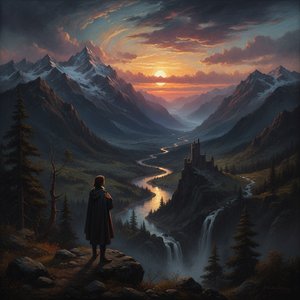
Thomas Grant’s 'Stirling Castle' (1914) captures a dramatic landscape of mountains & sheep in a Romantic Luminist style. Oil on canvas evokes awe, solitude, and the sublime. A stunning piece for art collectors.
Explore the captivating portraits of Sir Francis Grant, a renowned 19th-century British artist celebrated for his elegant depictions of royalty & aristocracy. Discover his legacy!
 Skaityti daugiau
Šiame puslapyje rodomas meno kūrinys yra saugomas autorių teisių įstatymais, todėl neturime teisės legaliai kurti ar parduoti jo identiškos reprodukcijos. Ši apsauga užtikrinama remiantis tokiais tarptautiniais susitarimais kaip Bernės konvencija ir pagal nacionalines įstatymų nuostatas, įskaitant tas, kurias nurodo JAV autoriškos teisės įstatymas – 17-asis skyrius.
Kaip pagarbią ir teisėtą alternatyvą, mes siūlome pagal užsakymą rankomis dažytus paveikslus, įkvėptus originalo. Mūsų įgudę ir profesionalūs menininkai kruopščiai tiria originalo stilių, nuotaiką ir meninę esmę, kad sukurtų naują, unikalią kūrinį, kuris sukelia tą paties jausmą – išlikdamas tuo tarciau originaliu, savarankišku kūrybiniu darbu.
Šis metodas visiškai atitinka autorių teises, nes jame nėra saugomo kūrinio kopijavimo ar dubliavimo. Tai yra kūrybinė reinterpretacija – naujas paveikslas, kurį įkvėpė originalas, tačiau kuris nėra jo identiškas.
Rankų darbo aliejinės reprodukcijos
Rankiniu būdu tapytas aliejus ant droblio jūsų pageidaujamame dydį ir rėmuose – tai mūsų menininkų pagal užsakymą sukurtas darbas. ( Perjungti į spausdinamus版作品 Perejti prie skaitmeninių vaizdų)




































Standartinis dydis
pagal užsakymą
CM
INCH
Pasirinkite iš mūsų nustatytų dydžių, atitinkančių originalaus meno kūrinio proporcijas.
Loading sizes...

plotis
aukštis
Įveskite jums reikiamą plotį ir aukštį, kad paveikslas atitiktų jūsų rėmą ar sieną. Kadangi šis darbas yra rankinio darbo, siekiant išgauti kitokios formos dydį, paveikslas gali būti šiek tiek didesnis (nuo kraštų bus palikta daugiau erdvės) arba mažesnis – pasirinkite jums patogiausią variantą. Prieš pradedant tapyti, atsiųsime jums skaitmeninį maketą patvirtinimui. Šioje puslapio nuotraukoje matomas vaizdas nėra galutinis rezultatas – jį parodys tik sukurtas maketas.
Ką galima pakeisti (pavyzdžiai): Pakeisti veidą į kliento nuotrauką; Pridėti augintinį (pvz., pakeisti katę šunimi); Įtraukti paslėptą žinutę fone; Pakeisti fono kraštovaizdį ar elementus.
Gavus užsakymą, TopImpressionists.com komanda susisieks su klientu el. paštu dėl instrukcijų ir pateiks maketo pavyzdį
Gavus užsakymą, TopImpressionists.com komanda susisieks su klientu el. paštu dėl instrukcijų ir pateiks maketo pavyzdį
Pristatymas visame pasaulyje () per 3–4 savaites, o ne įprastai – per 5 savaites. (28 spalis). Kokybė lieka nepakeičiama.

Nemokamas greitasis pristatymas visame pasaulyje

Aukštos kokybės lininis drobė

Pilnas siuntimo draudimas

Muitinės mokesčių grąžinimo garantija

Tikro spalvų atitikimo garantija

100 dienų grąžinimo politika (tik esant įtaigoms)

100% pinigų grąžinimo garantija

Nuolaida dideliems užsakymams
 Stiklo variantas prieinamas tik pasirinkus dydį iki 110 cm

Stirling Castle
Reprodukcijos technika
Reprodukcijos matmenys
-


Bendroji kaina
€ 237
Autoriaus biografija
The Visionary of the English Countryside
Born in Newcastle upon Tyne in 1913, Thomas Grant emerged as a profound voice in British landscape painting, a master who could translate the quietude of rural England into a visceral, tactile experience. His artistic journey, rooted in the rigorous traditions of the Newcastle Art School, was far more than a mere study of scenery; it was an emotional exploration of the land itself. While his early years were spent honing the technical foundations of realism, Grant’s true genius lay in his ability to transcend literal representation. He sought to capture the very breath of the countryside, imbuing his canvases with a sense of atmosphere that felt both timeless and immediate. Though he remained largely unrecognized by the broader art establishment during much of his active years, the depth of his vision has ensured a lasting legacy for those who seek beauty in the subtle shifts of light and shadow.
The evolution of Grant’s style was deeply informed by the giants of British art history. He drew significant inspiration from the tonal harmonies of Reynolds and the atmospheric, sublime landscapes of Turner. From these masters, he learned the importance of perspective and the way light can manipulate the perceived weight of a landscape. However, Grant departed from the meticulous, almost photographic detail favored by some of his contemporaries. Instead, he embraced a technique defined by thick impasto, applying paint in bold, rhythmic strokes that gave his work a sculptural quality. This heavy texture allowed him to recreate the ruggedness of earth and the softness of mist, ensuring that his paintings were not just seen, but felt. To look upon a Grant landscape is to encounter the physical presence of the natural world, where every ridge of paint contributes to the palpable emotion of the scene.
Mastery of Light and Landscape
Grant’s oeuvre serves as a profound testament to the quiet dignity of rural life and the dramatic potential of the natural elements. His compositions often centered on the interplay between man-made structures and the encroaching beauty of nature. In works such as “The Old Steeple,” he demonstrates an extraordinary command over mood, depicting a snow-covered church beneath a heavy, dramatic winter sky with such precision that the chill of the air seems to emanate from the canvas. Similarly, in “Coal Delivery,” Grant captures the soft, golden light of a rural farmhouse, turning a moment of everyday labor into a scene of quiet, pastoral grace. His ability to manipulate color and tone allowed him to navigate between different artistic movements, occasionally touching upon the Romantic Luminist style, as seen in the breathtaking “Stirling Castle,” where mountains and sheep are bathed in an awe-inspiring, solitary light.
Beyond his landscapes, Grant’s work often touched upon the psychological depth of his subjects, whether they were portraits or still lifes. His paintings were never static; they possessed a kinetic energy born from his expressive brushwork. This mastery is evident across several key themes in his career:
- Atmospheric Landscapes: The use of light and shadow to evoke the solitude and majesty of the British Isles.
- Textural Realism: The application of impasto to convey the physical weight and texture of the natural environment.
- Tonal Harmony: A sophisticated palette that draws from classical influences to create cohesive, emotive scenes.
- The Beauty of the Mundane: Elevating simple rural activities and structures into subjects of high art.
Today, the significance of Thomas Grant lies in his role as a bridge between traditional realism and the expressive freedom of impressionism. He did not merely document the English countryside; he interpreted its soul through a lens of textured emotion. As collectors and historians rediscover his work, Grant stands as a reminder that the most profound art often resides in the quietest corners of our world, waiting to be seen through eyes that value essence over mere detail.

Trumpa informacija
- Artistic Movement Or Style: Realism & Impressionism
- Artists Or Movements Influenced By This Artist: ['Reynolds']
- Artists Who Influenced This Artist: ['John Constable']
- Date Of Birth: 1867
- Full Name: Sir Francis Grant
- Nationality: British
- Notable Artworks:
- The Old Steeple
- Coal Delivery
- Place Of Birth: Newcastle upon Tyne, England
Susiję straipsniai
Capturing the Soul: The Emotional Majesty and Sublime Power of Romantic Landscape Painting
Explore the profound emotional depth of Romantic landscape painting. Discover how masters like Turner and Friedrich captured the sublime power of nature through intuition and imagination in this expert art history retrospective.

Capturing the Soul: The Emotional Magic and Sublime Grandeur of Romantic Landscape Painting
Explore the profound emotional depth of Romantic landscape painting. Discover how masters like Friedrich and Turner captured the sublime through light, shadow, and nature's power in this expert art history retrospective for discerning collectors.