


 Peržiūrėti realaus dydžio版
 Siųsti
 Dalintis
 Išsamiau
 Vadovas

 Atsisiųsti
 Panašūs eksponatai
 Rentgeno spindulių nuotrauka
 Diaporama
 Statistika
Black Rationality-Pathology Analysis
 Oil On Canvas
- WallArt
- Contemporary Art
 Contemporary
 70.0 x 95.0 cm
 Today Art Museum
A dramatic black and white painting by Wang Guangyi captures two figures sitting back-to-back in a profound study of isolation and depth, inviting you to explore this evocative piece for your collection.
 Rodyti daugiau
Tyrinėkite vienausių šiuolaikinių Kinijos menininkų Wang Guangyi „Political Pop“ meną. Žinomas dėl „Great Criticism“ serijos, kurioje derinasi kultūrinės revoliucijos propaganda ir Vakarų logotipai, jis meta iššūkį galios ir vartojimo suvokimui.
Šiame puslapyje rodomas meno kūrinys yra saugomas autorių teisių įstatymais, todėl neturime teisės legaliai kurti ar parduoti jo identiškos reprodukcijos. Ši apsauga užtikrinama remiantis tokiais tarptautiniais susitarimais kaip Bernės konvencija ir pagal nacionalines įstatymų nuostatas, įskaitant tas, kurias nurodo JAV autoriškos teisės įstatymas – 17-asis skyrius.
Šis metodas visiškai atitinka autorių teises, nes jame nėra kūrinio kopijavimo ar dubliavimo. Tai yra kūrybinė reinterpretacija – naujas paveikslas, kurį įkvėpė originalas, tačiau kuris nėra jo identiškas.
Giclée / Meno spausdinimas
Muziejų lygio „giclée“ arba drobos spausdinimas: greita gamyba ir lankstios apdailos parinktys. ( Pirkti rankomis tapytą reprodukciją Perejti prie skaitmeninių vaizdų)




P118B €10

P118H €10

P118W €10

P438Z €10

P508JH €12

P508YH €12

P805H €10

P805Z €10

P919BZ €10

P919G €10

P919XJ €10

P959ZH €10

P968JZ €12

W106C €8

W218G €10

W218JH €8

W218Y €10

W307PJ €10

W316G €10

W316PJ €8

W316Y €10

W398PJ €8

W4111J €10

W500HY €15

W500JH €15

W692G €12

W849H €8

W940BG €15

W953PJ €8




Standartinis
individualaus dydžio
CM
INCH
Pasirinkite iš mūsų nustatytų dydžių, atitinkančių originalaus meno kūrinio proporcijas.
Loading sizes...

plotis
aukštis
Įveskite jums reikiamą plotį ir aukštį, kad atvaizdas derėtų prie jūsų rėmo ar sienos. Spausdiną galima tik sumažinti, bet nepadidinti virš originalaus paveikslėlio dydžio, todėl keičiant proporcijas, dalis vaizdo prarandama. Prieš spausdinimą atsiųsime jums skaitmeninį maketą patvirtinimui. Šioje puslapio nuotraukoje matomas pjūvis nėra tikslus – jį rodo tik maketas.
Pristatymas visame pasaulyje () per 2 weeks, o ne įprastas 4/5 savaičių laikotarpis. (27 spalis)

Nemokamas greitasis pristatymas visame pasaulyje

Aukštos kokybės lininis drobė

Pilnas siuntimo draudimas

Muitinės mokesčių grąžinimo garantija

Tikro spalvų atitikimo garantija

100 dienų grąžinimo politika (tik esant įtaigoms)

100% pinigų grąžinimo garantija

Nuolaida dideliems užsakymams
 Stiklo variantas prieinamas tik pasirinkus dydį iki 110 cm

Black Rationality-Pathology Analysis
Giclée / Meno spausdinimas
Reprodukcijos dydis
-


Visų pasirinktų variantų kaina
€ 61
A Study in Solitude and Contrast
In the evocative masterpiece Black Rationality-Pathology Analysis, the viewer is immediately drawn into a profound psychological landscape. The painting presents two figures seated in chairs, their backs turned toward one another in a silent, heavy dialogue of separation. This composition, rendered with a striking black and white color scheme, strips away the distractions of the natural world to focus entirely on the raw tension between the subjects. The deliberate use of blue for the chair seats provides the only departure from the monochromatic drama, acting as a subtle anchor that draws the eye into the center of this interpersonal void. It is a scene that feels both intimate and infinitely distant, inviting anyone who gazki it to contemplate the invisible barriers that exist even in our closest connections.
The technique employed here speaks to a mastery of depth and atmospheric weight. Through the careful manipulation of light and shadow, the artist creates a sense of three-dimensional space that feels almost tactile. The starkness of the monochrome palette does not merely simplify the image; rather, it intensifies the emotional resonance of every brushstroke. For collectors and interior designers, this piece offers a sophisticated focal point that commands attention through its minimalist elegance. The interplay of light against the dark, brooding tones creates a dramatic chiaroscuro effect that can transform a modern living space or a curated gallery wall into a site of deep intellectual reflection.
The Weight of Modernity and Symbolism
To understand this work, one must look toward the artistic lineage of Wang Guangyi. Emerging from the complex socio-political landscape of China, Wang has long been a pioneer in exploring the friction between ideology and existence. In Black Rationality-Pathology Analysis, we see a departure from his famous Great Criticism series—which often utilized bold commercial logos—toward a more introspective, philosophical inquiry. The title itself suggests a clinical examination of human behavior, perhaps dissecting the "pathology" of modern isolation. The figures, by turning away from each other, become symbols of the fragmented nature of contemporary identity, where rationality and emotion are often at odds.
The emotional impact of the painting lies in its ability to evoke a sense of mystery and quiet melancholy. There is an undeniable intrigue in the unknown relationship between these two souls; are they estranged lovers, or perhaps representatives of conflicting ideologies? This ambiguity is precisely what makes the piece so enduringly captivating. For those seeking to decorate a space with art that provokes thought and conversation, this reproduction serves as a window into the complexities of the human condition. It is more than just a visual arrangement; it is an invitation to sit within the silence and find meaning in the shadows.
问答 (or more naturally for a website heading): Klausimai ir atsakymai
Kiek harmoningai dera „Black Rationality-Pathology Analysis“, autorius – Vang Guangji spalvos?
„Black Rationality-Pathology Analysis“, autorius – Vang Guangji spalvos于demonstruoja Balanced Harmony harmoniją. Harmonija apibūdina, kaip spalvos dera viena su kita.
Koks yra „Black Rationality-Pathology Analysis“ formatas ir dydis?
„Black Rationality-Pathology Analysis“, autorius – Vang Guangji yra Landscape formatas, kurio matmenys yra 70 x 95 cm.
Kokia technika buvo panaudota kūriniam darbui „Black Rationality-Pathology Analysis“, autorius – Vang Guangji?
„Black Rationality-Pathology Analysis“ sukurta naudojant Oil On Canvas.
Autoriaus biografija
Wang Guangyi: Biografija
Pradiniai metai ir išsilavinimas
- Gimė: Harbinas, Kinija (1957 m.)
- Prieš užimdamas się menu, patyrė Kultūrinės revoliucijos šoko ir dirbo kaimo vietovėje.
- Studijavo Žetžias meno akademijoje, kur 1984 m. baigė alyvos tapybos katedrą.
Meninė plėtra ir pagrindiniai darbai
- Anslingie darbai (1980-talas): Tyrinėjo Vakarų filosofiją per tokias serijas kaip „Šiaurės polius“ ir „Post-klasikinis“, dažnai naudojamas pilkus tonus bei nukreipiant į ikonines Vakarų kūrybos dalis, siekiant atskirti nuo klasikinio stiliaus.
- „Didžioji kritika“ serija (1990–2007 m.): Tai garsiausias Wang Guangyi kūrybos ciklas, sujungiantis socialistinę Kultūrinės revoliucijos vaizdinę simboliką su Vakarų vartojimo prekių prekės ženklo logotipais. Ši serija kritikuoja konfliktą tarp politinės ideologijos ir komercializmo. Vienas iš pavyzdžių – „Didžioji kritika: Coca-Cola“.
- „VISA, Paso ir viruso nešėjų“ serija (199as metai): Šios instaliacijos pateikia asmenų vaizdus kartu su biurokratine informacija, komentuodamos apie valstybės kontrolę ir individualią tapatybę.
- „Materialistinė“ serija (2001–2005 m.): Tyrinėjo transcendentines temas naudodamas skulptūrais, išvestomis iš propagandinės simbolikos, atspindėdami susidomėjimą dialektiniu materializmu.
Įtampų paliktas pėdsakas ir meninis stilius
- Ernst Gombrich: Wang teigia, kad Gombrichio teorija apie paveldėtus „schemata“ (šablonus) turėjo didelę įtaką jo meniniam požiūriui kultūrinę peržiūrą ir tęstinumą.
- Andy Warhol ir Joseph Beuys: Po šių menininkų įtakos Wang sukūrė „Political Pop“ stilių, kuris sujungia socialistinę vaizdinę simboliką su vartojimo kultūros užuominomis.
- „Political Pop“ (Politinis popas): Wang laikomas šios judėjimo lyderiu, naudodamas meną kaip įrankį kritikuoti politines ir komercines galios struktūras.
Istorinė reikšmė ir palikimas
- Naujojo meno judėjimo lyderis (po 1989 m.): Wang Guangyi su playing svarbią vaidmenį formuojant šiuolaikinį Kinijos meną po 1989 metų įvykių.
- Propagandos kritika: Jo kūrinys iššūkį metas žiūrėtojams kritiškai nagrinėti propagandą tiek socialistinėse, tiek kapitalistinėse sistemose.
- Pasaulinis pripažinimas: Eksponuojami visame pasaulyje, jo darbai yra svarbių tarptautinių muziejų kolekcijų dalis, užtvirtindami jo vietą kaip reikšmingos figūros šiuolaikiniame mene.

Vang Guangji
1957 - , Kinija
Trumpa informacija apie kūrėją
- Gimimo Data: 1957
- Gimimo Vieta: Harbinas, Kinija
- Menų Kryptis Ar Stilius: Politinis popas
- Mকে Įkvėpė Šį Šį Menininką:
- Andy Warhol
- Joseph Beuys
- Ernst Gombrich
- Tautybė: Kinetas
- Vardas, Pavardė: Wang Guangyi
- Žinomos Kūriniai:
- Šiaurės poliaus serija
- Post-klasikinė serija
- Didžioji kritika serija
- VISA serija
- Pasaulio pasio dokumentų serija
Susiję straipsniai

Shadow & Soul: Why Black & White Photography Remains the Ultimate Power Move in Modern Art
Discover why black & white photography remains a powerful force in contemporary art. Explore the impact of light, shadow, and texture through a visual journey of monochrome mastery and learn how to elevate your space with timeless grayscale aesthetics.

Slate Blue Masterpieces: 10 Iconic Paintings & Timeless Home Decor Ideas
Immerse yourself in the captivating world of slate blue! Explore 10 iconic paintings by Monet, Van Gogh & Renoir. Discover their stories, techniques & find museum-quality art reproductions for your home at .

White on Canvas: 10 Masterpieces & Timeless Elegance for Your Home Decor
Explore 10 iconic white paintings by Monet, Whistler & Rothko! Discover the stories behind these serene masterpieces and their impact on art history. Find museum-quality reproductions for your home decor at .

Dark Masterpieces: 10 Iconic Paintings Dominated by Black Tones |
Explore 10 iconic paintings dominated by black tones, from Rembrandt’s chiaroscuro to Goya's dark expressions. Discover the stories behind these masterpieces & find museum-quality art reproductions for your home at .
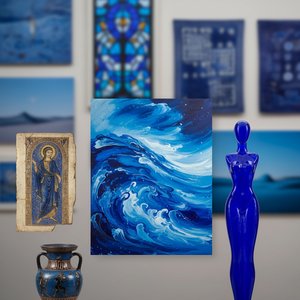
The Allure of Azure: Exploring the Symbolic & Aesthetic Depths of Blue in Art History
Explore the rich history of blue in art! Discover its symbolism, from ancient pigments to modern masterpieces by Kandinsky & Seurat. Uncover the psychological impact and cultural meanings behind this captivating hue.