


 Peržiūrėti realaus dydžio版
 Siųsti
 Dalintis
 Išsamiau
 Gidas
Gidas

 Atsisiųsti
 Panašūs eksponatai
 Rentgeno spindulių nuotrauka
 Diaporama
 Statistika
Windmills
 Impressionism
 1911
1911 69.0 x 112.0 cm
Discover 'Windmills' by William Grant Murray – a serene 1911 landscape painting of a Dutch windmill scene. Explore its historical context & timeless beauty.
 Rodyti daugiau
William Grant Murray (1877-1950): British artist renowned for landscapes, portraits & murals. Principal of Swansea Art School & curator of Glynn Vivian Gallery. Explore his figurative paintings and significant contributions to Welsh art.
Rankų darbo aliejinės reprodukcijos
Rankiniu būdu tapytas aliejus ant droblio jūsų pageidaujamame dydį ir rėmuose – mūsų menininkų darbas pagal užsakymą. ( Perjungti į spausdinimą Perejti prie skaitmeninių vaizdų)




P118B $10

P118H $10

P118W $10

P438Z $10

P508JH $12

P508YH $12

P805H $10

P805Z $10

P919BZ $10

P919G $10

P919XJ $10

P959ZH $10

P968JZ $12

W106C $8

W218G $10

W218JH $8

W218Y $10

W307PJ $10

W316G $10

W316PJ $8

W316Y $10

W398PJ $8

W4111J $10

W500HY $15

W500JH $15

W692G $12

W849H $8

W940BG $15

W953PJ $8




Standartinis
individualaus dydžio
CM
INCH
Pasirinkite iš mūsų nustatytų dydžių, atitinkančių originalaus meno kūrinio proporcijas.
Loading sizes...

plotis
aukštis
Galite įvesti savo matmenis, kad jie atitiktų konkretų rėmą ar erdvę. Jei pasirinktas dydis neatitinka originalaus paveikslėlio proporcijų, mes arba apkropsime meno kūrinį, arba papildysime tapybą rankomis dažytい elementais. Prieš pradėdami gamybą, jūsų patvirtinimui atsiųsime skaitmeninį maketą.
Atkreipkite dėmesį, kad ekrane rodomas vaizdas neatspindi tikrojo apkarpymo ar papildymo. Tik maketas tiksliai parodys galutinę kompoziciją.
Nors galima rinktis ir individualius dydžius, rekomenduojame pasirinkti matmenis iš nustatytos sąrašo, kad būtų išlaikytos originalios proporcijos.
Ką galima pakeisti (pavyzdžiai): Pakeisti veidą į kliento nuotrauką; Pridėti augintinį (pvz., pakeisti katę šunimi); Įtraukti paslėptą žinutę fone; Pakeisti fono kraštovaizdį ar elementus.
Gavus užsakymą, TopImpressionists.com komanda susisieks su klientu el. paštu dėl instrukcijų ir pateiks maketo pavyzdį
Gavus užsakymą, TopImpressionists.com komanda susisieks su klientu el. paštu dėl instrukcijų ir pateiks maketo pavyzdį
Pristatymas visame pasaulyje () per 3–4 savaites, o ne įprastai – per 5 savaites. (25 rugsėjis). Kokybė lieka nepakeičiama.

Nemokamas greitasis pristatymas visame pasaulyje

Aukštos kokybės lininis drobė

Pilnas siuntimo draudimas

Muitinės mokesčių grąžinimo garantija

Tikro spalvų atitikimo garantija

100 dienų grąžinimo politika (tik esant įtaigoms)

100% pinigų grąžinimo garantija

Nuolaida dideliems užsakymams
 Stiklo variantas prieinamas tik pasirinkus dydį iki 110 cm

Windmills
Reprodukcijos technika
Reprodukcijos dydis
-


Visų pasirinktų variantų kaina
$ 269
A Pastoral Scene: William Grant Murray’s ‘Windmills’ (1911)
- Subject and Composition: ‘Windmills’ transports the viewer to a tranquil rural landscape, dominated by a stately windmill set against a backdrop of billowing clouds. The composition is carefully balanced; the windmill acts as a central focal point, yet doesn't overwhelm the scene. A modest building – perhaps a shed or small barn – nestles nearby, suggesting human presence and agricultural life. Two figures animate the field, one positioned to the left and another to the right, subtly guiding the eye through the painting. The inclusion of a grazing horse further enhances the sense of peaceful activity within this idyllic setting.
- Style and Technique: Painted in 1911, ‘Windmills’ reflects influences of Post-Impressionism and early Modernism, though Murray maintains a distinctly representational approach. His brushwork is visible yet controlled, creating texture and depth without sacrificing clarity. The color palette is muted and harmonious, dominated by earthy tones and soft greys that evoke the atmosphere of a cloudy day. Murray’s technique emphasizes light and shadow to define form and create a sense of spaciousness within the landscape.
Historical Context & Artistic Lineage
- A Scottish Artist in Transition: William Grant Murray (1877-1950) was a versatile British artist, renowned for his murals, portraits and mosaics. Educated at prestigious art schools including the Royal College of Art in London and the Académie Julian in Paris, he possessed a strong academic foundation. ‘Windmills’ dates from a period where Murray was establishing himself as a landscape painter, moving away from purely decorative work towards more expressive representations of the natural world.
- The Allure of Rural Life: The early 20th century witnessed a growing fascination with rural life and a desire to escape the rapid industrialization of urban centers. Paintings like ‘Windmills’ tapped into this sentiment, offering viewers a nostalgic vision of simpler times and harmonious coexistence between humanity and nature.
Symbolism & Emotional Resonance
- The Windmill as Metaphor: The windmill itself carries symbolic weight. Traditionally, windmills represent progress, ingenuity, and harnessing the power of nature for human benefit. However, they can also evoke a sense of timelessness and the cyclical rhythms of agricultural life. In this painting, the windmill stands as a silent sentinel, witnessing the passage of time and the enduring beauty of the countryside.
- A Mood of Serenity: ‘Windmills’ evokes a profound sense of peace and tranquility. The soft colors, gentle brushwork, and harmonious composition combine to create a calming atmosphere. It's a scene that invites contemplation and offers respite from the stresses of modern life. The painting’s emotional impact lies in its ability to capture a fleeting moment of beauty and stillness.
For Collectors & Interior Design
- A Versatile Addition: With dimensions of 69 x 112 cm, ‘Windmills’ is a substantial yet manageable artwork suitable for a variety of interior spaces. Its muted color palette and pastoral subject matter make it particularly well-suited to traditional or country-style interiors.
- Harmonious Placement: Consider pairing this painting with natural materials such as wood, linen, and stone to enhance its rustic charm. It would be a striking focal point in a living room, dining room, or study, adding warmth and character to any space. A high-quality reproduction of ‘Windmills’ offers an accessible way to bring the serenity of Murray's vision into your home.
Susiję kūriniai


Autoriaus biografija
The Visionary of the Welsh Landscape: The Life of William Grant Murray
William Grant Murray was far more than a mere painter; he was a transformative force whose influence rippled through the British and Welsh artistic landscapes during the early twentieth century. Born in the coastal serenity of Portsoy, Scotland, in 1877, his early life was steeped in the rugged beauty of the north, a setting that would undoubtedly inform his lifelong fascination with light and atmosphere. His journey toward mastery began with rigorous academic discipline, moving from the Blairgowrie School of Art to the prestigious Edinburgh School of Art, before eventually finding himself at the heart of the London art scene within the Royal College of Art. It was during these formative years that Murray’s dedication to excellence became evident, earning him accolades that marked him as a rising star of his generation. The true metamorphosis of his style, however, occurred under the sun-drenched skies of France. In 1905, Murray immersed himself in the vibrant currents of European Impressionism while studying at the Académie Julian in Paris. This encounter with the French masters instilled in him a profound appreciation for the ephemeral—the way a sudden shadow falls across a meadow or how the morning mist clings to a harbor. He learned to see color not as static pigment, but as a living, breathing element that shifts with the passage of time. This Impressionist sensibility would become the heartbeat of his work, allowing him to capture the fleeting moments of light and movement that define the natural world.A Legacy of Leadership and Artistic Vitality
Beyond the canvas, Murray’s life was defined by a fierce commitment to the elevation of artistic education and the preservation of culture. His career took a pivotal turn when he moved into roles of significant responsibility, serving as the Art Headmaster at West Bromwich Municipal School of Art. Yet, it was his appointment as Principal of the Swansea Municipal School of Art that would cement his historical significance. Upon arriving, Murray famously critiqued the institution's state, viewing its lack of facilities as a sign of decay. Driven by an unwavering belief in artistic vitality, he spearheaded a period of unprecedented growth, transforming the school into a premier institution that, by 1914, stood among the top twenty-five in England and Wales. His influence extended deeply into the civic life of Wales through his role as the first curator of the Glynn Vivian Art Gallery. In this capacity, he acted as a guardian of beauty, shaping the collection and fostering a community where art could flourish alongside industry. His work was not limited to the small scale of easel painting; he possessed a grand vision that embraced murals and large-scale compositions, much like his brother George, who was also renowned for his monumental works. Through his dual roles as an educator and a curator, Murray ensured that the artistic pulse of Swansea remained strong through the turbulent years of the interwar period.The Essence of His Artistry
To look upon a work by Grant Murray is to experience a dialogue between structure and spontaneity. His technique often blended the disciplined foundations of his academic training with the fluid, emotive brushwork characteristic of the Impressionist movement. Whether he was depicting the rocky shores of his Scottish homeland or the shifting light of the Welsh coast, his paintings possess an inherent warmth and a sense of place that transcends mere representation. Key aspects of his artistic contribution include:- The integration of French Impressionist techniques into the British landscape tradition.
- A profound ability to capture atmospheric light and the transient qualities of nature.
- The institutional transformation of the Swansea Art School into a center of excellence.
- His pivotal role in the curatorial development of the Glynn Vivian Art Gallery.

William Grant Murray
1877 - 1950 , United Kingdom
Trumpa informacija apie kūrėją
- Artistic Movement Or Style: Impressionism
- Artists Who Influenced This Artist:
- Claude Monet
- Pierre Auguste Renoir
- Date Of Birth: 1877
- Date Of Death: 1950
- Full Name: William Grant Murray
- Nationality: British
- Notable Artworks:
- On the Seine
- Carreg Cennen Castle
- Barges on the Seine
- Place Of Birth: Portsoy, United Kingdom
Susiję straipsniai

Capturing the Soul: The Most Emotionally Moving Impressionist and Post-Impressionist Masterpieces
Discover the profound emotional depth of Impressionist and Post-Impressionist masterpieces. Explore how legends like Monet, Van Gogh, and Gauguin captured light and soul through evocative landscapes and vibrant brushwork for a timeless connection to art history.

Beyond the Light: Capturing Raw Emotion and Subjective Vision in Post-Impressionist Landscapes
Explore the profound emotional depth of Post-Impressionist landscapes. Discover how masters like Van Gogh moved beyond light to capture raw human feeling through vibrant color and expressive texture in this expert art history retrospective.
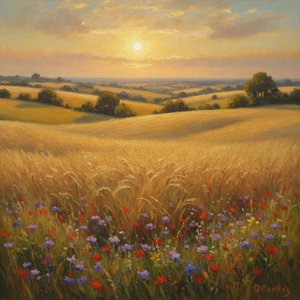
Golden Fields & Sun-Drenched Meadows: Capturing the Soul of Impressionist Landscapes
Immerse yourself in the luminous world of Impressionist landscapes. Discover how masters like Monet and Gauguin captured ephemeral light through plein air painting, and learn to bring the soul of sun-drenched meadows into your home with exquisite, hand-painted oil reproductions.

The Timeless Charm of Oil on Board: Reimagining Texture and Light through the Impressionist Lens
Discover the profound intimacy of oil on panel. Explore how Impressionist masters used rigid supports to capture light, texture, and impasto depth through exquisite, handmade oil reproductions for discerning collectors.

The Beauty of Impermanence: Capturing Decay through Impressionist Eyes
Explore the profound beauty of impermanence through Impressionist and Post-Impressionist eyes. Discover how masters like Monet and Van Gogh captured fleeting light and the poetic essence of nature's transitions in our deep dive into art history and emotional landscapes.