
Paveikslėlyje: · Su rėmu:
 Peržiūrėti realaus dydžio版
 Pasidalinti
 Dalintis
 Išsamiau
 Vadovas

 Atsisiųsti
 Panašūs eksponatai
 Rentgeno spindulių nuotrauka
 Automatinė diorama
 问答
问答 Statistika

€ 240
Rankų darbo aliejinės reprodukcijos
Rankiniu būdu tapytas aliejus ant droblio jūsų pageidaujamame dydį ir rėmuose – tai mūsų menininkų pagal užsakymą sukurtas darbas. ( Perjungti į spausdinamus版作品 Perejti prie skaitmeninių vaizdų)
Dydis
·Standartinis dydis
pagal užsakymą
CM
INCH
Pasirinkite iš mūsų nustatytų dydžių, atitinkančių originalaus meno kūrinio proporcijas.
Kraunami dydžiai...

plotis
aukštis
Įveskite jums reikiamą plotį ir aukštį, kad paveikslas atitiktų jūsų rėmą ar sieną. Kadangi šis darbas yra rankinio darbo, siekiant išgauti kitokios formos dydį, paveikslas gali būti šiek tiek didesnis (nuo kraštų bus palikta daugiau erdvės) arba mažesnis – pasirinkite jums patogiausią variantą. Prieš pradedant tapyti, atsiųsime jums skaitmeninį maketą patvirtinimui. Šioje puslapio nuotraukoje matomas vaizdas nėra galutinis rezultatas – jį parodys tik sukurtas maketas.
 Skaityti daugiau
Baigiamasis etapas
·
Baltas apasutojimas €1

Išblėstantis šonas €1

Išplėstinis €1

P118B €10

P118H €10

P118W €10

P438Z €10

P508JH €12

P508YH €12

P805H €10

P805Z €10

P919BZ €10

P919G €10

P919XJ €10

P959ZH €10

P968JZ €12

W106C €8

W218G €10

W218JH €8

W218Y €10

W307PJ €10

W316G €10

W316PJ €8

W316Y €10

W398PJ €8

W4111J €10

W500HY €15

W500JH €15

W692G €12

W849H €8

W940BG €15

W953PJ €8

H24-GOLD €30

H24-SILVER €30

H36-GOLD €45

H36-SILVER €45
Siunčiama saugiame vamzdelyje, paruošta patys sukomentuoti jūsų rėmeliais.
Virš 105 cm rėmas siunčiamas kaip rinkinys profesionaliam rėmininkui — skaitykite detales.
Papildomos paslaugos
nebūtinaKą apima papildomos paslaugos?
Pavyzdžiai, ką galima pakeisti: pakeisti veidą nuotrauka su klientu; pridėti augintinį (pvz., pakeisti kucingą šuniu); įtraukti paslaptingą žinutę fone; pakeisti fono kraštotvę ar elementus.
Gavus užsakymą, TopImpressionists.com komanda susisieks su klientu el. paštu dėl nurodymų ir pateiks preliminarią maketą.
Gavus užsakymą, TopImpressionists.com komanda susisieks su klientu el. paštu dėl nurodymų ir pateiks preliminarią maketą.
Pristatymas visame pasaulyje () per 3–4 savaites, o ne įprastai – per 5 savaites. (8 lapkritis). Kokybė lieka nepakeičiama.
Apsauginis lakas
Pavadinimo lentelė
Išgraviruotos bronzinės plokštelės detalės
This elegant plaque features the artist's name and the title of the artwork, finely engraved for a timeless presentation.
It is made from bronze with a refined, elegant finish. The text is precisely laser-engraved for a sharp and permanent result. Measuring 9x2 cm, the plaque is compact yet easy to read. It's built to be durable and scratch-resistant, offering a professional, museum-quality look. Mounting is simple thanks to the included adhesive backing.
Skaidrios akrilo plokštelės informacija
The plaque includes essential engraved details such as the artist's name, the title of the artwork, the date it was created, the type of media used-like oil on canvas or watercolor-a brief description of the piece, and a QR code that links to the complete artwork information.
It is crafted from clear acrylic, offering a sleek, modern appearance. The text is UV-engraved in black to ensure strong visual contrast. With a size of 10x15 cm, it ensures optimal readability. It comes equipped with two metal hooks for secure wall mounting. The plaque is designed to be weather-resistant, making it suitable for various environments, and it includes interactive features that work seamlessly with smartphone scanning.
Juodos akrilo plokštelės informacija
This elegant plaque includes engraved information such as the artist's name, the title of the artwork, the date it was created, the type of media used (like oil on canvas or watercolor), a short description of the artwork, and a QR code for quick access to more information.
The plaque itself is made from refined black acrylic with a premium finish. The text is laser-engraved in white for high contrast and readability. Its size is 10x15 cm, designed to be easy to read. It comes with two metal hooks for professional mounting. The design is sleek and fits any interior style. It is also weather-resistant and durable, with built-in digital integration for mobile compatibility.
Stiklo variantas prieinamas tik pasirinkus dydį iki 110 cm
 Stiklo variantas prieinamas tik pasirinkus dydį iki 110 cm
- Nemokamas greitasis pristatymas visame pasaulyje
- Aukštos kokybės lininis drobė
- Pilnas siuntimo draudimas
- Muitinės mokesčių grąžinimo garantija
- Tikro spalvų atitikimo garantija
- 100 dienų grąžinimo politika (tik esant įtaigoms)
- 100% pinigų grąžinimo garantija
- Nuolaida dideliems užsakymams


Kolekcinio objekto aprašas
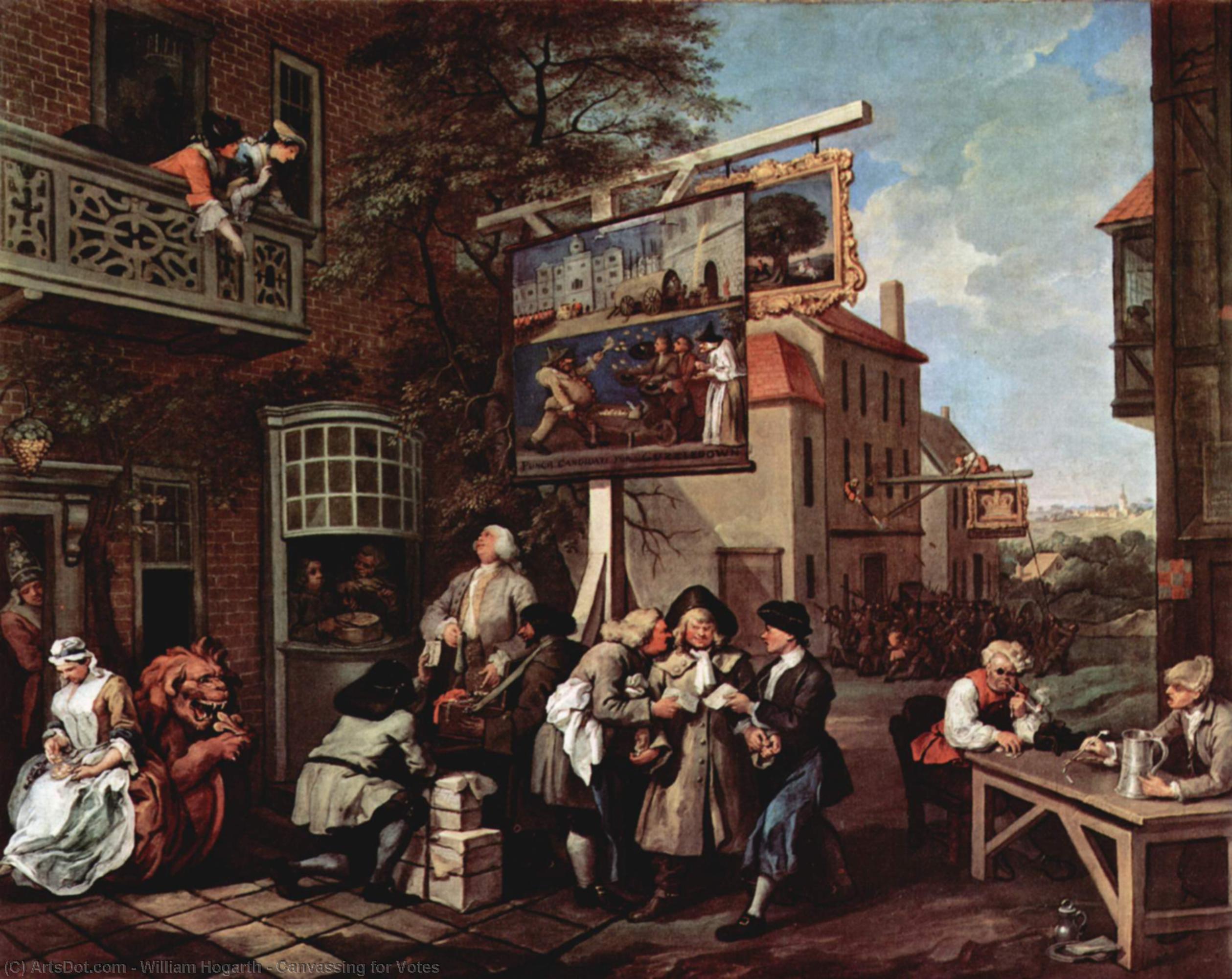
Experience William Hogarth's 'Canvassing for Votes,' a biting satire of 18th-century politics. This iconic print exposes corruption & manipulation, showcasing a pivotal moment in art history. Own a stunning reproduction today!
Autoriaus biografija
Viljamas Hogartas – žymus anglų dailininkas XVIII amžiaus, garsius dėl satirinių graviūrų ir istorinių paveikslų ciklus „A Harlot’s Progress“ bei „A Rake’s Progress“, kurie įvykdė revoluciją britiškoje dailėje. Jo kūriniai išraišką įgauna iš žymios estetikos ir istorinės reikšmės.
Apie paveisdelį
A Window into 18th-Century Politics and Human Nature
William Hogarth’s “Canvassing for Votes” isn't merely a painting; it’s a meticulously crafted social commentary, a vibrant snapshot of corruption and manipulation embedded within the seemingly convivial atmosphere of an 18th-century election. Completed between 1754 and 1755 as part of his renowned “Humours of an Election” series, this work transcends its historical context to offer a timeless reflection on human ambition, moral decay, and the seductive power of political influence. The scene unfolds within a bustling tavern – a microcosm of the wider political landscape – where carefully orchestrated displays of flattery, bribery, and outright deception are laid bare for the viewer’s discerning eye.
Hogarth's genius lies in his ability to blend Rococo style with biting satire. The painting is characterized by its soft, curved lines, delicate colors, and a lighthearted surface that belies the underlying darkness of the subject matter. However, this apparent elegance serves as a deceptive mask, concealing the rampant corruption at the heart of the scene. Notice the subtle details: the Jewish peddler offering trinkets to the Tory candidate, the ladies observing from an upstairs balcony, the riotous mob attempting to dismantle the tax office – each element contributes to Hogarth’s pointed critique of the era's political practices.
The Rococo Facade and Satirical Intent
The painting’s aesthetic is firmly rooted in the Rococo style, a trend popular during Hogarth’s time. This influence manifests in the use of pastel hues, graceful figures, and an overall sense of decorative charm. Yet, Hogarth subverts this seemingly frivolous style to expose the hypocrisy beneath the surface. The elaborate setting – the tavern interior, the well-dressed patrons – creates a veneer of civility, while the actions depicted reveal a system riddled with greed and deceit. The composition itself is carefully constructed to draw attention to these discrepancies, guiding the viewer’s eye through a series of interconnected vignettes that expose the moral failings of the political process.
Crucially, “Canvassing for Votes” isn't simply a depiction of events; it’s an indictment. Hogarth was deeply concerned with social justice and believed art could be used to challenge established power structures. He meticulously documented the realities of his time, exposing the corruption that permeated all levels of society. The painting serves as a potent reminder of the importance of transparency, fairness, and integrity in political processes – values that remain relevant today.
A Legacy of Social Commentary
“Canvassing for Votes” cemented William Hogarth’s reputation as a pioneering social commentator and a master of satirical art. The “Humours of an Election” series was a commercial success, demonstrating the public's appetite for works that held authority accountable. The engravings derived from these paintings were widely distributed, spreading Hogarth’s critique far beyond London’s elite circles. Today, the painting resides in the Sir John Soane’s Museum, a testament to its enduring significance and artistic merit.
Owning a high-quality reproduction of “Canvassing for Votes” offers more than just a beautiful addition to your home or office; it's an opportunity to connect with a pivotal moment in art history and engage with a timeless message about the dangers of unchecked power. TopImpressionists.com’s meticulous reproductions capture every brushstroke, color nuance, and subtle detail of Hogarth’s original masterpiece, ensuring that this iconic work continues to resonate for generations to come.
Klausimai ir atsakymai
Kokia yra „Canvassing for Votes“ – Viljamas Hogartas spalvų gama?
„Canvassing for Votes“ apibūdiną Earthy paletė, kurioje dominuoja Celadon (#adb4ae).
Ar galiu pamatyti „Canvassing for Votes“ – Viljamas Hogartas rentgeno nuotrauką?
„Canvassing for Votes“ – Viljamas Hogartas rentginio vaizdas (X-Ray) galima rasti šio kūrinio Rentgeninis vaizdas puslapio: tai interaktyvus vaizdo tyrimas per vienuolika optinių sluoksnių.
Į kokį laikotarpį buvo sukurta „Canvassing for Votes“ – Viljamas Hogartas?
Istorinis laikotarpis kūriniam „Canvassing for Votes“ – Viljamas Hogartas yra Early Medieval. Ši klasifikacija priskiria šį kūrinį konkrečiam meno istorijos etapui.
Trumpos faktinės datos ir meno viktorina
Apie Viljamas Hogartas

Viljamas Hogartas
1697 - 1764, Didžioji Britanija
Autoriaus biografija
William Hogarth (1697–1764)
William Hogarth, born into the bustling heart of 18th-century London in 1697, was more than just an artist; he was a visual historian, a keen observer of human nature, and a satirical commentator on the societal currents of his age. His life story is inextricably linked to the very fabric of England during a period of significant transformation – its burgeoning ambitions, underlying anxieties, and pervasive hypocrisies all finding potent expression in his remarkably detailed and often biting works. The son of a struggling Latin schoolmaster, Hogarth’s early experiences instilled within him both a love for learning and a sharp awareness of social inequalities, a foundation that would prove crucial to shaping his artistic vision. Initially apprenticed to an engraver, he quickly demonstrated a talent extending beyond mere technical skill; he possessed an innate ability to observe the nuances of human behavior and translate them into compelling visual narratives. However, he chafed against the constraints of traditional engraving, seeking a more expressive outlet for his burgeoning creativity. This led him to studies at both St Martin’s Lane Academy and under Sir James Thornhill, where he honed his skills in painting and composition, absorbing influences that would later inform his unique style.Early Life and Influences
Young Hogarth's upbringing was marked by hardship. His father, Richard Hogarth, a teacher of Latin, faced considerable difficulties securing employment and endured imprisonment for debt between 1708 and 1712 – an experience that profoundly shaped William’s worldview and fueled his gritty portrayal of London life. He developed a fascination with sketching people he encountered on the streets, mirroring the artistic sensibilities of artists like Pieter de Hooch and Rembrandt van Rijn. Hogarth's formative years instilled in him a deep appreciation for social justice and a critical eye for examining societal hypocrisy—values that would permeate his oeuvre throughout his career. Recognizing the transformative potential of observation, Hogarth embraced painting as a medium for conveying complex ideas and emotions, drawing inspiration from the monumental canvases of Sir James Thornhill, whose daughter he married in 1729. This union solidified his connection to the artistic establishment and provided him with invaluable guidance during his artistic development. He was particularly captivated by Thornhill’s masterful technique—a synthesis of realism and grandeur—which served as a cornerstone for Hogarth's own stylistic innovations.The Birth of Modern Moral Subjects
Hogarth’s true genius lay not simply *what* he painted, but *how*. He pioneered what he termed “modern moral subjects”—series of pictures designed to tell a story, often imbued with a strong satirical edge. These weren't isolated portraits or landscapes; they were visual novels unfolding before the viewer’s eyes, offering pointed commentary on contemporary society. A Harlot’s Progress, created in 1742, stands as perhaps his most iconic achievement—a meticulously crafted chronicle of Mary Burton’s descent into prostitution and its devastating consequences. Each scene is rendered with painstaking detail, populated by archetypal figures that embody the moral failings prevalent within London's social strata. The series exemplifies Hogarth’s commitment to confronting uncomfortable truths about human behavior and societal corruption—a stance reflected in his unflinching depictions of poverty, vice, and despair. Similarly, A Rake’s Progress, begun in 1733, chronicles the ruinous trajectory of Tom Rakewell—a wealthy gentleman consumed by gambling addiction and hedonistic indulgence. Like *A Harlot's Progress*, this series transcends mere narrative storytelling; it serves as a potent indictment of aristocratic excess and moral decay.Technique and Artistic Style
Hogarth’s artistic style was characterized by a masterful fusion of diverse influences—primarily Dutch genre painting and French satirical prints. He skillfully blended realism with dramatic flair, capturing the psychological complexities of his subjects with remarkable sensitivity. His technique revolved around a distinctive cross-hatching method—a meticulous layering of lines that created depth and texture—yielding results that rivaled those of Rembrandt van Rijn. This painstaking approach demanded considerable patience and precision, reflecting Hogarth’s unwavering dedication to achieving artistic excellence. Beyond visual artistry, he drew inspiration from literary works, notably Jonathan Swift's satirical prose, which honed his ability to convey moral judgments through narrative form. He believed that art should serve as a catalyst for social reform—challenging viewers to confront ethical dilemmas and fostering empathy for marginalized communities. Hogarth’s unwavering conviction in this principle underpinned his artistic endeavors and cemented his legacy as one of England's foremost satirists and visual innovators.Legacy and Enduring Influence
William Hogarth died in 1764, leaving behind a profound impact on British art history—a legacy that continues to inspire artists and scholars alike. He is universally recognized as the progenitor of political cartooning and comic strip illustration—establishing a precedent for conveying social critique through visual storytelling. Artists such as James Gillray and George Cruikshank embraced Hogarth’s stylistic precepts, perpetuating his tradition of biting satire and unwavering moral conviction. As Charles Lamb eloquently articulated, “Hogarth's images are like books to be read rather than merely looked at,” encapsulating the enduring significance of his work—a testament to its ability to provoke thought, stimulate debate, and illuminate the human condition. Hogarth’s paintings remain treasured masterpieces—celebrated for their artistic brilliance and their unflinching portrayal of Victorian society. He demonstrated that art could simultaneously entertain and enlighten—challenging audiences to grapple with ethical dilemmas and fostering a critical awareness of social injustices. His enduring influence testifies to his unwavering commitment to artistic integrity and his profound understanding of the human psyche.Trumpa informacija apie Viljamas Hogartas
- Artistic Movement Or Style: Satire, Realizmas
- Artists Who Influenced This Artist:
- Pieter de Hooch
- Jonathan Swift
- Date Of Birth: 1697
- Full Name: William Hogarth
- Nationality: Anglų
- Notable Artworks:
- A Harlot's Progress
- A Rake's Progress
- Place Of Birth: Londone
Tyrinėkite meno kūrinius, suskirstytus pagal temas, stilius ir savybes.


Viljamas Hogartas
Canvassing for Votes
() ·
Su rėmu: · Rankiniu būdu tapyta aliejumi ant lineno
Viso suma