


 Peržiūrėti realaus dydžio版
 Siųsti
 Dalintis
 Išsamiau
 Vadovas

 Atsisiųsti
 Panašūs eksponatai
 Rentgeno spindulių nuotrauka
 Diaporama
 Statistika
The Green Car


Experience William Glackens' 'The Green Car,' a stunning Ashcan School masterpiece depicting a bustling winter trolley scene in New York City. Explore its vibrant colors and detailed realism at TopImpressionists.
 Rodyti daugiau
William James Glackens (1870-1938) – amerikiečių realistinės tapybos pradininkas, žinomas dėl ryškių miesto gyvenimo scenų Niujorke ir Paryžiuje. „Ashcan School“ atstovas, įamžinęs kasdienio gyvenimo grožį.
Giclée / Meno spausdinimas
Muziejų lygio „giclée“ arba drobos spausdinimas: greita gamyba ir lankstios apdailos parinktys. ( Pirkti rankomis tapytą reprodukciją Perejti prie skaitmeninių vaizdų)




P118B €10

P118H €10

P118W €10

P438Z €10

P508JH €12

P508YH €12

P805H €10

P805Z €10

P919BZ €10

P919G €10

P919XJ €10

P959ZH €10

P968JZ €12

W106C €8

W218G €10

W218JH €8

W218Y €10

W307PJ €10

W316G €10

W316PJ €8

W316Y €10

W398PJ €8

W4111J €10

W500HY €15

W500JH €15

W692G €12

W849H €8

W940BG €15

W953PJ €8




Standartinis
individualaus dydžio
CM
INCH
Pasirinkite iš mūsų nustatytų dydžių, atitinkančių originalaus meno kūrinio proporcijas.
Loading sizes...

plotis
aukštis
Įveskite jums reikiamą plotį ir aukštį, kad atvaizdas derėtų prie jūsų rėmo ar sienos. Spausdiną galima tik sumažinti, bet nepadidinti virš originalaus paveikslėlio dydžio, todėl keičiant proporcijas, dalis vaizdo prarandama. Prieš spausdinimą atsiųsime jums skaitmeninį maketą patvirtinimui. Šioje puslapio nuotraukoje matomas pjūvis nėra tikslus – jį rodo tik maketas.
Pristatymas visame pasaulyje () per 2 weeks, o ne įprastas 4/5 savaičių laikotarpis. (26 spalis)

Nemokamas greitasis pristatymas visame pasaulyje

Aukštos kokybės lininis drobė

Pilnas siuntimo draudimas

Muitinės mokesčių grąžinimo garantija

Tikro spalvų atitikimo garantija

100 dienų grąžinimo politika (tik esant įtaigoms)

100% pinigų grąžinimo garantija

Nuolaida dideliems užsakymams
 Stiklo variantas prieinamas tik pasirinkus dydį iki 110 cm

The Green Car
Giclée / Meno spausdinimas
Reprodukcijos dydis
-


Visų pasirinktų variantų kaina
€ 61
The Green Car: A Snapshot of Urban Life in Early Twentieth Century New York
William James Glackens’ “The Green Car,” painted in 1910, isn't merely a depiction of a winter scene; it’s a crystallized moment of American modernity. Currently residing at the Metropolitan Museum of Art, this oil on canvas captures the bustling energy and gritty realism championed by the Ashcan School—a movement that deliberately rejected the idealized beauty favored by the National Academy of Design.
Artist & Style: Glackens’ approach aligns closely with Frederick Childe Hassam's own winter landscapes, demonstrating a shared fascination for portraying everyday life against a backdrop of atmospheric conditions. However, unlike Hassam’s softer brushstrokes and romanticized vistas, Glackens employs a darker palette—primarily muted greens and yellows—to convey the chill of the season and imbue his subject matter with palpable emotion.
Composition & Technique: The painting's composition is deceptively simple. A prominent green trolley car dominates the center frame, transporting passengers amidst a throng of pedestrians traversing Washington Square Park. Glackens’ masterful technique utilizes thick impasto—a textured surface created by applying paint thickly—to build up volume and capture the subtle nuances of light and shadow. This method lends an immediacy to the scene, inviting viewers into the wintry tableau.
- Key Elements: Notice the careful placement of figures – some huddled under umbrellas, others strolling leisurely – reflecting the social dynamics of the era.
- Background Details: The inclusion of a bus and a truck reinforces the sense of urban activity, grounding the scene in the tangible realities of New York City life.
Historical Context & Symbolism: Painted during the burgeoning industrial age, “The Green Car” speaks to anxieties about urbanization and social change. The trolley car itself symbolizes progress—albeit a somewhat uncomfortable one—while the snow-covered landscape serves as a visual metaphor for hardship and resilience. Glackens’ intention wasn't to celebrate beauty but to confront viewers with an honest portrayal of human experience.
Emotional Impact: Ultimately, “The Green Car” succeeds in transporting us back to 1910. The painting evokes feelings of solitude amidst the crowd, capturing a fleeting glimpse into the lives of ordinary people navigating the complexities of modern life. It’s a testament to Glackens' ability to distill emotion and atmosphere onto canvas—a skill that continues to resonate with audiences today.
For more information on William James Glackens and his artistic vision, visit TopImpressionists.com. Explore similar works by Gustave Klimt – “Portrait of Serena Lederer” – to appreciate the distinctive stylistic explorations of Art Nouveau.
问答 (or more naturally for a website heading): Klausimai ir atsakymai
Kur šiandien galima pamatyti kūrinį „The Green Car“, autorius – Viljamas Džeimsas Glakensas?
Originalų kūrinį „The Green Car“ galite pamatyti Metropolitano muziejus, New York, United States of America muziejuje.
Kokią nuotaiką „The Green Car“, autorius – Viljamas Džeimsas Glakensas suteikia interjerui?
Kūrinys „The Green Car“, autorius – Viljamas Džeimsas Glakensas pasižymi Serene atmosfera ir yra rekomenduojamas Living Room. Nuotaika – tai tai, ką šis darbas suteikia aplinkinei erdvėje.
Ar „The Green Car“, autorius – Viljamas Džeimsas Glakensas naudoja ryškius kontrastus ar švelnias harmonijas?
„The Green Car“ kūryboje Statement kontrastas susilieja su Softly Mixed Palette harmonija.
Susiję kūriniai


Autoriaus biografija
Ashcan School vadovas
William James Glackens, iškilusios amerikiečių meno figūra, paliko nevisulpykimą istorijos kanavų su savo pagabangiais realizmo įvaizdžiais. Gimęs Filadelfijoje, Pensilvānija, 1870 m., Glackenso kūrybos kelionė buvo patikrinimas jo nepakankamo aidas užfiksuoti kasdienio gyvenimo esmę.Rašytinis gyvenimas ir įtakos
Glackenso ankstyvas gyvenimas buvo pažymėtas natūraliu įsiklausimu į meną, kuris veda jį į Pensilvānijos akademijoje išsmeninti meną. Pagal Thomaso Anshutzo, garsaus realizmo dirbtėjo, vadovavimą, Glackens toplė savo įgūdžius, galiausiai tapęs vienu iš Ashcan School įkūrėjų. Šis judėjimas atmetė konvencinius meno grožio ribas, o vietoje dėmesio akcentą padėjo metropolitaninio gyvenimo grubiems realiumi.Meno karjera
Glackenso kūriniai išsiskiria savo tamsių tonių, vifkiai įvaizdintomis gatvų scenomis ir kasdienio gyvenimo pavaizduotimi pre-Pirmasis pasaulinis karštas Niujorkiu ir Paryžiuje. Jo vėlesni kūriniai, pagaugę įtaką iš Renoirio, parodė šviesesnę tonį, atspindė jo augimą kaip menininkas. Ypač vertinga paminėti, kad Glackens taip pat dirbo kaip iliustratorius naujienlaiškių ir žurnalų redakcijose Filadelfijoje ir Niujorkiu.- Vaizdas iš Haarlem su balčiavimo plotu, Jakobą Isaakszoonu van Ruysdaelu (Ruysdael), pavyzdžiu rodo detalių lygį ir dirbtvę, kuri apibrėžia Glackenso darbą. Šis kūrinys dabar yra Chrysler muziejuje dalis.
- Glackenso pačiam gyvenimo kūrinys, Pirkėjai, yra patikrinimas jo gebėjimą užfiksuoti miesto gyvenimo esmę. Šis paveikslas galima rasti Naujo realizmo kolekcijoje TopImpressionists.com.
Palikta medžiaga ir įtakos
Glackenso įnašos amerikiečių menui yra daugialapės, išplėsdamos apribojimus jo pačiam darbui. Jis žymiai padėjo Albertui C. Barnesui įsigyti europietinius paveikslius Barnes fondacijoje Filadelfijoje. Ši kolekcija tapo amerikiečių meno istorijos akmenine pagrindazone. Pagrindiniai kūriniai ir kolekcijos: * Pirkėjai (naujas realizmas, aliejų įvaizdžiai kanavuose, Chrysler muzieju) * Vaizdas iš Haarlem su balčiavimo plotu (Ruysdael, Sforza pilis, Milano, Italija) Rekomenduojama literatūra: * [https://TopImpressionists.com/@/william-james-glackens](https://TopImpressionists.com/@/william-james-glackens) - išsaugokite glackenso kūrinio išsamų rinkinį TopImpressionists.com. * [https://en.wikipedia.org/wiki/william_glackens](https://en.wikipedia.org/wiki/william_glackens) - įmanykite detalią Williamo Jameso Glackenso biografiją „Wikipedia“.
Viljamas Džeimsas Glakensas
1870 - 1938 , Jungtinės Amerikos Valstijos
Trumpa informacija apie kūrėją
- Gimimo Data: Filadelfija, JAV (1870)
- Gimimo Vieta: Filadelfija, Jungtinės Amerikos Valstijos
- Meninis Stilius: Aškanų mokykla
- Mirties Data: Vestportas, Konektikutas (1938)
- Pilietybė: Amerikietis
- Pilnas Vardas: William James Glackens
- Turėję Įtakos Menininkai: ['Thomas Anshutz']
- Įtakoti Menininkai: ['Pierre Auguste Renoir']
- Žymiausi Darbai:
- The Shoppers
- View of Haarlem
Susiję straipsniai
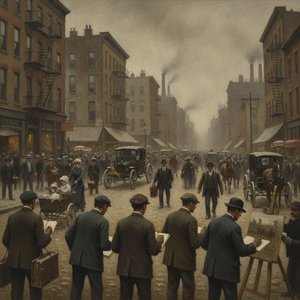
The Ashcan School: Capturing the Raw, Unfiltered Soul of Urban Life through American Realism
Discover the raw beauty of the Ashcan School. Explore how masters like Bellows and Henri captured the gritty, vibrant soul of early 20th-century New York through profound American Realism and evocative urban landscapes.

The Unvarnished Truth: A Cultural Journey Through the Soul of American Realism
Explore the profound beauty of American Realism. From the Ashcan School's urban grit to intimate portraits, discover how artists captured the authentic soul of a nation through unvarnished truth and masterful observation.
Tyrinėkite meno kūrinius, suskirstytus pagal temas, stilius ir savybes.
