
Paveikslėlyje: · Su rėmu:
 Peržiūrėti realaus dydžio版
 Pasidalinti
 Dalintis
 Išsamiau
 Vadovas

 Atsisiųsti
 Panašūs eksponatai
 Rentgeno spindulių nuotrauka
 Automatinė diorama
 问答
问答 Statistika
- 72.0 x 72.0 cm


€ 240
Rankų darbo aliejinės reprodukcijos
Rankiniu būdu tapytas aliejus ant droblio jūsų pageidaujamame dydį ir rėmuose – tai mūsų menininkų pagal užsakymą sukurtas darbas. ( Perjungti į spausdinamus版作品 Perejti prie skaitmeninių vaizdų)
Dydis
·Standartinis dydis
pagal užsakymą
CM
INCH
Pasirinkite iš mūsų nustatytų dydžių, atitinkančių originalaus meno kūrinio proporcijas.
Kraunami dydžiai...

plotis
aukštis
Įveskite jums reikiamą plotį ir aukštį, kad paveikslas atitiktų jūsų rėmą ar sieną. Kadangi šis darbas yra rankinio darbo, siekiant išgauti kitokios formos dydį, paveikslas gali būti šiek tiek didesnis (nuo kraštų bus palikta daugiau erdvės) arba mažesnis – pasirinkite jums patogiausią variantą. Prieš pradedant tapyti, atsiųsime jums skaitmeninį maketą patvirtinimui. Šioje puslapio nuotraukoje matomas vaizdas nėra galutinis rezultatas – jį parodys tik sukurtas maketas.
 Skaityti daugiau
Baigiamasis etapas
·
Baltas apasutojimas €1

Išblėstantis šonas €1

Išplėstinis €1

P118B €10

P118H €10

P118W €10

P438Z €10

P508JH €12

P508YH €12

P805H €10

P805Z €10

P919BZ €10

P919G €10

P919XJ €10

P959ZH €10

P968JZ €12

W106C €8

W218G €10

W218JH €8

W218Y €10

W307PJ €10

W316G €10

W316PJ €8

W316Y €10

W398PJ €8

W4111J €10

W500HY €15

W500JH €15

W692G €12

W849H €8

W940BG €15

W953PJ €8

H24-GOLD €30

H24-SILVER €30

H36-GOLD €45

H36-SILVER €45
Siunčiama saugiame vamzdelyje, paruošta patys sukomentuoti jūsų rėmeliais.
Virš 105 cm rėmas siunčiamas kaip rinkinys profesionaliam rėmininkui — skaitykite detales.
Papildomos paslaugos
nebūtinaKą apima papildomos paslaugos?
Pavyzdžiai, ką galima pakeisti: pakeisti veidą nuotrauka su klientu; pridėti augintinį (pvz., pakeisti kucingą šuniu); įtraukti paslaptingą žinutę fone; pakeisti fono kraštotvę ar elementus.
Gavus užsakymą, TopImpressionists.com komanda susisieks su klientu el. paštu dėl nurodymų ir pateiks preliminarią maketą.
Gavus užsakymą, TopImpressionists.com komanda susisieks su klientu el. paštu dėl nurodymų ir pateiks preliminarią maketą.
Pristatymas visame pasaulyje () per 3–4 savaites, o ne įprastai – per 5 savaites. (6 lapkritis). Kokybė lieka nepakeičiama.
Apsauginis lakas
Pavadinimo lentelė
Išgraviruotos bronzinės plokštelės detalės
This elegant plaque features the artist's name and the title of the artwork, finely engraved for a timeless presentation.
It is made from bronze with a refined, elegant finish. The text is precisely laser-engraved for a sharp and permanent result. Measuring 9x2 cm, the plaque is compact yet easy to read. It's built to be durable and scratch-resistant, offering a professional, museum-quality look. Mounting is simple thanks to the included adhesive backing.
Skaidrios akrilo plokštelės informacija
The plaque includes essential engraved details such as the artist's name, the title of the artwork, the date it was created, the type of media used-like oil on canvas or watercolor-a brief description of the piece, and a QR code that links to the complete artwork information.
It is crafted from clear acrylic, offering a sleek, modern appearance. The text is UV-engraved in black to ensure strong visual contrast. With a size of 10x15 cm, it ensures optimal readability. It comes equipped with two metal hooks for secure wall mounting. The plaque is designed to be weather-resistant, making it suitable for various environments, and it includes interactive features that work seamlessly with smartphone scanning.
Juodos akrilo plokštelės informacija
This elegant plaque includes engraved information such as the artist's name, the title of the artwork, the date it was created, the type of media used (like oil on canvas or watercolor), a short description of the artwork, and a QR code for quick access to more information.
The plaque itself is made from refined black acrylic with a premium finish. The text is laser-engraved in white for high contrast and readability. Its size is 10x15 cm, designed to be easy to read. It comes with two metal hooks for professional mounting. The design is sleek and fits any interior style. It is also weather-resistant and durable, with built-in digital integration for mobile compatibility.
Stiklo variantas prieinamas tik pasirinkus dydį iki 110 cm
 Stiklo variantas prieinamas tik pasirinkus dydį iki 110 cm
- Nemokamas greitasis pristatymas visame pasaulyje
- Aukštos kokybės lininis drobė
- Pilnas siuntimo draudimas
- Muitinės mokesčių grąžinimo garantija
- Tikro spalvų atitikimo garantija
- 100 dienų grąžinimo politika (tik esant įtaigoms)
- 100% pinigų grąžinimo garantija
- Nuolaida dideliems užsakymams


Kolekcinio objekto aprašas
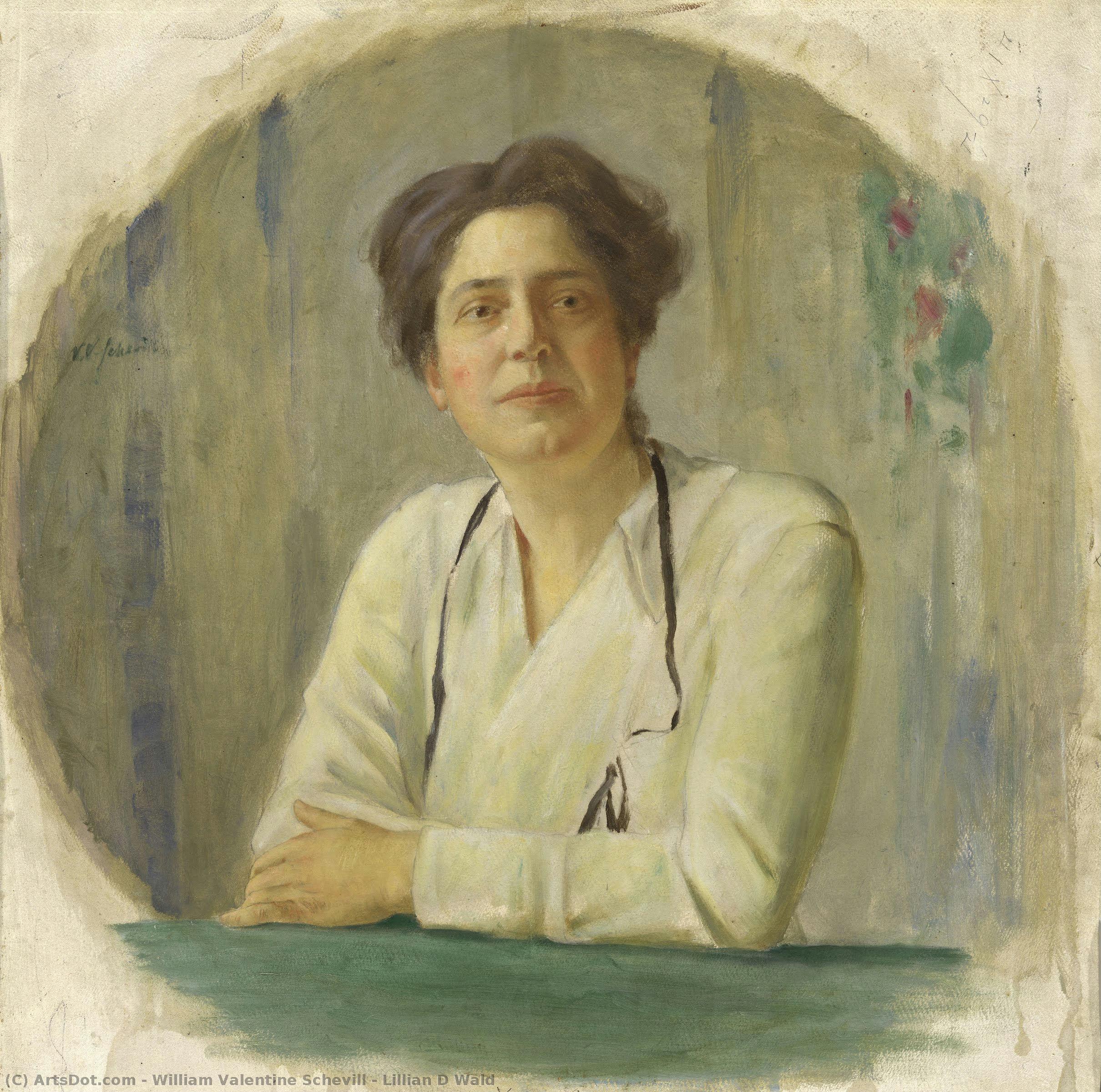
A captivating portrait of Lillian D. Wald by William Valentine Schevill, capturing the compassionate spirit of a pioneering nurse in 1919. A beautiful blend of Impressionism and realism.
Autoriaus biografija
Explore the art of William Valentine Schevill (1864-1951), an American artist influenced by German & US avant-garde styles. Known for portraits, landscapes, and historical subjects like George Washington. Discover his legacy at TopImpressionists.
Apie paveisdelį
A Portrait of Compassion: Lillian D. Wald by William Valentine Schevill
William Valentine Schevill’s 1919 portrait of Lillian D. Wald is more than just a likeness; it's a poignant embodiment of social reform and the burgeoning spirit of American progressivism. The painting, rendered in a style that deftly balances German Impressionistic influence with the emerging realism of the early 20th century, captures not merely Wald’s physical appearance but also her unwavering dedication to improving public health and advocating for the underserved.
Wald herself was a transformative figure. Born into privilege within a prominent German-Jewish family in Cincinnati, Ohio, she defied societal expectations to become one of America's first registered nurses and a pioneer in public health nursing. Her work with immigrant communities in New York City during the late 19th and early 20th centuries exposed her to appalling conditions – rampant disease, overcrowding, and systemic neglect – fueling her commitment to social justice. Schevill’s portrait serves as a visual testament to this dedication; Wald's direct gaze conveys both strength and empathy, suggesting an individual deeply invested in the well-being of others.
The Language of Light and Shadow
Schevill’s technique is characterized by a masterful manipulation of light and shadow, hallmarks of his training under Frank Duveneck and further refined during his time studying at the Academy of Fine Arts Munich. The painting utilizes a muted palette—primarily greens, browns, and creams—to create a sense of quiet dignity and understated power. Notice how Schevill employs broken brushstrokes to capture the texture of Wald’s dress and the subtle nuances of her face. The diffused light, reminiscent of Impressionism, softens the features while simultaneously highlighting the intelligence and resolve in her eyes. The background is deliberately simple, allowing Wald's presence to dominate the composition and drawing the viewer’s attention directly to her compassionate expression.
Symbolic Elements and Historical Context
Beyond its technical brilliance, the painting is rich with symbolic elements reflecting the era. The stethoscope, prominently displayed around Wald’s neck, immediately identifies her profession and underscores her role as a healer. The potted plants flanking the figure – one on either side – can be interpreted as symbols of growth, care, and the nurturing environment she sought to create for those in need. The clock visible in the upper-middle section subtly references the relentless passage of time and the urgency of her work. Painted in 1919, shortly after World War I, the portrait reflects a nation grappling with profound social changes and striving towards a more equitable future – a future Wald was actively shaping.
A Legacy of Service and Artistic Merit
Lillian D. Wald’s legacy extends far beyond her pioneering nursing work; Schevill's painting immortalizes her spirit, offering a powerful visual reminder of the importance of social responsibility and compassionate action. The artwork is not merely a portrait but a historical document, capturing a pivotal moment in American history and celebrating the life of a woman who dedicated herself to serving humanity. Today, reproductions of this compelling image continue to resonate with audiences, reminding us of the enduring value of empathy, service, and artistic expression.
- Artist: William Valentine Schevill
- Year: 1919
- Size: 72 x 72 cm
- Medium: Oil on Canvas
Further Research: For more information about Lillian D. Wald and William Valentine Schevill, please refer to the links below:
- National Portrait Gallery - Lillian D. Wald
- Google Arts & Culture - Lillian D Wald – William Valentine Schevill
Klausimai ir atsakymai
Kokia „Lillian D Wald“ spalvų intensyvumas?
Kūrinys „Lillian D Wald“ – William Valentine Schevill pasižymi Balanced Soft nasyginimu ir Balanced intensyvumu.
Kokią spalvų harmoniją išpriešia „Lillian D Wald“ – William Valentine Schevill?
„Lillian D Wald“ – William Valentine Schevill pasižymi Unified Palette spalvų harmonija.
Kokio dydžio rekomenduojama spausdinti kūrinį „Lillian D Wald“?
Rekomenduojamas spausdinimo dydis kūriniui „Lillian D Wald“ – William Valentine Schevill yra Medium.
Trumpos faktinės datos ir meno viktorina
Apie William Valentine Schevill

William Valentine Schevill
1864 - 1951, United States of America
Autoriaus biografija
The Soul of the Canvas: The Life and Legacy of William Valentine Schevill
In the grand tapestry of American art history, few threads weave together the disparate textures of European tradition and American spirit as gracefully as William Valentine Schevill. Born in the vibrant cultural cradle of Cincinnati, Ohio, on March 2nd, 1864, Schevill emerged from a lineage of artistic excellence that would eventually bridge the gap between the expressive dynamism of German Impressionism and the grounded, observant nature of American Realism. His journey was not merely one of personal growth, but a profound exploration of light, shadow, and the human condition, shaped by the prestigious academies of two continents.
The foundations of his mastery were laid at the Cincinnati Art Academy, where he studied under the legendary Frank Duveneck. It was here that Schevill first learned to manipulate the tonal qualities of paint to capture the fleeting essence of a moment. Seeking to expand his horizons, he ventured across the Atlantic to the Academy of Fine Arts Munich. Immersed in the rigorous yet expressive atmosphere of German training, he studied under luminaries such as Ludwig Löfftz, Max Lindenschmidt, and Nikolaos Gyzis. This period was transformative; it infused his brushwork with a certain European bravura, allowing him to blend meticulous detail with an atmospheric sensitivity that would become his hallmark.
A Mastery of Form and Emotion
Schevill’s oeuvre serves as a window into the shifting social and psychological landscapes of the late nineteenth and early twentieth centuries. He was a virtuoso of various genres, yet it is in his portraiture where his ability to capture the human psyche truly shines. His work does not merely record a likeness; it seeks to unveil the character beneath the skin. One of his most celebrated achievements, the portrait of Lillian D. Wald, currently held in the National Portrait Gallery in Washington D.C., stands as a testament to this skill. In this piece, he captures the compassionate spirit of the pioneering nurse through subtle tonal variations and a nuanced facial expression that resonates with profound empathy.
Beyond the intimate confines of portraiture, Schevill’s hand was equally adept at capturing the grandeur of the natural world and the weight of history. His landscapes are characterized by an expert command of atmospheric perspective, creating spaces that feel both vast and intimately reachable. Whether depicting the quiet dignity of a domestic scene, such as The Fondey Family, or evoking the monumental presence of historical figures like George Washington, his work maintains a consistent thread of truthfulness. His art was never about mere decoration; it was an act of profound observation.
An Enduring Artistic Presence
Throughout his long and prolific career, which spanned nearly nine decades, Schevill remained a vital participant in the international art dialogue. His presence at the Louisiana Purchase Exposition of 1904 provided him with a global stage, allowing his unique synthesis of styles to reach a diverse audience. As he moved through the artistic hubs of New York City, Boston, and eventually Los Angeles, his membership in prestigious organizations like the Salmagundi Club solidified his standing among the elite of the American art world.
The historical significance of William Valentine Schevill lies in his role as a stylistic conduit. He carried the lessons of the Munich school into the burgeoning American scene, enriching the local tradition with a sophisticated understanding of light and form. Today, his legacy is preserved not only in museum collections but in the very way we perceive the transition from the romanticism of the past to the realism of the modern era. To look upon a Schevill painting is to witness a master at work, forever capturing the ephemeral beauty of life through the enduring medium of oil and canvas.
Trumpa informacija apie William Valentine Schevill
- Full Name: William Valentine Schevill
- Nationality: American
- Date Of Birth: 1864
- Date Of Death: 1951
- Place Of Birth: Cincinnati, United States of America
- Notable Artworks:
- Lillian D Wald
- The Fondey Family
- George Washington
- Artistic Movement Or Style: German & US avant-garde
- Artists Who Influenced This Artist:
- Frank Duveneck
- Ludwig Löfftz
- Max Lindenschmitt
- Nikolaos Gyzis
- Artists Or Movements Influenced By This Artist: ['Louisiana Purchase Exposition']

William Valentine Schevill
Lillian D Wald
() ·
Su rėmu: · Rankiniu būdu tapyta aliejumi ant lineno
Viso suma