


 Peržiūrėti realaus dydžio版
 Pasidalinti
 Dalintis
 Išsamiau
 Vadovas

 Atsisiųsti
 Panašūs eksponatai
 Rentgeno spindulių nuotrauka
 Automatinė diorama
 Q&A
Q&A Statistika
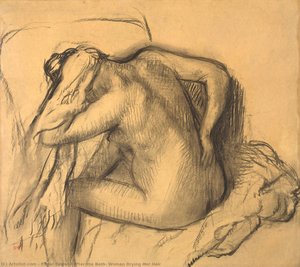
Lucy


Explore Yulia Pinkusevich’s ‘Lucy,’ a haunting charcoal portrait of a contemplative woman. Realistic shading & expressive texture create depth in this intimate, evocative drawing.
Yulia Pinkusevich is a Ukrainian-born American artist creating immersive installations & paintings exploring architecture, space, and perception. Professor at Mills College.
 Skaityti daugiau
Gaukite spausdinimui paruoštą failą, kurio kokybė gerokai viršija internetinę peržiūrą. Kiekvienas mūsų parduodamas skaitmeninis vaizdas yra ištrauktas iš aukštos raiškos pagrindinio failo mūsų duomenų bazėje — paprastai jis siekia nuo 5 000 iki 15 000 pikselių plotio — todėl galite drąsiai spausdinti didelius formatus, apkirpti vaizdą ar suมั่น būti patikinti, kad išsaugosite visas smulkias detales.
Mūsų studijoje nė viena failo kopija nelieka neapdorota. Skaitmeninio vaizdo ekspertas lygiuo su originaliu paveikslu patikrina spalvas ir, jei reikia, jas koreguoja, o tada profesionaliais retušavimo įrankiais padidina aiškumą bei detales — visada išlaikydamas ištikimybę autoriaus teptuko traukoms ir stiliui. Rezultatas – vaizdas, kuris atrodo kaip tikras paveikslas, o ne kaip su filtrais apdorotas skenavimas.
Patvirtinate prieš pabaigą: mūsų ekspertas per 72 valandas atsiųsta vaizdą el. laišku jūsų peržiūrai. Nepasitenkinate? Paprašykite patobulinimų ar pataisymų arba prašykite pinigų grąžinimo, jei kokybė neatitinka jūsų lūkesčių.
Ši kokybė yra patikima leidybos įstaigoms, dizaino studijoms, galerijoms ir spaudos įmonėms.
Skaitmeninis vaizdas
Atsisiųskite didelės raiškos failą asmeniniam naudojimui, spausdinimui ir kūrybiniams projektams. ( Perjungti į spausdinamus版作品 Pirkti rankų darbo tapybą)
Kiekvieną skaitinio vaizdo užsakymą papildė
Profesionalus skaitmeninis vaizdų pristatymas, garantuotas
Pasirinkę TopImpressionists.com, jūs ne tik gaunate paveikslėlį – jūs gaunate profesionaliai patobudintą skaitmeninį kūrinį, sukurtą itin tikniai ir užtikrinantį pasitenkinimą. Štai viską, kas automatiškai pritékia jūsų užsakymui:

Greitas pristatymas el. paštu
Jūsų aukštos raiškos skaitmeninis vaizdo failas bus išsiųstas el. paštu per 72 valandas nuo užsakymo – jis bus paruoštas naudoti be jokių papildomų veiksmų.

Dirbtiniu intelektu tobulintas skaitmeninis failas
Jūsų meno kūrinys profesionaliai optimizuojamas naudojant pažangius dirbtinio intelekto įrankius ir rankinį redagavimą, užtikrinant maksimalią detalę, aiškumą ir spalvų tikslumą.

Nemokamas visam laikui pakartotinis siuntimas
Atsitiktinai ištrytikote ar praradote savo failą? Nebijokite – bet kuriuo metu atsiųsime jį jums vėl nemokamai.

Jokio importo mokesčio – niekada
Mėgaukitės savo meno kūrynu be jokių muitinės mokesčių, įkainų ar pristatymo išlaidų – skaitiniai failai visada yra neapmokestinami.

Spalvų tikslumo garantija
Naudodami profesionalią įrangą ir spalvų valdymo sistemas, užtikriname, kad jūsų skaitmeninis vaizdas kuo tiksliau atspindėtų originalias spalvas.

100 dienų patikimumo garantija
Jei nebuvosite patenkinti įsigyto skaitmeninio vaizdo, mes jį tališkai koreguosime arba grąžinsime 100% sumą per 100 dienų – be jokių klausimų.

100% pinigų grąžinimo garantija
Nesitenkinate? Gaukite visą sumokėtą sumą per 100 dienų nuo skaitmeninio failo gavimo – be jokių papildomų klausimų.

Nuolaidos dideliems užsakymams
Pirkti 3 nuotraukas – 10% nuolaida – Pirkti 5 – 15% nuolaida – Pirkti 10 ir daugiau – 20% nuolaida. Puikiai tinka kūrybiniams projektams, galerijoms bei agentūroms.




Autoriaus biografija
Yulia Pinkusevich: Architect of Perception
Born in Kharkiv, Ukraine, in 1982, Yulia Pinkusevich’s artistic journey is inextricably linked to a profound sense of displacement and a relentless exploration of space – both physical and psychological. Her early life amidst the shifting political landscape of the late Soviet Union instilled within her a unique perspective, one shaped by the tension between rigid structures and the yearning for freedom, a theme that continues to resonate powerfully in her work today. This formative period, marked by the collapse of the USSR and her family’s subsequent immigration to New York City at age eight, fundamentally altered her worldview, fostering an acute awareness of identity, belonging, and the subjective nature of reality – all elements she meticulously translates into her immersive installations and paintings.
Pinkusevich's artistic education solidified this nascent understanding. She pursued degrees in Fine Arts from Rutgers University (2006) and a Master of Fine Arts from Stanford University (2012), environments that provided the technical skills and theoretical frameworks to articulate her complex vision. These academic pursuits weren’t merely about mastering technique; they were a deliberate process of honing her ability to dissect and reconstruct spatial relationships, mirroring the architectural layering she so often depicts in her work. The influence of figures like Joseph Beuys, known for his exploration of ritual and social critique through art, is subtly present in Pinkusevich's engagement with space as a site of meaning and interaction.
Spatial Illusions and Architectural Fragments
Pinkusevich’s artistic practice centers on creating visually arresting environments that challenge the viewer’s perception. She doesn’t simply represent architecture; she constructs it, deconstructing it, and reassembling it into impossible, dreamlike spaces. Her installations are characterized by a deliberate manipulation of perspective, often employing techniques borrowed from Renaissance painting to create illusions of depth and scale. These aren't static representations but dynamic experiences—spaces that seem to breathe, shift, and invite the viewer to become actively involved in their interpretation.
A key element of her work is the fragmentation of architectural forms. Rather than presenting a complete, unified structure, Pinkusevich isolates individual elements – windows, doorways, walls – and reconfigures them into unsettling juxtapositions. This deliberate disruption mirrors the experience of navigating complex urban environments, where familiar landmarks are often obscured by layers of advertising, signage, and the sheer density of human activity. Her pieces frequently evoke a sense of disorientation, prompting viewers to question their own assumptions about space and reality.
Themes of Displacement and Identity
Pinkusevich’s personal history—her Ukrainian heritage and her experience as an immigrant—forms the bedrock of her artistic concerns. The echoes of her childhood in Kharkiv, a city steeped in both Soviet grandeur and post-Soviet uncertainty, are palpable in her work. She grapples with themes of displacement, identity formation, and the lingering effects of historical trauma. Her exploration of Siberian shamanism, rooted in her family’s ancestral homeland, adds another layer to this complex tapestry, connecting her artistic practice to ancient traditions and a deep reverence for the natural world.
This intersection of personal narrative and broader social commentary is evident in her series *Isorithm*, which draws inspiration from declassified military manuals detailing the calculation of nuclear blast zones. By juxtaposing the cold logic of these maps with the chaotic reality of destruction, Pinkusevich forces viewers to confront the devastating consequences of conflict and the fragility of human existence. The work serves as a poignant meditation on vulnerability, resilience, and the enduring power of memory.
Recognition and Current Work
Yulia Pinkusevich’s innovative approach has garnered significant recognition within the contemporary art world. She is currently the Joan Danforth Professor of Painting at Mills College in Oakland, California, a position that allows her to nurture emerging artists while continuing to develop her own practice. Her work has been exhibited extensively both nationally and internationally, including solo shows at Marlborough London, Armory Show New York, and Qualia Contemporary Gallery in Palo Alto. Notable collections include those of the deYoung Museum, Stanford University, Meta HQ, Google HQ, and The City of Albuquerque.
Recent exhibitions showcase her continued exploration of spatial illusion and architectural fragmentation. Her work continues to be informed by her personal history and a deep engagement with contemporary issues—from environmental concerns to the complexities of identity in a globalized world. Currently, she is focused on exploring the intersection of memory, landscape, and the enduring legacy of displacement, continuing to push the boundaries of perception and invite viewers to reconsider their relationship with space and time.

Yulia Pinkusevich
1982 - , Ukraine
Trumpa informacija
- Artistic Movement Or Style: Installation art, Spatial illusion
- Artists Or Movements Influenced By This Artist:
- Architectural art
- Contemporary painting
- Artists Who Influenced This Artist:
- Beuys
- Schnabel
- Gagarin
- Date Of Birth: 1982
- Full Name: Yulia Pinkusevich
- Nationality: Ukrainian-born American
- Notable Artworks:
- Regeneratrix
- Sakha Aesthesis
- Calm Under the Waves
- Place Of Birth: Kharkiv, Ukraine