


 Bekijk op ware grootte
 Verstuur
 Delen
Delen
 Details bekijken
 Gids voor studentenkunstwerken

 Download
 Vergelijkbare items
 Röntgenonderzoek
 Diavoorstelling
 Statistieken
Zelfportret
 Acryl op canvas
- Wanddecoratie
- Renaissance-realisme
 1521
1521 127.0 x 117.0 cm
 Kunsthalle Bremen
Een meesterlijk zelfportret van Albrecht Dürer toont zijn anatomische precisie en humanistische idealen. Grafiet en krijt leggen de contouren van zijn naakte vorm vast, met een gouden ring en een appel als bijbelse allegorie.
 Lees meer
Albrecht Dürer: De grootste Duitse Renaissance kunstenaar! Bekend om zijn meesterlijke gravures, zelfportretten & iconische werken. Ontdek de schoonheid van zijn kunst!
Handgemaakte olieverfreproductie
Met de hand geschilderd in olieverf op canvas in uw gewenste maat en lijst, op bestelling gemaakt door onze kunstenaars. ( Schakel over naar print Schakel over naar digitale afbeeldingen)




P118B €10

P118H €10

P118W €10

P438Z €10

P508JH €12

P508YH €12

P805H €10

P805Z €10

P919BZ €10

P919G €10

P919XJ €10

P959ZH €10

P968JZ €12

W106C €8

W218G €10

W218JH €8

W218Y €10

W307PJ €10

W316G €10

W316PJ €8

W316Y €10

W398PJ €8

W4111J €10

W500HY €15

W500JH €15

W692G €12

W849H €8

W940BG €15

W953PJ €8




Standaardformaat
op maat gemaakt
CM
INCH
Kies uit onze vooraf ingestelde maten die overeenkomen met de originele verhoudingen van het kunstwerk.
Loading sizes...

breedte
hoogte
Voer de breedte en de hoogte in die u nodig heeft, passend bij uw lijst of uw muur. Dit is handgeschilderd, dus bij een afmeting met een andere vormverhouding kan de kunstenaar iets meer rondom het schilderij schilderen of juist iets meer weglaten — u kiest zelf. Wij sturen u een digitaal mockup ter goedkeuring voordat het schilderwerk begint. De afbeelding die op deze pagina wordt getoond, is niet het uiteindelijke resultaat — alleen de mockup geeft dit weer.
Voorbeelden van wat aangepast kan worden: Vervang het gezicht met een eigen foto; Voeg een huisdier toe (bijv. vervang de kat door een hond); Verwerk een verborgen boodschap in de achtergrond; Wijzig het landschap of andere elementen in de achtergrond.
Na de bestelling zal het team van TopImpressionists.com per e-mail contact opnemen met de klant voor instructies en een mockup-voorbeeld sturen.
Na de bestelling zal het team van TopImpressionists.com per e-mail contact opnemen met de klant voor instructies en een mockup-voorbeeld sturen.
Wereldwijde levering () binnen 3 tot 4 weken in plaats van de standaard 5 weken. (21 oktober). Zonder concessies aan de kwaliteit.

Gratis wereldwijde expressverzending

Hoogwaardig linnen canvas

Volledige verzendverzekering

Garantie op terugbetaling van invoerrechten

Garantie op exacte kleurweergave

Retourbeleid van 100 dagen (alleen bij defecten)

100% Geld-terug-garantie

Korting bij meerdere afnames
 De optie voor glas is alleen beschikbaar bij een formaat kleiner dan 110 cm.

Zelfportret
Reproductiemethode
Formaat reproductie
-


Totaalprijs
€ 235
Een venster naar het genie van de Renaissance: Albrecht Dürers zelfportret
Albrecht Dürer, een naam die onuitwisbaar in de annalen van de kunstgeschiedenis is gegrift, staat te boek als wellicht de meest invloedrijke kunstenaar van de Duitse Renaissance. Geboren in Neurenberg in 1471, was zijn leven een getuigenis van onwankelbare toewijding en artistieke innovatie—een reis die culmineerde in de creatie van een van de meest blijvende beelden van introspectie en meesterschap: Zelfportret op 22-jarige leeftijd. Deze tekening, die momenteel deel uitmaakt van de collectie van de Kunsthalle Bremen, overstijgt loutere representatie; het belichaamt de ware geest van de humanistische nieuwsgierigheid en de artistieke ambitie die zo kenmerkend waren voor zijn tijdperk.- Onderwerp & Compositie: Het portret toont Dürer in een opvallend ongeposeerde houding—naakt, met uitzondering van een gouden ring aan zijn vinger—een bewuste keuze die veel zegt over de Renaissance-idealen betreffende menselijke waardigheid en anatomische nauwkeurigheid. Hij houdt iets vast wat door wetenschappers wordt beschouwd als een appel of vrucht, waarmee hij subtiel verwijst naar bijbelse symboliek en zijn bewustzijn van culturele verhalen onderstreept.
- Stijl & Techniek: Dürers benadering sluit perfect aan bij de heersende stijlstromingen van zijn tijd—een vurig omarmen van klassieke principes gecombineerd met een minutieuze observatie van de natuur. De tekening is uitgevoerd met ongekende precisie met behulp van grafiet en krijt, wat een meesterschap in schaduwtechnieken demonstreert die een illusie van driedimensionaliteit creëren. Let op de subtiele kleurnuances die de contouren van Dürers gezicht, haar en torso vastleggen.
- Historische Context: Gecreëerd in 1548, weerspiegelt Zelfportret op 22-jarige leeftijd de intellectuele vurigheid van de Reformatie en de opkomende humanistische beweging. Kunstenaars zoals Dürer streefden ernaar de menselijke ervaring door middel van kunst te verheffen—om individuen met psychologische diepgang en anatomisch realisme af te beelden—een radicale breuk met de middeleeuwse conventies.
- Symboliek & Betekenis: De toevoeging van de appel is bijzonder opmerkelijk, als verwijzing naar de verdrijving van Adam en Eva uit het Paradijs—een aangrijpend herinnering aan de sterfelijkheid en het streven naar spirituele verlichting. Bovendien confronteert Dürers blik de kijker rechtstreeks, waardoor een intieme verbinding tussen kunstenaar en publiek ontstaat—een kenmerk van de Renaissance-portretkunst, bedoeld om zowel fysieke schoonheid als innerlijk karakter over te brengen.
- Erfenis & Reproductie: De reproducties van vandaag vangen de essentie van Dürers genie, waardoor bewonderaars wereldwijd de diepgaande impact van dit baanbrekende kunstwerk kunnen ervaren. TopImpressionists biedt uitzonderlijke prints van hoge kwaliteit aan die de genuanceerde texturen en het tonale bereik van de tekening getrouw reconstrueren—waardoor een stukje Renaissance-geschiedenis uw huis of atelier binnenkomt.
De verkenning van Dürers innovatieve tekenmethode
Dürers techniek was niet louter vaardig; het was revolutionair voor zijn tijd. Hij bestudeerde de menselijke anatomie met uiterste precisie en ontleedde kadavers om een dieper begrip te krijgen van de spierstructuur en de botopbouw—een praktijk die door veel tijdgenoten als onorthodox werd beschouwd. Deze anatomische kennis voedde zijn tekenproces, wat resulteerde in afbeeldingen die opmerkelijk accuraat en expressief zijn. De kunstenaar maakte gebruik van arcering- en kruisarceringstechnieken met een verbazingwekkende subtiliteit, waardoor texturen ontstonden die het uiterlijk van huid en spierweefsel nabootsen. Beschouw hoe deze lijnen niet alleen vorm overbrengen, maar ook licht en schaduw—elementen die cruciaal zijn voor het bereiken van een overtuigende illusie van de werkelijkheid.Een reflectie van het Renaissance-humanisme
De zorgvuldige bewaring door de Kunsthalle Bremen zorgt ervoor dat toekomstige generaties Zelfportret op 22-jarige leeftijd kunnen waarderen naast de meesterwerken van Rafaël, Leonardo da Vinci en Michelangelo. Dit kunstwerk belichaamt de humanistische geest—een geloof in het menselijk potentieel en een fascinatie voor de natuurlijke wereld—waarden die de artistieke prestaties van de Renaissance ondersteunden. Dürers zelfportret dient als een blijvende herinnering aan de transformerende kracht van kunst om zowel de fysieke vorm als de innerlijke ziel te verlichten.Vragen & Antwoorden
Welke plaatsing past bij het formaat van "Zelfportret" door Albrecht Dürer?
Het Vierkant formaat-formaat van "Zelfportret" door Albrecht Dürer wordt aanbevolen voor een Woonkamer. Formaat en ruimte samen bepalen de ideale plaatsing van een reproductie.
Welke afmeting en oriëntatie worden aanbevolen voor een print van "Zelfportret" door Albrecht Dürer?
Voor "Zelfportret" is de aanbevolen afdrukinstelling een formaat van Groot formaat en een Vierkant formaat oriëntatie.
Waar kan ik "Zelfportret" door Albrecht Dürer downloaden?
De afbeelding van "Zelfportret" door Albrecht Dürer kan worden gedownload via de Downloaden pagina van het kunstwerk: een download van een digitale afbeelding in hoge resolutie.
Biografie van de kunstenaar
A Life Forged in Nuremberg: The Early Years and Apprenticeship
Albrecht Dürer, a name synonymous with the German Renaissance, emerged from the bustling artisan city of Nuremberg in 1471. His father, Albrecht Dürer the Elder, was a successful goldsmith who had immigrated from Hungary, bringing with him a lineage steeped in craftsmanship. It was within this environment—the scent of metal and the meticulous precision of handiwork—that young Albrecht’s artistic inclinations first took root. Though his father envisioned a similar path for him, apprenticing him initially in the family trade, it soon became undeniable that Albrecht possessed an exceptional gift for drawing. At thirteen, he transitioned to the workshop of Michael Wolgemut, Nuremberg's leading artist at the time. This was no mere technical training; it was immersion into a world of illuminated manuscripts, painted panels, and—crucially—the burgeoning art of woodcut illustration. The sheer volume of work produced by Wolgemut’s workshop, including the extensive illustrations for the *Nuremberg Chronicle*, provided Dürer with an unparalleled foundation in design, composition, and the mechanics of image-making. A remarkable silverpoint self-portrait from 1484, created when he was barely a teenager, stands as astonishing evidence of his precocious talent—a testament to a burgeoning artistic identity already taking shape.
The Italian Influence and Artistic Maturation
Dürer’s ambition extended far beyond the confines of Nuremberg. Driven by an insatiable curiosity and a desire to master the art of painting, he embarked on his first journey to Italy in 1494. This was not simply a sightseeing trip; it was a pilgrimage to the heart of the Renaissance. He encountered the works of masters like Raphael, Giovanni Bellini, and Leonardo da Vinci—artists who were redefining the possibilities of form, perspective, and human expression. The impact of this exposure was profound. Dürer absorbed the classical motifs, harmonious compositions, and subtle sfumato techniques that characterized Italian art, yet he never abandoned his Northern European sensibility for meticulous detail and symbolic depth. A second sojourn to Italy between 1505 and 1507 further solidified these influences, allowing him to study ancient Roman ruins and refine his understanding of anatomy and proportion. This synthesis of Northern precision and Italian grace became the hallmark of Dürer’s unique artistic style.
Mastering the Mediums: Painting, Engraving, and Woodcut
Dürer was a master of multiple mediums, each offering him distinct avenues for creative expression. His paintings, though fewer in number than his prints, demonstrate a remarkable command of oil paint and an ability to capture both physical likeness and psychological depth. Works like the *Feast of the Rose Garlands* reveal a vibrant palette influenced by Venetian colorism. However, it was in the realm of printmaking—particularly engraving and woodcut—that Dürer truly revolutionized artistic practice. He elevated these techniques from mere reproductive methods to independent art forms, capable of conveying complex narratives and profound emotions. The *Apocalypse* series (1498), a collection of fourteen woodcuts illustrating the Book of Revelation, showcased his mastery of this medium despite its inherent limitations. Later engravings like *Melencolia I* (1514) and *Saint Jerome in His Study* (1514) are testaments to his unparalleled skill—intricate compositions filled with symbolic meaning and executed with breathtaking precision. He didn’t just depict reality; he imbued it with layers of intellectual and spiritual significance.
A Theorist and Innovator: The Legacy of Albrecht Dürer
Dürer was not merely an artist; he was a scholar, a theorist, and an innovator who sought to understand the underlying principles governing artistic creation. He believed in the mathematical foundations of art and dedicated himself to establishing a scientific approach to representation. His treatises on geometry, proportion, and human anatomy—most notably *Four Books of Human Proportion* (1528)—were groundbreaking for their time, demonstrating his commitment to rigorous observation and rational analysis. These writings were not simply academic exercises; they were intended to elevate the status of artists from mere craftsmen to intellectual practitioners. Dürer’s legacy extends far beyond his individual artworks. He bridged the gap between Northern European traditions and Italian Renaissance ideals, introducing classical motifs into Northern art while maintaining its distinctive character. His theoretical contributions helped establish a new framework for artistic practice, inspiring generations of artists with his technical skill, innovative spirit, and profound vision. He remains, to this day, one of the most important figures in the history of Western art.
Influences and Enduring Impact
- Michael Wolgemut: Dürer’s initial mentor, providing foundational skills in drawing, painting, and woodcut techniques.
- Leonardo da Vinci: Inspired Dürer’s exploration of anatomy, perspective, and sfumato—the subtle blending of tones.
- Raphael: Influenced Dürer’s compositional harmony and idealized forms.
- Giovanni Bellini: Contributed to Dürer's understanding of color and Venetian painting traditions.
Dürer’s influence reverberates through centuries of art history. His meticulous realism, his innovative use of printmaking, and his theoretical writings continue to inspire artists and scholars alike. He demonstrated that art could be both technically masterful and intellectually rigorous—a legacy that continues to shape the artistic landscape today. His work stands as a testament to the power of observation, the pursuit of knowledge, and the enduring human desire to create beauty and meaning.

Albrecht Dürer
1471 - 1528 , Duitsland
Snelle feiten
- Artistic Movement Or Style: Renaissance
- Artists Or Movements Influenced By This Artist:
- Wolgemut
- Nuremberg
- Artists Who Influenced This Artist:
- Leonardo da Vinci
- Raphael
- Bellini
- Date Of Birth: 21 mei 1471
- Date Of Death: 6 april 1528
- Full Name: Albrecht Dürer
- Nationality: Duits
- Notable Artworks:
- Apocalypse
- Melencolia I
- St. Jerome
- Place Of Birth: Nuremberg, Duitsland
Gerelateerde artikelen

The Soul of Shadows: Mastering Depth, Texture, and Emotional Resonance in the Art of Graphite
Explore the profound artistry of graphite drawing. Discover how masters use chiaroscuro, texture, and light to evoke deep emotion, bridging classical precision with Impressionist soul. A guide for true art lovers seeking technical mastery and historical depth.
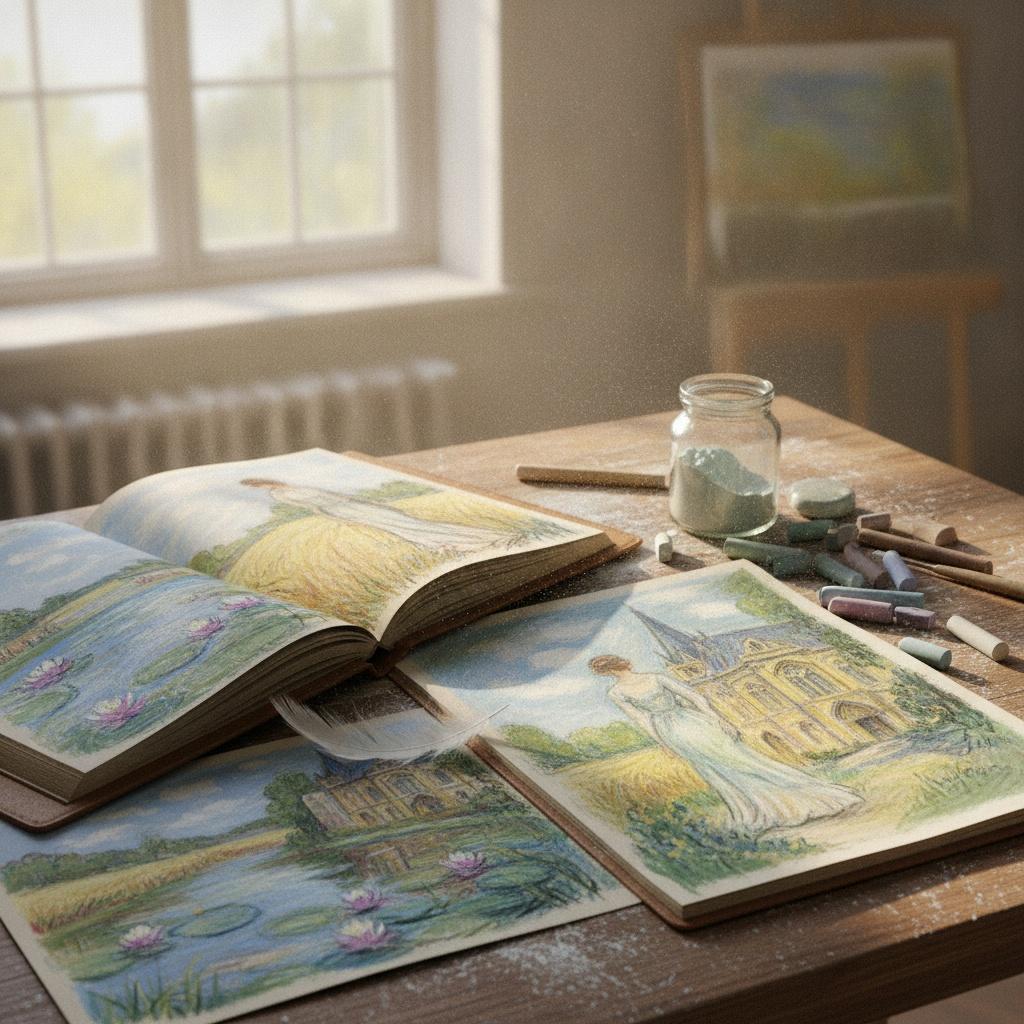
The Soft Magic of Chalk: Capturing Light, Texture, and the Ethereal Soul of Impressionist Masterpieces
Discover the ethereal beauty of pastel and chalk art. Explore how Impressionist masters like Van Gogh and Degas captured light and texture to create timeless, soulful masterpieces for the discerning collector.

The Soul of the Line: Discovering the Timeless Beauty and Emotional Depth of Graphite Art
Explore the profound beauty of graphite art. From the alchemy of carbon to the emotional depth of monochrome landscapes, discover how master artists use the eloquent line to capture light and soul in timeless pencil drawings.
Ontdek kunstwerken georganiseerd op thema, stijl en kenmerk.


