

Getoond: · Inclusief lijst:
 Voorvertoning
 Verstuur
 Delen
Delen
 Details bekijken
 Gids
Gids

 Download
 Vergelijkbare items
 Röntgenonderzoek
 Diavoorstelling
 Vraag & antwoord
 Statistieken
- 158.0 x 106.0 cm


€ 239
Handgemaakte olieverfreproductie
Met de hand geschilderd in olieverf op canvas in uw gewenste maat en lijst, op bestelling gemaakt door onze kunstenaars. ( Schakel over naar print Schakel over naar digitale afbeeldingen)
Formaat
·Standaardformaat
op maat gemaakt
CM
INCH
Kies uit onze vooraf ingestelde maten die overeenkomen met de originele verhoudingen van het kunstwerk.
Afmetingen laden...

breedte
hoogte
Voer de breedte en hoogte in die u nodig heeft, passend bij uw lijst of uw muur. Omdat dit handgeschilderd is, kan de kunstenaar bij een afmeting met een andere beeldverhouding iets meer rondom het schilderij schilderen of juist iets meer weglaten — u kiest zelf. Wij sturen u een digitaal mockup ter goedkeuring voordat het schilderwerk begint. De afbeelding die op deze pagina wordt getoond, is niet het uiteindelijke resultaat — alleen de mockup geeft dit weer.
 Lees meer over
Afronden
·
Wit €1

Vervagende randen €1

Doorlopende rand €1

P118B €10

P118H €10

P118W €10

P438Z €10

P508JH €12

P508YH €12

P805H €10

P805Z €10

P919BZ €10

P919G €10

P919XJ €10

P959ZH €10

P968JZ €12

W106C €8

W218G €10

W218JH €8

W218Y €10

W307PJ €10

W316G €10

W316PJ €8

W316Y €10

W398PJ €8

W4111J €10

W500HY €15

W500JH €15

W692G €12

W849H €8

W940BG €15

W953PJ €8

H24-GOLD €30

H24-SILVER €30

H36-GOLD €45

H36-SILVER €45
Verzonden in een beschermende koker, klaar om door uw eigen frameur te worden ingelijst.
Extra's
optioneelWat zijn de extra's precies?
Voorbeelden van wat aangepast kan worden: Vervang het gezicht door een foto van de klant; Voeg een huisdier toe (bijv. vervang de kat door een hond); Voeg een verborgen boodschap toe aan de achtergrond; Wijzig het landschap of de elementen in de achtergrond.
Na de bestelling zal het team van TopImpressionists.com per e-mail contact opnemen met de klant voor instructies en een mockup-voorbeeld verstrekken
Na de bestelling zal het team van TopImpressionists.com per e-mail contact opnemen met de klant voor instructies en een mockup-voorbeeld verstrekken
Wereldwijde levering () binnen 3 tot 4 weken in plaats van de standaard 5 weken. (4 november). Zonder concessies aan de kwaliteit.
Beschermende vernislaag
Naamplaatje
Details van de gegraveerde bronzen plaat
This elegant plaque features the artist's name and the title of the artwork, finely engraved for a timeless presentation.
It is made from bronze with a refined, elegant finish. The text is precisely laser-engraved for a sharp and permanent result. Measuring 9x2 cm, the plaque is compact yet easy to read. It's built to be durable and scratch-resistant, offering a professional, museum-quality look. Mounting is simple thanks to the included adhesive backing.
Details transparante acrylplaat
The plaque includes essential engraved details such as the artist's name, the title of the artwork, the date it was created, the type of media used-like oil on canvas or watercolor-a brief description of the piece, and a QR code that links to the complete artwork information.
It is crafted from clear acrylic, offering a sleek, modern appearance. The text is UV-engraved in black to ensure strong visual contrast. With a size of 10x15 cm, it ensures optimal readability. It comes equipped with two metal hooks for secure wall mounting. The plaque is designed to be weather-resistant, making it suitable for various environments, and it includes interactive features that work seamlessly with smartphone scanning.
Details zwarte acrylplaat
This elegant plaque includes engraved information such as the artist's name, the title of the artwork, the date it was created, the type of media used (like oil on canvas or watercolor), a short description of the artwork, and a QR code for quick access to more information.
The plaque itself is made from refined black acrylic with a premium finish. The text is laser-engraved in white for high contrast and readability. Its size is 10x15 cm, designed to be easy to read. It comes with two metal hooks for professional mounting. The design is sleek and fits any interior style. It is also weather-resistant and durable, with built-in digital integration for mobile compatibility.
De optie voor glas is alleen beschikbaar bij een formaat kleiner dan 110 cm.
 De optie voor glas is alleen beschikbaar bij een formaat kleiner dan 110 cm.
- Gratis wereldwijde expressverzending
- Hoogwaardig linnen canvas
- Volledige verzendverzekering
- Garantie op terugbetaling van invoerrechten
- Garantie op exacte kleurweergave
- Retourbeleid van 100 dagen (alleen bij defecten)
- 100% Geld-terug-garantie
- Korting bij meerdere afnames


Beschrijving verzamelobject
Contemplative portrait of Christ by Andrei Rublev (c. 1410), showcasing masterful Russian iconography; discover this timeless piece today.
Biografie kunstenaar
Andrey Rublyov (ca. 1360-1428): Een meester van de Russische icoonmalerij, bekend om mystieke en emotionele werken zoals 'Annunciatie' & 'Heilige Drie-eenheid'. Ontdek spirituele diepgang & Byzantijnse invloeden.
Over het schilderij
A Glimpse into Sacred Contemplation: The Aura of Rublev's Deesis
To stand before an image evocative of Andrei Rublev’s profound spiritual vision is to step across the threshold of time itself. This depiction, echoing the solemnity of a Deesis grouping, centers on a figure whose gaze seems to penetrate the veil between worlds. The subject, bearing the unmistakable gravitas associated with Christ or a deeply contemplative saint, commands attention through sheer emotional resonance. It is not merely a portrait; it is an encounter. The artist has captured that fleeting moment where introspection deepens into profound understanding, allowing the viewer to feel the weight of sacred thought emanating from the canvas.
Mastery in Pigment and Spirit: Technique and Craftsmanship
The technical brilliance evident in this work speaks volumes about Andrei Rublev’s unparalleled skill. Observe the meticulous handling of the paint; every visible brushstroke contributes to a tapestry of light and shadow that gives the figure an almost lifelike dimensionality. The contrast between the luminous quality of the face and the simplicity of the background—that striking yellow wall—is nothing short of masterful. This deliberate use of color serves not merely as decoration, but as a structural element guiding the eye directly to the emotional core: the man’s contemplative expression. For those who appreciate fine art reproduction, understanding this technique is key; it allows us to recreate the depth and subtlety that only painstaking hand-painting can achieve.
The Weight of History: Context in Russian Iconography
Dating back to 1410, this piece situates itself within a pivotal era for Russian art. Andrei Rublev was more than just a painter; he was the spiritual chronicler of his age. His work is deeply embedded in the tradition of Orthodox iconography, yet it possesses a unique psychological depth that elevates it beyond mere religious depiction into universal human experience. The style speaks to a period where Byzantine influences mingled with a burgeoning national artistic voice—a confluence that imbues the piece with both timeless sacredness and palpable human drama. Owning a reproduction allows one to bring this historical dialogue into a modern setting.
Symbolism of the Gaze: Emotional Impact for the Modern Collector
The most captivating element remains the subject’s gaze, directed slightly over the shoulder. This averted yet knowing look invites participation from the viewer. Symbolically, it speaks to themes of divine mystery, eternal watchfulness, and quiet wisdom. For collectors and interior designers alike, this piece offers more than just aesthetic beauty; it offers an atmosphere. It suggests a sanctuary within a room—a focal point that encourages pause, reflection, and a deeper appreciation for the enduring narratives of faith and humanity. The rich tones and profound subject matter ensure that this artwork will not merely hang on a wall, but rather inhabit the space with quiet dignity.
Veelgestelde vragen
Hoe intens zijn de kleuren in "Deesis Range: The Saviour" door Andrej Rubljov?
De kleuren in "Deesis Range: The Saviour" door Andrej Rubljov hebben een Vivid intensiteit.
Toont "Deesis Range: The Saviour" sterke licht-donkercontrasten?
"Deesis Range: The Saviour" door Andrej Rubljov vertoont een Serene contrast tussen de lichte en donkere partijen.
Waarvoor wordt een reproductie van "Deesis Range: The Saviour" door Andrej Rubljov aanbevolen?
Een reproductie van "Deesis Range: The Saviour" door Andrej Rubljov wordt aanbevolen voor Focal. Dit advies is gebaseerd op het onderwerp, de sfeer en de kleuren van het werk.
Snelle feiten en kunstquiz
Over Andrej Rubljov

Andrej Rubljov
1360 - 1428, Rusland
Biografie kunstenaar
Andrei Rublev: De Ziel van de Russische Iconografie
Andrei Rublev (ca. 1360 – ca. 1430) blijft een van de meest raadselachtige en diepgaand invloedrijke figuren in de geschiedenis van de Russische kunst. Meer dan louter een schilder, belichaamt hij een samensmelting van spirituele devotie, artistiek meesterschap en de essentie van het middelevens Russische rijk—een natie die worstelde met haar identiteit te midden van Byzantijnse invloeden en een ontluikend nationaal bewustzijn. Hoewel de details van zijn leven gehuld blijven in mysterie, is zijn nalatenschap als de voornaamste iconograaf van zijn tijd onbetwistbaar; hij vormde niet alleen de visuele taal van de Russisch-Orthodoxe kunst, maar liet ook een blijvende indruk achter op opeenvolgende generaties kunstenaars.
Er is weinig concreet bekend over de vroege jaren van Rublev. Men vermoedt dat hij in Moskou is geboren, hoewel sommige bronnen wijzen op een mogelijke oorsprong in het Trinitaas-Sint-Sergius Lavra-klooster nabij de stad—een plek die zijn artistieke ontwikkeling diepgaand zou hebben beïren. Zijn leertijd onder Theofanes de Griek, een beroemde Byzantijnse icoonschilder die naar Rusland was gemigreerd, bood hem een onschatbare basis in de technieken en stilistische conventies van die tijd. Toch oversteeg Rublev al snel de loutere imitatie; hij doordrenkte deze gevestigde vormen met een uniek Russische gevoeligheid—een tastbaar gevoel van nederigheid, spirituele diepgang en emotionele resonantie die zijn werk onderscheidde van zijn Byzantijnse voorgangers.
- Vroege carrière in het Kremlin: De vroege carrière van Rublev is onlosmakelijk verbonden met het Moskovische Kremlin. In 1405 sloot hij zijn krachten met Theofanes en Prokhor van Gorodets om de Verkondigingskathedraal te decoreren, een cruciaat moment in de Russische iconenschilderkunst. Deze samenwerking bracht Rublev in contact met de hoogste machtscentra en bood hem onschatbare ervaring met werken op monumentale schaal.
- <De Drie-eenheid-icoon: Wellicht zijn meest gevierde werk, de “Drie-eenheid”-icoon (ca. 1420-1428), is een getuigenis van zijn artistiek genie. Dit meesterwerk, tegenwoordig ondergebracht in de Trejakoev-galerie in Moskou, wijkt subtiel af van de traditionele Byzantijnse iconografie. De figuren van Abraham en Sarah ontbreken en zijn vervangen door een intiemere weergave van de Heilige Drie-eenheid—de Vader, de Zoon en de Heilige Geest—een verschuiving die wordt geïnterpreteerd als een reflectie van Rublevs eigen spirituele begrip van goddelijke eenheid.
- <Andronikov-klooster: Na zijn werk in het Kremlin bracht Rublev het laatste deel van zijn carrière door in het Andronikov-klooster nabij Moskou. Hier vervolgde hij zijn werk met iconen en fresco's, waaronder een reeks prachtige muurschilderingen in de Verlossingskathedraal, waarin zijn evoluerende stijl en verdiepende spirituele verkenning zichtbaar werden.
De Versmelting van Byzantijnse en Russische Tradities
Rublevs artistieke visie ontstond niet in isolement; het was diep geworteld in zowel de Byzantijnse tradities als de opkomende Russische gevoeligheden. De invloed van Theofanes is onmiskenbaar—het minutieuze detail, de rijke kleuren en de formele structuur van zijn composities zijn allemaal kenmerken van de Byzantijnse iconenschilderkunst. Rublev slaagde er echter in om deze elementen op meesterlijke wijze te integreren met een uitgesproken Russische esthetiek—een diep gevoel van nederigheid, een nadruk op emotionele expressie en een verbinding met het spirituele leven van de monastieke gemeenschap.
- Byzantijnse Invloed: De invloed van de Byzantijnse iconografie is duidelijk zichtbaar in Rublevs gebruik van hiërarchische compositie, zijn zorgvuldige weergave van draperieën en zijn trouw aan gevestigde iconografische conventies. Zijn werk getuigt van een diep begrip van Byzantijnse artistieke principes, wat de culturele en religieuze uitwisseling tussen Rusland en Byzantium weerspiegelt.
- Russische Spiritualiteit: Tegelijkertijd doordrenkte Rublev zijn kunst met een uniek Russisch spiritueel perspectief. Zijn figuren zijn niet geïdealiseerd of heroïsch; zij bezitten een stille waardigheid en een aura van diepe nederigheid. Deze nadruk op innerlijke spiritualiteit resoneerde sterk met de monastieke ethiek van zijn tijd—een periode die werd gekenmerkt door intense religieuze vurigheid en een verlangen naar goddelijke vereniging.
- Novgorodse Iconografie: De stijl van Rublev vertoont ook sporen van de Novgorodse iconenschilderkunst, die bekend stond om haar expressieve gezichten en emotionele intensiteit. Deze invloed droeg bij aan de psychologische diepgang en de emotionele resonantie die zijn werk zo kenmerkend maken.
Symboliek en Spirituele Diepgang
De iconen van Rublev zijn niet louter prachtige afbeeldingen; ze zijn doordrenkt met lagen symbolische betekenis, wat een diepgaand begrip van de christelijke theologie en spirituele praktijk weerspiegelt. Zijn composities bevatten vaak subtiele gebaren, gezichtsuitdrukkingen en ruimtelijke arrangementen die complexe theologische ideeën overbrengen.
- De Drie-eenheid-icoon: De “Drie-eenheid”-icoon is bijzonder rijk aan symboliek. De drie engelen vertegenwoordigen de Vader, de Zoon en de Heilige Geest, terwijl de centrale figuur—een nederige boer—de behoefte van de mensheid aan goddelijke genade symboliseert. Het ontbreken van Abraham en Sarah in de compositie suggereert een verschuiving weg van traditionele verhalen naar een meer intiem en persoonlijk begrip van de relatie tussen God en de mensheid.
- Andere Iconografische Elementen: Rublev maakte veelvuldig gebruik van symbolische gebaren, zoals handen die in gebed zijn gevouwen of ogen die naar de hemel zijn gericht, om spiritueel verlangen en devotie over te brengen. Zijn gebruik van kleur—met name de rijke blauwtinten en goud—draagt eveneens een symbolisch gewicht dat ideeën van goddelijkheid en transcendentie oproept.
Nalatenschap en Historisch Belang
Ondanks zijn relatief korte leven liet Andrei Rublev een onuitwisbare indruk achter op de Russische kunst en cultuur. Zijn werk beïnvloedde opeenvolgende generaties iconenschilders diepgaand en vormde de ontwikkeling van de Russische iconografie voor eeuwen daarna. Tijdens het Stoglavi Sobor in 1551 werd de stijl van Rublev officieel uitgeroepen tot model voor kerkelijke schilderkunst, waarmee zijn status als nationale artistieke held werd bezegeld.
- Tarkovsky's Film: De film Andrei Rublev van Andrei Tarkovsky uit 1966 speelde een cruciale rol bij het herwaarderen van het leven en werk van de kunstenaar. Hoewel de film slechts losjes gebaseerd is op historische gebeurtenissen, wist hij de spirituele diepgang en het artistieke genie van Rublev te vangen en hem zo aan een breder publiek voor te stellen.
- Blijvende Invloed: Vandaag de dag blijft Andrei Rublev een van de meest geliefde kunstenaars van Rusland—een symbool van spirituele devotie, artistiek meesterschap en de blijvende kracht van het geloof. Zijn iconen blijven ontzag en eerbied inboezemen en bieden een blik in de ziel van het middeleeuwse Rusland en de tijdloze schoonheid van de christelijke iconografie.
Snelle feiten over Andrej Rubljov
- Artistic Movement Or Style: Russische iconenschilderkunst
- Artists Or Movements Influenced By This Artist:
- Byzantijnse iconen
- Russisch-orthodoxe kunst
- Artists Who Influenced This Artist:
- Theofanes de Griek
- Prokhor van Gorodets
- Date Of Birth: ca. 1360
- Date Of Death: ca. 1428
- Full Name: Andrey Rublyov
- Nationality: Russisch
- Notable Artworks:
- Drie-eenheid icoon
- Annunciatie icoon
- Place Of Birth: Moskou, Rusland
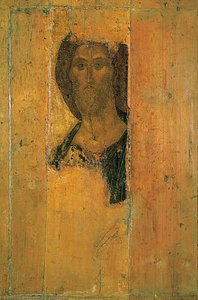
Andrej Rubljov
Deesis Range: The Saviour
() ·
Inclusief lijst: · Met de hand geschilderd in olieverf op linnen
Totaal