


 Bekijk op ware grootte
 Verstuur
 Delen
Delen
 Details bekijken
 Gids voor studentenkunstwerken

 Download
 Vergelijkbare items
 Röntgenonderzoek
 Diavoorstelling
 Statistieken
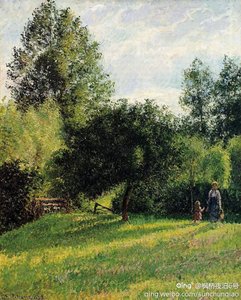
Apple Fallings


Arthur Spooner’s ‘Apple Fallings’ (c. 1890) captures rural life in a stunning realist oil painting. Explore its dappled light, impasto texture & nostalgic theme – a timeless piece!
Discover arthur spooner's art at TopImpressionists! Explore his unique style and themes. Find high-quality prints of arthur spooner's artwork to enhance your collection.
 Lees meer
Koop een digitale afbeelding in hoge resolutie met verbeterde kwaliteit, die veel superieur is aan de online voorvertoning.
Elk bestand wordt met uiterste precisie voorbereid door onze interne specialisten, met behulp van geavanceerde tools en deskundige handmatige retouche. Wij garanderen dat elke afbeelding een uitzonderlijke helderheid, nauwkeurige kleurweergave en verfijnde details bezit.
Het uiteindelijke bestand wordt binnen 72 uur per e-mail geleverd, geoptimaliseerd voor direct gebruik in professionele, redactionele en printomgevingen. Dit is dezelfde kwaliteit waarop vooraanstaande designstudio's, uitgevers en galerieën vertrouwen.
Digitale afbeeldingen
Download een bestand met hoge resolutie voor persoonlijke weergave, afdrukken en creatieve projecten. ( Schakel over naar print Koop handgeschilderd kunstwerk)
Inbegrepen bij elke bestelling van een digitale afbeelding
Professionele digitale levering, gegarandeerd
Wanneer u kiest voor TopImpressionists.com, ontvangt u niet alleen een afbeelding – u krijgt een professioneel verbeterd digitaal kunstwerk, met precisie vervaardigd en voorzien van een tevredenheidsgarantie. Dit is alles wat automatisch bij uw bestelling is inbegrepen:

Directe levering per e-mail
Uw hoogwaardige digitale afbeeldingsbestand wordt binnen 72 uur na bestelling naar u gemaild – klaar voor direct gebruik.

AI-geoptimaliseerd digitaal bestand
Uw kunstwerk wordt professioneel geoptimaliseerd met behulp van geavanceerde AI-tools en handmatige bewerkingen, waardoor maximale details, helderheid en kleurnauwkeurigheid worden gegarandeerd.

Gratis levenslange herlevering
Je bestand per ongeluk verwijderd of kwijtgeraakt? Geen zorgen – we sturen het u op elk gewenst moment gratis opnieuw toe.

Geen invoerkosten – nooit
Geniet direct van uw kunstwerk zonder invoerrechten, belastingen of verzendkosten – digitale downloads zijn altijd belastingvrij.

Garantie op kleurgetrouwheid
Met behulp van professionele hulpmiddelen en kleurbeheer zorgen wij ervoor dat uw digitale afbeelding de originele kleuren zo nauwkeurig mogelijk weergeeft.

100 dagen tevredenheidsgarantie
Als u niet tevreden bent met uw digitale afbeelding, passen wij deze aan of storten wij 100% terug binnen 100 dagen - zonder vragen te stellen.

100% Geld-terug-garantie
Niet tevreden? Ontvang een volledige terugbetaling binnen 100 dagen na ontvangst van uw digitale bestand – zonder vragen te stellen.

Korting bij grote bestellingen
Koop 3 afbeeldingen, bespaar 10% - Koop 5, bespaar 15% - Koop 10+, bespaar 20%. Ideaal voor creatieve projecten, galerieën en bureaus.
Gerelateerde kunstwerken



Biografie van de kunstenaar
The Quiet Legacy of Arthur Spooner
In the annals of British art, certain names resonate with thunderous fame, while others linger like a soft mist over a Nottinghamshire meadow, possessing a quiet, enduring grace. Arthur Spooner (1873–1962) belongs to that latter, more intimate category. A painter whose life was deeply rooted in the English landscape, Spooner’s work serves as a window into the atmospheric beauty of a bygone era. Born in Nottingham, his early years were marked by profound personal hardship; raised in an abusive household, he faced significant adversity from a young age. Yet, even amidst such turbulence, a creative spark flickered, fueled by an innate ability to observe and interpret the world around him. This resilience would later manifest in a body of work characterized by a steadfast dedication to capturing the subtle nuances of light, nature, and movement.
Spooner’s artistic journey was shaped by formal discipline and a wandering spirit. He honed his technical prowess at the Nottingham School of Art, an institution that provided him with the foundational tools of his craft. His training instilled in him a respect for realism, yet he was never a mere copyist of nature. Instead, he sought to infuse his subjects with emotion and atmosphere, drawing inspiration from the burgeoning Impressionist movement. This synthesis of precise detail and emotive light allowed him to transcend simple documentation, turning a landscape into a sensory experience. His travels also played a surprising role in his development; tales of his youth performing jigs for workers at the Empire State Building suggest a man who was as much a part of the world's vibrant pulse as he was a silent observer of its landscapes.
Mastery of Light and Form
The true essence of Spooner’s artistry lies in his ability to manipulate texture and tone to evoke specific moods. He was particularly renowned for his equine subjects and landscapes, genres that demanded both anatomical accuracy and a delicate touch. When painting horses, he did not merely depict muscle and mane; he captured the very breath and kinetic energy of the animal, utilizing subtle tonal variations to suggest movement and vitality. His landscapes were equally evocative, often featuring scenes such as the serene Saints Bay in Guernsey or the nostalgic, dappled light of Apple Fallings. In these works, one can observe a masterful use of impasto and soft, blended brushstrokes that create a palpable sense of depth and atmosphere.
His technical repertoire was diverse, allowing him to navigate between different artistic temperaments:
- Impressionistic Light: A profound ability to render the fleeting qualities of sunlight, particularly during the "golden hours" of dawn or dusk.
- Realist Precision: An exacting eye for detail in the rendering of foliage, rocks, and animal musculature, ensuring a grounded sense of reality.
- Atmospheric Depth: The use of misty, soft-focus techniques to create a sense of distance and contemplative stillness, as seen in works like Misty Autumn.
A Lasting Impression on the Nottinghamshire Scene
While Spooner may not have sought the global spotlight, his contributions to the British art scene were significant and deeply felt within his local community. His appointment as an Associate Member of the Royal Academy (RBA) in 1920 served as a formal recognition of his skill and standing among his peers. As a teacher at the Nottingham School of Art, he also played a vital role in nurturing the next generation of British painters, passing on the traditions of landscape and figurative art that he had so masterfully refined.
His historical significance is perhaps best measured by the enduring presence of his work in public collections and the way it continues to stir the emotions of contemporary viewers. Pieces such as The Goose Fair, Nottingham (1926)—now held in the prestigious Nottingham Castle—stand as cultural landmarks, preserving the spirit of local life and civic pride. Through his canvases, Spooner achieved a rare feat: he captured the ephemeral beauty of the natural world and the dignity of everyday life, leaving behind a legacy that remains as luminous and evocative as a sunlit woodland glade.

arthur spooner
1873 - 1962
Kerngegevens
- Artistic Movement Or Style: Impressionism
- Artists Or Movements Influenced By This Artist: ['Edward Burne-Jones']
- Artists Who Influenced This Artist:
- Claude Monet
- William Morris
- Date Of Birth: 1873
- Date Of Death: 1962
- Full Name: Arthur Eugene Spooner
- Nationality: British
- Notable Artworks:
- Goose Fair
- Welbeck Estate
- Place Of Birth: Nottingham, England