


 Bekijk op ware grootte
 Verstuur
 Delen
Delen
 Details bekijken
 Gids voor studentenkunstwerken

 Download
 Vergelijkbare items
 Röntgenonderzoek
 Diavoorstelling
 Statistieken
not identified

Experience the dramatic intensity of Caravaggio's still life masterpiece, featuring a colossal pumpkin and scattered apples in a rich Baroque style – perfect for art lovers to discover or own.
 Lees meer
Ontdek Caravaggio (1571-1610): Barokmeester van realisme & tenebrisme! Dramatische religieuze taferelen, intense clair-obscur en een revolutionaire stijl.
Giclée / Kunstafdrukken
Giclée- of canvasafdruk van museumkwaliteit met een snelle productie en flexibele afwerkingsmogelijkheden. ( Koop handgeschilderd kunstwerk Schakel over naar digitale afbeeldingen)




P118B €10

P118H €10

P118W €10

P438Z €10

P508JH €12

P508YH €12

P805H €10

P805Z €10

P919BZ €10

P919G €10

P919XJ €10

P959ZH €10

P968JZ €12

W106C €8

W218G €10

W218JH €8

W218Y €10

W307PJ €10

W316G €10

W316PJ €8

W316Y €10

W398PJ €8

W4111J €10

W500HY €15

W500JH €15

W692G €12

W849H €8

W940BG €15

W953PJ €8




Standaardformaat
op maat gemaakt
CM
INCH
Kies uit onze vooraf ingestelde maten die overeenkomen met de originele verhoudingen van het kunstwerk.
Loading sizes...

breedte
hoogte
Voer de breedte en de hoogte in die u nodig heeft, passend bij uw lijst of uw muur. Een afdruk kan alleen worden ingekort, nooit groter worden gemaakt dan het origineel, waardoor een formaat met een andere verhouding een deel van de afbeelding verliest. Wij sturen u een digitaal mockup ter goedkeuring voordat we iets drukken. De afbeelding op deze pagina toont niet de werkelijke uitsnede — dit is alleen te zien op het mockup.
Wereldwijde levering () binnen 2 weken in plaats van de standaard 4/5 weken. (24 oktober)

Gratis wereldwijde expressverzending

Hoogwaardig linnen canvas

Volledige verzendverzekering

Garantie op terugbetaling van invoerrechten

Garantie op exacte kleurweergave

Retourbeleid van 100 dagen (alleen bij defecten)

100% Geld-terug-garantie

Korting bij meerdere afnames
 De optie voor glas is alleen beschikbaar bij een formaat kleiner dan 110 cm.

not identified
Giclée / Kunstafdrukken
Formaat reproductie
-


Totaalprijs
€ 61
A Study in Abundance: A Caravaggio Still Life
This captivating still life, attributed to the masterful hand of Michelangelo Merisi da Caravaggio, presents a scene brimming with both earthly bounty and profound emotional resonance. The composition immediately draws the eye to a monumental pumpkin – a dominant presence that speaks volumes about the harvest’s richness and the transient nature of beauty. Scattered around this central figure are a carefully arranged collection of apples, their crimson skins offering a vibrant counterpoint to the earthy tones of the vegetables and fruit. A solitary human form, subtly placed on the right side of the canvas, introduces an element of narrative, perhaps suggesting contemplation or interaction with this opulent display.
- Subject Matter: The painting’s subject is a classic still life – a meticulously rendered collection of fruits and vegetables. However, Caravaggio elevates this genre through his dramatic use of light and shadow, transforming the mundane into something deeply evocative.
- Style & Technique: This work exemplifies Caravaggio's signature *tenebrism*, a technique characterized by stark contrasts between intensely dark areas and dramatically illuminated subjects. The strong directional light not only reveals the textures and forms of the objects but also serves to heighten their emotional impact, creating a sense of theatrical drama. The artist’s brushwork is loose and expressive, contributing to the painting's raw energy and immediacy.
Historical Context & Caravaggio’s Innovation
Created during the tumultuous period of the Baroque era (roughly 1600-1750), this still life reflects a shift in artistic sensibilities away from the idealized forms of the Renaissance towards a more realistic and emotionally charged approach. Caravaggio, working primarily in Rome, was a revolutionary figure who challenged the established conventions of his time. He rejected the polished surfaces and classical allegories favored by many of his contemporaries, instead choosing to depict everyday subjects – often religious scenes – with unflinching honesty and a deep understanding of human psychology. His use of ordinary people as models, rather than idealized figures, further contributed to this revolutionary spirit.
Born in Milan in 1571, Caravaggio’s early life was marked by tragedy—the deaths of his father and grandfather from the plague. This experience profoundly shaped his artistic vision, fueling a preoccupation with themes of mortality, suffering, and redemption. His time in Rome, though initially challenging, provided him with the freedom to develop his unique style, which would ultimately influence generations of artists.
Symbolism & Emotional Impact
- The Pumpkin: The oversized pumpkin is often interpreted as a symbol of abundance, fertility, and even mortality – a reminder of the cyclical nature of life and death.
- Apples: Apples frequently represent temptation, knowledge, or beauty in Western art. Their placement strategically draws attention to specific areas of the composition.
- The Human Figure: The presence of the human figure adds an element of mystery and invites the viewer to contemplate their role within this scene. It could be interpreted as a representation of humanity’s relationship with nature, or perhaps a meditation on faith and doubt.
Ultimately, this Caravaggio still life transcends its simple subject matter to become a powerful exploration of light, shadow, emotion, and the human condition. Its dramatic intensity and masterful technique continue to captivate viewers centuries later, making it a timeless masterpiece worthy of admiration and preservation.
Vragen & Antwoorden
Voor welke afmeting wordt het afdrukken van "not identified" aanbevolen?
Een reproductie van Large wordt aanbevolen voor "not identified" door Caravaggio. De afmetingen kunnen worden aangepast met behoud van de verhoudingen.
Welke verzadiging en intensiteit vertoont "not identified" door Caravaggio?
De kleuren van "not identified" door Caravaggio vertonen een Muted verzadiging met een Monochromatic intensiteit.
Wat verklaart de auteursrechtelijke status van "not identified" door Caravaggio?
De auteursrechtstatus van "not identified" - bevindt zich in het publiek domein - de auteursrechten zijn verlopen - vloeit voort uit het overlijden van de kunstenaar in 1610.
Biografie van de kunstenaar
Een Leven in Schaduw en Licht
Michelangelo Merisi da Caravaggio, een naam die onlosmakelijk verbonden is met de dramatische intensiteit van de barokschilderkunst, werd in 1571 geboren in Milaan, een periode gekenmerkt door zowel artistieke bloei als maatschappelijke omwentelingen. Zijn vroege leven werd getekend door verlies; de pest teisterde zijn geboortestad en eiste het leven van zijn vader en grootvader toen hij slechts zes jaar oud was. Opgegroeid in relatieve armoede, ontwikkelde de jonge Michelangelo een scherp bewustzijn van menselijk lijden en veerkracht – thema’s die later centraal zouden komen te staan in zijn doeken. Hij begon zijn artistieke opleiding in Milaan onder Simone Peterzano, een voormalig leerling van Titiaan, waar hij de basisprincipes van de Renaissance-techniek absorbeerde, maar al vroeg een rebelse geest toonde die weldra conventionele normen zou doorbreken. Deze leertijd legde een solide basis, maar het was in Rome, rond 1592, dat Caravaggio zijn eigen stem vond, hoewel niet zonder aanvankelijke strijd en ontberingen. De stad, een bruisend centrum van artistieke patronage en religieuze ijver, bleek zowel aantrekkelijk als meedogenloos voor de ambitieuze jonge schilder.Een Revolutionaire Visie: Techniek en Stijl
De komst van Caravaggio in Rome luidde een seismische verschuiving in het landschap van de Italiaanse kunst in. Hij verwierp de heersende maniëristische stijl – gekenmerkt door haar artificiële elegantie en verlengde vormen – ten gunste van een compromisloze realisme dat schokte en boeide. Zijn meest bepalende innovatie was zijn meesterlijke gebruik van chiaroscuro, het dramatische contrast tussen licht en donker, dat hij naar een nieuw niveau van expressieve kracht tilde. Deze techniek, vaak aangeduid als tenebrisme, was niet slechts een esthetische keuze; het was een middel om de emotionele impact te versterken, kijkers in het hart van de scène te trekken en zijn figuren een tastbare aanwezigheid te geven. Hij schuwde geïdealiseerde afbeeldingen en bevolkte zijn schilderijen met gewone mensen – vaak afkomstig uit de straten van Rome – als modellen voor religieuze figuren. Deze radicale aanpak daagde traditionele opvattingen over schoonheid en heiligheid uit, waardoor het sacrale toegankelijk en diep menselijk werd. Zijn composities waren vaak sober en direct, gericht op cruciale momenten van intense dramatiek, zoals de brute realisme in “De Vangst van Christus” of de stille contemplatie in "Sint Franciscus van Assisi in Extase".Belangrijke Werken en Blijvende Invloed
Gedurende zijn relatief korte carrière produceerde Caravaggio een oeuvre dat tot op de dag van vandaag resoneren met het publiek. Vroege werken, zoals “De Waarzegster” (1594), tonen zijn ontluikend talent voor het vastleggen van realistisch detail en psychologische nuance. “Het Emmaüsmalte” (1601-1602), bewaard in de National Gallery in Londen, is een voorbeeld van zijn beheersing van chiaroscuro en vermogen om diepe emotionele diepte over te brengen binnen een bijbelse vertelling. “David met het hoofd van Goliath” (ca. 1610) is bijzonder huiveringwekkend, vaak geïnterpreteerd als een zelfportret dat Caravaggio’s eigen turbulente gemoed weerspiegelt. Zijn invloed reikte verder dan Italië en inspireerde een generatie kunstenaars die bekend staan als de Caravaggisti, of “schaduwschilders”, die zijn stijl overnamen in heel Europa. Opmerkelijke volgelingen waren Peter Paul Rubens, Jusepe de Ribera en Gerrit van Honthorst, die elk Caravaggio’s technieken aanpasten aan hun eigen unieke artistieke visies.Een Tumultueus Bestaan en Blijvende Erfenis
Caravaggio's leven was net zo dramatisch en turbulent als zijn kunst. Een vluchtig temperament en een voorliefde voor ruzies leidden tot frequente problemen met de wet, culminerend in een moordbeschuldiging in 1606 die hem dwong Rome te ontvluchten. Hij bracht de volgende vier jaar rondzwervend door in Napels, Malta en Sicilië, waar hij bleef schilderen terwijl hij wanhopig op zoek was naar een pauselijke gratie. Ondanks zijn inspanningen bleef hij een buitenwetscit, achtervolgd door zijn verleden en geplaagd door persoonlijke conflicten. Hij stierf in Porto Ercole, Italië, in 1610 onder mysterieuze omstandigheden – de oorzaak van zijn dood blijft onderwerp van debat, met theorieën variërend van koorts tot vergiftiging. Hoewel zijn leven kort was, getuigt Caravaggio’s artistieke nalatenschap van zijn revolutionaire visie en onwrikbare toewijding aan het realisme. Hij daagde de conventies van zijn tijd uit, baande de weg voor een modernere benadering van schilderen en liet een onuitwisbare stempel achter op de loop van de westerse kunstgeschiedenis. Zijn werk blijft ontzag inboezemen en tot contemplatie aanzetten, en herinnert ons aan de kracht van kunst om de donkerste hoeken van de menselijke ervaring te verlichten.
Caravaggio
1571 - 1610 , Spanje
Snelle feiten
- Artistic Movement Or Style: Barok, Tenebrism
- Artists Or Movements Influenced By This Artist:
- Rubens
- Ribera
- Artists Who Influenced This Artist:
- Titian
- Leonardo da Vinci
- Date Of Birth: 29 september 1571
- Date Of Death: 18 juli 1610
- Full Name: Michelangelo Merisi da Caravaggio
- Nationality: Italiaans
- Notable Artworks:
- The Fortune Teller
- Supper at Emmaus
- David with Goliath
- Place Of Birth: Milaan, Spanje
Gerelateerde artikelen
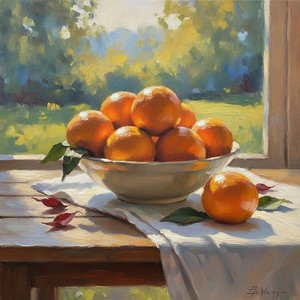
Sun-Drenched Citrus: The Vibrant Beauty of Oranges in Impressionist Masterpieces
Embark on a sensory journey through Impressionist masterpieces. Discover how Renoir and Cézanne captured the vibrant light and luscious textures of sun-drenched oranges in exquisite still life paintings designed to inspire and transform your home.

Drama and Light: Discover the Captivating Grandeur of Baroque Art
Immerse yourself in the dramatic splendor of Baroque art. Explore the profound impact of light, shadow, and the Counter-Reformation through an expert historical lens, celebrating the masters who defined an era of unparalleled grandeur and emotional intensity.
Ontdek kunstwerken georganiseerd op thema, stijl en kenmerk.


