

Getoond: · Inclusief lijst:
 Voorvertoning
 Verstuur
 Delen
Delen
 Details bekijken
 Gids
Gids

 Download
 Vergelijkbare items
 Röntgenonderzoek
 Diavoorstelling
 Vraag & antwoord
 Statistieken
- 237.0 x 189.0 cm


€ 240
Handgemaakte olieverfreproductie
Met de hand geschilderd in olieverf op canvas in uw gewenste maat en lijst, op bestelling gemaakt door onze kunstenaars. ( Schakel over naar print Schakel over naar digitale afbeeldingen)
Formaat
·Standaardformaat
op maat gemaakt
CM
INCH
Kies uit onze vooraf ingestelde maten die overeenkomen met de originele verhoudingen van het kunstwerk.
Afmetingen laden...

breedte
hoogte
Voer de breedte en hoogte in die u nodig heeft, passend bij uw lijst of uw muur. Omdat dit handgeschilderd is, kan de kunstenaar bij een afmeting met een andere beeldverhouding iets meer rondom het schilderij schilderen of juist iets meer weglaten — u kiest zelf. Wij sturen u een digitaal mockup ter goedkeuring voordat het schilderwerk begint. De afbeelding die op deze pagina wordt getoond, is niet het uiteindelijke resultaat — alleen de mockup geeft dit weer.
 Lees meer over
Afronden
·
Wit €1

Vervagende randen €1

Doorlopende rand €1

P118B €10

P118H €10

P118W €10

P438Z €10

P508JH €12

P508YH €12

P805H €10

P805Z €10

P919BZ €10

P919G €10

P919XJ €10

P959ZH €10

P968JZ €12

W106C €8

W218G €10

W218JH €8

W218Y €10

W307PJ €10

W316G €10

W316PJ €8

W316Y €10

W398PJ €8

W4111J €10

W500HY €15

W500JH €15

W692G €12

W849H €8

W940BG €15

W953PJ €8

H24-GOLD €30

H24-SILVER €30

H36-GOLD €45

H36-SILVER €45
Verzonden in een beschermende koker, klaar om door uw eigen frameur te worden ingelijst.
Extra's
optioneelWat zijn de extra's precies?
Voorbeelden van wat aangepast kan worden: Vervang het gezicht door een foto van de klant; Voeg een huisdier toe (bijv. vervang de kat door een hond); Voeg een verborgen boodschap toe aan de achtergrond; Wijzig het landschap of de elementen in de achtergrond.
Na de bestelling zal het team van TopImpressionists.com per e-mail contact opnemen met de klant voor instructies en een mockup-voorbeeld verstrekken
Na de bestelling zal het team van TopImpressionists.com per e-mail contact opnemen met de klant voor instructies en een mockup-voorbeeld verstrekken
Wereldwijde levering () binnen 3 tot 4 weken in plaats van de standaard 5 weken. (6 november). Zonder concessies aan de kwaliteit.
Beschermende vernislaag
Naamplaatje
Details van de gegraveerde bronzen plaat
This elegant plaque features the artist's name and the title of the artwork, finely engraved for a timeless presentation.
It is made from bronze with a refined, elegant finish. The text is precisely laser-engraved for a sharp and permanent result. Measuring 9x2 cm, the plaque is compact yet easy to read. It's built to be durable and scratch-resistant, offering a professional, museum-quality look. Mounting is simple thanks to the included adhesive backing.
Details transparante acrylplaat
The plaque includes essential engraved details such as the artist's name, the title of the artwork, the date it was created, the type of media used-like oil on canvas or watercolor-a brief description of the piece, and a QR code that links to the complete artwork information.
It is crafted from clear acrylic, offering a sleek, modern appearance. The text is UV-engraved in black to ensure strong visual contrast. With a size of 10x15 cm, it ensures optimal readability. It comes equipped with two metal hooks for secure wall mounting. The plaque is designed to be weather-resistant, making it suitable for various environments, and it includes interactive features that work seamlessly with smartphone scanning.
Details zwarte acrylplaat
This elegant plaque includes engraved information such as the artist's name, the title of the artwork, the date it was created, the type of media used (like oil on canvas or watercolor), a short description of the artwork, and a QR code for quick access to more information.
The plaque itself is made from refined black acrylic with a premium finish. The text is laser-engraved in white for high contrast and readability. Its size is 10x15 cm, designed to be easy to read. It comes with two metal hooks for professional mounting. The design is sleek and fits any interior style. It is also weather-resistant and durable, with built-in digital integration for mobile compatibility.
De optie voor glas is alleen beschikbaar bij een formaat kleiner dan 110 cm.
 De optie voor glas is alleen beschikbaar bij een formaat kleiner dan 110 cm.
- Gratis wereldwijde expressverzending
- Hoogwaardig linnen canvas
- Volledige verzendverzekering
- Garantie op terugbetaling van invoerrechten
- Garantie op exacte kleurweergave
- Retourbeleid van 100 dagen (alleen bij defecten)
- 100% Geld-terug-garantie
- Korting bij meerdere afnames


Beschrijving verzamelobject
Michelangelo Merisi da Caravaggio’s "The Conversion of St. Paul" is a Baroque masterpiece! Witness the dramatic moment of divine intervention through intense chiaroscuro and psychological depth. A visceral depiction of faith's transformation.
Biografie kunstenaar
Ontdek Caravaggio (1571-1610): Barokmeester van realisme & tenebrisme! Dramatische religieuze taferelen, intense clair-obscur en een revolutionaire stijl.
Over het schilderij
The Conversion of St. Paul: A Baroque Drama Illuminated
Michelangelo Merisi da Caravaggio’s “The Conversion of St. Paul” stands as an unparalleled achievement in Baroque art—a visceral depiction of divine intervention and spiritual transformation that continues to captivate audiences centuries later. Painted in 1600, this monumental canvas (237 x 189 cm), housed within the Odescalchi Balbi Collection in Rome, transcends mere representation; it’s an immersive experience fueled by Caravaggio's revolutionary use of chiaroscuro and imbued with profound psychological depth.A Moment Frozen in Time
The scene captures the pivotal instant when Saint Paul—formerly Saul of Tarsus, a zealous persecutor of Christians—experienced his dramatic conversion on the road to Damascus. Illuminated by an ethereal divine light emanating from above, Paul collapses to the ground, overwhelmed by spiritual ecstasy. This depiction isn’t simply recounting scripture; it's conveying the overwhelming force of faith and the shattering of preconceived notions. Caravaggio masterfully portrays this transformative moment with unflinching realism—a stark contrast to the idealized depictions prevalent in earlier Renaissance art.The Power of Light and Shadow: Caravaggio’s Technique
Caravaggio’s signature technique, chiaroscuro, dominates the composition. He employs extreme contrasts between light and dark, sculpting figures from darkness while highlighting Paul's body with radiant illumination. This dramatic effect isn’t merely stylistic; it serves to heighten emotional intensity and draw the viewer into the scene. The artist meticulously renders textures—the rough linen of Paul’s robe, the weathered face of Saint Peter—creating a palpable sense of physicality that underscores the profound spiritual significance of the event. Furthermore, Caravaggio utilizes atmospheric perspective, subtly blurring distant figures to emphasize the immediacy of the conversion experience.Symbolism and Narrative Depth
Beyond its technical brilliance, “The Conversion” is rich in symbolic elements. The scattered birds represent chaos and disorientation—mirroring Paul’s shattered worldview before his encounter with God. Saint Peter, positioned on the left, offers a gesture of compassion and reassurance, symbolizing divine grace. The overall arrangement contributes to a dynamic narrative, inviting contemplation on themes of repentance, faith, and redemption. Caravaggio deliberately avoids portraying Paul as a saintly figure; instead, he presents him as a man humbled by suffering—a relatable portrayal that resonates powerfully with viewers across time.Influence Beyond Rome
Caravaggio’s influence extended far beyond the confines of Rome, impacting artists throughout Europe. His innovative approach to lighting and dramatic composition challenged artistic conventions and paved the way for developments in Baroque painting, notably in Venice where Giorgione, Titian, and Tintoretto adopted similar techniques. “The Conversion of St Paul” remains a cornerstone of art history—a testament to Caravaggio’s ability to transform biblical narratives into emotionally resonant visual experiences that continue to inspire artists and collectors alike. Its enduring legacy speaks volumes about the power of art to convey profound spiritual truths.Veelgestelde vragen
Wat is de dominante kleur van "The Conversion of St. Paul" door Caravaggio?
Quinacridone Magenta (#765b54) is de dominante kleur van "The Conversion of St. Paul" door Caravaggio.
Wat stelt "The Conversion of St. Paul" door Caravaggio voor, en welke stemming straalt het uit?
"The Conversion of St. Paul" toont religious narrative, conversion miracle, biblical figure, dramatic lighting, chiaroscuro technique, saint paul, roman baroque art en de vastgelegde stemming is Dramatic.
Welke techniek is gebruikt voor "The Conversion of St. Paul" en wanneer is het gemaakt?
De techniek van "The Conversion of St. Paul" door Caravaggio is Acrylic On Canvas, en het werk dateert uit 1600.
Snelle feiten en kunstquiz
Over Caravaggio

Caravaggio
1571 - 1610, Spanje
Biografie kunstenaar
Een Leven in Schaduw en Licht
Michelangelo Merisi da Caravaggio, een naam die onlosmakelijk verbonden is met de dramatische intensiteit van de barokschilderkunst, werd in 1571 geboren in Milaan, een periode gekenmerkt door zowel artistieke bloei als maatschappelijke omwentelingen. Zijn vroege leven werd getekend door verlies; de pest teisterde zijn geboortestad en eiste het leven van zijn vader en grootvader toen hij slechts zes jaar oud was. Opgegroeid in relatieve armoede, ontwikkelde de jonge Michelangelo een scherp bewustzijn van menselijk lijden en veerkracht – thema’s die later centraal zouden komen te staan in zijn doeken. Hij begon zijn artistieke opleiding in Milaan onder Simone Peterzano, een voormalig leerling van Titiaan, waar hij de basisprincipes van de Renaissance-techniek absorbeerde, maar al vroeg een rebelse geest toonde die weldra conventionele normen zou doorbreken. Deze leertijd legde een solide basis, maar het was in Rome, rond 1592, dat Caravaggio zijn eigen stem vond, hoewel niet zonder aanvankelijke strijd en ontberingen. De stad, een bruisend centrum van artistieke patronage en religieuze ijver, bleek zowel aantrekkelijk als meedogenloos voor de ambitieuze jonge schilder.Een Revolutionaire Visie: Techniek en Stijl
De komst van Caravaggio in Rome luidde een seismische verschuiving in het landschap van de Italiaanse kunst in. Hij verwierp de heersende maniëristische stijl – gekenmerkt door haar artificiële elegantie en verlengde vormen – ten gunste van een compromisloze realisme dat schokte en boeide. Zijn meest bepalende innovatie was zijn meesterlijke gebruik van chiaroscuro, het dramatische contrast tussen licht en donker, dat hij naar een nieuw niveau van expressieve kracht tilde. Deze techniek, vaak aangeduid als tenebrisme, was niet slechts een esthetische keuze; het was een middel om de emotionele impact te versterken, kijkers in het hart van de scène te trekken en zijn figuren een tastbare aanwezigheid te geven. Hij schuwde geïdealiseerde afbeeldingen en bevolkte zijn schilderijen met gewone mensen – vaak afkomstig uit de straten van Rome – als modellen voor religieuze figuren. Deze radicale aanpak daagde traditionele opvattingen over schoonheid en heiligheid uit, waardoor het sacrale toegankelijk en diep menselijk werd. Zijn composities waren vaak sober en direct, gericht op cruciale momenten van intense dramatiek, zoals de brute realisme in “De Vangst van Christus” of de stille contemplatie in "Sint Franciscus van Assisi in Extase".Belangrijke Werken en Blijvende Invloed
Gedurende zijn relatief korte carrière produceerde Caravaggio een oeuvre dat tot op de dag van vandaag resoneren met het publiek. Vroege werken, zoals “De Waarzegster” (1594), tonen zijn ontluikend talent voor het vastleggen van realistisch detail en psychologische nuance. “Het Emmaüsmalte” (1601-1602), bewaard in de National Gallery in Londen, is een voorbeeld van zijn beheersing van chiaroscuro en vermogen om diepe emotionele diepte over te brengen binnen een bijbelse vertelling. “David met het hoofd van Goliath” (ca. 1610) is bijzonder huiveringwekkend, vaak geïnterpreteerd als een zelfportret dat Caravaggio’s eigen turbulente gemoed weerspiegelt. Zijn invloed reikte verder dan Italië en inspireerde een generatie kunstenaars die bekend staan als de Caravaggisti, of “schaduwschilders”, die zijn stijl overnamen in heel Europa. Opmerkelijke volgelingen waren Peter Paul Rubens, Jusepe de Ribera en Gerrit van Honthorst, die elk Caravaggio’s technieken aanpasten aan hun eigen unieke artistieke visies.Een Tumultueus Bestaan en Blijvende Erfenis
Caravaggio's leven was net zo dramatisch en turbulent als zijn kunst. Een vluchtig temperament en een voorliefde voor ruzies leidden tot frequente problemen met de wet, culminerend in een moordbeschuldiging in 1606 die hem dwong Rome te ontvluchten. Hij bracht de volgende vier jaar rondzwervend door in Napels, Malta en Sicilië, waar hij bleef schilderen terwijl hij wanhopig op zoek was naar een pauselijke gratie. Ondanks zijn inspanningen bleef hij een buitenwetscit, achtervolgd door zijn verleden en geplaagd door persoonlijke conflicten. Hij stierf in Porto Ercole, Italië, in 1610 onder mysterieuze omstandigheden – de oorzaak van zijn dood blijft onderwerp van debat, met theorieën variërend van koorts tot vergiftiging. Hoewel zijn leven kort was, getuigt Caravaggio’s artistieke nalatenschap van zijn revolutionaire visie en onwrikbare toewijding aan het realisme. Hij daagde de conventies van zijn tijd uit, baande de weg voor een modernere benadering van schilderen en liet een onuitwisbare stempel achter op de loop van de westerse kunstgeschiedenis. Zijn werk blijft ontzag inboezemen en tot contemplatie aanzetten, en herinnert ons aan de kracht van kunst om de donkerste hoeken van de menselijke ervaring te verlichten.Snelle feiten over Caravaggio
- Artistic Movement Or Style: Barok, Tenebrism
- Artists Or Movements Influenced By This Artist:
- Rubens
- Ribera
- Artists Who Influenced This Artist:
- Titian
- Leonardo da Vinci
- Date Of Birth: 29 september 1571
- Date Of Death: 18 juli 1610
- Full Name: Michelangelo Merisi da Caravaggio
- Nationality: Italiaans
- Notable Artworks:
- The Fortune Teller
- Supper at Emmaus
- David with Goliath
- Place Of Birth: Milaan, Spanje
Ontdek kunstwerken georganiseerd op thema, stijl en kenmerk.


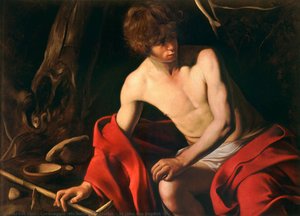


Caravaggio
The Conversion of St. Paul
() ·
Inclusief lijst: · Met de hand geschilderd in olieverf op linnen
Totaal