


 Bekijk op ware grootte
 Verstuur
 Delen
Delen
 Details bekijken
 Gids voor studentenkunstwerken

 Download
 Vergelijkbare items
 Röntgenonderzoek
 Diavoorstelling
 Statistieken
Cefalu
 Olieverf op canvas
- Wanddecoratie
- Romantic Landscape Painting
 1830
1830 63.0 x 79.0 cm
 Wallraf-Richartz-Museum
Magnificent huile tableau Rottmann 'Cefalu' (1830). Romantische landschap tonend Sicilië schoonheid & architecturale detail. Handgepainte reproducties beschikbaar.
 Lees meer
Explore the evocative landscapes of Carl Rottmann – German Romanticism master! Discover his mythical scenes & Bavarian vistas. A key figure in 19th-century art.
Giclée / Kunstafdrukken
Giclée- of canvasafdruk van museumkwaliteit met een snelle productie en flexibele afwerkingsmogelijkheden. ( Koop handgeschilderd kunstwerk Schakel over naar digitale afbeeldingen)




P118B €10

P118H €10

P118W €10

P438Z €10

P508JH €12

P508YH €12

P805H €10

P805Z €10

P919BZ €10

P919G €10

P919XJ €10

P959ZH €10

P968JZ €12

W106C €8

W218G €10

W218JH €8

W218Y €10

W307PJ €10

W316G €10

W316PJ €8

W316Y €10

W398PJ €8

W4111J €10

W500HY €15

W500JH €15

W692G €12

W849H €8

W940BG €15

W953PJ €8




Standaardformaat
op maat gemaakt
CM
INCH
Kies uit onze vooraf ingestelde maten die overeenkomen met de originele verhoudingen van het kunstwerk.
Loading sizes...

breedte
hoogte
Voer de breedte en de hoogte in die u nodig heeft, passend bij uw lijst of uw muur. Een afdruk kan alleen worden ingekort, nooit groter worden gemaakt dan het origineel, waardoor een formaat met een andere verhouding een deel van de afbeelding verliest. Wij sturen u een digitaal mockup ter goedkeuring voordat we iets drukken. De afbeelding op deze pagina toont niet de werkelijke uitsnede — dit is alleen te zien op het mockup.
Wereldwijde levering () binnen 2 weken in plaats van de standaard 4/5 weken. (21 oktober)

Gratis wereldwijde expressverzending

Hoogwaardig linnen canvas

Volledige verzendverzekering

Garantie op terugbetaling van invoerrechten

Garantie op exacte kleurweergave

Retourbeleid van 100 dagen (alleen bij defecten)

100% Geld-terug-garantie

Korting bij meerdere afnames
 De optie voor glas is alleen beschikbaar bij een formaat kleiner dan 110 cm.

Cefalu
Giclée / Kunstafdrukken
Formaat reproductie
-


Totaalprijs
€ 61
Een Adembenemende Siciliëse Landschapskunst: Een Analyse van Rottmanns ‘Cefalu’
De schilderij ‘Cefalu’ van Carl Anton Joseph Rottmann, een werk uit 1830 dat zich huisvest in het Wallraf-Richartz Museum te Köln, Duitsland, is meer dan alleen een prachtige afbeelding van het Siciliaanse kustgebied. Het vertegenwoordigt een hoogtepunt van de Duitse Romantiek en biedt een fascinerende kijk op een tijd waarin kunstenaars streidden naar een diepere emotionele expressie en een ongekende waardering voor de natuur. Rottmann, een briljante maar enigszins controversiële figuur binnen het Duitse kunstenaarschap, wist een stijl te ontwikkelen die zowel dramatisch als serene elementen combineerde – een stijl die perfect aansluit bij de essentie van zijn tijd. Het kunstwerk is uitgevoerd in olie op doek en domineert een groot natuursteenfragment tegen een achtergrond van azuurblauwe zee en groene bergen. Rottmann’s visie was om niet alleen het fysieke landschap vast te leggen, maar ook de emotionele ervaring die het oproept bij de waarnemer. Een bijzonder belangrijk aspect hiervan is het gebruik van licht en schaduw – een techniek die Rottmann meesterlijk beheerstte en waarmee hij een gevoel van diepte en beweging creëerde dat typerend is voor zijn oeuvre. De kunstenaar gebruikte warme kleuren om de architectuur te accentueren, terwijl koele tinten werden toegepast om een gevoel van rust en harmonie te bevorderen. Een gedetailleerde observatie van het natuursteenfragment onthult een complexe compositie waarin verschillende vormen en texturen samensmelten tot een totaalbeeld dat zowel majestueus als intimiteit uitstraalt. Het kunstwerk draagt een rijke symbolische lading bij die verder gaat dan een eenvoudige beschrijving van de omgeving. Het grote natuursteenfragment staat symbool voor stabiliteit en kracht, terwijl de zee voor beweging en verandering staat – thema’s die centraal staan in het Romantiek gedachtegoed. Rottmann gebruikte deze symbolen om een boodschap over te brengen over de schoonheid en grandeur van de natuur, maar ook over de fragiliteit van het menselijke bestaan. Een subtiele verwijzing naar het licht dat het natuursteenfragment binnenvalt kan worden geïnterpreteerd als een symbool voor hoop en verlichting – een thema dat terugkomt in veel werken van Rottmann en andere Romantische kunstenaars. De keuze voor olie op doek als medium was niet alleen een kwestie van technische bekwaamheid, maar ook een strategische beslissing die bijdroeg aan het emotionele impact van het kunstwerk. Olie biedt de mogelijkheid om kleuren intensiever weer te geven en schaduwen subtieler vorm te geven dan andere mediums zoals aquarel of pastel. Rottmann’s aandacht voor detail is evident in de zorgvuldige manier waarop hij het natuursteenfragment en de omgeving heeft gereproduceerd, waardoor een beeld ontstaat dat zowel realistisch als expressief is. Een bezoek aan het Wallraf-Richartz Museum biedt een unieke kans om deze prachtige schilderij persoonlijk te aanschouwen en je onderdompelen in de schoonheid van Romantische kunst. Voor wie geïnspireerd wil worden door Rottmann’s stijl en techniek, biedt TopImpressionists een uitgebreide collectie hoogwaardige reproducties aan – waaronder een prachtige kleurenprint van ‘Cefalu’. Laat je verwonderen over de magie van het oude kunstwerk en breng een stukje Romantiek naar jouw huis! Een bezoek aan https://TopImpressionists.com zal je zeker niet teleurstellen.Vragen & Antwoorden
Welke emotionele toon gaat gepaard met de Romantic Landscape Painting-stijl van "Cefalu"?
"Cefalu" draagt een Melancholisch emotionele toon in zich binnen de Romantic Landscape Painting-stroming."
Hoe past "Cefalu" binnen de thema's en stijl van Carl Anton Joseph Rottmann?
"Cefalu" deelt met andere werken van Carl Anton Joseph Rottmann de Romantic Landscape Painting-stijl en de terugkerende thema's: nature's grandeur inspires, romantic ideals prevail, landscape reflects emotion, rottmann’s signature style, sicilian beauty captured.
Maakt "Cefalu" door Carl Anton Joseph Rottmann gebruik van sterke contrasten of zachte harmonieën?
In "Cefalu" wordt een Verklaring contrast gecombineerd met een Zacht gemengd palet harmonie.
Biografie van de kunstenaar
The Visionary Landscapes of Carl Rottmann
Born in the tranquil setting of Handschuhsheim, Germany, in 1797, Carl Anton Joseph Rottmann emerged as a profound voice within the movement of German Romanticism. His life and artistry were deeply intertwined with the shifting landscapes of 19th-century Europe, reflecting a period where the sublime beauty of nature met the burgeoning spirit of national identity. Unlike many of his contemporaries who focused on the intimate or the domestic, Rottmann possessed an expansive vision, seeking to capture the monumental scale of the world through sweeping vistas and mythic atmospheres. His journey was one of constant movement, traveling through the rugged terrains of Greece, Italy, and the Bavarian Alps, each location leaving an indelible mark on his palette and his perception of the divine within the natural world.
The development of Rottmann’s style was a masterful evolution from classical precision to a more emotive, atmospheric approach. Influenced by the grand traditions of landscape painting, he moved beyond mere topographical accuracy to embrace the sublime—that specific Romantic quality of awe and terror inspired by the vastness of nature. His technique involved a sophisticated understanding of light and shadow, using them not just to define form, and shape, but to evoke a sense of historical weight and mythic presence. In his hands, a mountain range was never just stone and ice; it was a silent witness to antiquity, a stage for the legends of old. This ability to infuse physical geography with spiritual and historical narrative became the hallmark of his mature period.
A Legacy of Light and Myth
Rottmann’s achievements are most notably seen in his ability to bridge the gap between the tangible world and the realm of imagination. His works often serve as windows into a lost era, where the ruins of ancient civilizations seem to breathe under the soft glow of a Mediterranean sun or the misty shroud of a northern forest. Through his meticulous attention to the interplay of light upon textures—the roughness of weathered stone, the translucency of water, and the softness of clouds—he achieved a level of luminosity that captivated the art world of his time.
The historical significance of his oeuvre lies in its role as a cornerstone of Romantic landscape art. His contributions can be summarized through several key artistic pillars:
- The Synthesis of History and Nature: He pioneered a method of painting where the landscape itself acts as a vessel for historical memory, blending archaeological interest with poetic expression.
- Mastery of Atmospheric Perspective: His use of color temperature and clarity to create depth allowed viewers to feel immersed in the vastness of his depicted scenes.
- Cultural Documentation: Through his travels, he provided a visual record of the European landscapes that were central to the Romantic identity, particularly the Greek and Bavarian vistas.
Ultimately, the work of Carl Rottmann remains a testament to the power of the gaze to transform the ordinary into the extraordinary. He did not merely paint what he saw; he painted what he felt in the presence of greatness. His legacy continues to resonate with those who find beauty in the monumental and meaning in the silent, enduring features of our earth, ensuring his place as a vital figure in the tapestry of 19th-century European art.

Carl Anton Joseph Rottmann
1797 - 1850 , Germany
Snelle feiten
- Full Name: Joseph Wright of Derby
- Nationality: English
- Date Of Birth: 1797
- Date Of Death: 1850
- Place Of Birth: Handschuhsheim, Germany
- Notable Artworks:
- An Experiment on a Bird in the Air Pump
- The Slaughtered Horse
- A Man Defending His Cart
- Artistic Movement Or Style: Romanticism, Neoclassicism
- Artists Who Influenced This Artist:
- Janys Zedres
- Rembrandt
- Artists Or Movements Influenced By This Artist:
- Joshua Reynolds
- Romanticism
Gerelateerde artikelen

Capturing the Soul: The Emotional Magic and Sublime Grandeur of Romantic Landscape Painting
Explore the profound emotional depth of Romantic landscape painting. Discover how masters like Friedrich and Turner captured the sublime through light, shadow, and nature's power in this expert art history retrospective for discerning collectors.
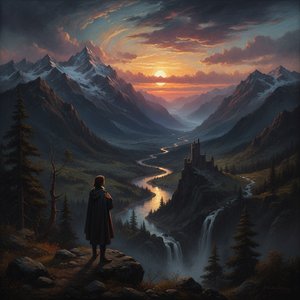
Capturing the Soul: The Emotional Majesty and Sublime Power of Romantic Landscape Painting
Explore the profound emotional depth of Romantic landscape painting. Discover how masters like Turner and Friedrich captured the sublime power of nature through intuition and imagination in this expert art history retrospective.
Ontdek kunstwerken georganiseerd op thema, stijl en kenmerk.


