Atelier — Gratis verzending wereldwijd — Levertijd 2–6 weken
Van foto naar schilderij Verlanglijstje Winkelwagen
Bestel print Bestel printBestel handgeschilderde reproductie Bestel handgeschilderde reproductie VerstuurVerstuur
Details bekijkenDetails bekijken Toevoegen aan favorieten Toevoegen aan favorieten DownloadDownload Vergelijkbare itemsVergelijkbare items DiavoorstellingDiavoorstelling

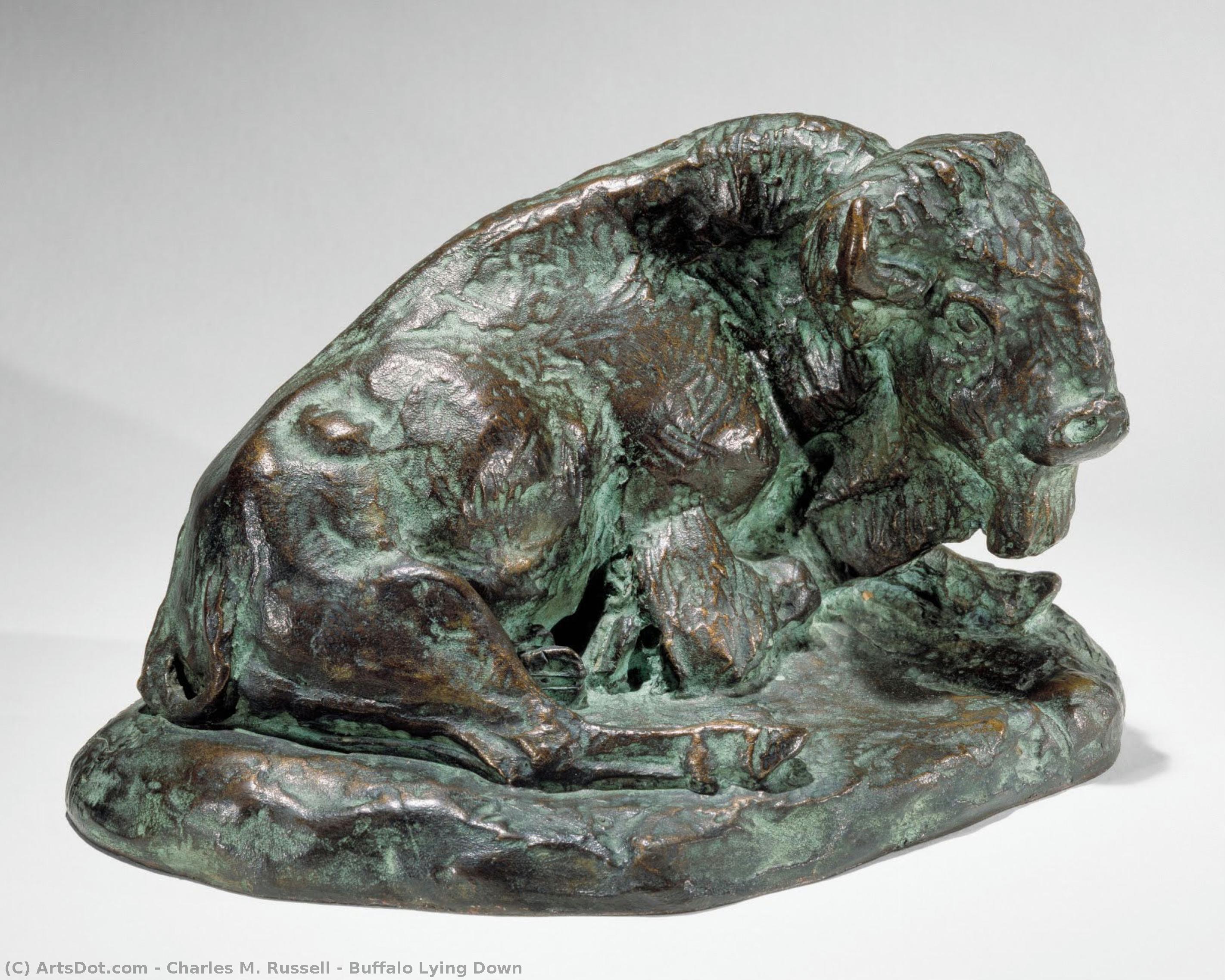
Buffalo Lying Down

Charles Marion Russell's 'Buffalo Lying Down' captures a bronze sculpture of a majestic buffalo, showcasing the artist’s mastery of realism and his deep connection to the American West. Explore its details!

Ontdek de betoverende wereld van Charles Marion Russell, ‘De Cowboy Kunstenaar’, die het Amerikaanse Westen meesterlijk vastlegde met schilderijen & bronzen beelden. Zijn leven, kunst en nalatenschap.

Koop een digitale afbeelding in hoge resolutie met verbeterde kwaliteit, die veel superieur is aan de online voorvertoning.

Elk bestand wordt met uiterste precisie voorbereid door onze interne specialisten, met behulp van geavanceerde tools en deskundige handmatige retouche. Wij garanderen dat elke afbeelding een uitzonderlijke helderheid, nauwkeurige kleurweergave en verfijnde details bezit.

Het uiteindelijke bestand wordt binnen 72 uur per e-mail geleverd, geoptimaliseerd voor direct gebruik in professionele, redactionele en printomgevingen. Dit is dezelfde kwaliteit waarop vooraanstaande designstudio's, uitgevers en galerieën vertrouwen.

Digitale afbeeldingen

Download een bestand met hoge resolutie voor persoonlijke weergave, afdrukken en creatieve projecten. (Bestel print Bestel printBestel handgeschilderde reproductie Bestel handgeschilderde reproductie)

Totaalprijs

$ 24,90

Inbegrepen bij elke bestelling van een digitale afbeelding

Professionele digitale levering, gegarandeerd

Wanneer u kiest voor TopImpressionists.com, ontvangt u niet alleen een afbeelding – u krijgt een professioneel verbeterd digitaal kunstwerk, met precisie vervaardigd en voorzien van een tevredenheidsgarantie. Dit is alles wat automatisch bij uw bestelling is inbegrepen:

shipping_icon
Snelle levering per e-mail

Uw hoogwaardige digitale afbeeldingsbestand wordt binnen 72 uur na bestelling naar u gemaild – klaar voor direct gebruik.

canvas_icon
AI-verbeterd digitaal bestand

Uw kunstwerk wordt professioneel geoptimaliseerd met behulp van geavanceerde AI-tools en handmatige bewerkingen, waardoor maximale details, helderheid en kleurnauwkeurigheid worden gegarandeerd.

insurance_icon
Gratis levenslange herlevering van digitale afbeeldingen

Je bestand per ongeluk verwijderd of kwijtgeraakt? Geen zorgen – we sturen het u op elk gewenst moment gratis opnieuw toe.

tax_icon
Geen invoerkosten – nooit

Geniet direct van uw kunstwerk zonder invoerrechten, belastingen of verzendkosten – digitale downloads zijn altijd belastingvrij.

color_icon
Garantie op kleurgetrouwheid

Met behulp van professionele hulpmiddelen en kleurbeheer zorgen wij ervoor dat uw digitale afbeelding de originele kleuren zo nauwkeurig mogelijk weergeeft.

return_icon
60 dagen tevredenheidsgarantie

Als u niet tevreden bent met uw digitale afbeelding, passen wij deze aan of storten wij 100% terug binnen 60 dagen – zonder vragen gesteld.

guarantee_icon
100% Geld-terug-garantie

Niet tevreden? Ontvang binnen 60 dagen na ontvangst van uw digitale bestand uw volledige aankoopbedrag terug – zonder vragen te stellen.

discount_icon
Korting bij grote bestellingen

Koop 3 afbeeldingen, bespaar 10% - Koop 5, bespaar 15% - Koop 10+, bespaar 20%. Ideaal voor creatieve projecten, galerieën en bureaus.

Snelle feiten

  • Dimensions: 18.7 x 10.8 x 10.5 cm
  • Influences: Western art
  • Subject or theme: Resting buffalo
  • Location: Amon Carter Museum
  • Artistic style: Realistic sculpture
  • Medium: Bronze
  • Artist: Charles M. Russell

Kunstquiz

Er is slechts één goed antwoord op elke vraag.

Vraag 1:
What is the primary subject of Charles Marion Russell’s ‘Buffalo Lying Down’?
Vraag 2:
In what year was ‘Buffalo Lying Down’ created?
Vraag 3:
What material is ‘Buffalo Lying Down’ primarily made from?
Vraag 4:
Charles Marion Russell is best known for his depictions of which era and subject matter?
Vraag 5:
According to the description, what is a key characteristic of the buffalo sculpture’s texture?

Beschrijving verzamelobject

A Moment of Tranquility: The Bronze Sculpture of a Resting Bison

Charles Marion Russell’s “Buffalo Lying Down,” created in 1924, isn’t merely a sculpture; it's a profound distillation of the American West—a landscape etched with hardship, resilience, and an enduring connection to nature. Cast in rich bronze, this piece captures a moment of unexpected serenity: a lone bison, rendered with remarkable anatomical detail and a palpable sense of weariness, rests peacefully on a subtly elevated base reminiscent of the earth itself. The sculpture immediately draws the viewer into its world, inviting contemplation on themes of strength, vulnerability, and the quiet dignity of the wild.

Buffalo Lying Down by Charles M. Russell

The Artist’s Vision: Russell and the Myth of the West

Charles Marion Russell, a pivotal figure in American art history, didn't simply depict the West; he lived it. Born in St. Louis and raised on ranches in Montana, Russell spent his life immersed in the cowboy culture, observing Native Americans, and documenting the vast landscapes of the region. His work evolved from simple sketches to elaborate bronzes, each imbued with a deep understanding of the subject matter—a blend of romanticism and gritty realism. “Buffalo Lying Down” exemplifies this approach: it’s not a heroic depiction of a cowboy or a dramatic scene of conflict, but rather a quiet observation of an animal in repose, reflecting Russell's fascination with the subtle beauty of the natural world.

The sculpture emerged during a period when the American West was undergoing rapid transformation. The bison population had been decimated by overhunting, and Russell’s work served as a poignant reminder of this loss—a celebration of an iconic animal facing extinction. Furthermore, Russell's deep respect for Native American culture is evident in his portrayal of the buffalo; it’s not just a beast of burden but a symbol of life, sustenance, and spiritual significance.

Crafting the Bronze: Technique and Materials

Russell’s process involved a complex combination of traditional sculpting techniques. He began with a clay model, meticulously refining its form until it captured the essence of the bison's anatomy and posture. This model was then used to create a wax cast, which served as the basis for the final bronze sculpture. The lost-wax casting method—a painstaking process involving creating a mold from the wax model and pouring molten bronze into it—resulted in a surface texture that is both smooth and subtly rough, mirroring the natural appearance of aged bronze. The patina – the green or reddish-brown coloration that develops over time due to oxidation – adds depth and character to the sculpture, further enhancing its sense of age and authenticity.

Notably, the piece was cast by Roman Bronze Works in New York City, a renowned foundry known for producing high-quality bronze sculptures. The presence of the foundry’s mark on the base—"R. B. W."—is a testament to the craftsmanship involved in creating this remarkable artwork.

Symbolism and Emotional Resonance

Beyond its technical brilliance, “Buffalo Lying Down” resonates with profound symbolic meaning. The bison's relaxed posture conveys a sense of peace and vulnerability—a moment of respite from the challenges of survival. It’s an image that speaks to the interconnectedness between humans and nature, reminding us of our dependence on the natural world and the importance of respecting its delicate balance. The sculpture’s muted color palette – dominated by earthy browns and greens – evokes a sense of timelessness and reinforces the feeling of quiet contemplation. “Buffalo Lying Down” is more than just a bronze sculpture; it's a powerful meditation on the spirit of the American West, inviting viewers to connect with its history, its beauty, and its enduring legacy.


Kunstenaarsbiografie

A Life Etched in the West

Charles Marion Russell, affectionately known as “C.M.” or “Kid” Russell, was far more than just an artist; he was a product of the American West itself – a living embodiment of its rugged spirit and untamed beauty. Born in St. Louis, Missouri, in 1864, his early life wasn’t steeped in formal artistic training but rather fueled by an almost primal yearning for the vast open spaces and freedom of the frontier. This deep-seated fascination would ultimately lead him west, abandoning a conventional education at sixteen to embrace the challenging life of a working cowboy in Montana's Judith Basin. It was a deliberate act of immersion, a conscious decision to *live* the West he so passionately envisioned – an experience that profoundly shaped his artistic vision and became the very foundation of his enduring legacy. For eleven years, Russell dedicated himself to the demanding existence of a ranch hand, hunter, and cowboy, absorbing the landscape’s rhythms, understanding its people—the cowboys, Native Americans, and trappers whose lives he would later immortalize on canvas and in bronze.

From Wrangler to Chronicler: The Birth of an Artistic Voice

Russell's artistic journey wasn’t a carefully planned progression through art academies; it was instead an organic unfolding born from necessity and keen observation. While working as a cowboy, his initial sketches weren’t intended for galleries or collectors – they were personal records, visual diaries documenting the daily realities of life on the range. These early works—depicting branding cattle, rounding up horses, encounters with wildlife—were characterized by an astonishing naturalism, honed through years spent meticulously observing the subtle nuances of his surroundings. He wasn’t interested in romanticizing or idealizing the West; he sought to capture it as it *was*, warts and all – a commitment that distinguished him from many of his contemporaries. A pivotal moment arrived after illustrating a postcard depicting cattle struggling against a harsh winter—a scene so powerfully rendered that it sparked immediate demand for his work, providing the impetus for him to transition from ranch hand to full-time artist in 1893. This marked the beginning of a prolific career spanning painting, sculpture, and writing, all unified by his unwavering dedication to portraying the authentic spirit of the American West.

Capturing a Vanishing World: Themes and Techniques

Russell’s art is profoundly imbued with narrative – each canvas tells a story, often steeped in the mythology and realities of frontier life. His subjects are remarkably diverse, yet consistently focused on the complex interactions between cowboys, Native Americans, and the vast, untamed landscape. He didn't shy away from depicting conflict, but his portrayals were rarely sensationalized; instead, they conveyed a sense of respect for all involved, acknowledging the intricate dynamics of a rapidly changing world. “A Bad Hoss” (1904), exemplifies this – a dynamic scene capturing the struggle between cowboy and bucking bronco, embodying both the skill and inherent danger of the cowboy lifestyle. Similarly, “Battle of Belly River” (1905) showcases his ability to depict dramatic historical events with precision and emotional depth. His artistic technique evolved over time, moving from a more illustrative style towards looser brushwork and bolder color palettes. He was a master storyteller, skillfully employing composition, light, and shadow to create compelling narratives that resonated deeply with audiences eager to connect with the romance and ruggedness of the West. His later works often featured a heightened sense of drama and emotional intensity, reflecting his growing maturity as an artist and his deepening understanding of the human condition. He understood that the true beauty of the West lay not just in its landscapes but also in the resilience and spirit of those who called it home.

Influences and Evolution: A Western Vision

Russell’s artistic vision wasn't solely rooted in his experiences as a cowboy; he was deeply influenced by the stories, legends, and traditions of the American West. He devoured tales of frontier heroes, Native American folklore, and the vast landscapes that shaped the region’s identity. His early exposure to Native American culture during his time near the Blackfoot, Piegan, and Blood tribes in Alberta, Canada, profoundly impacted his work, leading him to depict their customs, ceremonies, and spiritual beliefs with remarkable sensitivity and respect. He wasn't simply a recorder of events; he was an interpreter—translating the experiences of the West into a visual language that resonated with both Native Americans and settlers alike. His travels to New York City in the early 1900s provided him with exposure to European artistic techniques, particularly Impressionism, which influenced his use of color and brushwork. This fusion of Western experience and artistic influences resulted in a uniquely powerful and evocative style that defined his legacy.

Legacy and Enduring Influence

Charles Marion Russell’s impact on American art is undeniable. He wasn't merely a painter of Western scenes; he *defined* them for generations. His work helped to shape the popular image of the cowboy, the Native American, and the vast landscapes of the West, influencing countless artists who followed in his footsteps. He became known as “the cowboy artist” not just for his subject matter but also for his authentic portrayal of Western life—a portrayal rooted in personal experience rather than romanticized fantasy. Today, his paintings and sculptures are highly sought after by collectors and museums worldwide. The C.M. Russell Museum Complex in Great Falls, Montana, stands as a testament to his enduring legacy, housing an extensive collection of his work and preserving the spirit of the West he so passionately captured. His murals, like “Lewis and Clark Meeting Indians at Ross’ Hole”, continue to inspire awe and admiration, serving as powerful reminders of a pivotal moment in American history. Russell's art transcends mere representation; it is a celebration of courage, resilience, and the enduring power of the human spirit—a legacy that continues to captivate audiences more than a century after his death. Beyond his artistic achievements, Russell’s advocacy for Native Americans – particularly his support for the establishment of the Rocky Boy Reservation – underscores his commitment to social justice and cultural preservation, adding another layer to his complex and compelling story.

Charles Marion Russell (C.M. Russell)

Charles Marion Russell (C.M. Russell)

1864 - 1926 , Verenigde Staten van Amerika

Belangrijkste feiten

  • Artistic Movement Or Style: West-kunst
  • Artists Or Movements Influenced By This Artist: ['West-kunst']
  • Date Of Birth: 19 maart 1864
  • Date Of Death: 24 oktober 1926
  • Full Name: Charles Marion Russell
  • Nationality: Amerikaans
  • Notable Artworks:
    • Big Nose George...
    • When Plains...
    • Peace Talk
  • Place Of Birth: St. Louis, USA
© TopImpressionists.com — Alle rechten voorbehouden  ·  100% Met de hand geschilderd · Tevredenheid gegarandeerd · Gratis wereldwijde verzending
VISA MASTERCARD