

Getoond: · Inclusief lijst:
 Voorvertoning
 Verstuur
 Delen
Delen
 Details bekijken
 Gids
Gids

 Download
 Vergelijkbare items
 Röntgenonderzoek
 Diavoorstelling
 Vraag & antwoord
 Statistieken

€ 239
Handgemaakte olieverfreproductie
Met de hand geschilderd in olieverf op canvas in uw gewenste maat en lijst, op bestelling gemaakt door onze kunstenaars. ( Schakel over naar print Schakel over naar digitale afbeeldingen)
Formaat
·Standaardformaat
op maat gemaakt
CM
INCH
Kies uit onze vooraf ingestelde maten die overeenkomen met de originele verhoudingen van het kunstwerk.
Afmetingen laden...

breedte
hoogte
Voer de breedte en hoogte in die u nodig heeft, passend bij uw lijst of uw muur. Omdat dit handgeschilderd is, kan de kunstenaar bij een afmeting met een andere beeldverhouding iets meer rondom het schilderij schilderen of juist iets meer weglaten — u kiest zelf. Wij sturen u een digitaal mockup ter goedkeuring voordat het schilderwerk begint. De afbeelding die op deze pagina wordt getoond, is niet het uiteindelijke resultaat — alleen de mockup geeft dit weer.
 Lees meer over
Afronden
·
Wit €1

Vervagende randen €1

Doorlopende rand €1

P118B €10

P118H €10

P118W €10

P438Z €10

P508JH €12

P508YH €12

P805H €10

P805Z €10

P919BZ €10

P919G €10

P919XJ €10

P959ZH €10

P968JZ €12

W106C €8

W218G €10

W218JH €8

W218Y €10

W307PJ €10

W316G €10

W316PJ €8

W316Y €10

W398PJ €8

W4111J €10

W500HY €15

W500JH €15

W692G €12

W849H €8

W940BG €15

W953PJ €8

H24-GOLD €30

H24-SILVER €30

H36-GOLD €45

H36-SILVER €45
Verzonden in een beschermende koker, klaar om door uw eigen frameur te worden ingelijst.
Extra's
optioneelWat zijn de extra's precies?
Voorbeelden van wat aangepast kan worden: Vervang het gezicht door een foto van de klant; Voeg een huisdier toe (bijv. vervang de kat door een hond); Voeg een verborgen boodschap toe aan de achtergrond; Wijzig het landschap of de elementen in de achtergrond.
Na de bestelling zal het team van TopImpressionists.com per e-mail contact opnemen met de klant voor instructies en een mockup-voorbeeld verstrekken
Na de bestelling zal het team van TopImpressionists.com per e-mail contact opnemen met de klant voor instructies en een mockup-voorbeeld verstrekken
Wereldwijde levering () binnen 3 tot 4 weken in plaats van de standaard 5 weken. (5 november). Zonder concessies aan de kwaliteit.
Beschermende vernislaag
Naamplaatje
Details van de gegraveerde bronzen plaat
This elegant plaque features the artist's name and the title of the artwork, finely engraved for a timeless presentation.
It is made from bronze with a refined, elegant finish. The text is precisely laser-engraved for a sharp and permanent result. Measuring 9x2 cm, the plaque is compact yet easy to read. It's built to be durable and scratch-resistant, offering a professional, museum-quality look. Mounting is simple thanks to the included adhesive backing.
Details transparante acrylplaat
The plaque includes essential engraved details such as the artist's name, the title of the artwork, the date it was created, the type of media used-like oil on canvas or watercolor-a brief description of the piece, and a QR code that links to the complete artwork information.
It is crafted from clear acrylic, offering a sleek, modern appearance. The text is UV-engraved in black to ensure strong visual contrast. With a size of 10x15 cm, it ensures optimal readability. It comes equipped with two metal hooks for secure wall mounting. The plaque is designed to be weather-resistant, making it suitable for various environments, and it includes interactive features that work seamlessly with smartphone scanning.
Details zwarte acrylplaat
This elegant plaque includes engraved information such as the artist's name, the title of the artwork, the date it was created, the type of media used (like oil on canvas or watercolor), a short description of the artwork, and a QR code for quick access to more information.
The plaque itself is made from refined black acrylic with a premium finish. The text is laser-engraved in white for high contrast and readability. Its size is 10x15 cm, designed to be easy to read. It comes with two metal hooks for professional mounting. The design is sleek and fits any interior style. It is also weather-resistant and durable, with built-in digital integration for mobile compatibility.
De optie voor glas is alleen beschikbaar bij een formaat kleiner dan 110 cm.
 De optie voor glas is alleen beschikbaar bij een formaat kleiner dan 110 cm.
- Gratis wereldwijde expressverzending
- Hoogwaardig linnen canvas
- Volledige verzendverzekering
- Garantie op terugbetaling van invoerrechten
- Garantie op exacte kleurweergave
- Retourbeleid van 100 dagen (alleen bij defecten)
- 100% Geld-terug-garantie
- Korting bij meerdere afnames


Beschrijving verzamelobject
Admire Claude Monet’s "Water Lilies, Setting Sun," a serene Impressionist landscape capturing the golden hues of twilight over Giverny's iconic water lilies. Explore its beauty and significance at TopImpressionists.
Biografie kunstenaar
Ontdek de wereld van Claude Monet, de impressionistische meester die beroemd werd door het vastleggen van vluchtig licht en kleur in iconische landschappen zoals Waterlelies & Hooibergen.
Over het schilderij
A Symphony of Light and Tranquility
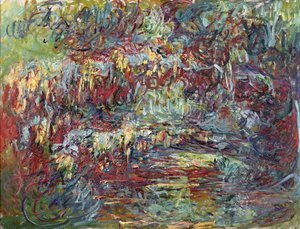
Claude Monet’s Water-Lilies, Setting Sun is far more than a mere depiction of a garden; it is a profound immersion into the very essence of Impressionism. Created during the twilight years of the artist's life at Giverny, this masterpiece embodies an unwavering dedication to capturing the ephemeral beauty of nature. As the sun begins its descent, the canvas transforms into a sensory experience where the boundaries between water, sky, and earth dissolve. The painting invites the viewer to witness the precise moment when light becomes liquid, turning a simple pond into a shimmering stage of fiery oranges, radiant yellows, and deep, dusky reds. It is a work that does not merely show a scene but allows one to feel the warmth of the fading day and the profound stillness of the evening air.
In this breathtaking composition, Monet moves away from traditional landscape structures, abandoning the horizon line to focus entirely on the surface of the water. This technique creates an illusion of an endless, shoreless wave, where the viewer’s gaze oscillates between the floating lily pads and the dark, vertical reflections of weeping willows. The water itself appears deep and mysterious, a murky expanse that provides a necessary weight to the luminous surface. For the collector or interior designer, this piece offers a unique sense of depth; it acts as a window into a tranquil world, providing a focal point that is both intellectually stimulating and visually soothing.
The Mastery of Impressionist Technique
To look closely at Water-Lilies, Setting Sun is to witness the revolutionary "plein air" philosophy in its most mature form. Eschewing the rigid, meticulous details of academic painting, Monet utilized short, broken brushstrokes and vibrant, unmixed pigments to reproduce the flickering quality of light. This method allows colors to dance across the eye, creating a sense of movement that mimics the gentle ripples of a pond. The artist skillfully builds up layers of pigment, applying paint thickly to create a textured surface that catches the light physically, much like the sunlit water it represents.
The palette is a masterclass in color theory and emotional resonance. While the warm hues of the sunset dominate the upper reaches of the composition, they are balanced by cooler shades of blues and greens that suggest the cooling temperature of the dusk. This interplay between warmth and coolness creates a rhythmic luminosity, guiding the eye through the intricate details of the lily pads. For those seeking to adorn a space with art, this technique ensures that the painting remains dynamic under different lighting conditions, shifting its mood from the energetic glow of late afternoon to the quiet, contemplative shadows of twilight.
A Legacy of Peace and Eternal Beauty
Beyond its technical brilliance, this work carries a heavy weight of historical and symbolic significance. Painted during a period of global upheaval, Monet’s focus on his water garden was an act of profound devotion to peace and the enduring cycles of nature. The series of Water Lilies became a symbol of resilience, reflecting a desire to find harmony amidst chaos. The lilies themselves, floating serenely upon the shifting reflections, serve as symbols of purity and the quiet persistence of life.
Integrating a high-quality reproduction of this masterpiece into a home or gallery space brings with it an atmosphere of timeless elegance. It is an ideal choice for those who appreciate art that evokes emotion—whether it be the nostalgic warmth of a summer evening or the meditative calm of a secluded garden. As a cornerstone of Western art history, Water-Lilies, Setting Sun continues to inspire awe, offering a sanctuary of color and light that transcends the boundaries of time and space.
Veelgestelde vragen
Wie heeft "Water-Lilies, Setting Sun" gemaakt?
De kunstenaar achter "Water-Lilies, Setting Sun" is Claude Monet. Het werk is gecatalogiseerd onder de naam van Claude Monet.
Waar zou een reproductie van "Water-Lilies, Setting Sun" door Claude Monet opgehangen moeten worden?
Formaat (Landscape) en aanbevolen ruimte (Living Room) zijn de twee plaatsingskenmerken vastgelegd voor "Water-Lilies, Setting Sun" door Claude Monet.
Zijn er werken die lijken op "Water-Lilies, Setting Sun"?
Ontdek vergelijkbare werken voor "Water-Lilies, Setting Sun" op de Vergelijkbare werken-pagina van dit kunstwerk.
Snelle feiten en kunstquiz
Over Claude Monet

Claude Monet
1840 - 1926, Frankrijk
Biografie kunstenaar
Een Leven Gedompeld in Licht: De Wereld van Claude Monet
Oscar-Claude Monet, een naam die synoniem staat voor het Impressionisme, was meer dan slechts een schilder van landschappen; hij was een chroniqueur van vluchtige momenten, een dichter van licht en kleur. Geboren in Parijs op 14 november 1840, nam zijn vroege leven een onverwachte wending toen zijn familie zich op vijfjarige leeftijd vestigde in Le Havre, Normandië. Hoewel hij door zijn vader aanvankelijk voor een commerciële carrière werd voorbestemd, kwam het aangeboren artistieke talent van de jonge Claude al snel aan het licht, eerst in houtskoolkarikaturen die hij lokaal verkocht – een bewijs van zowel zijn vaardigheid als zijn ondernemingsgeest. Toch was het zijn ontmoeting met Eugène Boudin die cruciaal bleek. Boudin leerde Monet niet alleen hoe hij moest schilderen; hij plantte het revolutionaire idee in hem om en plein air te schilderen – direct naar de natuur toe – een praktijk die zijn gehele artistieke reis zou definiëren.
Monets formele opleiding begon in Parijs, kortstondig aan de Académie Suisse en later onder begeleiding van Charles Gleyre. Het was hier dat hij blijvende vriendschappen sloot met medekunstenaars zoals Auguste Renoir, een band die werd gesmeed door gedeelde artistieke frustraties en het verlangen om te ontsnappen aan de beperkingen van de traditionele academische schilderkunst. Zijn vroege werken toonden weliswaar technische bekwaamheid, maar misten nog de kenmerkende stem die zijn stijl later zou typeren. Een periode van onrust volgde – de Frans-Duitse Oorlog dwong Monet om asiel te zoeken in Londen, waar hij zich onderdompelde in het werk van Engelse landschapmeesters zoals J.M.W. Turner, en hun atmosferische effecten en innovatieve gebruik van kleur in zich opnam.
De Geboorte van een Esthetische Revolutie
Bij zijn terugkeer naar Frankrijk werd Monet een centrale figuur in een opkomende artistieke rebellie. Ontevreden over de conservatieve standaarden van de Salon, sloot hij de handen bij andere gelijkgestemde kunstenaars om onafhankelijke tentoonstellingen te organiserle. De expositie van 1874 bleek een keerpunt, niet alleen voor Monet maar voor de gehele kunstwereld. Het was hier dat zijn schilderij “Impression, soleil levant” (Impressie, opgaande zon) – een nevelige weergave van de haven van Le Havre bij dageraad – werd tentoongesteld, en waaruit de spottende term "Impressionisme" voortkwam. De naam bleef echter hangen en ontwikkelde zich tot een ereteken voor een beweging die streefde naar het vastleggen van de subjectieve impressie van een scène, in plaats van een exacte representatie ervan.
Monets kenmerkende stijl bloeide tijdens deze periode: losse, zichtbare penseelstreken, levendige en vaak ongemengde kleuren die naast elkaar werden aangebracht (een techniek bekend als “gebroken kleur”), en een onwankelbare focus op het vangen van de vergankelijke kwaliteiten van het licht. Hij zette zijn plein air-praktijk onvermoeibare voort, waarbij hij snel werkte om zijn directe waarnemingen vast te leggen voordat veranderende omstandigheden het tafereel wijzigden. Deze toewijding ging niet enkel over het afbeelden van wat hij zag, maar eerder over hoe hij het voelde als reactie daarop – een radicale breuk met de artistieke conventies.
Giverny: Een Paradijs van Licht en Reflectie
In 1883 vestigde Monet zich in Giverny, ten noordwesten van Parijs, waar hij een huis en tuin creëerde die zowel zijn toevluchtsoord als zijn grootste bron van inspiratie zouden worden. Hij transformeerde het landgoed zorgvuldig tot een uitbundig paradijs, compleet met exotische bloemen, treurwilgen en, het beroemdst van allemaal, een waterlelievijver overbrugd door een Japanse brug. Dit was niet louter een decoratieve tuin; het was een levend laboratorium waar Monet de effecten van licht op water, gebladerte en reflecties onder gecontroleerde omstandigheden kon bestuderen.
De laatste decennia van zijn leven waren bijna volledig gewijd aan het schilderen van de waterlelievijver in Giverny. Hij begon aan de monumentale serie Waterlelies (Nymphéas), waarbij hij enorme doeken creëerde die het oppervlak van de vijver afbeeldden als een voortdurend veranderend tapijt van kleur en licht. Dit waren niet simpelweg schilderijen van bloemen; het waren meeslepende ervaringen, ontworpen om de kijker te omhullen in een wereld van serene schoonheid en contemplatieve stilte. De schaal van deze werken is adembenemend en duwt de grenzen van de traditionele schilderkunst op, terwijl het al anticipeert op het abstract expressionisme.
Nalatenschap: Een Blijvende Impact op de Kunstgeschiedenis
De impact van Claude Monet op de kunstgeschiedenis is onmeetbaar. Hij was niet alleen de grondlegger van het Impressionisme; hij veranderde fundamenteel de manier waarop kunstenaars de wereld om hen heen waarnamen en vertegenwoordigden. Zijn nadruk op de subjectieve ervaring, zijn omarming van de plein air-schilderkunst en zijn innovatieve technieken plaveiden de weg voor de verkenning van abstractie en niet-representatieve vormen in de moderne kunst.
Monet behaalde tijdens zijn leven aanzienlijk commercieel succes – een zeldzaamheid voor avant-garde kunstenaars uit zijn tijd. Zijn werk blijft wereldwijd ontzag inboezemen en publiek betoveren, waarmee hij zijn plaats als een van de belangrijkste figuren in de westerse kunst heeft verstevigd. Hij stierf op 5 december 1926 en liet een nalatenschap na die doorklinkt in generaties van kunstenaars en kunstliefhebbers. Belangrijke collecties van zijn meesterwerken worden bewaard in prestigieuze instellingen zoals het Musée d'Orsay en het Musée Marmottan Monet in Parijs, wat ervoor zorgt dat zijn visie de wereld blijft verlichten.
Belangrijke Artistieke Technieken
- Plein Air Schilderen: Centraal in zijn ontwikkeling, wat directe observatie van licht en atmosfeer mogelijk maakte.
- Gebroken Kleur: Het naast elkaar aanbrengen van kleine streken pure kleur voor optische menging.
- Serieschilderen: Het afbeelden van hetzelfde onderwerp onder verschillende licht- en weersomstandigheden – ter demonstratie van de transformerende kracht van tijd en licht.
Snelle feiten over Claude Monet
- Artistic Movement Or Style: Impressionisme
- Artists Or Movements Influenced By This Artist: ['Moderne kunst']
- Artists Who Influenced This Artist:
- Eugène Boudin
- J.M.W. Turner
- Date Of Birth: 14 november 1840
- Date Of Death: 5 december 1926
- Full Name: Oscar-Claude Monet
- Nationality: Frans
- Notable Artworks:
- Zonsopgang
- Waterlelies
- Hooinstapels
- Place Of Birth: Parijs, Frankrijk
Vergelijkbare kunstwerken




Ontdek kunstwerken georganiseerd op thema, stijl en kenmerk.


Claude Monet
Water-Lilies, Setting Sun
() ·
Inclusief lijst: · Met de hand geschilderd in olieverf op linnen
Totaal