


 Bekijk op ware grootte
 Verstuur
 Delen
Delen
 Details bekijken
 Gids voor studentenkunstwerken

 Download
 Vergelijkbare items
 Röntgenonderzoek
 Diavoorstelling
 Statistieken
The Lomond Hills
 Impressionism
 1926
1926 51.0 x 61.0 cm
Admire Douglas Gordon Shields’ "The Lomond Hills" (1926). This impressionistic landscape captures serene Scottish hills & village life with visible brushstrokes & atmospheric depth.
Explore the evocative portraits & landscapes of Douglas Gordon Shields, renowned Scottish painter capturing Victorian society & natural beauty. Discover his legacy!
 Lees meer
De kunstwerken die op deze pagina worden weergegeven, zijn beschermd door de auteursrechtwetgeving, wat betekent dat het ons wettelijk niet is toegestaan om identieke reproducties te maken of te verkopen. Deze bescherming wordt gehandhaafd onder internationale overeenkomsten zoals de Conventie van Bern en door nationale wetgeving, waaronder de bepalingen van de Amerikaanse auteurswet - Titel 17. Alle rechten voorbehouden. Reproduceren of distribueren van afbeeldingen is niet toegestaan zonder uitdrukkelijke schriftelijke toestemming van WahooArt.com en de rechthebbenden.
Als een respectvol en legaal alternatief bieden wij op maat gemaakte, handgeschilderde kunstwerken aan die geïnspireerd zijn op het origineel. Onze bekwame en professionele kunstenaars bestuderen zorgvuldig de stijl, sfeer en artistieke essentie van het origineel om een nieuw, uniek werk te creëren dat dezelfde emotie oproept – terwijl het een op zichzelf staande, originele creatie blijft.
Deze methode voldoet volledig aan de auteursrechtwetgeving, omdat het niet gaat om het kopiëren of dupliceren van het beschermde kunstwerk. In plaats daarvan is er sprake van een creatieve herinterpretatie — een nieuw schilderij dat door het origineel wordt geïnspireerd, maar er niet identiek aan is.
Handgemaakte olieverfreproductie
Met de hand geschilderd in olieverf op canvas in uw gewenste maat en lijst, op bestelling gemaakt door onze kunstenaars. ( Schakel over naar print Schakel over naar digitale afbeeldingen)




































Standaardformaat
op maat gemaakt
CM
INCH
Kies uit onze vooraf ingestelde maten die overeenkomen met de originele verhoudingen van het kunstwerk.
Loading sizes...

breedte
hoogte
Voer de breedte en de hoogte in die u nodig heeft, passend bij uw lijst of uw muur. Dit is handgeschilderd, dus bij een afmeting met een andere vormverhouding kan de kunstenaar iets meer rondom het schilderij schilderen of juist iets meer weglaten — u kiest zelf. Wij sturen u een digitaal mockup ter goedkeuring voordat het schilderwerk begint. De afbeelding die op deze pagina wordt getoond, is niet het uiteindelijke resultaat — alleen de mockup geeft dit weer.
Voorbeelden van wat aangepast kan worden: Vervang het gezicht met een eigen foto; Voeg een huisdier toe (bijv. vervang de kat door een hond); Verwerk een verborgen boodschap in de achtergrond; Wijzig het landschap of andere elementen in de achtergrond.
Na de bestelling zal het team van TopImpressionists.com per e-mail contact opnemen met de klant voor instructies en een mockup-voorbeeld sturen.
Na de bestelling zal het team van TopImpressionists.com per e-mail contact opnemen met de klant voor instructies en een mockup-voorbeeld sturen.
Wereldwijde levering () binnen 3 tot 4 weken in plaats van de standaard 5 weken. (22 oktober). Zonder concessies aan de kwaliteit.

Gratis wereldwijde expressverzending

Hoogwaardig linnen canvas

Volledige verzendverzekering

Garantie op terugbetaling van invoerrechten

Garantie op exacte kleurweergave

Retourbeleid van 100 dagen (alleen bij defecten)

100% Geld-terug-garantie

Korting bij meerdere afnames
 De optie voor glas is alleen beschikbaar bij een formaat kleiner dan 110 cm.

The Lomond Hills
Reproductiemethode
Formaat reproductie
-


Totaalprijs
€ 236
Gerelateerde kunstwerken


Biografie van de kunstenaar
The Visionary of the Highlands: The Life and Art of Douglas Gordon Shields
In the tapestry of Scottish art history, few threads are as richly colored or as evocative as those woven by Douglas Gordon Shields. Born in Glasgow in 1888, Shields emerged during a transformative era, a time when the lingering romanticism of the Victorian age began to dance with the burgeoning light and movement of modernism. His life, spanning from the late nineteenth century to his passing in 1940, serves as a bridge between two worlds: the disciplined, academic traditions of the Glasgow School of Art and the ethereal, atmospheric freedom of Impressionism. To look upon a Shields canvas is to witness a profound dialogue between the meticulous observation of reality and the emotional resonance of the Scottish landscape.
Shields’ artistic foundation was laid within the prestigious halls of the Glasgow School of Art, where he immersed himself in the rigorous techniques of academic painting. This period of his life was defined by a disciplined pursuit of mastery, learning to render textures, light, and form with an almost scientific precision. His early training instilled in him a reverence for detail that would later allow him to excel in the demanding genre of portraiture. As he began to establish his reputation, Shields became a sought-after chronicler of the Scottish elite. His portraits were far more than mere likenesses; they were psychological studies imbued with dignity and grace. Whether capturing the stern resolve of an industrialist or the delicate elegance of a lady, such as in his hauntingly beautiful The Lady in the Blue Cloak, Shields possessed a rare ability to translate the very essence of his subjects onto the canvas through subtle tonal gradations and masterful handling of fabric.
A Symphony of Light and Landscape
While the structured world of portraiture provided him with professional prominence, it was the wild, untamed beauty of the Scottish Highlands that truly captured Shields’ soul. As his career progressed, a stylistic metamorphosis began to take hold, driven by an undeniable passion for the fleeting moments of nature. Influenced by the luminous innovations of Claude Monet and Frédéric Bazille, Shields moved away from the rigid boundaries of academic realism toward the soft, breathing edges of Impressionism. He began to prioritize the way light dances across a glen or how mist clings to a mountain peak, favoring loose, expressive brushstrokes over exacting lines.
This shift allowed him to create works that felt less like static images and more like living memories. His depictions of the Lomond Hills stand as quintessential examples of this late-period mastery. In these landscapes, one can sense the atmospheric depth and the vibrant, shifting color palettes that convey a profound sense of immediacy. He did not merely paint the land; he painted the air surrounding it, the moisture in the breeze, and the quiet, rhythmic pulse of Highland life. This ability to blend the structural integrity of his early training with an Impressionistic sensitivity to light is what elevates his landscape work from mere scenery to poetic expression.
Legacy and Artistic Significance
The oeuvre of Douglas Gordon Shields, comprising approximately 150 significant paintings, remains a testament to a life dedicated to the pursuit of visual truth. His significance lies in his unique position as a transitional figure who could navigate the complexities of both the formal and the fluid. He honored the traditions of his predecessors—the Pre-Raphaelite aesthetics and Romantic idealism that shaped his youth—while fearlessly embracing the modern impulse to capture the ephemeral.
Today, his work continues to resonate with those who seek the sublime in the natural world and the profound in the human countenance. His legacy is found in:
- The mastery of texture: His ability to render the weight of velvet and the roughness of stone with equal brilliance.
- Atmospheric storytelling: The way his landscapes evoke the specific, haunting moods of the Scottish climate.
- Cultural preservation: His role in documenting the faces and the vistas of a Scotland caught between the Victorian era and the modern age.
Through his eyes, we are invited to rediscover the Highlands not just as a geographical location, but as an emotional landscape of light, shadow, and enduring beauty.

Snelle feiten
- Artistic Movement Or Style: Victorian Art
- Artists Or Movements Influenced By This Artist: ['Impressionism']
- Artists Who Influenced This Artist: ['Pre-Raphaelites']
- Date Of Birth: 1888
- Full Name: Douglas Gordon Shields
- Nationality: Scottish
- Notable Artworks:
- The Lady in the Blue Cloak
- Glassford Walker
- The Lomond Hills
- Place Of Birth: Glasgow, Scotland
Gerelateerde artikelen
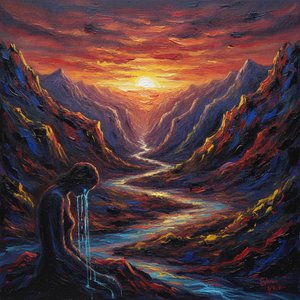
Capturing Emotion: A Journey Through the Soul of Expressionist Landscapes
Explore the profound emotional depth of Expressionist landscapes. Discover how Post-Impressionist masters moved beyond light to capture the soul through vibrant color and form. A curated journey for true art lovers seeking the beauty of expressive mastery.

Whispers of the Meadow: Capturing the Serenity of the Quiet Countryside in Impressionist Masterpieces
Embark on a visual journey through Impressionist masterpieces. Discover how masters like Monet and Renoir captured the serene beauty of the countryside through light, color, and emotion. Explore timeless landscapes designed to bring tranquility and cultural elegance to your home sanctuary.

Beyond the Light: Capturing Raw Emotion and Subjective Vision in Post-Impressionist Landscapes
Explore the profound emotional depth of Post-Impressionist landscapes. Discover how masters like Van Gogh moved beyond light to capture raw human feeling through vibrant color and expressive texture in this expert art history retrospective.

Capturing the Soul: The Most Emotionally Moving Impressionist and Post-Impressionist Masterpieces
Discover the profound emotional depth of Impressionist and Post-Impressionist masterpieces. Explore how legends like Monet, Van Gogh, and Gauguin captured light and soul through evocative landscapes and vibrant brushwork for a timeless connection to art history.