


 Voorvertoning
 Verstuur
 Delen
Delen
 Details bekijken
 Gids
Gids

 Download
 Vergelijkbare items
 Röntgenonderzoek
 Diavoorstelling
 Statistieken
The Lonely Ones
 Expressionism
 1935
1935 100.0 x 130.0 cm
Explore Edvard Munch’s "The Lonely Ones," a poignant Expressionist masterpiece capturing isolation & emotion. Discover its moody atmosphere & profound human connection. #Munch #Expressionism
 Lees meer
Ontdek Edvard Munch (1863-1944), de meester van angst en emotie! Bekijk 'The Scream' & zijn iconische kunstwerken vol melancholie, liefde & psychologische diepgang.
Giclée / Kunstafdrukken
Giclée- of canvasafdruk van museumkwaliteit met een snelle productie en flexibele afwerkingsmogelijkheden. ( Bestel handgeschilderde reproductie Schakel over naar digitale afbeeldingen)




P118B €10

P118H €10

P118W €10

P438Z €10

P508JH €12

P508YH €12

P805H €10

P805Z €10

P919BZ €10

P919G €10

P919XJ €10

P959ZH €10

P968JZ €12

W106C €8

W218G €10

W218JH €8

W218Y €10

W307PJ €10

W316G €10

W316PJ €8

W316Y €10

W398PJ €8

W4111J €10

W500HY €15

W500JH €15

W692G €12

W849H €8

W940BG €15

W953PJ €8




Standaardformaat
op maat gemaakt
CM
INCH
Kies uit onze vooraf ingestelde maten die overeenkomen met de originele verhoudingen van het kunstwerk.
Loading sizes...

breedte
hoogte
Voer de gewenste breedte en hoogte in, passend bij uw lijst of muur. Een afdruk kan alleen worden ingekort en nooit groter worden gemaakt dan het origineel; een formaat met andere verhoudingen zal daarom een deel van de afbeelding verliezen. Wij sturen u een digitaal mockup ter goedkeuring voordat we tot drukwerk overgaan. De afbeelding op deze pagina toont niet de werkelijke uitsnede — dit is alleen te zien op het mockup.
Wereldwijde levering () binnen 2 weken in plaats van de standaard 4/5 weken. (27 oktober)

Gratis wereldwijde expressverzending

Hoogwaardig linnen canvas

Volledige verzendverzekering

Garantie op terugbetaling van invoerrechten

Garantie op exacte kleurweergave

Retourbeleid van 100 dagen (alleen bij defecten)

100% Geld-terug-garantie

Korting bij meerdere afnames
 De optie voor glas is alleen beschikbaar bij een formaat kleiner dan 110 cm.

The Lonely Ones
Giclée / Kunstafdrukken
Afmetingen reproductie
-


Eindtotaal
€ 61
A Silent Dialogue: Unveiling Edvard Munch’s ‘The Lonely Ones’
Edvard Munch's 1935 painting, *The Lonely Ones*, is a deeply affecting work that encapsulates the core tenets of Expressionism. Measuring 100 x 130 cm, this oil on canvas transcends mere representation, offering instead a visceral exploration of human isolation and emotional vulnerability within the vastness of existence. The scene depicts a man and woman standing side-by-side on a balcony, their figures subtly defined against a brooding seascape – yet profoundly disconnected from one another and their surroundings.Expressionist Style & Technical Mastery
Munch’s masterful use of color and brushwork is central to the painting's emotional power. Dominant blues and purples evoke a sense of melancholy and introspection, while warmer tones are reserved for the figures themselves, highlighting their fragile presence. The loose, expressive brushstrokes aren’t concerned with precise detail; rather, they convey feeling – a swirling interiority made visible. This technique is characteristic of Expressionism, a movement that prioritized subjective experience over objective reality. Munch doesn't simply *show* us loneliness; he allows us to *feel* it through the very texture and color of the paint. The simplified forms and abstracted shapes further contribute to this emotional resonance, stripping away extraneous detail to focus on the essential human condition.Historical Context & Artistic Lineage
Created in 1935, *The Lonely Ones* reflects a period of significant social and political upheaval. Munch was part of a generation grappling with anxieties about modernity, industrialization, and the loss of traditional values. He stood alongside other pioneering Expressionists like Vincent van Gogh, Paul Cézanne, and Georges Seurat, all of whom challenged conventional artistic norms in favor of exploring inner psychological states. However, Munch’s work is particularly distinguished by its intensely personal and autobiographical nature. His own life was marked by loss, illness, and mental anguish – experiences that profoundly shaped his artistic vision.Symbolism & Emotional Resonance
The symbolism within *The Lonely Ones* is both subtle and profound. The sea, often a symbol of the unconscious or the infinite, stretches out before the figures, emphasizing their smallness and insignificance in the face of existential questions. The presence of the dog – a recurring motif in Munch’s work – can be interpreted as representing loyalty, companionship, or perhaps even a primal instinct for connection that remains unfulfilled. The balcony itself acts as a liminal space—a threshold between interiority and exteriority, further emphasizing the characters' detachment from both. The painting isn’t about a specific narrative; it’s about a universal feeling – the ache of loneliness, the longing for connection, and the contemplation of life’s inherent solitude.Impact & Legacy
*The Lonely Ones* continues to resonate with audiences today because its themes are timeless and universally relatable. In an increasingly fragmented world, the painting serves as a poignant reminder of our shared human need for belonging and understanding. Its influence can be seen in countless works of contemporary art that explore similar themes of alienation and emotional vulnerability.- For Art Lovers: This piece offers a powerful meditation on the human condition, inviting introspection and empathy.
- For Collectors: *The Lonely Ones* represents a significant example of Munch’s mature style and a cornerstone of Expressionist art.
- For Interior Designers: The painting's moody palette and evocative imagery can add depth and emotional complexity to any space, creating a focal point for contemplation.
Veelgestelde vragen
Is "The Lonely Ones" in zijn geheel eerder licht of donker?
"The Lonely Ones" heeft een algehele helderheid van bright en een luminantie van Gentle Luminance.
Hoe komen stroming en tijdperk samen in "The Lonely Ones" door Edvard Munch?
"The Lonely Ones" door Edvard Munch behoort tot de Expressionism-stroming, uit de 19e eeuw-periode van de maker.
Waar kan ik kunstwerken vinden die lijken op "The Lonely Ones" door Edvard Munch?
Ontdek vergelijkbare werken voor "The Lonely Ones" op de Vergelijkbare werken-pagina van dit kunstwerk.
Biografie kunstenaar
Een Leven in Schaduw: De Wereld van Edvard Munch
Edvard Munch, geboren in 1863 te Ådalsbruk in Noorwegen, was een kunstenaar wiens werk synoniem werd met de angsten en emotionele onrust van het moderne tijdperk. Zijn leven, diep getekend door verlies en een allesdoordringende melancholie, vormde de bron van zijn expressieve kunst. Al vroeg in zijn jeugd, overschaduwd door de vroege dood van zijn moeder en zus – beiden ten prooi gevallen aan tuberculose – ontwikkelde Munch een spookachtige preoccupatie met sterfelijkheid, ziekte en de fragiliteit van het menselijk bestaan. Deze ervaringen waren niet slechts biografische details; ze werden de kern van zijn artistieke visie, die een onophoudelijke verkenning van het innerlijke landschap van angst, verdriet en hunkering aanwakkerde. De strenge religieuze overtuigingen van zijn vader en zijn eigen worstelingen met psychische aandoeningen droegen verder bij aan een gevoel van dreiging dat Munch’s wereld doordrong, waardoor niet alleen zijn persoonlijke leven maar ook de symbolische taal van zijn schilderijen werd gevormd. Hij portretteerde geen scènes; hij externaliseerde een interne staat en vertaalde psychologische nood in visuele vorm.
De Ontstaansgeschiedenis van Expressie: Invloeden en Artistieke Ontwikkeling
Munch’s artistieke reis begon met formele training aan de Koninklijke School voor Kunst en Design in Kristiania (Oslo), maar het was zijn ontmoeting met boheemse kringen en de nihilistische filosofie van Hans Jæger die zijn creatieve vuur echt aanwakkerde. Jæger moedigde Munch aan om conventionele academische stijlen te verlaten en zich in plaats daarvan onder te dompelen in de diepten van zijn eigen subjectieve ervaring, een concept dat hij “zielsschilderen” noemde. Deze cruciale verschuiving markeerde het begin van Munch’s kenmerkende stijl – gekenmerkt door rauwe emotie, vervormde vormen en een afwijzing van naturalistische weergave. Zijn reizen naar Parijs in de jaren 1890 brachten hem in contact met de opkomende post-impressionistische beweging, waar hij invloeden absorbeerde van kunstenaars als Paul Gauguin, Vincent van Gogh en Henri de Toulouse-Lautrec. Het gedurfde kleurgebruik, expressieve penseelstreken en psychologische intensiteit van deze meesters resoneerden diep met Munch’s eigen artistieke neigingen. Hij imiteerde hun technieken niet; hij synthetiseerde ze tot iets unieks – een visuele taal die in staat was om de meest diepe en verontrustende menselijke emoties over te brengen. Zijn tijd in Berlijn bleek ook cruciaal, waardoor hij in contact kwam met toneelschrijver August Strindberg, wiens verkenning van psychologische thema’s Munch’s artistieke onderzoek verder aanwakkerde.
Iconische Visioenen: Belangrijke Werken en Hun Symbolische Betekenis
Munch’s oeuvre wordt bevolkt door beelden die diep in het collectieve bewustzijn zijn gegrift. De Schreeuw, misschien wel zijn meest iconische werk, overstijgt zijn status als schilderij om een universeel symbool van existentieel angst te worden. Het wervelende, vurige landschap en het contornerende gezicht van de figuur belichamen een oergevoel tegen de onverschilligheid van het universum. Madonna, een controversieel en diep persoonlijk stuk, onderzoekt thema’s als seksualiteit, moederschap en sterfelijkheid met verontrustende openhartigheid. Terugkerende motieven zoals Het Zieke Kind – geïnspireerd door het verlies van zijn zus Sophie – dienen als ontroerende herinneringen aan Munch’s jeugdtrauma en de alomtegenwoordige schaduw van de dood. Melancholie I & II, krachtige afbeeldingen van diepe droefheid en isolatie, onthullen een kwetsbaarheid die zowel persoonlijk als universeel herkenbaar is. Deze werken zijn niet simpelweg representaties van de externe realiteit; ze zijn vensters naar de ziel van de kunstenaar, die kijkers een compromisloze blik bieden op de donkerste hoeken van het menselijk psyche. Munch streefde er niet naar om mooie beelden te creëren; hij zocht naar waarheid – zelfs als die waarheid pijnlijk en verontrustend was.
Een Blijvende Erfenis: Historische Betekenis en Voortdurende Invloed
Edvard Munch’s bijdrage aan de moderne kunst is onmeetbaar. Hij staat als een sleutelfiguur in de ontwikkeling van het expressionisme, die baanbaande weg voor kunstenaars die subjectieve emotie boven objectieve weergave stelden. Zijn compromisloze verkenning van universele menselijke ervaringen – liefde, verlies, angst en dood – blijft tot op de dag van vandaag resoneren met publiek, waardoor zijn plaats als een van de meest invloedrijke en duurzame figuren in de kunstgeschiedenis wordt verstevigd. Zijn werk heeft generaties kunstenaars diepgaand beïnvloed, bewegingen zoals het Duitse expressionisme en daarbuiten beïnvloedend. Hij durfde de donkerdere aspecten van de menselijke conditie te confronteren, waarbij hij conventionele opvattingen over schoonheid en artistieke representatie uitdaagde. Zelfs na het bereiken van roem en erkenning – culminerend in de oprichting van het Munch Museum in Oslo – bleef zijn persoonlijke leven turbulent, gekenmerkt door periodes van psychische instabiliteit en isolatie. Toch bleef hij creëren, waardoor een oeuvre achterbleef dat blijft provoceren, uitdagen en inspireren. Munch’s erfenis gaat niet alleen over de schilderijen zelf; het gaat om de moed om de complexiteit van het menselijk bestaan te confronteren en die ervaringen in kunst te vertalen die spreken tot de diepste delen van ons wezen.

Edvard Munch
1863 - 1944 , Noorwegen
Belangrijkste feiten
- Artistic Movement Or Style: Expressionisme
- Artists Or Movements Influenced By This Artist: ['Duits Expressionisme']
- Artists Who Influenced This Artist:
- Paul Gauguin
- Van Gogh
- Date Of Birth: 12 december 1863
- Date Of Death: 23 januari 1944
- Full Name: Edvard Munch
- Nationality: Noors
- Notable Artworks:
- The Scream
- Madonna
- The Sick Child
- Place Of Birth: Ådalsbruk, Zweden
Gerelateerde artikelen

Edvard Munch: Anxiety, Modernity & the Dawn of Expressionism
Explore the profound world of Edvard Munch, pioneer of Expressionism. Discover the origins of 'The Scream' & his haunting depictions of anxiety, mortality, and love. Expert analysis & high-quality reproductions at TopImpressionists.

Top 10 Meesterwerken gedomineerd door 'Slate Blue': Kunst voor uw interieur
Ontdek 10 beroemde schilderijen gedomineerd door de prachtige tint 'Slate Blue'. Van Monet tot Van Gogh, leer over kunstgeschiedenis & techniek. Museumkwaliteit reproducties voor uw interieur op TopImpressionists.com! Ontdek de collectie online.

Romantische Landschappen: Top 10 Meesterwerken voor een Sfeervol Interieur | TopImpressionists.nl
Ontdek de 10 meest iconische meesterwerken van de Romantiek! Reis door de tijd met Caspar David Friedrich, Turner & Delacroix. Laat je inspireren en vind museumkwaliteit kunst reproducties voor een sfeervol interieur op TopImpressionists.com.

Edvard Munch's Top 25 Meesterwerken: Kunst voor uw Interieur | TopImpressionists.com
Ontdek de 25 meest iconische schilderijen van Edvard Munch, meesterwerken van het expressionisme. Lees over angst, liefde & symboliek in zijn werk. Museumkwaliteit reproducties op TopImpressionists.com!
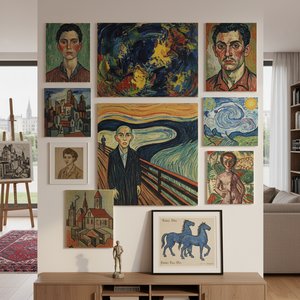
Top 10 Expressionistische Meesterwerken: Kunst die Échte Emotie Spreekt | TopImpressionists.nl
Ontdek de 10 meest iconische Expressionistische meesterwerken! Van Munch's 'De Schreeuw' tot Kandinsky's abstractie. Leer over de kunstenaars, technieken & emoties achter deze beweging. Museumkwaliteit reproducties op TopImpressionists.com.
Ontdek kunstwerken georganiseerd op thema, stijl en kenmerk.


