


 Voorvertoning
 Verstuur
 Delen
Delen
 Details bekijken
 Gids
Gids

 Download
 Vergelijkbare items
 Röntgenonderzoek
 Diavoorstelling
 Statistieken
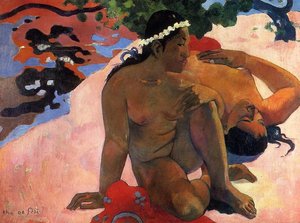
Alone
 Oil On Canvas
- WallArt
- Post-Impressionist Movement
 1893
1893- 19th Century
 50.0 x 73.0 cm
Paul Gauguin’s "Alone," a captivating Post-Impressionist painting from 1893, depicts a serene woman resting in a warm yellow field, showcasing the artist's signature cloisonnism style. Discover this iconic artwork and bring its tranquil beauty into your space.
 Lees meer
Paul Gauguin: Een revolutionaire Post-Impressionist schilder met felle kleuren, exotische onderwerpen & symbolistische thema's. Ontdek zijn reis van financieel succes naar kunstlegende.
Giclée / Kunstafdrukken
Giclée- of canvasafdruk van museumkwaliteit met een snelle productie en flexibele afwerkingsmogelijkheden. ( Bestel handgeschilderde reproductie Schakel over naar digitale afbeeldingen)




P118B €10

P118H €10

P118W €10

P438Z €10

P508JH €12

P508YH €12

P805H €10

P805Z €10

P919BZ €10

P919G €10

P919XJ €10

P959ZH €10

P968JZ €12

W106C €8

W218G €10

W218JH €8

W218Y €10

W307PJ €10

W316G €10

W316PJ €8

W316Y €10

W398PJ €8

W4111J €10

W500HY €15

W500JH €15

W692G €12

W849H €8

W940BG €15

W953PJ €8




Standaardformaat
op maat gemaakt
CM
INCH
Kies uit onze vooraf ingestelde maten die overeenkomen met de originele verhoudingen van het kunstwerk.
Loading sizes...

breedte
hoogte
Voer de gewenste breedte en hoogte in, passend bij uw lijst of muur. Een afdruk kan alleen worden ingekort en nooit groter worden gemaakt dan het origineel; een formaat met andere verhoudingen zal daarom een deel van de afbeelding verliezen. Wij sturen u een digitaal mockup ter goedkeuring voordat we tot drukwerk overgaan. De afbeelding op deze pagina toont niet de werkelijke uitsnede — dit is alleen te zien op het mockup.
Wereldwijde levering () binnen 2 weken in plaats van de standaard 4/5 weken. (26 oktober)

Gratis wereldwijde expressverzending

Hoogwaardig linnen canvas

Volledige verzendverzekering

Garantie op terugbetaling van invoerrechten

Garantie op exacte kleurweergave

Retourbeleid van 100 dagen (alleen bij defecten)

100% Geld-terug-garantie

Korting bij meerdere afnames
 De optie voor glas is alleen beschikbaar bij een formaat kleiner dan 110 cm.

Alone
Giclée / Kunstafdrukken
Afmetingen reproductie
-


Eindtotaal
€ 61
Alone: A Portrait of Quietude by Paul Gauguin
Paul Gauguin’s “Alone,” painted in 1893, is more than just a depiction of a woman resting; it's an immersive exploration of solitude and the profound stillness that can be found within. Measuring a modest 50 x 73 cm, this oil-on-canvas work invites viewers into a world of contemplative serenity, a hallmark of Gauguin’s mature style and a poignant reflection of his own increasingly isolated existence.
- Subject Matter: The central figure, a woman lying prone with her head cradled in her arm, exudes an immediate sense of peace. Her relaxed posture suggests either slumber or deep contemplation – the ambiguity adds to the painting’s evocative power. Scattered around her are other figures, smaller and less defined, contributing to the overall impression of isolation rather than distracting from the primary theme.
- Style & Technique: Gauguin masterfully employs the style of Cloisonnism, characterized by bold outlines and flattened planes of color. This technique, reminiscent of stained glass, creates a striking visual impact, emphasizing the geometric forms and contributing to the painting’s tranquil atmosphere. The use of warm yellow in the background field further enhances this sense of calm and adds depth to the composition.
- Historical Context: “Alone” emerged during a pivotal moment in Gauguin's artistic journey, firmly rooted within the Post-Impressionist movement. Influenced by artists like Van Gogh and Bernard, he sought to move beyond mere representation, aiming instead to capture subjective emotions and spiritual truths. The painting’s themes of isolation resonate with the anxieties and uncertainties of the late 19th century, a period marked by rapid social change and increasing urbanization.
Decoding Symbolism: A Journey Within
Beyond its surface beauty, “Alone” is rich in symbolic potential. The woman’s posture immediately evokes feelings of vulnerability and introspection. Her placement on the ground suggests a surrender to the moment, a willingness to embrace solitude rather than resist it. The expansive yellow field surrounding her isn't merely a backdrop; it represents an open space, a realm of possibility, perhaps even a metaphor for the unconscious mind. The smaller figures, though indistinct, could symbolize fleeting memories or the echoes of past experiences – reminders of connections that have faded into the background.
- Color Palette: Gauguin’s deliberate use of warm yellows and earthy tones contributes significantly to the painting's emotional impact. Yellow, often associated with optimism and enlightenment, is tempered by the muted colors, creating a sense of both hope and melancholy.
- Compositional Elements: The diagonal lines created by the woman’s body and the horizon line contribute to the dynamic feel of the composition, preventing it from feeling static or lifeless. This careful arrangement guides the viewer's eye and reinforces the painting's central theme of movement – not physical movement, but rather the internal journey of contemplation.
Gauguin’s Legacy: A Timeless Exploration
"Alone" stands as a testament to Gauguin’s profound understanding of human emotion and his ability to translate complex feelings onto canvas. It's a painting that invites viewers to pause, reflect, and consider the beauty and significance of solitude. Its influence can be seen in countless works of art that followed, solidifying Gauguin’s place as one of the most important artists of the modern era.
A hand-painted reproduction of “Alone” offers a unique opportunity to bring this iconic artwork into your home or office. Each reproduction is meticulously crafted by skilled artisans, ensuring exceptional detail and color accuracy. Whether you are an art collector, interior designer, or simply someone who appreciates beauty, this stunning piece will undoubtedly become a cherished addition to your collection.
Veelgestelde vragen
Met welke techniek en welke afmetingen is het originele "Alone" door Paul Gauguin uitgevoerd?
"Alone" door Paul Gauguin is uitgevoerd in Oil On Canvas en heeft de afmetingen 50 x 73 cm.
Wat is de algemene sfeer van "Alone" door Paul Gauguin?
"Alone" heeft een Calm atmosfeer.
Hoe verhoudt de stijl van "Alone" zich tot het tijdperk van de maker?
In "Alone" door Paul Gauguin ontmoet de Post-Impressionist Movement-stroming de 19e eeuw-periode.
Vergelijkbare kunstwerken




Biografie kunstenaar
Eugène Henri Paul Gauguin: Een Leven in Wilde Kleuren
Eugène Henri Paul Gauguin, een naam die resoneert met levendige kleuren en rebellie, staat als een cruciale figuur in de overgang van Impressionisme naar moderne kunst. Geboren in Parijs in 1848 was zijn leven allesbehalve conventioneel. Zijn vroege jaren werden gevormd door een ongebruikelijk opvoeding; zijn vader een journalist en zijn moeder afkomstig van Peruviaanse aristocratie – haar grootmoeder, Flora Tristan, een baanbrekende feministe en socialistische schrijver wiens idealen ongetwijfeld in de familie weerklanken veroorzaakten. Deze erfenis zou Gauguin’s artistieke visie diepgaand beïnvloeden, een fascinatie met culturen buiten Europa aanwakkeren. Een opvoeding in Peru als kind, na de verhuizing van zijn familie in 1850, dwong hem tot een wereld die radicaal anders was dan Parijs, een ervaring die bleef hangen en uiteindelijk zijn zoektocht naar authenticiteit in kunst voedde. Na terugkeer naar Frankrijk na het overlijden van zijn vader, ontving Gauguin een formele opleiding, maar voelde zich aangetrokken tot de academische wereld, maar eerder tot de bloeiende financiële wereld, waar hij een carrière als beursmakelaar begon – een pad dat opvallend tegenstond aan het artistieke lot dat hem wachtte.Van Financier naar Kunstenaar
Gauguin leidde jarenlang een dubbelleven, met toewijding aan zijn zakelijke ondernemingen terwijl hij heimelijk een passie voor schilderkunst cultiveerde. In eerste instantie werd hij beïnvloed door de Impressionisten en experimenteerde hij in zijn vrije tijd met kleur en licht, maar voelde hij snel dat ze zich beperkten tot het vastleggen van vluchtige momenten van realiteit. De financiële crisis van 1882 bleek een keerpunt te zijn, waardoor hij zijn lucratieve carrière opgaf en zich vol overtuiging stortte in zijn artistieke roeping. Dit was niet alleen een verandering van beroep; het was een fundamentele verschuiving in wereldbeeld. Hij zocht begeleiding bij Camille Pissarro, die zijn ontwikkeling aanmoedigde en hem introduceerde bij de avant-garde cirkels van Parijs. Gauguin begon echter snel af te wijken van Impressionistische principes, verlangend naar iets expressiever, iets symbolischer – een manier om niet alleen *wat* hij zag, maar wat hij *voelde* over te brengen. Deze drang leidde hem op een reis van artistieke exploratie die hem verder zou voeren dan de Parijse salons en in het hart van ‘primitieve’ culturen. Hij was niet alleen geïnteresseerd in het vastleggen van deze culturen; hij zocht ernaar om hun essentie te absorberen, ervan uitgaande dat ze een zuiverheid boden die verloren was gegaan in de Westerse beschaving.De Aanroep naar Bretagne en Tahiti
Gauguin’s artistieke evolutie was onlosmakelijk verbonden met zijn reizen. Hij bracht tijd door in Bretagne, gefascineerd door het ruige landschap en de diepgewortelde tradities van zijn bewoners. Deze periode zag hij experimenteren met platte vormen, felle lijnen en een vereenvoudiging van compositie – technieken die hem verder wegvoerden van naturalisme en dichter naar een meer symbolische taal. Maar zijn reis naar Tahiti in 1891 ontketende werkelijk zijn creatieve potentieel. Op zoek naar een toevluchtsoord van wat hij beschouwde als de verstikkende beperkingen van Europese civilisatie, hoopte Gauguin inspiratie te vinden in Polynesiëse cultuur, ervan uitgaande dat deze een zuiverder, authentieker manier van leven bood. Dit was niet alleen een artistieke zoektocht; het was een spirituele missie. Hij dompelde zich onder in lokale gebruiken en geloofsovertuigingen, vastleggend Polynesiërs vrouwen, landschappen en religieuze praktijken door zijn unieke lens. Beïnvloed door Japanse prints – *Japonisme* – en middeleeuwse kunst ontwikkelde hij een kenmerkende esthetiek gekenmerkt door levendige kleuren, exotische onderwerpen en een sfeer van mysterie. Iconische schilderijen zoals “Vahine no te miti” (Vrouw met mango), “Manao Tupapau” (Gevangen door de Geest van de Dood) en “The Day of Gods ontstonden in deze periode, waarmee zijn reputatie als een visionaire kunstenaar werd verstevigd. Zijn gebruik van kleur werd steeds heviger en niet-natuurlijk, bedoeld om emotie en spirituele betekenis uit te drukken, niet om de realiteit te reproduceren.Erfgoed en Controversie
Ondanks zijn artistieke doorbraken was Gauguin’s leven vaak gekleurd door moeilijkheden. Hij had financiële problemen en een verslechterend gezondheidstoestand tijdens zijn verblijf in Tahiti en later op de Marquesas eilanden, waar hij uiteindelijk vestigde. Toch bleef hij productief schilderen, voortdurend thema's van het leven, de dood en spiritualiteit onderzoeken. Hij stierf in 1903 op Hiva Oa, een afgelegen eiland in de Marquesas-archipel, grotendeels onherkenbaar voor zijn genie. Pas na zijn dood begon Gauguin’s werk de erkenning te krijgen die het verdiende. Vandaag de dag wordt hij geëerd als een cruciale figuur in de ontwikkeling van moderne kunst, die de overgang van Impressionisme naar Symbolisme inluidde en het pad bereidde voor bewegingen zoals Fauvism. Zijn gebruik van kleur, vereenvoudigde vormen en symbolische beelden heeft kunstenaars zoals Pablo Picasso, Henri Matisse en velen anderen aanzienlijk beïnvloed. Echter, Gauguin blijft een controversiële figuur vanwege aspecten van zijn persoonlijke leven – met name zijn relaties met jonge Polynesiërs vrouwen – die voortdurend worden herzien in het licht van hedendaagse ethische overwegingen. Ondanks dit blijft zijn artistieke bijdragen onbetwistbaar, en zijn nalatenschap inspireert kunstenaars en kunstliefhebbers over de hele wereld. Hij was een ware innovator, een rebel die durfde conventies uit te dagen en zijn eigen pad te volgen, waardoor een oeuvre achterbleef dat net zo boeiend en raadselachtig is als de man zelf.Belangrijke Invloeden & Artistieke Kenmerken
- Impressionisme: Vroege invloed op kleur en licht, later verworpen vanwege de focus op vluchtige realiteit.
- Japonisme: Inspireerde platte perspectieven, felle lijnen en decoratieve patronen.
- Middeleeuwse Kunst: Beïnvloed symbolische beelden en een afwijzing van strikte realisme.
- Synthetisch: Een stijl ontwikkeld door Gauguin die de creatie van kunst benadrukt op basis van subjectieve ervaring in plaats van objectieve observatie.
- Primitivisme: Fascinering voor niet-westerse culturen, ervan uitgaande dat ze een zuiverere en spirituelere manier van leven boden. Dit wordt weerspiegeld in zijn onderwerpen en stijlelementen.

Paul Gauguin
1848 - 1903 , Frankrijk
Belangrijkste feiten
- Artistic Movement Or Style: Post-Impressionisme, Symbolisme
- Artists Or Movements Influenced By This Artist:
- Pablo Picasso
- Henri Matisse
- Artists Who Influenced This Artist: ['Camille Pissarro']
- Date Of Birth: 1848
- Date Of Death: 1903
- Full Name: Eugène Henri Paul Gauguin
- Nationality: Frans
- Notable Artworks:
- Vahine no te miti
- Manao Tupapau
- The Day of Gods
- Place Of Birth: Parijs, Frankrijk
Gerelateerde artikelen

The Enduring Legacy of Printmaking: Techniques, Themes & Artistic Innovation Across Centuries
Explore the rich history of printmaking with TopImpressionists. Discover techniques from intaglio to lithography, learn about collecting valuable prints & find museum-quality reproductions. Expert insights for art enthusiasts and collectors.

Giclée Prints: Archival Quality & Aesthetic Nuances for the Discerning Collector
Explore the world of giclée prints with TopImpressionists. Learn about archival quality, aesthetic nuances & investment potential. Expert guidance for discerning art collectors seeking museum-quality reproductions and lasting value.

The Enduring Legacy of Fine Art Prints: Technique, History & Aesthetic Impact
Explore the rich history & techniques of fine art prints. Discover investment potential, assess authenticity, and learn how to preserve your collection with expert guidance. Trusted insights for discerning collectors.

Echoes of Time: Exploring the Enduring Appeal & Historical Context of Vintage Art Prints
Explore the captivating world of vintage art prints! Discover their history, collecting tips & enduring appeal. Expert insights on chromolithography and building a legacy collection with TopImpressionists.
Top 10 Meesterwerken Gedomineerd door 'Chrome Geel': Kunst voor uw Interieur
Ontdek de top 10 beroemde schilderijen gedomineerd door 'Chrome Geel'! Van Gogh, Monet en meer. Leer over kunststijlen & technieken. Museumkwaliteit reproducties voor uw interieur op TopImpressionists.com
Ontdek kunstwerken georganiseerd op thema, stijl en kenmerk.


