

Getoond: · Inclusief lijst:
 Voorvertoning
 Verstuur
 Delen
Delen
 Details bekijken
 Gids
Gids

 Download
 Vergelijkbare items
 Röntgenonderzoek
 Diavoorstelling
 Vraag & antwoord
 Statistieken


€ 240
Handgemaakte olieverfreproductie
Met de hand geschilderd in olieverf op canvas in uw gewenste maat en lijst, op bestelling gemaakt door onze kunstenaars. ( Schakel over naar print Schakel over naar digitale afbeeldingen)
Formaat
·Standaardformaat
op maat gemaakt
CM
INCH
Kies uit onze vooraf ingestelde maten die overeenkomen met de originele verhoudingen van het kunstwerk.
Afmetingen laden...

breedte
hoogte
Voer de breedte en hoogte in die u nodig heeft, passend bij uw lijst of uw muur. Omdat dit handgeschilderd is, kan de kunstenaar bij een afmeting met een andere beeldverhouding iets meer rondom het schilderij schilderen of juist iets meer weglaten — u kiest zelf. Wij sturen u een digitaal mockup ter goedkeuring voordat het schilderwerk begint. De afbeelding die op deze pagina wordt getoond, is niet het uiteindelijke resultaat — alleen de mockup geeft dit weer.
 Lees meer over
Afronden
·
Wit €1

Vervagende randen €1

Doorlopende rand €1

P118B €10

P118H €10

P118W €10

P438Z €10

P508JH €12

P508YH €12

P805H €10

P805Z €10

P919BZ €10

P919G €10

P919XJ €10

P959ZH €10

P968JZ €12

W106C €8

W218G €10

W218JH €8

W218Y €10

W307PJ €10

W316G €10

W316PJ €8

W316Y €10

W398PJ €8

W4111J €10

W500HY €15

W500JH €15

W692G €12

W849H €8

W940BG €15

W953PJ €8

H24-GOLD €30

H24-SILVER €30

H36-GOLD €45

H36-SILVER €45
Verzonden in een beschermende koker, klaar om door uw eigen frameur te worden ingelijst.
Extra's
optioneelWat zijn de extra's precies?
Voorbeelden van wat aangepast kan worden: Vervang het gezicht door een foto van de klant; Voeg een huisdier toe (bijv. vervang de kat door een hond); Voeg een verborgen boodschap toe aan de achtergrond; Wijzig het landschap of de elementen in de achtergrond.
Na de bestelling zal het team van TopImpressionists.com per e-mail contact opnemen met de klant voor instructies en een mockup-voorbeeld verstrekken
Na de bestelling zal het team van TopImpressionists.com per e-mail contact opnemen met de klant voor instructies en een mockup-voorbeeld verstrekken
Wereldwijde levering () binnen 3 tot 4 weken in plaats van de standaard 5 weken. (6 november). Zonder concessies aan de kwaliteit.
Beschermende vernislaag
Naamplaatje
Details van de gegraveerde bronzen plaat
This elegant plaque features the artist's name and the title of the artwork, finely engraved for a timeless presentation.
It is made from bronze with a refined, elegant finish. The text is precisely laser-engraved for a sharp and permanent result. Measuring 9x2 cm, the plaque is compact yet easy to read. It's built to be durable and scratch-resistant, offering a professional, museum-quality look. Mounting is simple thanks to the included adhesive backing.
Details transparante acrylplaat
The plaque includes essential engraved details such as the artist's name, the title of the artwork, the date it was created, the type of media used-like oil on canvas or watercolor-a brief description of the piece, and a QR code that links to the complete artwork information.
It is crafted from clear acrylic, offering a sleek, modern appearance. The text is UV-engraved in black to ensure strong visual contrast. With a size of 10x15 cm, it ensures optimal readability. It comes equipped with two metal hooks for secure wall mounting. The plaque is designed to be weather-resistant, making it suitable for various environments, and it includes interactive features that work seamlessly with smartphone scanning.
Details zwarte acrylplaat
This elegant plaque includes engraved information such as the artist's name, the title of the artwork, the date it was created, the type of media used (like oil on canvas or watercolor), a short description of the artwork, and a QR code for quick access to more information.
The plaque itself is made from refined black acrylic with a premium finish. The text is laser-engraved in white for high contrast and readability. Its size is 10x15 cm, designed to be easy to read. It comes with two metal hooks for professional mounting. The design is sleek and fits any interior style. It is also weather-resistant and durable, with built-in digital integration for mobile compatibility.
De optie voor glas is alleen beschikbaar bij een formaat kleiner dan 110 cm.
 De optie voor glas is alleen beschikbaar bij een formaat kleiner dan 110 cm.
- Gratis wereldwijde expressverzending
- Hoogwaardig linnen canvas
- Volledige verzendverzekering
- Garantie op terugbetaling van invoerrechten
- Garantie op exacte kleurweergave
- Retourbeleid van 100 dagen (alleen bij defecten)
- 100% Geld-terug-garantie
- Korting bij meerdere afnames


Beschrijving verzamelobject
Experience the vibrant Early Renaissance depth of Lippi's Triptych, featuring Madonna and Child scenes with meticulous detail; discover this masterpiece today.
Biografie kunstenaar
Filippo Lippi (1406-1469): Een revolutionaire Renaissance-schilder met lyrische Madonnen, naturalisme & innovatieve composities. Beïnvloed Botticelli & vormde de Quattrocento kunst. Ontdek zijn leven & werk!
Over het schilderij
A Vision in Tempera: Exploring Fra Filippo Lippi's Triptych
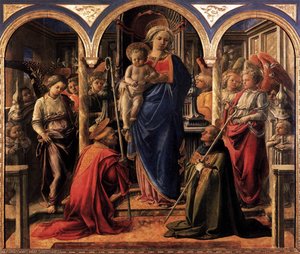
To stand before a work like this Triptych by Fra Filippo Lippi is to step directly into the luminous heart of the Early Renaissance. Dating from 1437, this piece transcends mere decoration; it is a profound meditation on faith, humanity, and divine mystery, rendered with an exquisite delicacy that speaks volumes of its creator's genius. The very structure—the three distinct yet harmoniously connected panels—invites the viewer into a narrative journey, guiding the eye from one sacred moment to the next.
Lippi, a master whose life was as complex as his art, captured the burgeoning spirit of humanism within deeply religious iconography. His ability to imbue monumental subjects with such palpable tenderness is what makes this triptych so enduringly captivating. The meticulous application of tempera paint allows for a jewel-like vibrancy in the colors, while the underlying structure speaks to an emerging mastery of perspective, giving weight and believable depth to every figure.
Composition and Sacred Narrative
The genius of the composition lies in its tripartite division, each panel serving as a self-contained yet related devotional scene. In the central focus, we encounter the Madonna and Child, a timeless tableau where Mary’s serene blue cloak speaks of purity, cradling the vibrant life symbolized by the infant Jesus robed in red. Flanking this core mystery are supporting figures—on the left, perhaps a bishop or cardinal holding scripture, grounding the scene in scholarly tradition; and on the right, another saintly figure contemplating sacred texts.
The architectural elements visible in the background, reminiscent of grand Gothic cathedrals, serve not only as setting but as symbolic anchors to the enduring Church. These scenes are richly framed by elaborate gold borders, which do more than simply adorn; they elevate the depicted moments to an almost ethereal plane of opulence and sanctity.
Technique and Material Brilliance
The choice of tempera medium is crucial to appreciating this artwork's technical brilliance. This egg-based paint allowed Lippi unparalleled control, enabling him to achieve those breathtakingly fine details—the folds in the drapery, the delicate rendering of halos, the subtle expressions on the faces.
When considering a reproduction of such a piece for your home or collection, understanding this technique is key. The luminosity achieved by tempera is unlike oil paint; it possesses a matte, jewel-toned richness that speaks to centuries of careful craftsmanship. It is a testament to the artist's hand, where every brushstroke feels deliberate and imbued with purpose.
Symbolism and Emotional Resonance
Beyond the narrative, the triptych pulses with deep symbolism. The interplay between the rich blues, the passionate reds, and the solemn greens creates a visual vocabulary of divinity, humanity, and sacrifice. It is an artwork that does not merely depict holiness; it evokes the *feeling* of reverence. For the modern collector or designer, this piece offers more than just aesthetic beauty; it offers a focal point for contemplation—a quiet corner imbued with historical weight and spiritual depth.
To bring such a masterpiece into your space is to invite a dialogue between Renaissance artistry and contemporary life. It suggests an appreciation for enduring narratives, meticulous skill, and the profound beauty found at the intersection of art and faith.
Veelgestelde vragen
Kan ik "Triptych" in meer detail bekijken?
De Röntgenanalyse-pagina van "Triptych" door Filippo Lippi is een interactieve viewer waarmee u door elf optische lagen van het kunstwerk kunt glijden, inclusief een weergave in röntgenstijl.
Tot welke periode in de carrière van Filippo Lippi behoort "Triptych"?
"Triptych" behoort tot de Early Renaissance in de carrière van Filippo Lippi. Deze classificatie plaatst het werk in de context van de ontwikkeling van de kunstenaar.
Wat is de dominante kleur van "Triptych"?
De dominante kleur van "Triptych" door Filippo Lippi is Golden Yellow Range. Deze kleur vormt de onderliggende toon van het palet.
Snelle feiten en kunstquiz
Over Filippo Lippi

Filippo Lippi
1406 - 1469, Italië
Biografie kunstenaar
A Florentine Rebel: The Life and Art of Filippo Lippi
Filippo di Tommaso Lippi, beter bekend als Fra Filippo Lippi, was een figuur die zowel door artistieke genialiteit werd verheven als door een leven vol schandaal en onconventionele keuzes. Geboren in Florence in 1406 uit een familie van slachters, waren zijn vroege jaren gekenmerkt door verlies; hij werd op jonge leeftijd wegens de dood van zijn ouders, alleen achtergelaten aan de zorg van zijn tante, Mona Lapaccia. Deze omstandigheden leidden uiteindelijk tot zijn toetreding tot de Carmelietenorde in 1420, een pad dat niet alleen zijn artistieke ontwikkeling vormde maar ook de complexiteit van zijn karakter definieerde. Binnen deze kloostermuren begon jonge Filippo met zijn formele opleiding en ontdekte hij cruciaal zijn passie voor schilderkunst. De invloed van deze omgeving is tastbaar in veel van zijn werk: een delicate balans tussen spirituele toewijding en een toenemende menselijke gevoeligheid.Van Religieuze Vows tot Artistische Innovatie
Lippi’s toetreding tot de Carmelietenorde in 1420 was niet slechts het gevolg van omstandigheden, maar leek zijn artistieke drang te ontketenen. Hij nam zijn geloften op zestienjarige leeftijd en werd rond 1425 priester, waarbij hij bleef in de priorij tot 1432. Het is tijdens deze periode dat kunsthistoricus Giorgio Vasari beschrijft hoe Lippi gefascineerd raakte door de baanbrekende fresco’s van Masaccio in de Brancacci Kapel – een ontmoeting die cruciaal bleek te zijn. De impact van Masaccio's naturalisme en innovatieve lichtgebruik is duidelijk zichtbaar in Lippi’s vroege werken, zoals de *Tarquinia Madonna*, waar een nieuwe realiteit begint te verschijnen. Echter, Lippi was niet simpelweg een imitator; hij ontwikkelde snel zijn eigen kenmerkende stijl, gekenmerkt door lyrische gratie, delicate kleuren en een subtiele emotionele diepte die hem onderscheidde van zijn tijdgenoten. Hij begon religieuze scènes te vullen met een gevoel van intimiteit en menselijke verbinding, weg van de meer rigide formaliteit van eerdere devotionele kunst.Een Meester van Compositie en Controverse
Lippi’s artistieke carrière bloeide op in Florence, waar hij commissies ontving van prominente families zoals de Medici. Werken zoals *De Aankondiging en de Zeven Heiligen* tonen zijn vermogen om complexe composities te creëren vol symbolische betekenis en elegante detail. De *Kroning der Maagd*, voltooid in 1441 voor de nonnen van Sant’Ambrogio, is bijzonder opmerkelijk; het bevat een halflange figuur die velen zien als een zelfportret van Lippi zelf – een moedige uitspraak van artistieke identiteit binnen een religieuze context. Maar zijn leven was verre van sereen. Hij werd vaak verwikkeld in financiële moeilijkheden, juridische geschillen en beschuldigingen van vervalsing. Misschien de meest sensationele episode was zijn ontvoering van Lucrezia Buti, een non uit Prato, met wie hij na jaren van schandaal en controverse uiteindelijk trouwde. Deze daad, hoewel schokkend voor die tijd, spreekt Lippi’s rebelse geest en zijn bereidheid om maatschappelijke normen te verwerpen in de jacht op persoonlijke geluk te spreken.De Invloed van Masaccio en de Vroege Stijl
Lippi’s artistieke ontwikkeling werd sterk beïnvloed door Masaccio, wiens werk hij ontmoette in de Brancacci Kapel. De nadruk op realisme, het gebruik van licht en schaduw, en de compositie waren allemaal elementen die Lippi overnam. Zijn vroege werken, zoals de *Tarquinia Madonna*, laten deze invloed duidelijk zien. Echter, Lippi was niet alleen een imitator; hij ontwikkelde al snel zijn eigen stijl, gekenmerkt door lyrische gratie, delicate kleuren en een subtiele emotionele diepte. Hij begon religieuze scènes te vullen met een gevoel van intimiteit en menselijke verbinding, weg van de meer rigide formaliteit van eerdere devotionele kunst. De *Annunciatie* en de *Zeven Heiligen*, besteld door Cosimo de Medici, zijn voorbeelden van deze stijl.Een Meester van Compositie en Controverse
Lippi’s artistieke carrière bloeide op in Florence, waar hij commissies ontving van prominente families zoals de Medici. Werken zoals *De Aankondiging en de Zeven Heiligen* tonen zijn vermogen om complexe composities te creëren vol symbolische betekenis en elegante detail. De *Kroning der Maagd*, voltooid in 1441 voor de nonnen van Sant’Ambrogio, is bijzonder opmerkelijk; het bevat een halflange figuur die velen zien als een zelfportret van Lippi zelf – een moedige uitspraak van artistieke identiteit binnen een religieuze context. Maar zijn leven was verre van sereen. Hij werd vaak verwikkeld in financiële moeilijkheden, juridische geschillen en beschuldigingen van vervalsing. Misschien de meest sensationele episode was zijn ontvoering van Lucrezia Buti, een non uit Prato, met wie hij na jaren van schandaal en controverse uiteindelijk trouwde. Deze daad, hoewel schokkend voor die tijd, spreekt Lippi’s rebelse geest en zijn bereidheid om maatschappelijke normen te verwerpen in de jacht op persoonlijke geluk te spreken.Legacy and Influence
Ondanks de turbulentie van zijn leven liet Filippo Lippi een onuitwisbare stempel achter op de Renaissance kunst. Hij was een zeer gevraagde schilder, en zijn werkplaats werd een broedplaats voor toekomstige meesters. Onder zijn meest uitstekende leerlingen waren Sandro Botticelli en Francesco di Pesello (Pesellino), beiden van wie afstamming zou leiden tot aanzienlijke erkenning in hun eigen recht. Lippi’s invloed kan worden gezien in de lyrische schoonheid en emotionele expressiviteit die kenmerken veel van de Florentijnse schilderkunst tijdens het late Quattrocento. Hij bracht de kloof tussen de vroege Renaissance naturalisme van Masaccio en de verfijndere esthetiek van de Gouden Eeuw samen, waardoor een nieuwe generatie kunstenaars werd geopend om de mogelijkheden van menselijke vorm en emotie te verkennen. Zijn vermogen om religieuze toewijding te combineren met wereldse realisme, gekoppeld aan zijn innovatieve composities en uitstekende techniek, versterkte zijn plaats als een van de meest belangrijke en boeiende figuren van de Italiaanse Renaissance. Hij stierf in Spoleto in 1469, nalatend een erfenis die tot op de dag van vandaag bewondering en bewondering inspireert. Zijn kunst is een getuigenis van de kracht van menselijke creativiteit en de blijvende aantrekkingskracht van schoonheid.Snelle feiten over Filippo Lippi
- Artistic Movement Or Style: Vroege Renaissance
- Artists Or Movements Influenced By This Artist: ['Botticelli']
- Artists Who Influenced This Artist: ['Masaccio']
- Date Of Birth: 1406
- Date Of Death: 1469
- Full Name: Filippo di Tommaso Lippi
- Nationality: Italiaans
- Notable Artworks:
- Tarquinia Madonna
- Annunciatie
- Zeven Heiligen
- Place Of Birth: Florence, Italië
Ontdek kunstwerken georganiseerd op thema, stijl en kenmerk.




Filippo Lippi
Triptych
() ·
Inclusief lijst: · Met de hand geschilderd in olieverf op linnen
Totaal