
Getoond: · Inclusief lijst:
 Voorvertoning
 Verstuur
 Delen
Delen
 Details bekijken
 Gids
Gids

 Download
 Vergelijkbare items
 Röntgenonderzoek
 Diavoorstelling
 Vraag & antwoord
 Statistieken
- 142.0 x 210.0 cm


€ 240
Handgemaakte olieverfreproductie
Met de hand geschilderd in olieverf op canvas in uw gewenste maat en lijst, op bestelling gemaakt door onze kunstenaars. ( Schakel over naar print Schakel over naar digitale afbeeldingen)
Formaat
·Standaardformaat
op maat gemaakt
CM
INCH
Kies uit onze vooraf ingestelde maten die overeenkomen met de originele verhoudingen van het kunstwerk.
Afmetingen laden...

breedte
hoogte
Voer de breedte en hoogte in die u nodig heeft, passend bij uw lijst of uw muur. Omdat dit handgeschilderd is, kan de kunstenaar bij een afmeting met een andere beeldverhouding iets meer rondom het schilderij schilderen of juist iets meer weglaten — u kiest zelf. Wij sturen u een digitaal mockup ter goedkeuring voordat het schilderwerk begint. De afbeelding die op deze pagina wordt getoond, is niet het uiteindelijke resultaat — alleen de mockup geeft dit weer.
 Lees meer over
Afronden
·
Wit €1

Vervagende randen €1

Doorlopende rand €1

P118B €10

P118H €10

P118W €10

P438Z €10

P508JH €12

P508YH €12

P805H €10

P805Z €10

P919BZ €10

P919G €10

P919XJ €10

P959ZH €10

P968JZ €12

W106C €8

W218G €10

W218JH €8

W218Y €10

W307PJ €10

W316G €10

W316PJ €8

W316Y €10

W398PJ €8

W4111J €10

W500HY €15

W500JH €15

W692G €12

W849H €8

W940BG €15

W953PJ €8

H24-GOLD €30

H24-SILVER €30

H36-GOLD €45

H36-SILVER €45
Verzonden in een beschermende koker, klaar om door uw eigen frameur te worden ingelijst.
Extra's
optioneelWat zijn de extra's precies?
Voorbeelden van wat aangepast kan worden: Vervang het gezicht door een foto van de klant; Voeg een huisdier toe (bijv. vervang de kat door een hond); Voeg een verborgen boodschap toe aan de achtergrond; Wijzig het landschap of de elementen in de achtergrond.
Na de bestelling zal het team van TopImpressionists.com per e-mail contact opnemen met de klant voor instructies en een mockup-voorbeeld verstrekken
Na de bestelling zal het team van TopImpressionists.com per e-mail contact opnemen met de klant voor instructies en een mockup-voorbeeld verstrekken
Wereldwijde levering () binnen 3 tot 4 weken in plaats van de standaard 5 weken. (6 november). Zonder concessies aan de kwaliteit.
Beschermende vernislaag
Naamplaatje
Details van de gegraveerde bronzen plaat
This elegant plaque features the artist's name and the title of the artwork, finely engraved for a timeless presentation.
It is made from bronze with a refined, elegant finish. The text is precisely laser-engraved for a sharp and permanent result. Measuring 9x2 cm, the plaque is compact yet easy to read. It's built to be durable and scratch-resistant, offering a professional, museum-quality look. Mounting is simple thanks to the included adhesive backing.
Details transparante acrylplaat
The plaque includes essential engraved details such as the artist's name, the title of the artwork, the date it was created, the type of media used-like oil on canvas or watercolor-a brief description of the piece, and a QR code that links to the complete artwork information.
It is crafted from clear acrylic, offering a sleek, modern appearance. The text is UV-engraved in black to ensure strong visual contrast. With a size of 10x15 cm, it ensures optimal readability. It comes equipped with two metal hooks for secure wall mounting. The plaque is designed to be weather-resistant, making it suitable for various environments, and it includes interactive features that work seamlessly with smartphone scanning.
Details zwarte acrylplaat
This elegant plaque includes engraved information such as the artist's name, the title of the artwork, the date it was created, the type of media used (like oil on canvas or watercolor), a short description of the artwork, and a QR code for quick access to more information.
The plaque itself is made from refined black acrylic with a premium finish. The text is laser-engraved in white for high contrast and readability. Its size is 10x15 cm, designed to be easy to read. It comes with two metal hooks for professional mounting. The design is sleek and fits any interior style. It is also weather-resistant and durable, with built-in digital integration for mobile compatibility.
De optie voor glas is alleen beschikbaar bij een formaat kleiner dan 110 cm.
 De optie voor glas is alleen beschikbaar bij een formaat kleiner dan 110 cm.
- Gratis wereldwijde expressverzending
- Hoogwaardig linnen canvas
- Volledige verzendverzekering
- Garantie op terugbetaling van invoerrechten
- Garantie op exacte kleurweergave
- Retourbeleid van 100 dagen (alleen bij defecten)
- 100% Geld-terug-garantie
- Korting bij meerdere afnames


Beschrijving verzamelobject
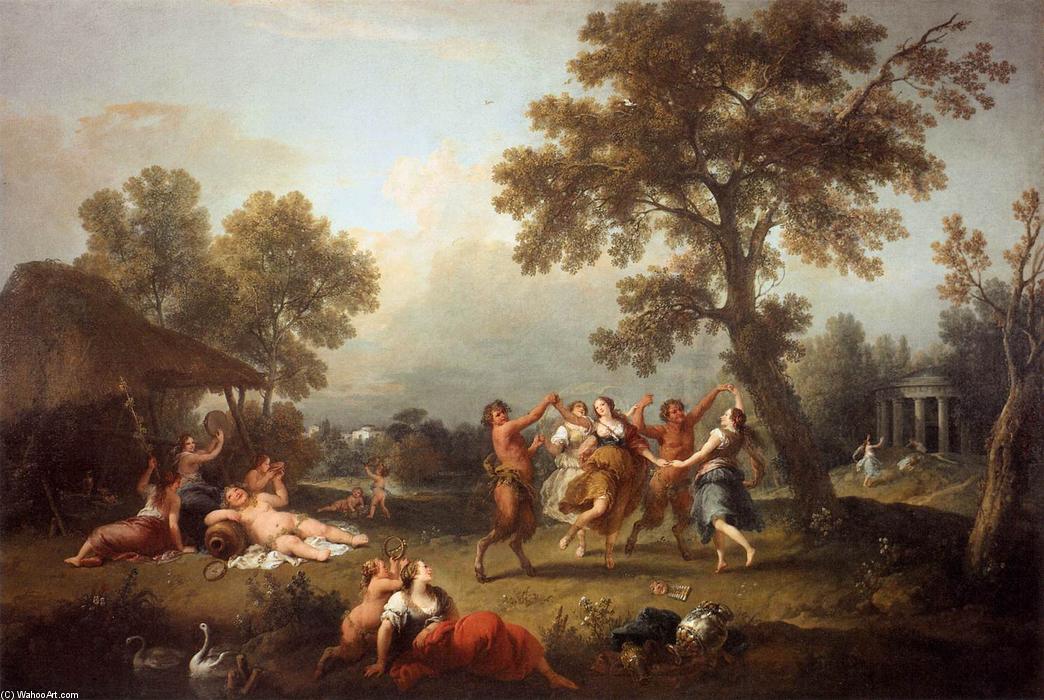
Experience the joyous Rococo elegance of Francesco Zuccarelli’s Bacchanal, a vibrant oil masterpiece capturing an idyllic pastoral celebration that invites you to bring timeless Venetian charm into your private collection.
Biografie kunstenaar
Ontdek de idyllische landschappen van Francesco Zuccarelli (1702-1788), een Italiaanse meester van de Rococo, bekend om zijn Arcadische scènes en Venetiaanse charme.
Over het schilderij
Francesco Zuccarelli’s Bacchanal: A Symphony of Pastoral Elegance
The Bacchanal by Francesco Zuccarelli stands as an emblem of the Rococo artistic movement, capturing not merely a scene but an entire ethos—one steeped in aristocratic indulgence and idealized beauty. Painted circa 1740-50, this oil on canvas masterpiece resides within the Gallerie dell’Accademia in Venice, Italy, offering visitors a glimpse into a period defined by opulent interiors and refined sensibilities. Zuccarelli's skill lies not just in depicting figures engaged in joyous revelry but in crafting an immersive experience that transports the viewer to a realm of pastoral serenity infused with vibrant color and masterful composition.Composition and Style: Balancing Chaos and Harmony
Zuccarelli’s approach distinguishes itself from the more dramatic Baroque tradition, prioritizing balance and grace over theatrical grandeur. The painting depicts a lively bacchanal—a celebration honoring Dionysus, the Greek god of wine and ecstasy—yet it avoids overwhelming visual sensation. A central group of figures dominates the canvas, their postures dynamic yet carefully arranged around a prominent architectural element: a classical structure reminiscent of Roman temples, subtly anchoring the scene in antiquity. The artist employs meticulous detailing to portray each participant’s attire and expression, conveying both physicality and emotion with remarkable precision. Notice how Zuccarelli utilizes light and shadow to sculpt forms, creating depth and enhancing the sense of movement—a hallmark of Rococo aesthetics.Color Palette and Technique: Embracing Pastel Radiance
The color palette is dominated by earthy tones – ochre, umber, Sienna – providing a grounding counterpoint to the splashes of vibrant hues adorning the figures’ clothing. Crimson reds, emerald greens, and sapphire blues punctuate the scene, symbolizing fertility, vitality, and divine inspiration. Zuccarelli's technique showcases exceptional brushwork, layering pigments with subtle gradations to achieve luminous surfaces that shimmer with reflected light. The artist skillfully blends colors on canvas, creating a velvety texture that contributes to the painting’s overall impression of luxurious softness. This meticulous attention to detail underscores Zuccarelli’s dedication to capturing not just what is seen but also how it feels—a testament to the transformative power of art.Historical Context: Venetian Aristocracy and Artistic Patronage
The Bacchanal reflects the cultural landscape of Venice during the mid-18th century, a city ruled by an aristocratic elite deeply invested in artistic patronage. Zuccarelli’s work exemplifies the Rococo style's fascination with idealized landscapes and mythological narratives—themes favored by Venetian noble families eager to express their status and sophistication. The painting aligns perfectly with broader European trends toward decorative art and emotional expression, signaling a shift away from Baroque solemnity towards a celebration of sensual pleasure and imaginative vision.Symbolism: Dionysian Ecstasy and Pastoral Tranquility
Beyond its visual splendor, Bacchanal is laden with symbolic significance. The bacchanalia itself represents the unrestrained pursuit of joy and indulgence—a deliberate rejection of Puritan morality—while simultaneously evoking images of Arcadia, the mythical pastoral paradise inhabited by shepherds and nymphs. The figures’ gestures convey a profound connection to nature and divine inspiration, mirroring the Rococo preoccupation with themes of beauty, harmony, and sensual experience. Zuccarelli's masterful depiction captures not only the outward spectacle of celebration but also its inner resonance—a reminder that art can transcend mere representation to communicate deeper truths about human emotion and spiritual aspiration.Legacy: Rediscovering Zuccarelli’s Vision
Francesco Zuccarelli’s reputation waned in the early 19th century, yet his work has experienced a resurgence of interest in recent decades, displayed prominently in museums worldwide. Bacchanal stands as a cornerstone of Rococo art history—a testament to Zuccarelli's artistic genius and his ability to distill the essence of an era into a single unforgettable image. Its enduring appeal lies in its exquisite beauty, balanced composition, and profound exploration of human emotion, continuing to inspire artists and collectors alike.Veelgestelde vragen
Hoe intens zijn de kleuren in "Bacchanal" door Francesco Zuccarelli?
"Bacchanal" door Francesco Zuccarelli heeft een Balanced kleurintensiteit.
Welke afmeting van "Bacchanal" door Francesco Zuccarelli past in de aanbevolen kamer?
De aanbevolen combinatie voor "Bacchanal" door Francesco Zuccarelli: een afdruk van Large in een Living Room.
Hoe verhoudt "Bacchanal" zich tot de terugkerende thema's van Francesco Zuccarelli?
Binnen de bekende thema's van Francesco Zuccarelli - classical ideals, roman mythology, decorative style, venetian tradition, landscape genre - legt "Bacchanal" een eigen focus op bacchanal, landscape, classical, wine, festive, figures, italy.
Snelle feiten en kunstquiz
Over Francesco Zuccarelli

Francesco Zuccarelli
1702 - 1788, Italië
Biografie kunstenaar
Francesco Zuccarelli: Een leven in landschap
- Geboren: Pitigliano, Italië (1702)
- Overleden: 1788
- Stroming: Laat-Barok / Rococo
Giacomo Francesco Zuccarelli, bij de meeste mensen simpelweg bekend als Francesco Zuccarelli, was een cruciale Italiaanse kunstenaar die wereldwijd faam verwierf met zijn idyllische landschappen en Arcadië-achtige scènes. Geboren in het Toscaanse Pitigliano in 1702, groeide hij in het midden van de 18e eeuw uit tot de meest betekenisvolle landschapsschilder van Venetië. Zijn werk vond diepe weerklank in heel Europa, en in het bijzonder in Engeland, waar hij gedurende aanzienlijke perioden onder koninklijk mecenaat werkte.
Vroege opleiding en Romeinse invloeden
De artistieke reis van Zuccarelli begon in Rome, waar hij als leerling werkte onder Giovanni Maria Morandi en Pietro Nelli, met een aanvankelijke focus op de portretkunst. Tussen 1728 en 1731 wijdde hij zich grotendeels aan het graveren van de vervagende fresco's van Giovanni da San Giovanni en Andrea del Sarto, een taak die zijn scherpe oog voor detail en zijn affiniteit met klassieke invloeden verder aanscherpte. Volgens de historicus Luigi Lanzi speelde Paolo Anesi een instrumentale rol in het begeleiden van Zuccarelli naar de landschapsschilderkunst, wat de koers van zijn artistieke leven definitief zou bepalen.
Zijn vroege werken onthullen de diepe invloed van het Romeins classicisme en een ontluikende passie voor het vastleggen van de serene schoonheid van het Italiaanse platteland.
De Venetiaanse periode en de weg naar roem
Rond 1732 verhuisde Zuccarelli naar Venetië, waar hij slim inspeelde op een groeiende behoefte aan nieuwe landschapsschilderkunst. Hier ontwikkelde hij een geheel eigen stijl, gekenmerende door een zacht palet, luchtige composities en figuren die tot leven kwamen door lumineuze tonale waarden—een verfrissende breuk met de zwaardere, typische Venetiaanse kleuren van zijn voorgangers. Deze vernieuwing trok snel invloedrijke beschermheren aan, zoals maarschalk Schulenburg, Joseph Smith (de Britse consul) en Francesco Algarotti.
Zijn creativiteit stopte niet bij het canvas; hij ging regelmatig samenwerkingen aan met kunstenaars als Antonio Visentini en Bernardo Bellotto. Zijn oeuvre omvatte onder andere series over neo-Palladiaanse architectuur en een set speelkaarten gebaseerd op het Oude Testament, versierd met handgekleurde scènes. In 1768 bereikte zijn internationale prestige een hoogtepunt toen hij mede-oprichter werd van de Royal Academy of Arts in Londen, waarmee zijn status als grootmeester definitief werd bezegeld.
De latere jaren, verval en hernieuwde waardering
Ondanks de aanvankelijke triomfen, begon de reputatie van Zuccarelli in het begin van de 19e eeuw te wankelen naarmate het naturalisme aan terrein won. Critici zoals Turner uitten slechts gematigd lof; zij erkenden de schoonheid van zijn figuren, maar stelden vragen bij zijn algehele stijl. De kunsthistoricus Michael Levey analyseerde later dat de brede populariteit van Zuccarelli vooral te danken was aan het decoratieve karakter van zijn werk, wat hem met name bij het Engelse publiek zeer geliefd maakte.
Sinds de jaren 90 is er echter sprake van een herwaardering. Italiaanse wetenschappers hebben de kar getrokken in het herstellen van Zuccarelli's eer, waarbij zij zijn cruciale bijdrage aan de landschapsschilderkunst benadrukken via talrijke tentoonstellingen. Vandaag de dag wordt Francesco Zuccarelli erkend als een ware meester van de Rococo, gevierd om zijn idyllische landschappen die een gevoel van rust en klassieke schoonheid oproepen. Zijn nalatenschap blijft kunstenaars inspireren en publiek over de hele wereld betoveren.
Snelle feiten over Francesco Zuccarelli
- Artistic Movement Or Style: Rococo, Barok
- Artists Who Influenced This Artist:
- Paolo Anesi
- Claude Lorrain
- Andrea del Sarto
- Date Of Birth: 15 augustus 1702
- Date Of Death: 30 december 1788
- Full Name: Giacomo Francesco Zuccarelli
- Nationality: Italiaans
- Notable Artworks:
- Capriccio met San Giorgio Maggiore
- Klassiek Landschap
- Landschap met meisjes aan de rivier
- Bacchanale
- Place Of Birth (City And Country): Pitigliano, Italië

Francesco Zuccarelli
Bacchanal
() ·
Inclusief lijst: · Met de hand geschilderd in olieverf op linnen
Totaal