


 Bekijk op ware grootte
 Verstuur
 Delen
Delen
 Details bekijken
 Gids voor studentenkunstwerken

 Download
 Vergelijkbare items
 Röntgenonderzoek
 Diavoorstelling
 Statistieken
Salome
 Acrylic On Canvas
- WallArt
- German Symbolism
 1906
1906 92.0 x 114.0 cm
 Lenbachhaus
Franz Ritter von Stuck's "Salome" (1906) depicts a captivating dance of desire and tragedy, blending Symbolism with biblical drama. Explore the haunting beauty & dark narrative of this iconic masterpiece.
 Lees meer
"meta_description": "Franz von Stuck was een invloedrijke Duitse Symbolist schilder, bekend om zijn mythische en sensuele werken, een sleutelfiguur in de München Secession en een belangrijke kunstenaar van de vroege 20e eeuw."
Handgemaakte olieverfreproductie
Met de hand geschilderd in olieverf op canvas in uw gewenste maat en lijst, op bestelling gemaakt door onze kunstenaars. ( Schakel over naar print Schakel over naar digitale afbeeldingen)




P118B €10

P118H €10

P118W €10

P438Z €10

P508JH €12

P508YH €12

P805H €10

P805Z €10

P919BZ €10

P919G €10

P919XJ €10

P959ZH €10

P968JZ €12

W106C €8

W218G €10

W218JH €8

W218Y €10

W307PJ €10

W316G €10

W316PJ €8

W316Y €10

W398PJ €8

W4111J €10

W500HY €15

W500JH €15

W692G €12

W849H €8

W940BG €15

W953PJ €8




Standaardformaat
op maat gemaakt
CM
INCH
Kies uit onze vooraf ingestelde maten die overeenkomen met de originele verhoudingen van het kunstwerk.
Loading sizes...

breedte
hoogte
Voer de breedte en de hoogte in die u nodig heeft, passend bij uw lijst of uw muur. Dit is handgeschilderd, dus bij een afmeting met een andere vormverhouding kan de kunstenaar iets meer rondom het schilderij schilderen of juist iets meer weglaten — u kiest zelf. Wij sturen u een digitaal mockup ter goedkeuring voordat het schilderwerk begint. De afbeelding die op deze pagina wordt getoond, is niet het uiteindelijke resultaat — alleen de mockup geeft dit weer.
Voorbeelden van wat aangepast kan worden: Vervang het gezicht met een eigen foto; Voeg een huisdier toe (bijv. vervang de kat door een hond); Verwerk een verborgen boodschap in de achtergrond; Wijzig het landschap of andere elementen in de achtergrond.
Na de bestelling zal het team van TopImpressionists.com per e-mail contact opnemen met de klant voor instructies en een mockup-voorbeeld sturen.
Na de bestelling zal het team van TopImpressionists.com per e-mail contact opnemen met de klant voor instructies en een mockup-voorbeeld sturen.
Wereldwijde levering () binnen 3 tot 4 weken in plaats van de standaard 5 weken. (22 oktober). Zonder concessies aan de kwaliteit.

Gratis wereldwijde expressverzending

Hoogwaardig linnen canvas

Volledige verzendverzekering

Garantie op terugbetaling van invoerrechten

Garantie op exacte kleurweergave

Retourbeleid van 100 dagen (alleen bij defecten)

100% Geld-terug-garantie

Korting bij meerdere afnames
 De optie voor glas is alleen beschikbaar bij een formaat kleiner dan 110 cm.

Salome
Reproductiemethode
Formaat reproductie
-


Totaalprijs
€ 236
The Enigmatic Dance: Unveiling Franz Ritter von Stuck’s “Salome”
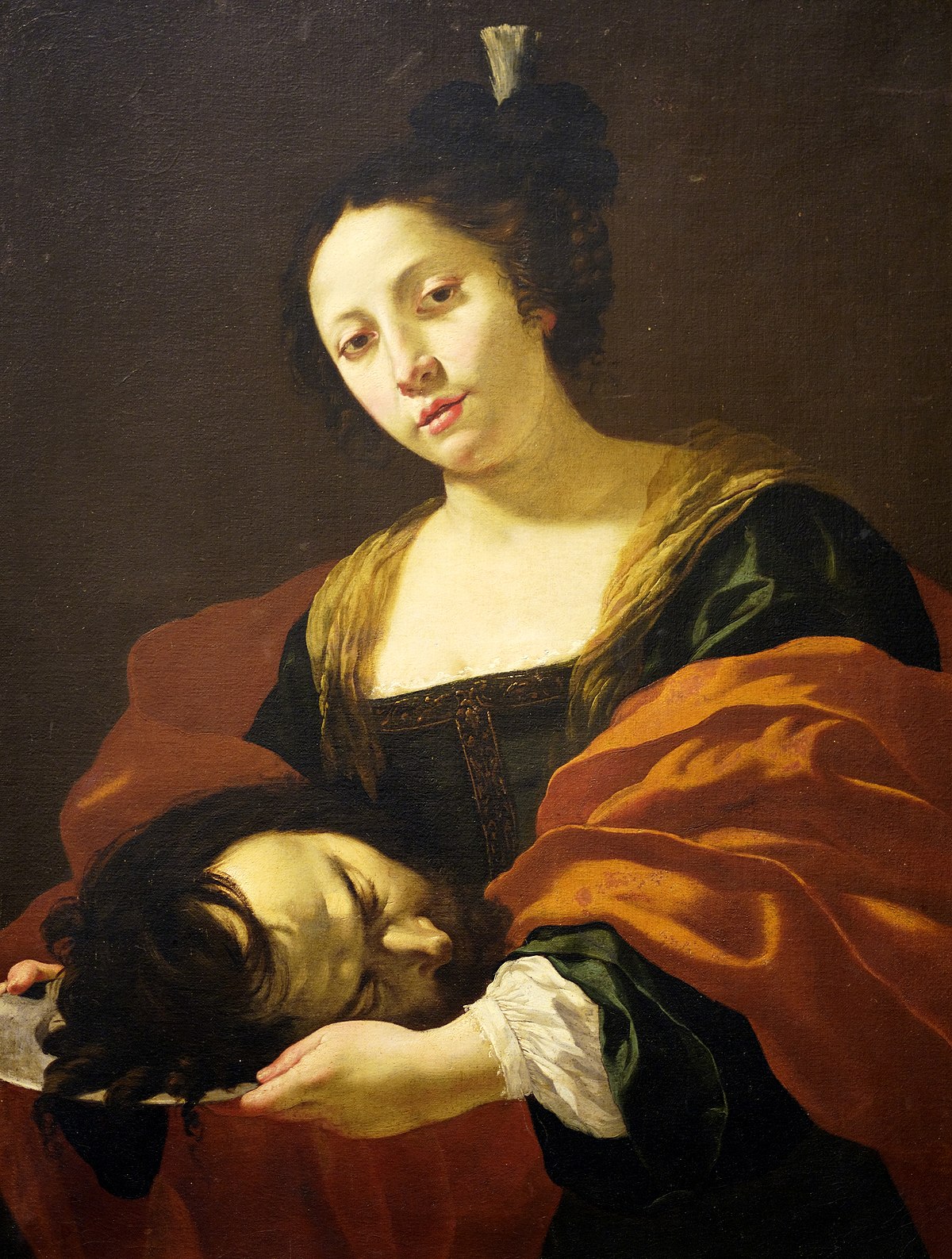
Franz Ritter von Stuck's 1906 painting, "Salome," is not merely a depiction of a biblical episode; it’s a profoundly unsettling and intensely symbolic exploration of desire, power, and the dark undercurrents of human nature. Emerging from the fertile ground of German Symbolism, Stuck masterfully blends classical precision with the dreamlike logic of the subconscious, creating an image that continues to captivate and disturb over a century later. The painting’s immediate impact lies in its dramatic composition – a carefully orchestrated tableau of figures poised on the precipice of violence and obsession. The scene unfolds within a shadowy, almost claustrophobic space, dominated by a towering, ornate architecture suggesting both opulence and impending doom. This isn't a straightforward narrative; it’s an atmosphere saturated with tension, inviting viewers to contemplate the motivations and fates of those involved.
A Symphony of Contrasts: Style, Technique, and Materiality
Stuck’s artistic style is immediately recognizable as a potent blend of Symbolism and Art Nouveau influences. The painting showcases his signature use of rich, jewel-toned colors – deep reds, emerald greens, and shimmering golds – applied with meticulous detail to create an opulent yet unsettling effect. His brushwork is deliberately expressive, employing visible strokes that contribute to the overall sense of drama and movement. Notice particularly the way he renders the textures: the velvet drapery, the polished surfaces of the architecture, and even the glistening skin of Salome herself – all are rendered with a tactile quality that draws the viewer into the scene. The painting was executed in oil on canvas, a medium that allowed Stuck to achieve both luminous color saturation and remarkable textural detail. The use of chiaroscuro—the dramatic contrast between light and shadow—further intensifies the emotional impact, highlighting key figures and obscuring others in an atmosphere of mystery and foreboding.
The Narrative Unfolds: Biblical Context and Symbolism
At its core, “Salome” depicts a pivotal moment from the New Testament – the fulfillment of Herodias’s vengeful plot against John the Baptist. However, Stuck doesn't offer a simple retelling of the story; instead, he delves into the psychological complexities of the characters and imbues the scene with layers of symbolic meaning. Salome herself is not portrayed as a seductive temptress but rather as a figure caught in a web of manipulation and driven by a primal desire for power. The presence of the dark servant, clutching John’s severed head on a platter, introduces an element of grotesque horror – a stark reminder of the brutal consequences of unchecked ambition. The architecture—a blend of Romanesque and Byzantine styles—suggests both grandeur and decay, mirroring the moral corruption at the heart of the narrative. The star-studded night sky serves as a backdrop to this drama, hinting at a realm beyond earthly concerns and perhaps suggesting a connection between life and death.
A “Prince of Art”: Stuck’s Legacy and Artistic Significance
Franz Ritter von Stuck was more than just an artist; he was a cultural phenomenon. Nicknamed the "Prince of Art" during his lifetime, he bridged the gap between academic tradition and the burgeoning currents of modernism. His work explored themes of sin, beauty, and the subconscious with a boldness and emotional intensity that resonated deeply with audiences at the turn of the 20th century. Villa Stuck, his own architectural masterpiece in Munich, stands as a testament to his artistic vision—a lavishly decorated space filled with sculptures, paintings, and intricate details reflecting his fascination with mythology, symbolism, and the darker aspects of human experience. “Salome” is arguably one of his most enduring works, demonstrating his mastery of dramatic composition, evocative color palettes, and profound psychological insight. It remains a powerful and unsettling image that continues to provoke discussion and inspire interpretation.
Vragen & Antwoorden
Waarvan is "Salome" gemaakt en in welke stijl?
"Salome" is vervaardigd in Acrylic On Canvas, in de German Symbolism-stijl.
Is "Salome" door Franz von Stuck een schilderij, een tekening of een prent?
"Salome" is een WallArt-werk.
Wat zijn de datum en de stijl van "Salome" door Franz von Stuck?
"Salome" werd in 1906 gecreëerd als een werk uit de German Symbolism-stroming. De datum en de stroming verankeren het kunstwerk in de kunstgeschiedenis.
Biografie van de kunstenaar
Een Leven Gedicht in Symbolen: Franz Ritter von Stuck
Franz Ritter von Stuck, een naam die synoniem staat voor de evocatieve kracht van Duitse Symbolisme, ontpopte zich uit het ruige landschap van Beieren in 1863 tot een van de meest invloedrijke kunstenaars van zijn tijd. Geboren in Tettenweis, aanvankelijk bestemd voor een leven als forester na zijn vader, toonde jonge Franz al vroeg een onweerstaanbare artistieke drang die zijn pad radicaal zou veranderen. Deze vroege aanleg leidde hem naar München, eerst naar de School of Applied Arts in 1878 en vervolgens naar de Academie voor Beeldende Kunsten vanaf 1882-1884, waar hij onder de betovering van Arnold Böcklin’s spookachtig mooie mythologische scènes viel – een vormende invloed die zijn artistieke visie diep zou bepalen. Stuck was niet zomaar een kunstenaar; hij was een cultureel fenomeen, een “Prins der Kunst” zoals hij tijdens zijn leven bekend stond, en bracht de kloof tussen de academische tradities van de 19e eeuw en de opkomende stromingen van het modernisme in kaart.De Opkomst van een Symbolistische Meester
Stuck’s opstijging tot prominentie was verrassend snel. Zijn doorbraak kwam in 1889 met *The Guardian of Paradise*, tentoongesteld in de Glazen Paleis in München, en won onmiddellijk kritische lof en een gouden medaille. Deze schilderij was niet alleen een demonstratie van technische vaardigheid; het verkondigde een nieuwe artistieke stem – één die klassieke precisie combineerde met mythologische onderwerpen en een ondertoon van symbolistische mystiek. Hij werd snel een centrale figuur in de uitdaging van gevestigde normen, en medeoprichter van de München Secession in 1892, samen met gelijkgestemde kunstenaars die vastbesloten waren om zich los te maken van conservatieve beperkingen en moderne kunst te verdedigen. Deze daad van artistieke rebellie kwam overeen met zijn exploratie van beeldhouwkunst, waarbij hij debuteerde met *Athlete*, een indrukwekkende demonstratie van zijn veelzijdigheid. Echter, *The Sin* (1893) cementeerde zijn reputatie als meester van Symbolistische schilderkunst, en trok het publiek en de kritiek aan met zijn dramatische intensiteit en psychologische diepte. Deze periode markeerde de volle bloei van Stuck’s unieke stijl – een krachtige combinatie van sensualiteit, klassieke vorm en symbolische resonans.Thema's en Invloeden: Een Wereld van Verlangen en Mythologie
De artistieke wereld van Franz von Stuck wordt bevolkt door terugkerende motieven die zijn diepe betrokkenheid met tijdloze thema’s onthullen. Mythologie diende als een constante bron van inspiratie, getrokken uit Griekse, Romeinse en Bijbelverhalen – die hij op zijn eigen manier herinterpreteerde. Dit waren geen simpele hervertellingen; het waren exploraties van de menselijke conditie gefilterd door de lens van oude verhalen. Net zo prominent was zijn fascinatie voor sensualiteit en de *femme fatale*, krachtig uitgedrukt in zijn vele beelden van Salome – een figuur die verlangen, gevaar en morele ambiguïteit vertegenwoordigt. Deze schilderijen waren niet alleen bedoeld om fysieke schoonheid te tonen; ze gingen dieper in op de psychologische complexiteit van vrouwelijke macht en het potentieel voor zowel aantrekkingskracht als vernietiging. Onderliggend bij alles was een diepe eerbied voor klassieke kunst, zichtbaar in zijn nauwkeurige techniek, anatomische precisie en compositie. Naast Böcklin werd Stuck beïnvloed door de Pre-Raphaelieten en Gustave Moreau, maar hij was niet zomaar een imitator; hij synthetiseerde deze invloeden tot iets unieks voor zichzelf, waardoor hij generaties latere kunstenaars diepgaand beïnvloedde.Een Leermeester en een Edelman
In 1895 nam Franz von Stuck nog een cruciale rol aan – die van leraar aan de Academie in München. Hij werd een gerespecteerde docent, niet alleen door technische vaardigheden over te brengen, maar ook door zijn studenten aan te moedigen om hun eigen artistieke visies te verkennen. Onder hen bevonden zich luminaries zoals Paul Klee, Hans Purrmann en Josef Albers, wat de reikwijdte van zijn invloed demonstreerde. Zijn toewijding aan kunst werd in 1905 erkend toen hij werd geëerd en een ridderstand verworven – een getuigenis van zijn groeiende prestige en bijdrage aan de Duitse cultuur. Hij bleef accolades ontvangen in heel Europa, waardoor zijn positie als een van de toonaangevende kunstenaars van zijn tijd werd versterkt. Zijn Villa Stuck in München, nu een museum, staat vandaag de dag als een blijvend monument aan zijn leven en werk, en biedt waardevolle inzichten in zijn artistieke visie en de culturele context van het late 19e en vroege 20e eeuw. Zijn nalatenschap leeft voort niet alleen door zijn schilderijen en sculpturen, maar ook door de talloze kunstenaars die hij heeft geïnspireerd, waardoor de geest van Franz von Stuck nog steeds resoneert in de kunstwereld.Belangrijke Werken en Duurzaamheid
- The Spring (1886): Een levendige weergave die zijn vroege meesterschap van kleur en compositie demonstreert.
- Dissonance (1893): Een onheilspellend portret dat emotionele wroeging uitdrukt door een vrouw die de viool speelt.
- Salome (verschillende versies): Misschien zijn meest iconische werk, dat het Bijbelse verhaal weergeeft met opvallende sensualiteit en psychologische diepte.
- Athlete (1892): Een krachtige sculptuur die zijn vaardigheid in driedimensionaal vorm geeft.

Franz von Stuck
1863 - 1928 , Duitsland
Snelle feiten
- Artistic Movement Or Style: Symbolisme, Art Nouveau
- Artists Or Movements Influenced By This Artist:
- Paul Klee
- Gustave Moreau
- Artists Who Influenced This Artist:
- Arnold Böcklin
- Pre-Raphaelieten
- Date Of Birth: 23 feb 1863
- Date Of Death: 30 aug 1928
- Full Name: Franz Ritter von Stuck
- Nationality: Duits
- Notable Artworks:
- De Wacht van het Paradijs
- Salome
- Zonde
- Place Of Birth: Tettenweis, Duitsland
Gerelateerde artikelen

The Elegance of Erté: Capturing the Timeless Glamour and Sophistication of Art Deco Style
Immerse yourself in the exquisite world of Erté. Discover how his legendary Art Deco illustrations defined 1920s glamour through unparalleled elegance, symmetry, and fashion artistry. Explore a timeless legacy of luxury for the true art enthusiast.