


 Bekijk op ware grootte
 Verstuur
 Delen
Delen
 Details bekijken
 Gids voor studentenkunstwerken

 Download
 Vergelijkbare items
 Röntgenonderzoek
 Diavoorstelling
 Statistieken
Indian Power


A powerful depiction of a man on horseback with raised arms captures the dynamic energy of Fritz Scholder's 1972 masterpiece Indian Power, inviting you to explore this iconic piece of modern Native American art.
 Lees meer
Fritz Scholder (1937-2005) was a pivotal Native American artist known for his Abstract Expressionist paintings challenging stereotypes & Pop Art depictions of modern Indian life. Explore his iconic series and legacy.
De kunstwerken die op deze pagina worden weergegeven, zijn beschermd door de auteursrechtwetgeving, wat betekent dat het ons wettelijk niet is toegestaan om identieke reproducties te maken of te verkopen. Deze bescherming wordt gehandhaafd onder internationale overeenkomsten zoals de Conventie van Bern en door nationale wetgeving, waaronder de bepalingen van de Amerikaanse auteurswet - Titel 17. Alle rechten voorbehouden. Reproduceren of distribueren van afbeeldingen is niet toegestaan zonder uitdrukkelijke schriftelijke toestemming van WahooArt.com en de rechthebbenden.
Als een respectvol en legaal alternatief bieden wij op maat gemaakte, handgeschilderde kunstwerken aan die geïnspireerd zijn op het origineel. Onze bekwame en professionele kunstenaars bestuderen zorgvuldig de stijl, sfeer en artistieke essentie van het origineel om een nieuw, uniek werk te creëren dat dezelfde emotie oproept – terwijl het een op zichzelf staande, originele creatie blijft.
Deze methode voldoet volledig aan de auteursrechtwetgeving, omdat het niet gaat om het kopiëren of dupliceren van het beschermde kunstwerk. In plaats daarvan is er sprake van een creatieve herinterpretatie — een nieuw schilderij dat door het origineel wordt geïnspireerd, maar er niet identiek aan is.
Handgemaakte olieverfreproductie
Met de hand geschilderd in olieverf op canvas in uw gewenste maat en lijst, op bestelling gemaakt door onze kunstenaars. ( Schakel over naar print Schakel over naar digitale afbeeldingen)




P118B €10

P118H €10

P118W €10

P438Z €10

P508JH €12

P508YH €12

P805H €10

P805Z €10

P919BZ €10

P919G €10

P919XJ €10

P959ZH €10

P968JZ €12

W106C €8

W218G €10

W218JH €8

W218Y €10

W307PJ €10

W316G €10

W316PJ €8

W316Y €10

W398PJ €8

W4111J €10

W500HY €15

W500JH €15

W692G €12

W849H €8

W940BG €15

W953PJ €8




Standaardformaat
op maat gemaakt
CM
INCH
Kies uit onze vooraf ingestelde maten die overeenkomen met de originele verhoudingen van het kunstwerk.
Loading sizes...

breedte
hoogte
U kunt uw eigen afmetingen invoeren om in een specifieke lijst of ruimte te passen. Als de door u gekozen maat niet overeenkomt met de verhoudingen van het originele beeld, zullen we het kunstwerk bijsnijden of het schilderij uitbreiden met extra handgeschilderde elementen. Een digitale mockup wordt ter goedkeuring naar u verzonden voordat de productie begint.
Houd er rekening mee dat de preview op het scherm niet de werkelijke uitsnede of uitbreiding weergeeft. Alleen de mockup toont de uiteindelijke compositie nauwkeurig.
Hoewel aangepaste afmetingen mogelijk zijn, raden we aan een maat uit de vooraf gedefinieerde lijst te selecteren om de originele verhoudingen te behouden.
Voorbeelden van wat aangepast kan worden: Vervang het gezicht met een eigen foto; Voeg een huisdier toe (bijv. vervang de kat door een hond); Verwerk een verborgen boodschap in de achtergrond; Wijzig het landschap of andere elementen in de achtergrond.
Na de bestelling zal het team van TopImpressionists.com per e-mail contact opnemen met de klant voor instructies en een mockup-voorbeeld sturen.
Na de bestelling zal het team van TopImpressionists.com per e-mail contact opnemen met de klant voor instructies en een mockup-voorbeeld sturen.
Wereldwijde levering () binnen 3 tot 4 weken in plaats van de standaard 5 weken. (8 oktober). Zonder concessies aan de kwaliteit.

Gratis wereldwijde expressverzending

Hoogwaardig linnen canvas

Volledige verzendverzekering

Garantie op terugbetaling van invoerrechten

Garantie op exacte kleurweergave

Retourbeleid van 100 dagen (alleen bij defecten)

100% Geld-terug-garantie

Korting bij meerdere afnames
 De optie voor glas is alleen beschikbaar bij een formaat kleiner dan 110 cm.

Indian Power
Reproductiemethode
Formaat reproductie
-


Totaalprijs
€ 231
A Vision of Unbridled Spirit
In the powerful strokes of Indian Power, created in 1972, we encounter a moment of profound kinetic energy that transcends the canvas. Fritz Scholder, a master of reimagining the Native American narrative, presents us with a figure that is both grounded in history and soaring in spirit. The painting captures a man atop a horse, his arm thrust toward the heavens in a gesture of triumph or perhaps a call to ancestral strength. This is not merely a portrait of a rider; it is an exploration of sovereignty and the indomitable will. The composition is masterfully balanced, with the horse occupying a commanding presence on the right, its form suggesting a rhythmic movement that mirrors the heartbeat of the plains. Against a backdrop of a vast, crystalline blue sky, the vibrant red of the man's shirt serves as a visual heartbeat, pulling the viewer’s eye into the center of this dramatic encounter.
The technique employed in this oil on canvas reflects Scholder’s unique ability to blend the raw emotion of Abstract Expressionism with a striking, almost Pop Art-inspired clarity. The brushwork is deliberate and bold, creating textures that give life to the horse's musculature and the flowing movement of the rider's hair. There is a magnificent contrast at play here—the stillness of the infinite sky clashing with the dynamic, muscular tension of the subject. This interplay of color and form creates a sense of depth that invites the observer to step into the scene, feeling the wind and the heat of the sun. For the collector or interior designer, such a piece offers more than just decoration; it provides a focal point of intense character that can anchor a room with its commanding presence.
The Legacy of a Renegade Perspective
To understand the emotional weight of Indian Power, one must look toward the revolutionary context in which Fritz Scholder worked. Moving away from the romanticized, often static depictions of Native life that dominated the early 20th century, Scholder utilized his art to interrogate and deconstruct stereotypes. He brought a modern, often gritty honesty to his subjects, refusing to let them be trapped in a nostalgic past. In this work, we see the culmination of that mission: a depiction of strength that is contemporary and vital. The symbolism of the raised arm suggests a reclamation of agency—a refusal to be silenced or relegated to the margins of history.
For those seeking to adorn a space with art that sparks conversation and evokes deep reflection, this reproduction serves as a window into a pivotal era of American art history. It is a piece that resonates with themes of resilience, identity, and the enduring power of the human spirit. Whether placed in a sophisticated gallery setting or a curated residential collection, Indian Power stands as a testament to Scholder's legacy—a legacy that continues to challenge, inspire, and captivate the modern eye.
Vragen & Antwoorden
Hoe oud was Fritz Scholder bij het creëren van "Indian Power" in 1972?
Toen "Indian Power" werd gemaakt in 1972, was Fritz Scholder - geboren in 1937 - 35 jaar oud.
Wie heeft "Indian Power" gemaakt?
"Indian Power" is gemaakt door Fritz Scholder. De informatie op deze pagina beschrijft het originele werk van Fritz Scholder.
Wat is de creatiedatum van "Indian Power" door Fritz Scholder?
"Indian Power" dateert uit 1972. Deze datum plaatst het werk binnen de carrière van Fritz Scholder en de betreffende tijdperk.
Wanneer en met welke materialen is "Indian Power" gemaakt?
"Indian Power" werd in 1972 vervaardigd met de Oil On Canvas-techniek. Materiaal en datum beschrijven hoe en wanneer het origineel is gemaakt.
Kan ik "Indian Power" bekijken als een diavoorstelling op volledig scherm?
"Indian Power" door Fritz Scholder kan worden bekeken als een diavoorstelling op de Diavoorstelling pagina van het kunstwerk.
Wat deelt "Indian Power" met het overige werk van Fritz Scholder?
"Indian Power" deelt met andere werken van Fritz Scholder de Pop Art-stijl en de terugkerende thema's: abstract expressionism influence, pop art style, challenging native stereotypes, modern indian life themes, iconic mid-career work.
Waarvoor wordt het gebruik van "Indian Power" door Fritz Scholder aanbevolen?
Een reproductie van "Indian Power" door Fritz Scholder wordt aanbevolen voor Focal. Dit advies is gebaseerd op het onderwerp, de sfeer en de kleuren van het werk.
Biografie van de kunstenaar
Fritz Scholder: A Renegade Voice in Native American Art
Fritz Scholder (1937-2005) wasn’t born into a world of tradition or steeped in the lore of his ancestry. He was, in many ways, an outsider—a European-American raised in Minnesota and California, with only a quarter Luiseno bloodline connecting him to the California Mission tribes. Yet, this very distance became the cornerstone of his revolutionary approach to Native American art, forging a path that challenged established stereotypes and offered a brutally honest, often uncomfortable, portrayal of modern Indian life. Scholder’s legacy isn't one of romanticized depictions; it’s a testament to the power of perspective—a refusal to simply observe but instead to actively interrogate and deconstruct the narratives surrounding Native Americans in American culture.
Scholder’s early artistic development was shaped by a confluence of influential figures. His initial exposure to art came through his high school teacher, Oscar Howe, a prominent Yanktonai Dakota artist who instilled in him an appreciation for traditional forms and storytelling. This foundation was further strengthened during the summer of 1955 at the Mid-West Art and Music Camp, where he encountered Robert B. Green and James Grittner. Later, his move to Sacramento in 1957 brought him into contact with Wayne Thiebaud, a pivotal figure in Abstract Expressionism, who introduced Scholder to the possibilities of modern abstraction. This exposure proved crucial, laying the groundwork for his later stylistic innovations.
The “Real Indian” Series and Controversy
Scholder’s most significant contribution to Native American art arrived in 1967 with the launch of his controversial "Indian Image" series. Rejecting the prevalent romanticized depictions of Native Americans—the stoic warrior, the noble savage—Scholder presented a starkly different reality. He depicted Indians engaging in everyday activities: drinking beer, smoking cigarettes, driving cars, and even wearing Western clothing. These images, rendered in bold acrylics with a textured surface reminiscent of folk art, were deliberately provocative, confronting viewers with the uncomfortable truth that Native Americans were not relics of the past but modern individuals grappling with contemporary issues.
The series ignited immediate controversy within the art world and among Native American communities. Some viewed it as disrespectful and exploitative, accusing Scholder of appropriating a culture he didn’t fully understand. Others recognized its power—its unflinching honesty and its challenge to ingrained prejudices. Despite the criticism, the "Indian Image" series cemented Scholder's reputation as a daring and uncompromising artist who refused to shy away from difficult subjects. It marked a turning point in Native American art, shifting the focus from traditional representations to explorations of contemporary identity.
Technique and Influences
Scholder’s artistic style evolved significantly throughout his career. Initially influenced by Abstract Expressionism, he gradually developed a distinctive approach characterized by bold colors, layered textures, and a flattened perspective—a technique that echoed the visual language of folk art and advertising. He was particularly adept at using acrylic paint to create thick, impasto surfaces, imbuing his canvases with a sense of physicality and immediacy.
Beyond painting, Scholder explored various mediums, including monotypes, lithographs, and sculpture. His work was deeply influenced by the teachings of Lloyd Kiva New, a Cherokee designer who encouraged him to embrace Native American aesthetics and storytelling traditions. He also drew inspiration from Hopi jeweler Charles Loloma, incorporating elements of indigenous craftsmanship into his artistic practice. His time at the Institute of American Indian Arts in Santa Fe exposed him to a diverse range of Native American artists and perspectives, further broadening his creative horizons.
Legacy and Historical Significance
Fritz Scholder’s impact on Native American art is undeniable. He shattered conventional representations, forcing viewers to confront uncomfortable truths about the relationship between Native Americans and mainstream America. His work paved the way for a new generation of artists who dared to explore complex issues of identity, culture, and history with honesty and vulnerability.
Scholder’s legacy extends beyond his individual artworks. He was a dedicated teacher and mentor, shaping the careers of numerous Native American artists. His willingness to challenge established norms and embrace unconventional approaches continues to inspire artists today. Fritz Scholder wasn't simply an artist; he was a catalyst for change—a voice that refused to be silenced and a testament to the power of art to provoke dialogue and foster understanding.

Fritz Scholder
1937 -
Snelle feiten
- Full Name: Fritz William Scholder V
- Nationality: American (Luiseño)
- Date Of Birth: 1937
- Date Of Death: February 10, 2005
- Place Of Birth: Breckenridge, Minnesota
- Notable Artworks:
- Indian Image
- Indian and Storefront
- Indian Power
- Artistic Movement Or Style: Abstract Expressionism, Pop Art
- Artists Who Influenced This Artist:
- Oscar Howe
- Wayne Thiebaud
- Artists Or Movements Influenced By This Artist: ['T.C. Cannon']
Gerelateerde artikelen

Crimson Threads of Narrative: Exploring Symbolism & Representation in Artworks Featuring the Red Dress
Explore the rich symbolism of the red dress in art history! From ancient power displays to iconic portraits like Cézanne’s 'Madame Cezanne', discover the cultural and artistic significance behind this captivating color. Expert analysis & insights.

Azure Visions: Exploring Representations of the Blue Dress in Western Art History
Explore the rich history of the blue dress in Western art! Discover its symbolism, from Renaissance masterpieces to modern interpretations by artists like Martin & Schiele. Uncover cultural meanings and artistic techniques.
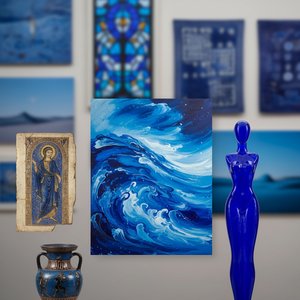
The Allure of Azure: Exploring the Symbolic & Aesthetic Depths of Blue in Art History
Explore the rich history of blue in art! Discover its symbolism, from ancient pigments to modern masterpieces by Kandinsky & Seurat. Uncover the psychological impact and cultural meanings behind this captivating hue.

Top 10 Meesterwerken gedomineerd door 'Slate Blue': Kunst voor uw interieur
Ontdek 10 beroemde schilderijen gedomineerd door de prachtige tint 'Slate Blue'. Van Monet tot Van Gogh, leer over kunstgeschiedenis & techniek. Museumkwaliteit reproducties voor uw interieur op TopImpressionists.com! Ontdek de collectie online.

Top 25 Meesterwerken van Henri Matisse: Kleur, Vorm & Emotie voor uw Interieur
Ontdek de top 25 meesterwerken van Henri Matisse! Duik in de wereld van Fauvisme, kleurrijke composities & expressieve kunst. Vind museumkwaliteit reproducties en decoratie-inspiratie op TopImpressionists.com. Exploreer de collectie online!