


 Bekijk op ware grootte
 Verstuur
 Delen
Delen
 Details bekijken
 Gids voor studentenkunstwerken

 Download
 Vergelijkbare items
 Röntgenonderzoek
 Diavoorstelling
 Statistieken
The Sideshowed


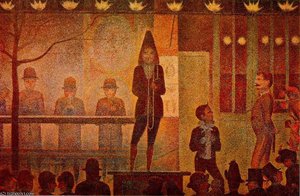
Experience Georges Seurat’s luminous Pointillist technique in ‘Circus Sideshow,’ capturing Parisian spectacle and illusion with meticulous detail—a cornerstone of Impressionism that invites you to explore this captivating masterpiece at TopImpressionists.com.
 Lees meer
Ontdek Georges Seurat (1859-1891), pionier van Pointillisme & Neo-Impressionisme! Bewonder 'A Sunday on La Grande Jatte' en zijn baanbrekende kleurtheorie. Handgeschilderde reproducties te koop!
Handgemaakte olieverfreproductie
Met de hand geschilderd in olieverf op canvas in uw gewenste maat en lijst, op bestelling gemaakt door onze kunstenaars. ( Schakel over naar print Schakel over naar digitale afbeeldingen)




P118B €10

P118H €10

P118W €10

P438Z €10

P508JH €12

P508YH €12

P805H €10

P805Z €10

P919BZ €10

P919G €10

P919XJ €10

P959ZH €10

P968JZ €12

W106C €8

W218G €10

W218JH €8

W218Y €10

W307PJ €10

W316G €10

W316PJ €8

W316Y €10

W398PJ €8

W4111J €10

W500HY €15

W500JH €15

W692G €12

W849H €8

W940BG €15

W953PJ €8




Standaardformaat
op maat gemaakt
CM
INCH
Kies uit onze vooraf ingestelde maten die overeenkomen met de originele verhoudingen van het kunstwerk.
Loading sizes...

breedte
hoogte
Voer de breedte en de hoogte in die u nodig heeft, passend bij uw lijst of uw muur. Dit is handgeschilderd, dus bij een afmeting met een andere vormverhouding kan de kunstenaar iets meer rondom het schilderij schilderen of juist iets meer weglaten — u kiest zelf. Wij sturen u een digitaal mockup ter goedkeuring voordat het schilderwerk begint. De afbeelding die op deze pagina wordt getoond, is niet het uiteindelijke resultaat — alleen de mockup geeft dit weer.
Voorbeelden van wat aangepast kan worden: Vervang het gezicht met een eigen foto; Voeg een huisdier toe (bijv. vervang de kat door een hond); Verwerk een verborgen boodschap in de achtergrond; Wijzig het landschap of andere elementen in de achtergrond.
Na de bestelling zal het team van TopImpressionists.com per e-mail contact opnemen met de klant voor instructies en een mockup-voorbeeld sturen.
Na de bestelling zal het team van TopImpressionists.com per e-mail contact opnemen met de klant voor instructies en een mockup-voorbeeld sturen.
Wereldwijde levering () binnen 3 tot 4 weken in plaats van de standaard 5 weken. (23 oktober). Zonder concessies aan de kwaliteit.

Gratis wereldwijde expressverzending

Hoogwaardig linnen canvas

Volledige verzendverzekering

Garantie op terugbetaling van invoerrechten

Garantie op exacte kleurweergave

Retourbeleid van 100 dagen (alleen bij defecten)

100% Geld-terug-garantie

Korting bij meerdere afnames
 De optie voor glas is alleen beschikbaar bij een formaat kleiner dan 110 cm.

The Sideshowed
Reproductiemethode
Formaat reproductie
-


Totaalprijs
€ 236
A Symphony of Light and Illusion
In the quiet brilliance of Georges Seurat’s 1888 masterpiece, “Circus Sideshow,” we find ourselves transported to the heart of a Parisian spectacle, where the boundaries between reality and illusion begin to dissolve. This work is far more than a mere depiction of a circus performance; it is a profound exploration of how light interacts with the human gaze. As a cornerstone of Post-Impressionism, the painting captures a moment of suspended animation, inviting the viewer to step into a world where every flicker of movement and every shadow is meticulously calculated to evoke a sense of wonder. The scene presents a woman on stage, her presence commanding the attention of a diverse crowd, creating an atmosphere thick with both excitement and the quiet anticipation of the unknown.
The emotional resonance of the piece lies in its ability to balance the grandiosity of the spectacle with the intimate, almost voyeuristic experience of the spectators. There is a palpable tension between the performers on stage and the audience—some individuals are deeply immersed in the magic of the moment, while others remain detached, lost in their own reflections. This duality mirrors the complexity of urban life in late 19th-century France, where the public spectacle served as both a shared social ritual and a collection of isolated, individual experiences. For the collector or interior designer, this painting offers a sophisticated layer of narrative depth, making it an ideal centerpiece for spaces that value intellectual stimulation and atmospheric storytelling.
The Scientific Soul of Pointillism
To gaze upon “Circus Sideshow” is to witness the triumph of scientific rigor applied to the canvas. Seurat, a pioneer of the Pointillist technique, rejected the spontaneous, often blurred brushstrokes of his Impressionist predecessors in favor of a method rooted in optical theory. Rather than blending pigments on a palette, he painstakingly applied tiny, unrecorded dots of pure, unmixed color—shades of yellow ochre, cadmium red, and ultramarine blue—directly onto the surface. This revolutionary approach relies on the viewer's eye to perform the work of blending; as light hits these individual points of pigment, the brain synthesizes them into a luminous, vibrating whole.
This technique creates an effect of shimmering luminosity that traditional painting methods simply cannot replicate. The texture of the piece feels alive, as if the very air within the circus tent is composed of dancing particles of light. For those seeking to incorporate fine art into a modern interior, the structural integrity and rhythmic precision of Seurat’s dots provide a unique visual texture that complements both classical and contemporary decor. It is a technique that demands slow looking, rewarding the observer with a deeper understanding of how color and light can be manipulated to create a sense of profound depth and brilliance.
A Legacy of Spectacle and Modernity
Historically, “Circus Sideshow” serves as a window into the cultural zeitgeist of the Belle Époque. The circus was a symbol of the era's fascination with exoticism, social mobility, and the marvels of modern entertainment. By choosing this subject, Seurat elevated a transient moment of popular culture to the status of high art, imbuing the ephemeral nature of the sideshow with a sense of permanence and monumental importance. The painting captures the essence of a society on the brink of a new century, caught between the traditional allure of the spectacle and the scientific advancements that were reshaping human perception.
Owning a high-quality reproduction of this masterpiece allows one to bring this historical elegance into the home. Whether placed in a sunlit gallery or a moody, dimly lit study, the painting acts as a bridge between eras. It offers more than just aesthetic beauty; it provides a conversation piece that speaks to the history of science, the evolution of art movements, and the eternal human fascination with the magic of the stage. It is an investment in a legacy of light, precision, and the enduring power of the human imagination.
Vragen & Antwoorden
Kan ik "The Sideshowed" in meer detail bekijken?
De röntgenweergave van "The Sideshowed" door Georges Pierre Seurat is te vinden op de Röntgenanalyse-pagina van het kunstwerk: een interactieve verkenning van het beeld door middel van elf optische lagen.
Waar en voor welk doel wordt "The Sideshowed" aanbevolen?
Gebruik (Accent) en ruimte (Living Room) zijn de twee aanbevelingen voor "The Sideshowed" door Georges Pierre Seurat.
Is "The Sideshowed" een van de meest populaire werken van Georges Pierre Seurat?
"The Sideshowed" door Georges Pierre Seurat heeft een populariteitsniveau van Iconic. Deze classificatie weerspiegelt hoe breed het werk wordt erkend.
Gerelateerde kunstwerken




Biografie van de kunstenaar
Georges Seurat: De Wetenschap van Licht en de Poëzie van het Moderne Leven
Georges Pierre Seurat, geboren in Parijs op 2 december 1859, was meer dan een schilder; hij was een wetenschapper, een denker en een revolutionair die de kunstwereld voorgoed veranderde. Zijn leven, hoewel tragisch kort – hij stierf slechts 31 jaar oud – was intensief gericht op het ontrafelen van de mysteries van licht en kleur, resulterend in een unieke visuele taal die bekend staat als Pointillisme en Neo-Impressionisme. Seurat’s jeugd, gekenmerkt door een comfortabele burgerlijke omgeving, legde de basis voor zijn latere artistieke ambities. Na een solide opleiding aan de École Municipale de Sculpture et Dessin en later de prestigieuze École des Beaux-Arts, waar hij studeerde onder Henri Lehmann, begon Seurat zich af te keren van de traditionele academische normen. Hij zocht naar een manier om de werkelijkheid weer te geven die verder ging dan het louter observeren; hij wilde de wetenschap achter de waarneming begrijpen en deze kennis in zijn kunst integreren.Van Academisme naar Chromoluminarisme: Een Wetenschappelijke Revolutie
Seurat’s artistieke ontwikkeling was geen plotselinge sprong, maar een geleidelijke evolutie, aangedreven door onverzadigbare nieuwsgierigheid en rigoureuze experimenten. Zijn vroege werk vertoonde nog invloeden van de academische traditie, met tekenvaardigheid en respect voor gevestigde compositiewetten. Maar al snel begon hij deze conventies in twijfel te trekken, op zoek naar een meer systematische benadering van het schilderen. Hij verdiepte zich in de kleurenleer, bestudeerde de werken van wetenschappers zoals Michel Eugène Chevreul en Ogden Rood, die de optische effecten van naast elkaar geplaatste kleuren onderzochten. Deze studies vormden de basis voor zijn baanbrekende techniek: chromoluminarisme – de wetenschap van kleur – en de praktische toepassing ervan, Pointillisme. Het idee was simpel maar revolutionair: kleine, afzonderlijke puntjes van pure kleur op het doek aanbrengen, in de hoop dat het oog van de toeschouwer deze optisch zou vermengen en zo een levendig, stralend effect zou creëren. Dit ging verder dan alleen helderdere kleuren; het was een poging om te begrijpen hoe het menselijk visuele systeem licht en kleur waarneemt en die kennis te benutten om een dynamischer en boeiender schilderij te creëren. Seurat’s voorbereiding op zijn grootschalige composities was even indrukwekkend: met Conté krijt maakte hij gedetailleerde tekeningen op ruw papier, waarbij hij de plaatsing van elke punt zorgvuldig plande – een bijna wiskundig precisie in zijn artistieke proces.Iconische Werken en Artistieke Visie: Een Blik op La Grande Jatte
Het hoogtepunt van Seurat’s onderzoek en experimenten is wellicht het best te zien in A Sunday Afternoon on the Island of La Grande Jatte (1884-1886), een monumentaal werk dat het begin markeerde van het Neo-Impressionisme. Dit iconische schilderij, waarop Parijzenaars genieten van een ontspannen middag aan de Seine, toont zijn pointillistische techniek in al haar glorie. De figuren, weergegeven als zorgvuldig geplaatste puntjes kleur, lijken te fonkelen en te vibreren met licht, waardoor een sfeer van serene stilte ontstaat. Alfalfa, Saint-Denis (1886-1887) toont zijn toepassing van de kleurenleer op een landschap, terwijl eerdere werken zoals Landscape at Saint-Ouen (1882-1883) zijn evoluerende stijl en groeiende interesse in het vastleggen van licht en sfeer onthullen. Zelfs afbeeldingen van het moderne Parijse leven, zoals The Eiffel Tower (1889), werden getransformeerd door zijn unieke techniek, waarbij een harmonieuze combinatie van industriële moderniteit en artistieke innovatie werd bereikt. Bathers at Asnières (1884), een ander belangrijk werk, verkende thema's als ontspanning en modern leven met zijn kenmerkende stijl, en voorspelde de meer verfijnde aanpak die te zien is in *La Grande Jatte*. Deze schilderijen waren niet zomaar representaties van scènes; ze waren zorgvuldig opgebouwde visuele experimenten, ontworpen om de mogelijkheden van kleur en waarneming te verkennen.Een Duurzaam Erfgoed: Invloed en Historische Betekenis
Ondanks een tragisch kort leven – Seurat stierf op slechts 31-jarige leeftijd in 1891 – was zijn impact op de kunstwereld diepgaand en verreikend. Zijn werk daagde traditionele artistieke conventies uit, waardoor de weg werd geopend voor talloze daaropvolgende bewegingen. De nadruk op subjectieve expressie en de verkenning van nieuwe technieken resoneerde met kunstenaars die wilden breken met beperkingen. Seurat’s invloed is te zien in het werk van de Fauvisten, die felle kleuren en expressieve penseelstreken omarmden; de Cubisten, die vormen ontleed in geometrische vormen; en de Abstract Expressionisten, die emotionele intensiteit en spontane gebaren prioriteerden. Seurat’s wetenschappelijke benadering van het schilderen, hoewel aanvankelijk controversieel, verbredde uiteindelijk de definitie van artistieke mogelijkheden. Hij toonde aan dat kunst zowel intellectueel rigoureus als emotioneel ontroerend kon zijn – een synthese die kunstenaars tot op de dag van vandaag inspireert. Seurat’s nalatenschap strekt zich uit voorbij zijn technische innovaties; hij heeft een oeuvre achtergelaten dat de essentie van het moderne leven vastlegt met ongeëvenaarde precisie en schoonheid, waardoor hij zijn plaats als een ware pionier van de moderne kunst heeft verworven. Zijn schilderijen blijven getuigenissen van de kracht van observatie, experimenten en de onvermoeibare menselijke wens om de wereld om ons heen te begrijpen door de lens van artistieke expressie.
Georges Pierre Seurat
1859 - 1891 , Frankrijk
Snelle feiten
- Artistic Movement Or Style: Neo-Impressionisme, Puntillisme
- Artists Or Movements Influenced By This Artist:
- Fauvisme
- Kubisme
- Abstract Expressionisme
- Artists Who Influenced This Artist:
- Michel Eugène Chevreul
- Ogden Rood
- Date Of Birth: 2 december 1859
- Date Of Death: 29 maart 1891
- Full Name: Georges Pierre Seurat
- Nationality: Frans
- Notable Artworks:
- A Sunday on La Grande Jatte
- Bathers at Asnières
- Alfalfa, Saint-Denis
- De Eiffeltoren
- Place Of Birth: Parijs, Frankrijk
Gerelateerde artikelen

Capturing the Light: A Journey Through the Magic of Impressionist Masterpieces
Embark on a sensory journey through Impressionist history. Discover the magic of en plein air painting, from Monet's light to Seurat's color, and learn how to bring these luminous masterpieces into your home with museum-quality, hand-painted reproductions.

Capturing the Soul: The Most Emotionally Moving Impressionist and Post-Impressionist Masterpieces
Discover the profound emotional depth of Impressionist and Post-Impressionist masterpieces. Explore how legends like Monet, Van Gogh, and Gauguin captured light and soul through evocative landscapes and vibrant brushwork for a timeless connection to art history.

Capturing Light & Form: The Geometric Beauty of Impressionist Masterpieces
Discover the profound connection between light and geometry in Impressionist masterpieces. Explore how masters like Monet and Cézanne captured essence through form, offering a soulful journey into the heart of art history for true connoisseurs.

The Symphony of Dots: Unveiling the Luminous Magic and Optical Brilliance of Pointillism
Discover the luminous magic of Pointillism and the scientific brilliance of Georges Seurat. Explore our exquisite, hand-painted oil reproductions, meticulously crafted to bring the timeless elegance and optical beauty of Neo-Impressionism into your home with museum-grade quality.

The Magic of Pointillism: How Seurat and Signac Revolutionized Color and Light
Discover the luminous revolution of Pointillism. Explore how masters Georges Seurat and Paul Signac used scientific color theory and optical mixing to transform light and art history in this deep dive into Neo-Impressionist brilliance.
Ontdek kunstwerken georganiseerd op thema, stijl en kenmerk.


