


 Bekijk op ware grootte
 Verstuur
 Delen
Delen
 Details bekijken
 Gids voor studentenkunstwerken

 Download
 Vergelijkbare items
 Röntgenonderzoek
 Diavoorstelling
 Statistieken
North-South
 Acrylic On Canvas
- WallArt
- Cubism
 46.0 x 33.0 cm
 Galleria Civica di Arte Moderna e Contemporanea Torino
Discover Gino Severini’s ‘North-South,’ a vibrant Futurist masterpiece capturing Parisian dynamism. Explore Cubist forms & motion in this 1912 oil painting – a unique art investment.
 Lees meer
Gino Severini (1883-1966) was een Italiaanse kunstenaar die Futurisme en Cubisme combineerde. Zijn dynamische schilderijen, zoals 'North-South' en 'Waltz', verkregen internationale erkenning en zijn werk blijft inspireren.
De kunstwerken die op deze pagina worden weergegeven, zijn beschermd door de auteursrechtwetgeving, wat betekent dat het ons wettelijk niet is toegestaan om identieke reproducties te maken of te verkopen. Deze bescherming wordt gehandhaafd onder internationale overeenkomsten zoals de Conventie van Bern en door nationale wetgeving, waaronder de bepalingen van de Amerikaanse auteurswet - Titel 17. Alle rechten voorbehouden. Reproduceren of distribueren van afbeeldingen is niet toegestaan zonder uitdrukkelijke schriftelijke toestemming van WahooArt.com en de rechthebbenden.
Deze methode voldoet volledig aan de auteursrechtwetgeving, omdat het niet gaat om het kopiëren of dupliceren van het beschermde kunstwerk. In plaats daarvan is er sprake van een creatieve herinterpretatie — een nieuw schilderij dat door het origineel wordt geïnspireerd, maar er niet identiek aan is.
Giclée / Kunstafdrukken
Giclée- of canvasafdruk van museumkwaliteit met een snelle productie en flexibele afwerkingsmogelijkheden. ( Koop handgeschilderd kunstwerk Schakel over naar digitale afbeeldingen)




P118B €10

P118H €10

P118W €10

P438Z €10

P508JH €12

P508YH €12

P805H €10

P805Z €10

P919BZ €10

P919G €10

P919XJ €10

P959ZH €10

P968JZ €12

W106C €8

W218G €10

W218JH €8

W218Y €10

W307PJ €10

W316G €10

W316PJ €8

W316Y €10

W398PJ €8

W4111J €10

W500HY €15

W500JH €15

W692G €12

W849H €8

W940BG €15

W953PJ €8




Standaardformaat
op maat gemaakt
CM
INCH
Kies uit onze vooraf ingestelde maten die overeenkomen met de originele verhoudingen van het kunstwerk.
Loading sizes...

breedte
hoogte
U kunt uw eigen afmetingen opgeven om in een specifieke lijst of ruimte te passen. Als de door u gekozen maat niet overeenkomt met de proporties van het originele kunstwerk, zullen wij de afbeelding bijsnijden of uitbreiden met een gespiegelde of effen rand. Een digitaal mockup wordt ter goedkeuring naar u verzonden voordat de productie begint.
Houd er rekening mee dat de preview op het scherm de werkelijke bijsneding of uitbreiding niet weergeeft. Alleen de mockup toont de uiteindelijke compositie nauwkeurig.
Hoewel aangepaste maten beschikbaar zijn, raden wij aan een afmeting uit de vooraf bepaalde lijst te kiezen om de originele proporties te behouden.
Wereldwijde levering () binnen 2 weken in plaats van de standaard 4/5 weken. (12 oktober)

Gratis wereldwijde expressverzending

Hoogwaardig linnen canvas

Volledige verzendverzekering

Garantie op terugbetaling van invoerrechten

Garantie op exacte kleurweergave

Retourbeleid van 100 dagen (alleen bij defecten)

100% Geld-terug-garantie

Korting bij meerdere afnames
 De optie voor glas is alleen beschikbaar bij een formaat kleiner dan 110 cm.

North-South
Giclée / Kunstafdrukken
Formaat reproductie
-


Totaalprijs
€ 60
A Symphony of Motion: Gino Severini’s “North-South”
Gino Severini's "North-South," painted in 1912, isn’t merely a depiction of a Parisian marketplace; it’s an exhilarating embodiment of the Futurist spirit – a visual explosion capturing the dynamism and frenetic energy of modern urban life. Born in Cortona, Italy, in 1883, Severini initially embraced Divisionism before being swept into the revolutionary currents of Futurism, a movement that sought to dismantle traditional artistic conventions and celebrate speed, technology, and the raw power of the industrial age. This painting represents a pivotal moment in his career, showcasing a shift towards a more synthetic approach, heavily influenced by Cubist principles while retaining the core Futurist obsession with capturing fleeting moments of intense motion. The work immediately transports the viewer into a vibrant, almost overwhelming scene – a sensory overload rendered with remarkable precision and emotional intensity.Deconstructing Reality: Style and Technique
Severini’s style in “North-South” is undeniably Cubist, yet distinctly Futurist. He employs what's known as "simultaneous view," a technique pioneered by Futurists like Boccioni, where multiple perspectives are presented simultaneously within a single composition. This creates an illusion of movement and depth, mimicking the experience of navigating a bustling city street. The painting’s fragmented forms – the overlapping stalls, the blurred figures, the fractured signage – aren't simply stylistic choices; they represent a deliberate attempt to break down traditional spatial relationships and convey the sensation of speed and disorientation inherent in urban environments. Notice how the artist utilizes sharp, angular lines to define architectural elements and create a sense of dynamism, contrasting with the softer, more rounded forms of the human figures. The application of paint is equally significant; Severini employs broken brushstrokes and layered glazes, building up texture and creating a palpable sense of surface – you can almost feel the heat radiating from the marketplace and hear the clamor of voices.A Marketplace of Modernity: Historical Context
“North-South” was created during a period of immense social and technological change in Europe. The rise of industrialization, the proliferation of railways and automobiles, and the rapid growth of cities were fundamentally altering people’s lives and perceptions of space and time. Futurism, born out of this context, sought to capture these changes on canvas, rejecting the past and embracing the future with a fervent enthusiasm. Severini's choice of subject – a busy marketplace in Pigalle, a district known for its entertainment venues and vibrant nightlife – is particularly revealing. It’s not simply a snapshot of commerce; it’s a microcosm of modern urban life, teeming with activity, noise, and sensory stimulation. The inclusion of signs like “METRO” and “SORTIE” further emphasizes the painting's connection to the burgeoning infrastructure of Paris, highlighting the city’s role as a hub of innovation and progress.Symbolism in Motion: Interpreting the Details
Beyond its immediate visual impact, "North-South" is rich with symbolic meaning. The fragmented forms can be interpreted as representing the breakdown of traditional values and social structures under the pressures of modernity. The blurred figures suggest the anonymity and alienation experienced by individuals within a rapidly changing urban landscape. Even the seemingly random arrangement of objects – the fruits, vegetables, and merchandise displayed on the stalls – contributes to the painting’s overall sense of chaos and dynamism. The prominent signage, particularly “PIGALLE,” hints at the district's reputation as a center of entertainment and vice, adding another layer of complexity to the scene. The title itself, "North-South," subtly references the intersecting paths of movement within the city – the flow of people, goods, and information that define modern urban life.A Legacy of Velocity: Emotional Impact
Ultimately, “North-South” is a powerfully evocative work of art that captures the exhilarating and disorienting experience of navigating a rapidly changing world. It’s not a comfortable or serene scene; it's deliberately jarring and unsettling, reflecting the anxieties and uncertainties of modern life. Yet, within this chaos lies a sense of energy and vitality – a celebration of speed, innovation, and the relentless pursuit of progress. Severini masterfully translates these complex emotions onto canvas, creating an artwork that continues to resonate with viewers today, reminding us of the transformative power of art to capture the spirit of its time. It remains a testament to the Futurist vision—a bold declaration of modernity’s frenetic beauty.Vragen & Antwoorden
Welke techniek is gebruikt voor "North-South" door Gino Severini?
Gino Severini gebruikte de Acrylic On Canvas-techniek voor "North-South". De techniek bepaalt de materiële aard van het originele werk.
Bij welke kunststroming behoort "North-South" door Gino Severini?
"North-South" is een werk uit de Cubism. De stroming geeft de artistieke traditie aan waartoe het werk behoort.
Waar kan ik een gids vinden voor "North-South"?
De Gids-pagina van "North-South" door Gino Severini biedt een printbaar factsheet van twee pagina's: het kunstwerk met de bijbehorende identificatietabel, een tijdlijn die het werk plaatst binnen de levensloop van de kunstenaar, andere werken van de kunstenaar, het gemeten kleurenpalet en kant-en-klare citaten in vier verschillende stijlen.
Waarvan is "North-South" gemaakt en in welke stijl?
In "North-South" ontmoet de Acrylic On Canvas-techniek de Cubism-stroming.
Welke afmeting voor de reproductie wordt aanbevolen voor "North-South" door Gino Severini?
De aanbevolen afmeting voor de print van "North-South" door Gino Severini is Medium.
Zijn er werken die lijken op "North-South"?
Werken die lijken op "North-South" staan vermeld op de Vergelijkbare werken-pagina van het kunstwerk.
Wat zijn de reproductierechten van "North-South" in Galleria Civica di Arte Moderna e Contemporanea Torino?
Het originele "North-South" bevindt zich in Galleria Civica di Arte Moderna e Contemporanea Torino en het werk is nog steeds auteursrechtelijk beschermd.
Waar kan ik het originele werk "North-South" door Gino Severini bewonderen?
"North-South" door Gino Severini is te zien in Galleria Civica di Arte Moderna e Contemporanea Torino, Turijn, Italië. De vermelding van het museum heeft betrekking op het originele werk, niet op reproducties.
Biografie van de kunstenaar
Early Life and the Seeds of Artistic Rebellion
Gino Severini emerged into the world on April 7, 1883, in the picturesque Tuscan town of Cortona, Italy. His beginnings were humble; his father a junior court official, his mother a dressmaker – a background that instilled in him both a sensitivity to form and an awareness of societal structures. Formal education proved ill-fitting for the young Severini’s restless spirit. Expelled at fifteen alongside classmates for a youthful indiscretion involving stolen exam papers, he found himself cast adrift from conventional schooling. This expulsion, however, wasn't a derailment but rather a catalyst, freeing him to pursue his burgeoning artistic inclinations independently while working as a shipping clerk. The move to Rome in 1899 marked a turning point; it was there, amidst the ancient ruins and vibrant street life, that he began formal art classes, quickly becoming captivated by the shimmering effects of Divisionism – a technique championed by artists like Giacomo Balla and Umberto Boccioni, who would soon become pivotal figures in his artistic journey. These formative years laid the essential groundwork for Severini’s eventual embrace of Futurism, igniting within him a desire to capture the dynamism of modern life.Embracing the Velocity of Futurism
The invitation to join Filippo Tommaso Marinetti and Umberto Boccioni in the burgeoning Futurist movement proved transformative for Severini. He became a signatory of the *Manifesto of the Futurist Painters* in 1910, aligning himself with a revolutionary ideology that celebrated speed, technology, and the intoxicating energy of modernity. This wasn’t merely an artistic choice; it was a philosophical commitment to shattering tradition and forging a new aesthetic language for a rapidly changing world. Severini played a crucial role in disseminating Futurist ideas internationally, notably organizing the movement's first exhibition outside Italy at Galerie Bernheim-Jeune in Paris in 1912. His work during this period, exemplified by paintings like *North-South* (1915), embodies the Futurist obsession with capturing motion and energy through fragmented forms and a vibrant, almost explosive palette. Unlike some of his colleagues who focused on machines, Severini often turned to urban scenes and dancers as subjects, reflecting his fascination with portraying the rhythms and sensations of modern life – the swirling skirts, the flashing lights, the pulsating crowds. He helped organize the first Futurist exhibition outside Italy at Galerie Bernheim-Jeune in Paris in 1912. His work during this period, exemplified by paintings like *North-South* (1915), embodies the Futurist obsession with capturing motion and energy through fragmented forms and a vibrant, almost explosive palette.A Synthesis of Styles: Cubism and Beyond
Severini’s artistic style was never confined by rigid dogma; it was a constantly evolving synthesis of influences. While deeply rooted in the Futurist aesthetic, his work also demonstrated a profound engagement with Cubism, particularly after his pivotal visit to Paris in 1911. He absorbed elements of geometric abstraction and fragmented perspectives, incorporating them into his compositions to create dynamic arrangements that conveyed a sense of simultaneity and movement. Artists like Umberto Boccioni, Carlo Carrà, and Giovanni Francesco Romanelli were significant influences, but Severini’s unique vision allowed him to forge his own path. *Waltz*, for instance, showcases this masterful fusion of styles – the swirling energy of dance rendered through a Cubist lens, resulting in a painting that feels both chaotic and harmonious. He was adept at portraying the human figure as the source of energetic motion in his paintings. Severini’s exploration of classical themes and forms continued throughout his career, demonstrating an ability to adapt and evolve without abandoning his core aesthetic principles.Notable Achievements and Legacy
Severini achieved considerable recognition during his lifetime, securing prestigious awards from institutions such as the Rome Quadrennial and cementing his place among the leading artists of his era. His paintings are housed in major museums across Europe and America, serving as enduring testaments to his artistic vision and contribution to the development of modern art. Gino Severini passed away peacefully in Paris on February 27, 1966, at the age of 83, leaving behind a rich and multifaceted body of work that continues to inspire artists and scholars alike. His legacy as a pioneer of Futurism and Cubism remains profound, reminding us of the transformative power of art to capture the spirit of its time—a testament to his enduring influence on the artistic landscape.
Gino Severini
1883 - 1966 , Italie
Snelle feiten
- Artistic Movement Or Style: Futurisme en Cubisme
- Artists Who Influenced This Artist:
- Giacomo Balla
- Umberto Boccioni
- Date Of Birth: 7 april 1883
- Date Of Death: 26 februari 1966
- Full Name: Gino Severini
- Nationality: Italiaans
- Notable Artworks:
- North-South
- Waltz
- Zelfportret
- Place Of Birth: Cortona, Italië
Gerelateerde artikelen

Fragmented Beauty: Exploring the Soul and Geometric Depth of Cubist Landscapes
Embark on a cultural journey through the soul of Cubist landscapes. Discover how masters like Braque and Rivera redefined nature through geometric beauty, fragmented forms, and profound abstraction in this expert art-history exploration.
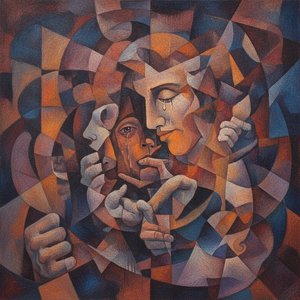
Beyond the Surface: Exploring the Emotional Depth of Cubist Expressionism
Discover the profound emotional resonance within Cubist Expressionism. Explore how fragmented forms and geometric abstraction convey deep human feeling through an expert art-historical lens for the discerning collector.

Beyond the Lens: Deconstruct Your Memories into Geometric Masterpieces with AI-Driven Cubist Artistry
Transform your cherished photos into breathtaking Cubist masterpieces. Using proprietary AI technology and master oil painters, we deconstruct reality into geometric elegance. Elevate your home with a bespoke, hand-painted legacy piece that merges modern innovation with timeless artistry.

Breaking Reality: A Sophisticated Guide to the Power of Cubist Fragmentation and Geometric Reimagination
Explore the profound depth of Cubist fragmentation. Our expert guide delves into the revolutionary techniques of Picasso and Braque, offering art collectors a sophisticated understanding of how deconstructed forms redefine modern perception and luxury curation.