Voorvertoning
 Verstuur
 Delen
Delen
 Details bekijken
 Gids
Gids

 Download
 Vergelijkbare items
 Röntgenonderzoek
 Diavoorstelling
 Statistieken
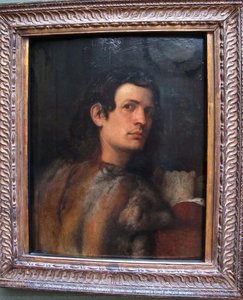
Self-portrait
 Oil On Canvas
- WallArt
- High Renaissance
 1510
1510 52.0 x 43.0 cm
 Herzog Anton Ulrich Museum
 Lees meer
Handgemaakte olieverfreproductie
Met de hand geschilderd in olieverf op canvas in uw gewenste maat en lijst, op bestelling gemaakt door onze kunstenaars. ( Schakel over naar print Schakel over naar digitale afbeeldingen)




P118B €10

P118H €10

P118W €10

P438Z €10

P508JH €12

P508YH €12

P805H €10

P805Z €10

P919BZ €10

P919G €10

P919XJ €10

P959ZH €10

P968JZ €12

W106C €8

W218G €10

W218JH €8

W218Y €10

W307PJ €10

W316G €10

W316PJ €8

W316Y €10

W398PJ €8

W4111J €10

W500HY €15

W500JH €15

W692G €12

W849H €8

W940BG €15

W953PJ €8




Standaardformaat
op maat gemaakt
CM
INCH
Kies uit onze vooraf ingestelde maten die overeenkomen met de originele verhoudingen van het kunstwerk.
Loading sizes...

breedte
hoogte
Voer de breedte en hoogte in die u nodig heeft, passend bij uw lijst of uw muur. Omdat dit handgeschilderd is, kan de kunstenaar bij een afmeting met een andere beeldverhouding iets meer rondom het schilderij schilderen of juist iets meer weglaten — u kiest zelf. Wij sturen u een digitaal mockup ter goedkeuring voordat het schilderwerk begint. De afbeelding die op deze pagina wordt getoond, is niet het uiteindelijke resultaat — alleen de mockup geeft dit weer.
Voorbeelden van aanpassingen: Vervang het gezicht met een eigen foto; Voeg een huisdier toe (bijv. vervang de kat door een hond); Verwerk een verborgen boodschap in de achtergrond; Wijzig het landschap of andere elementen in de achtergrond.
Na de bestelling zal het team van TopImpressionists.com per e-mail contact opnemen met de klant voor instructies en een mockup-voorbeeld sturen.
Na de bestelling zal het team van TopImpressionists.com per e-mail contact opnemen met de klant voor instructies en een mockup-voorbeeld sturen.
Wereldwijde levering () binnen 3 tot 4 weken in plaats van de standaard 5 weken. (26 oktober). Zonder concessies aan de kwaliteit.

Gratis wereldwijde expressverzending

Hoogwaardig linnen canvas

Volledige verzendverzekering

Garantie op terugbetaling van invoerrechten

Garantie op exacte kleurweergave

Retourbeleid van 100 dagen (alleen bij defecten)

100% Geld-terug-garantie

Korting bij meerdere afnames
 De optie voor glas is alleen beschikbaar bij een formaat kleiner dan 110 cm.

Self-portrait
Druktechniek
Afmetingen reproductie
-


Eindtotaal
€ 236
Self-Portrait by Giorgione: An Enigma of Venetian Renaissance
Giorgio Barbarelli da Castelfranco, universally known as Giorgione, remains one of the most elusive figures in the artistic panorama of the High Renaissance. Born around 1477 or 1478 in Castel Franco Veneto – a precise date stubbornly resisted by scholarly debate – his tragically curtailed life, concluding circa 1510 at the age of thirty-two or thirty-three, belies an artistic legacy that continues to fascinate and inspire centuries later. Unlike many contemporaries whose biographies unfold with relative clarity, Giorgione’s story is shrouded in obscurity, pieced together from fragmentary archival records and romanticized accounts primarily attributed to Giorgio Vasari.
His formative years were spent immersed within the vibrant cultural milieu of Venice, a city renowned for its patronage of artistic innovation alongside an ardent appreciation for sensual beauty. Evidence suggests he apprenticed under Giovanni Bellini, a titan of Venetian painting, absorbing the established stylistic conventions before forging his own distinctive voice—a voice characterized by profound introspection and a masterful manipulation of color and light.
Style and Technique: Venetian Luminosity
Giorgione’s artistic approach embodies the quintessential tenets of Venetian Renaissance style. He skillfully blended influences from Leonardo da Vinci's sfumato technique – achieved through subtle gradations of tone to create hazy, atmospheric effects – with Bellini’s meticulous realism. This fusion resulted in a visual language that prioritized mood and emotion over strict anatomical accuracy. The “Self-Portrait,” housed at the Herzog Anton Ulrich Museum in Braunschweig, exemplifies this ethos perfectly.
Executed in oil on canvas, the painting demonstrates remarkable textural detail achieved through deliberate brushstrokes—a hallmark of Giorgione’s oeuvre. Careful observation reveals a masterful rendering of light and shadow, sculpting the face and hair with an expressive dynamism that transcends mere representation. The dark background serves as a counterpoint to the luminous flesh tones, drawing attention to the central figure and amplifying its psychological depth.
Historical Context: Venice at Its Zenith
The painting’s creation coincided with Venice's apex of artistic and economic power during the Renaissance. The Serenissima Republic was a crucible for humanist thought and artistic experimentation, attracting artists from across Europe eager to engage with its intellectual ferment. Giorgione’s Venetian surroundings undoubtedly informed his aesthetic sensibilities, fostering a preoccupation with idealized beauty and conveying a sense of contemplative melancholy—themes prevalent in Renaissance portraiture.
Symbolism: The Face of Uncertainty
The sitter's gaze directs off to the side, avoiding direct confrontation with the viewer – a gesture that speaks volumes about Giorgione’s artistic intention. This subtle compositional choice underscores the inherent ambiguity of human experience and invites contemplation on themes of identity and self-awareness. Furthermore, the garment—a rich green adorned with a scarlet collar—suggests an awareness of aristocratic status and perhaps hints at references to classical mythology, mirroring prevalent artistic conventions of the period.
Emotional Impact: A Window into Renaissance Soul
“Self-Portrait” transcends mere visual depiction; it is a profound meditation on human psychology. Giorgione’s masterful use of color and brushwork evokes a palpable sense of melancholy—a characteristic emotion explored extensively by artists during the Renaissance as they wrestled with questions of mortality and spiritual contemplation. The painting remains an enduring testament to the humanist spirit of its time, inviting viewers to engage in a dialogue about the complexities of human consciousness.
Veelgestelde vragen
Welke emotie straalt het High Renaissance-werk "Self-portrait" uit?
Binnen de High Renaissance-stroming is "Self-portrait" vastgelegd met een Melancholic toon.
Wie is de maker van "Self-portrait" en bij welke stroming hoort dit werk?
"Self-portrait" is het werk van Giorgione en behoort tot de High Renaissance-stroming.
Wie is de maker van "Self-portrait" en uit welk jaar stamt het werk?
"Self-portrait" is gemaakt door Giorgione en dateert uit 1510.
Biografie kunstenaar
Giorgione: Een Venetiaanse Renaissance Schilder
Giorgio Barbarelli da Castelfranco, beter bekend als Giorgione, blijft een van de meest mysterieuze en fascinerende Figuren in de Italiaanse Renaissance kunst. Geboren rond 1477 of 1478 in het kleine stadje Castelfranco Veneto nabij Venetië – het exacte geboortejaar is onderwerp van debat – zijn tragisch korte leven, dat eindigde rond 1510 op amper drieëntwintig jaar oud, doet afbreken met de verwachtingen die veel van zijn tijdgenoten hadden over een uitgebreide levensgeschiedenis. Anders dan vele kunstenaars uit zijn tijd waarvan het leven gedetailleerd wordt beschreven, blijft Giorgione’s verhaal gehuld in mysterie, samengesteld uit enkele historische gegevens en vaak romantische verslagen van Giorgio Vasari. Wat wij weten suggereert een man die volledig ondergedompeld was in de levendige cultuur van Venetië, een stad die zowel kunstelijke innovatie als een hedonistische waardering voor schoonheid aanmoedigde. Hij volgde waarschijnlijk Giovanni Bellini op als leerling, waardoor hij zich kennismaakte met de gevestigde tradities voordat hij zijn eigen unieke weg begon te volgen.Een Leerling van Bellini en Een Nieuwe Stilistische Aanpak
Giorgione’s artistieke stijl betekende een belangrijke breuk met de Florentijnse nadruk op lijnperspectief en nauwkeurige tekentechniek. Hij verkende kleur, atmosfeer en een evocatieve melancholie die kenmerken werden van de Venetiaanse school. Zijn techniek omvatte het verzachten van lijnen, het gebruik van subtiele tinten – *sfumato* – om atmosferische effecten te creëren en het nastreven van algemene harmonie boven minutieuze aandacht voor detail. Deze aanpak was niet alleen een technische keuze; het weerspiegelde een fundamenteel andere artistieke gevoeligheid. Giorgione wilde niet repliceren wat hij zag, maar eerder de essentie ervan vastleggen: zijn vluchtige emoties en zijn poëtische resonans. Zijn schilderijen waren vaak gevuld met enigmatische onderwerpen en ambiguë verhalen, waardoor kijkers werden uitgenodigd om een wereld van contemplatie binnen te gaan in plaats van klare verhalen aan het licht te brengen. Hij wilde niet dat zijn kunstwerken een puzzel waren om opgelost te worden; hij wilde dat ze gevoelens en stemmingen oproepen en een gevoel van verwondering veroorzaken. Zijn stijl werd sterk beïnvloed door Giovanni Bellini, wiens werk hij leerde kennen tijdens zijn opleiding. Giorgione volgde dezelfde lijn als Bellini, waarbij hij ook de aandacht richtte op het gebruik van kleur en licht – iets wat bij veel kunstenaars uit zijn tijd nog niet gebeurde. Deze stijl zou zijn hoogtepunt vinden in Giorgione’s *De Tempest*, een schilderij dat rond 1506-1508 voltooid werd en waar hij een belangrijke rol speelde als kunstenaar.Een Mysterieus Onderwerp en Een Nieuwe Visie op Landschap
Zoals vele andere kunstenaars uit zijn tijd, stond Giorgione voor een moeilijke taak bij het vastleggen van de natuurlijke wereld. Hij wilde niet alleen een exacte kopie maken van wat hij zag, maar eerder een gevoel voor schoonheid en harmonie creëren. Een belangrijk verschil tussen Giorgione’s stijl en die van andere kunstenaars uit zijn tijd was dat hij het landschap centraal plaatste in zijn werken – iets wat bij veel kunstenaars uit zijn tijd nog niet gebeurde. Hij gebruikte de techniek van *sfumato* om een atmosfeerrijke kleurengebruik te creëren, waarbij lijnen werden verzacht en tinten subtiel werden aangepast om een gevoel voor ruimte en licht weer te geven. Deze stijl werd sterk beïnvloed door Leonardo Da Vinci en andere kunstenaars uit Noord-Europa die ook hun aandacht richtten op het landschap als onderdeel van hun kunstwerken. Een belangrijk voorbeeld hiervan is *De Tempest*, waarin Giorgione een scène neerzette met een soldaat en een moederlijke vrouw tegen een achtergrond van een stormachtige omgeving. De schilderij heeft kunsthistorici al eeuwenlang gefascineerd omdat het onderwerp en de inhoud enigmatisch blijven en niet gemakkelijk te interpreteren zijn. Een andere belangrijke bijdrage aan Giorgione’s stijl was zijn aandacht voor emotie en gevoelens – iets wat hij wilde weergeven in zijn kunstwerken zonder een bepaalde historische context of allegorie aan te bieden. Hij wilde dat zijn schilderijen een gevoel van schoonheid en verwondering oproepen bij de kijker, waardoor hij zich onderscheidde van veel andere kunstenaars uit zijn tijd die zich concentreerden op het weergeven van historische gebeurtenissen of religieuze thema’s.Bekende Werken en Een Laatste Inspiratie
Hoewel Giorgione slechts een beperkt aantal werken heeft achtergelaten, heeft hij een belangrijke plaats ingenomen in kunstgeschiedenis. Hij verkreeg zijn stijl uit Giovanni Bellini en andere kunstenaars uit Noord-Europa die ook hun aandacht richtten op het landschap als onderdeel van hun kunstwerken. Zijn schilderijen werden beschouwd als een belangrijke ontwikkeling binnen de Venetiaanse kunstschool en hebben een grote invloed gehad op de ontwikkeling van kunst in Italië en Europa. Een belangrijk voorbeeld hiervan is *De Zonsondergang*, dat rond 1508 voltooid werd en waar hij een belangrijke rol speelde als kunstenaar. Het schilderij wordt beschouwd als een van zijn meest prachtige werken omdat het een gevoel voor kleur en licht weergeeft dat overeenkomt met de stijl van Leonardo Da Vinci en andere kunstenaars uit Noord-Europa. Een ander belangrijk voorbeeld hiervan is *Slapende Venus*, dat rond 1509 voltooid werd en waar hij een belangrijke rol speelde als kunstenaar. Het schilderij wordt beschouwd als een van zijn meest iconische werken omdat het een prachtige afbeelding geeft van de Griekse godin Venus, waarbij Giorgione een gevoel voor schoonheid en harmonie weergeeft dat overeenkomt met de stijl van Leonardo Da Vinci en andere kunstenaars uit Noord-Europa. Een belangrijk voorbeeld hiervan is *Judith*, dat rond 1504 voltooid werd en waar hij een belangrijke rol speelde als kunstenaar. Een ander belangrijk voorbeeld hiervan is *Laura*, dat rond 1510 voltooid werd en waar hij een belangrijke rol speelde als kunstenaar. Zijn stijl heeft een grote invloed gehad op de ontwikkeling van kunst in Italië en Europa, waardoor hij een belangrijke plaats heeft ingenomen in kunstgeschiedenis.Een Mysterieus Onderwerp en Een Nieuwe Visie op Landschap
Giorgione’s stijl werd sterk beïnvloed door Leonardo Da Vinci en andere kunstenaars uit Noord-Europa die ook hun aandacht richtten op het landschap als onderdeel van hun kunstwerken. Een belangrijk voorbeeld hiervan is *De Tempest*, waarin Giorgione een scène neerzette met een soldaat en een moederlijke vrouw tegen een achtergrond van een stormachtige omgeving. De schilderij heeft kunsthistorici al eeuwenlang gefascineerd omdat het onderwerp en de inhoud enigmatisch blijven en niet gemakkelijk te interpreteren zijn. Een ander belangrijk voorbeeld hiervan is *De Zonsondergang*, dat rond 1508 voltooid werd en waar hij een belangrijke rol speelde als kunstenaar. Het schilderij wordt beschouwd als een van zijn meest prachtige werken omdat het een gevoel voor kleur en licht weergeeft dat overeenkomt met de stijl van Leonardo Da Vinci en andere kunstenaars uit Noord-Europa. Een ander belangrijk voorbeeld hiervan is *Slapende Venus*, dat rond 1509 voltooid werd en waar hij een belangrijke rol speelde als kunstenaar. Het schilderij wordt beschouwd als een van zijn meest iconische werken omdat het een prachtige afbeelding geeft van de Griekse godin Venus, waarbij Giorgione een gevoel voor schoonheid en harmonie weergeeft dat overeenkomt met de stijl van Leonardo Da Vinci en andere kunstenaars uit Noord-Europa. Een ander belangrijk voorbeeld hiervan is *Judith*, dat rond 1504 voltooid werd en waar hij een belangrijke rol speelde als kunstenaar. Een ander belangrijk voorbeeld hiervan is *Laura*, dat rond 1510 voltooid werd en waar hij een belangrijke rol speelde als kunstenaar. Zijn stijl heeft een grote invloed gehad op de ontwikkeling van kunst in Italië en Europa, waardoor hij een belangrijke plaats heeft ingenomen in kunstgeschiedenis. ## Een Laatste Inspiratie Giorgione’s stijl heeft een grote invloed gehad op de ontwikkeling van kunst in Italië en Europa, waardoor hij een belangrijke plaats heeft ingenomen in kunstgeschiedenis. Zijn stijl werd sterk beïnvloed door Leonardo Da Vinci en andere kunstenaars uit Noord-Europa die ook hun aandacht richtten op het landschap als onderdeel van hun kunstwerken. Een belangrijk voorbeeld hiervan is *De Tempest*, waarin Giorgione een scène neerzette met een soldaat en een moederlijke vrouw tegen een achtergrond van een stormachtige omgeving. De schilderij heeft kunsthistorici al eeu
Giorgione
1477 - 1510 , Italië
Belangrijkste feiten
- Artistic Movement Or Style: Venetiaanse School
- Artists Who Influenced This Artist:
- Giovanni Bellini
- Mantegna
- Date Of Birth: ca. 1477/78
- Date Of Death: voor november 7, 1510
- Full Name: Giorgio Barbarelli da Castelfranco
- Nationality: Italiaans
- Notable Artworks:
- De Tempest
- Pastoraal Concert
- Slapende Venus
- Place Of Birth: Castelfranco Veneto, Italië
Gerelateerde artikelen

Reflecting the Self: A History of Portraiture & Psychological Insight
Explore the fascinating history of self-portraiture from Renaissance masters like Dürer & Rembrandt to modern interpretations. Discover the psychological insights and artistic techniques behind these iconic works. Expert analysis for art enthusiasts.

Venetian Renaissance: The Golden Age of Color, Light, and Luminous Artistry
Embark on a journey through the Venetian Renaissance. Discover how masters like Giorgione and Titian revolutionized art through luminous color and light. Explore the profound legacy of the Venetian School and its enduring influence on the world of fine art.

Giorgione: Enigma and Innovation in Early Venetian Renaissance Painting
Explore the enigmatic world of Giorgione, a pivotal figure in the Venetian Renaissance. Discover his innovative techniques, iconic paintings like 'The Tempest', and lasting influence on art history. Learn more at TopImpressionists.

Top 10 Renaissance Meesterwerken: Kunstgeschiedenis voor uw Interieur | TopImpressionists.com
Ontdek de 10 meest iconische Renaissance meesterwerken van Leonardo da Vinci, Michelangelo & Rafaël. Leer over hun techniek en betekenis. Museumkwaliteit kunst reproducties voor uw interieur op TopImpressionists.com

Jacopo Tintoretto's Meesterwerken: 25 Schilderijen die de Renaissance Definieerden | TopImpressionists
Ontdek de 25 meest indrukwekkende schilderijen van Jacopo Tintoretto, de meester van het Venetiaanse Renaissance. Duik in zijn dramatische stijl, religieuze thema's & techniek. Vind museumkwaliteit reproducties en decoratie-inspiratie op TopImpressionists.com.
Ontdek kunstwerken georganiseerd op thema, stijl en kenmerk.