

Shown: · With its frame:
 Voorvertoning
 Verstuur
 Delen
Delen
 Details bekijken
 Gids
Gids

 Download
 Vergelijkbare items
 Röntgenonderzoek
 Diavoorstelling
 Q&A
Q&A Statistieken


€ 239
Handgemaakte olieverfreproductie
Met de hand geschilderd in olieverf op canvas in uw gewenste maat en lijst, op bestelling gemaakt door onze kunstenaars. ( Schakel over naar print Schakel over naar digitale afbeeldingen)
Size
·Standaardformaat
op maat gemaakt
CM
INCH
Kies uit onze vooraf ingestelde maten die overeenkomen met de originele verhoudingen van het kunstwerk.
Loading sizes...

breedte
hoogte
Voer de breedte en hoogte in die u nodig heeft, passend bij uw lijst of uw muur. Omdat dit handgeschilderd is, kan de kunstenaar bij een afmeting met een andere beeldverhouding iets meer rondom het schilderij schilderen of juist iets meer weglaten — u kiest zelf. Wij sturen u een digitaal mockup ter goedkeuring voordat het schilderwerk begint. De afbeelding die op deze pagina wordt getoond, is niet het uiteindelijke resultaat — alleen de mockup geeft dit weer.
 Lees meer over
Finish
·
White €1

Blurside €1

Extended €1

P118B €10

P118H €10

P118W €10

P438Z €10

P508JH €12

P508YH €12

P805H €10

P805Z €10

P919BZ €10

P919G €10

P919XJ €10

P959ZH €10

P968JZ €12

W106C €8

W218G €10

W218JH €8

W218Y €10

W307PJ €10

W316G €10

W316PJ €8

W316Y €10

W398PJ €8

W4111J €10

W500HY €15

W500JH €15

W692G €12

W849H €8

W940BG €15

W953PJ €8

H24-GOLD €30

H24-SILVER €30

H36-GOLD €45

H36-SILVER €45
Shipped in a protective tube, ready for your own framer.
Above 105 cm the frame is shipped as a kit for a professional framer — read the details.
Extras
optionalWhat do the extras include?
Examples of what can be changed: Replace face with customer photo; Add pet (e.g., replace cat with dog); Include hidden message in background; Change background landscape or elements.
After order, TopImpressionists.com team will email client for instructions and provide a mockup preview
After order, TopImpressionists.com team will email client for instructions and provide a mockup preview
Wereldwijde levering () binnen 3 tot 4 weken in plaats van de standaard 5 weken. (2 november). Zonder concessies aan de kwaliteit.
Beschermende vernislaag
Naamplaatje
Details van de gegraveerde bronzen plaat
This elegant plaque features the artist's name and the title of the artwork, finely engraved for a timeless presentation.
It is made from bronze with a refined, elegant finish. The text is precisely laser-engraved for a sharp and permanent result. Measuring 9x2 cm, the plaque is compact yet easy to read. It's built to be durable and scratch-resistant, offering a professional, museum-quality look. Mounting is simple thanks to the included adhesive backing.
Details transparante acrylplaat
The plaque includes essential engraved details such as the artist's name, the title of the artwork, the date it was created, the type of media used-like oil on canvas or watercolor-a brief description of the piece, and a QR code that links to the complete artwork information.
It is crafted from clear acrylic, offering a sleek, modern appearance. The text is UV-engraved in black to ensure strong visual contrast. With a size of 10x15 cm, it ensures optimal readability. It comes equipped with two metal hooks for secure wall mounting. The plaque is designed to be weather-resistant, making it suitable for various environments, and it includes interactive features that work seamlessly with smartphone scanning.
Details zwarte acrylplaat
This elegant plaque includes engraved information such as the artist's name, the title of the artwork, the date it was created, the type of media used (like oil on canvas or watercolor), a short description of the artwork, and a QR code for quick access to more information.
The plaque itself is made from refined black acrylic with a premium finish. The text is laser-engraved in white for high contrast and readability. Its size is 10x15 cm, designed to be easy to read. It comes with two metal hooks for professional mounting. The design is sleek and fits any interior style. It is also weather-resistant and durable, with built-in digital integration for mobile compatibility.
De optie voor glas is alleen beschikbaar bij een formaat kleiner dan 110 cm.
 De optie voor glas is alleen beschikbaar bij een formaat kleiner dan 110 cm.
- Gratis wereldwijde expressverzending
- Hoogwaardig linnen canvas
- Volledige verzendverzekering
- Garantie op terugbetaling van invoerrechten
- Garantie op exacte kleurweergave
- Retourbeleid van 100 dagen (alleen bij defecten)
- 100% Geld-terug-garantie
- Korting bij meerdere afnames


Beschrijving verzamelobject
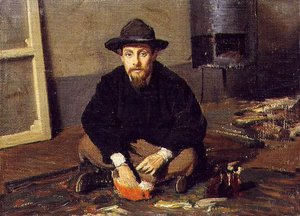
Giovanni Boldini's 'Portrait of Diego Martelli' (1865) captures a moment of quiet intimacy with dynamic brushwork and rich color, showcasing the artist’s signature style.
Biografie kunstenaar
Giovanni Boldini (1842-1931): De 'Meester van de Wrijf' schilderde elegante portretten van Parijs’ belle époque. Ontdek zijn meesterwerken en de glamour van het verleden!
About the painting
Giovanni Boldini’s “Portrait of Diego Martelli” – A Window into Belle Époque Parisian Life
Giovanni Boldini's "Portrait of Diego Martelli," painted circa 1865, isn’t merely a likeness; it’s a carefully constructed tableau vivant, a snapshot of a specific moment in time and a testament to the artist’s remarkable ability to capture not just appearance but also character and atmosphere. This painting, now housed within the Palazzo Pitti in Florence, offers a captivating glimpse into the vibrant social scene of late 19th-century Paris – a world of artistic ferment, intellectual discourse, and burgeoning modernity. Boldini, already establishing himself as a master of portraiture, skillfully employs a technique that blends elements of Realism with the subtle influences of the Macchiaioli movement, creating an image both grounded in observation and imbued with a dynamic energy.
The subject, Diego Martelli, an Italian art critic instrumental in championing Impressionism within Italy, is depicted seated on the floor, a posture remarkably unconventional for formal portraits of the era. This deliberate choice immediately establishes a sense of intimacy and informality, suggesting a relaxed conversation or perhaps a shared moment of contemplation. Martelli’s attire – a dark, simple suit and hat – contrasts subtly with the vibrant, almost luminous, cloth draped across his lap, hinting at a connection to the natural world and a rejection of rigid social conventions. Boldini's masterful use of light is crucial; it doesn’t simply illuminate the subject but sculpts their form, creating depth and volume within the relatively small canvas.
The Influence of Macchiaioli Realism
Boldini’s artistic journey was profoundly shaped by his encounter with the Macchiaioli – a group of Tuscan painters who prioritized capturing fleeting moments and atmospheric effects over meticulous detail. This influence is evident in “Portrait of Diego Martelli” through Boldini's loose brushwork, particularly noticeable in the rendering of the fabric and background. Rather than striving for photographic accuracy, he employs broken color and visible strokes to convey a sense of immediacy and spontaneity – a hallmark of the Macchiaioli’s approach. The muted palette, dominated by browns, grays, and ochres, further reinforces this connection to nature and the transient qualities of light.
Furthermore, Boldini's composition echoes the Macchiaioli’s penchant for depicting subjects within their natural surroundings. The glimpse of a window in the background suggests a domestic setting, grounding Martelli in a specific place and time. This subtle inclusion adds layers of meaning to the portrait, inviting viewers to imagine the context of the scene and the lives of those depicted.
Symbolism and Emotional Resonance
Beyond its technical brilliance, “Portrait of Diego Martelli” is rich in symbolic detail. The seated position itself can be interpreted as a gesture of humility or openness, suggesting that Martelli is willing to share his thoughts and ideas with the viewer. The red cloth draped across his lap – a splash of vibrant color against the muted background – could symbolize passion, creativity, or perhaps even the revolutionary spirit of Impressionism. The direct gaze of Martelli’s eyes draws the viewer into the portrait, creating a powerful connection between subject and observer.
Boldini masterfully captures not just a physical likeness but also an essence—a sense of intellectual curiosity, quiet contemplation, and perhaps even a touch of melancholy. The painting evokes a feeling of intimacy and invites us to step back in time and witness a pivotal moment in the history of art.
A Masterpiece of Belle Époque Portraiture
“Portrait of Diego Martelli” stands as a quintessential example of Giovanni Boldini’s signature style – a captivating blend of realism, dynamism, and psychological insight. It's a painting that rewards careful observation, revealing new details with each viewing. Boldini’s ability to capture the fleeting moments of human interaction and imbue his portraits with emotional resonance cemented his reputation as “the Master of Swish,” a title reflecting both his distinctive brushwork and his remarkable talent for portraying the allure and sophistication of Parisian society during the Belle Époque. Reproductions of this iconic work offer a beautiful opportunity to bring a piece of art history into your home, capturing the spirit of a bygone era.
Veelgestelde vragen
Welke stemming straalt "Diego Martelli" door Giovanni Boldini uit binnen Realism?
Binnen de Realism-stroming is "Diego Martelli" vastgelegd met een Nostalgic toon.
Welk gevoel roept "Diego Martelli" bij u op?
"Diego Martelli" roept een Nostalgic gevoel op. De emotionele toon beschrijft de indruk die het werk achterlaat.
Uit welk land komt het Realism werk "Diego Martelli"?
"Diego Martelli" verbindt de Realism-stroming met Italië via de geboorteplaats van de maker.
Quick facts and art quiz
About Giovanni Boldini

Giovanni Boldini
1842 - 1931, Italië
Biografie kunstenaar
A Master of Swish: The Life and Art of Giovanni Boldini
Giovanni Boldini, een naam die synoniem staat voor elegantie en verleiding van de Belle Époque, was een Italiaanse kunstenaar die zich in Parijs een gerespecteerd portretschilder wist te maken. Geboren op 31 december 1842 in Ferrara, Italië, begon Boldini’s artistieke reis onder begeleiding van zijn vader, een schilder gespecialiseerd in religieuze onderwerpen. Deze vroege blootstelling aan de kunst legde een fundamenteel begrip van techniek en compositie vast, maar het is zijn verhuizing naar Florence in 1862 dat werkelijk zijn creatieve geest ontketende. Daar ontmoette hij de Macchiaioli – een groep Italiaanse realistische schilders die Impressionisme voorspelden met hun nadruk op licht, kleur en spontane uitvoering. Deze ontmoeting bleek cruciaal, beïnvloedde Boldini’s landschappen met een nieuwe vitaliteit en responsiviteit ten opzichte van de natuur. Echter, het was in het vastleggen van de essentie van zijn onderwerpen door middel van portretten dat hij uiteindelijk blijvende roem zou bereiken.Van Florence naar Parijs
Boldini’s artistieke weg leidde hem eerst naar Londen, waar hij snel erkenning verwierf voor zijn portretten van prominente figuren zoals Lady Holland en de hertogin van Westminster. Deze vroege successen legden de basis voor zijn verhuizing naar Parijs in 1872 – een stad die zowel zijn thuis als zijn muze zou worden. In Parijs verdiepte Boldini zich in het artistieke milieu, bevriende hij Edgar Degas en navigeerde hij door het complexe sociale landschap van de Franse hoofdstad. Hij ontwikkelde een kenmerkende stijl gekenmerkt door zijn vloeibaarheid, dynamiek en een bijna theatrale flair. Zijn penseelstreeken waren niet alleen beschrijvend; ze leken de beweging, persoonlijkheid en de atmosfeer rondom zijn onderwerpen vast te leggen. Deze unieke benadering earg hem de aanduiding “Master of Swish” in 1933, een getuigenis van de gracieuze energie die door zijn werk heen stroomde. Hij werd *de* portretschilder voor Parijseselschap, en immortaleerde het glamoureuze leven van actrices, socialeites en aristocraten.Techniek en Invloeden
Boldini’s techniek was net zo boeiend als de personages die hij portretteerde. Zijn doeken waren vaak in grote schaal, waardoor hij een gevoel van grandeur en aanwezigheid kon overbrengen. Hij gebruikte een losse, expressieve penseelstreek, waarbij hij lagen kleur opbouwde om textuur en diepte te creëren. Deze aanpak, gecombineerd met zijn scherp oog voor detail en vermogen om vluchtige uitdrukkingen vast te leggen, resulteerde in portretten die zowel indrukwekkend realistisch als doordrenkt waren van een onmiskenbaar gevoel van stijl. Hoewel beïnvloed door de nadruk op licht en spontaniteit van de Macchiaioli, haalde Boldini ook inspiratie uit kunstenaars zoals John Singer Sargent en Paul Helleu, wiens eigen dynamische penseelstreek resoneren met zijn artistieke gevoeligheid. Hij kopieerde niet alleen gelijkenissen; hij creëerde impressies – evocatieve representaties van karakter en sociale status. Zijn portretten waren niet alleen beelden; ze waren verklaringen.De Belangrijkste Werken
Boldini’s portfolio omvat een reeks iconische werken, waaronder zijn beroemde portret van Giuseppe Verdi, dat de grandeur van de Italiaanse componist vastlegt met een scherp oog voor detail en een gevoel voor dynamiek. Zijn portretten van leden van de Parijse elite, zoals Marthe de Florian, tonen zijn vermogen om de persoonlijkheid en elegantie van zijn onderwerpen te vangen. Het portret van Marthe de Florian, dat in 2010 werd ontdekt in een verlaten appartement in Parijs, is een fascinerend voorbeeld van Boldini’s artistieke vaardigheid en het verborgen potentieel van zijn oeuvre. De geschiedenis rond dit schilderij – een vergeten schat die na decennia van stilstand weer boven kwam – draagt alleen maar bij aan de mystiek die om zowel de kunstenaar als zijn onderwerpen hangt.Een Erfgoed
Doorheen zijn carrière toonde Boldini zich een veelzijdige kunstenaar, met tentoonstellingen in Venetië (1895, 1903, 1905 en 1912) en werd hij benoemd tot Légion d’honneur voor zijn bijdragen aan de kunsten. Ondanks dat zijn populariteit afnam na zijn dood op 11 januari 1931, blijft zijn nalatenschap voortleven, met zijn werken die nog steeds een publiek aantrekken over de hele wereld. Zijn schilderijen prijken in prestigieuze musea en galerieën, als een tijdloze getuigenis van zijn artistieke begaafdheid. Boldini’s invloed strekt zich uit over generaties, inspirerend kunstenaars en liefhebbers tot op de dag van vandaag.- Boldini's invloed is zichtbaar in hedendaagse portretschilderkunst.
- Zijn werk wordt tentoongesteld in belangrijke musea wereldwijd.
- De ontdekking van verloren werken stimuleert verder wetenschappelijk onderzoek.
Quick facts about Giovanni Boldini
- Artistic Movement Or Style: Impressionisme
- Artists Or Movements Influenced By This Artist: ['John Singer Sargent']
- Artists Who Influenced This Artist: ['Macchiaioli']
- Date Of Birth: 31 dec 1842
- Date Of Death: 11 jan 1931
- Full Name: Giovanni Boldini
- Nationality: Italiaans
- Notable Artworks:
- Portret van Marthe
- Verdi's portret
- Place Of Birth: Ferrara, Italië
Vergelijkbare kunstwerken




Ontdek kunstwerken georganiseerd op thema, stijl en kenmerk.


Giovanni Boldini
Diego Martelli
() ·
With its frame: · Hand-painted in oil on linen
Total