

 Voorvertoning
 Verstuur
 Delen
Delen
 Details bekijken
 Gids
Gids

 Download
 Vergelijkbare items
 Röntgenonderzoek
 Diavoorstelling
 Q&A
Q&A Statistieken
A messa prima


A moonlit night of mystery unfolds in Giovanni Segantini's post-impressionist masterpiece A messa prima where a woman watches a figure depart, inviting you to explore this ethereal moment through a fine oil reproduction.
 Lees meer
Giovanni Segantini (1858-1899): Italiaanse meester van adembenemende Alpenlandschappen! Ontdek zijn symbolistische & divisionistische schilderijen die de schoonheid en spiritualiteit van de bergen vastleggen.
Giclée / Kunstafdrukken
Giclée- of canvasafdruk van museumkwaliteit met een snelle productie en flexibele afwerkingsmogelijkheden. ( Bestel handgeschilderde reproductie Schakel over naar digitale afbeeldingen)




P118B €10

P118H €10

P118W €10

P438Z €10

P508JH €12

P508YH €12

P805H €10

P805Z €10

P919BZ €10

P919G €10

P919XJ €10

P959ZH €10

P968JZ €12

W106C €8

W218G €10

W218JH €8

W218Y €10

W307PJ €10

W316G €10

W316PJ €8

W316Y €10

W398PJ €8

W4111J €10

W500HY €15

W500JH €15

W692G €12

W849H €8

W940BG €15

W953PJ €8




Standaardformaat
op maat gemaakt
CM
INCH
Kies uit onze vooraf ingestelde maten die overeenkomen met de originele verhoudingen van het kunstwerk.
Loading sizes...

breedte
hoogte
Voer de gewenste breedte en hoogte in, passend bij uw lijst of muur. Een afdruk kan alleen worden ingekort en nooit groter worden gemaakt dan het origineel; een formaat met andere verhoudingen zal daarom een deel van de afbeelding verliezen. Wij sturen u een digitaal mockup ter goedkeuring voordat we tot drukwerk overgaan. De afbeelding op deze pagina toont niet de werkelijke uitsnede — dit is alleen te zien op het mockup.
Wereldwijde levering () binnen 2 weken in plaats van de standaard 4/5 weken. (31 oktober)

Gratis wereldwijde expressverzending

Hoogwaardig linnen canvas

Volledige verzendverzekering

Garantie op terugbetaling van invoerrechten

Garantie op exacte kleurweergave

Retourbeleid van 100 dagen (alleen bij defecten)

100% Geld-terug-garantie

Korting bij meerdere afnames
 De optie voor glas is alleen beschikbaar bij een formaat kleiner dan 110 cm.

A messa prima
Giclée / Kunstafdrukken
Afmetingen reproductie
-


Eindtotaal
€ 62
A Nocturnal Encounter in Light and Shadow
In the quiet, silvered depths of Giovanni Segantini’s 1885 masterpiece, A messa prima, we are invited into a world where the boundaries between reality and dream begin to dissolve. This post-impressionist gem captures a profound moment of human connection—or perhaps, more poignantly, a moment of departure. At the heart of the composition stands a woman perched upon a staircase, her silhouette marked by an elegant ponytail, gazing downward with an expression that oscillates between longing and resignation. Below her, a figure retreats into the shadows, walking away into the mysteries of the night. The scene is not merely a depiction of a physical space, but an emotional landscape where every brushstroke serves to heighten the sense of intrigue and quiet melancholy that defines this nocturnal encounter.
The atmosphere of the painting is thick with the ethereal glow of a moonlit sky, a technique that Segantini employs to envelop the viewer in a soft, luminous haze. Through his masterful use of light, the artist transforms a simple architectural setting into a stage for symbolic storytelling. The moonlight does more than illuminate the figures; it acts as a celestial witness to the fleeting nature of human presence. As the light touches the edges of the stairs and the distant, shadowy figures in the background, it creates a sense of depth that pulls the observer deeper into the painting’s mystery. This interplay of light and dark—the chiaroscuro of the post-impressionist era—imbues the work with a spiritual weight, suggesting that even in the darkness, there is a profound beauty to be found in the transient moments of our lives.
The Mastery of Post-Impressionist Technique
Segantini’s approach to A messa prima showcases his unique ability to blend the structural precision of his training with the emotive, atmospheric qualities of Symbolism. The technique used here allows for a dreamy, almost otherworldly quality that is characteristic of his most celebrated works. Rather than focusing on harsh outlines, Segantini utilizes subtle transitions of tone to suggest movement and emotion. This soft-focus effect creates a sense of nostalgia, as if we are viewing a memory rather than a live event. For the discerning collector or interior designer, this painting offers a sophisticated textural depth that can anchor a room, providing a focal point that rewards prolonged contemplation.
Beyond its visual allure, the painting serves as a poignant reflection on the passage of time and the fragility of human bonds. The composition is meticulously balanced to guide the eye from the central woman, down the descending steps, and toward the receding figures in the distance, mirroring the very movement of life itself—a constant progression away from what was once close. To possess a high-quality reproduction of this work is to bring a piece of art history into one's personal sanctuary; it is an invitation to reflect on the beauty of the ephemeral and the enduring power of the human spirit. Whether placed in a contemporary gallery setting or a classic study, A messa prima remains a timeless testament to the evocative power of Segantini’s vision.
Veelgestelde vragen
Zijn de kleuren van "A messa prima" door Giovanni Segantini verzadigd of gedempt?
"A messa prima" door Giovanni Segantini heeft een Subtle Color verzadiging.
Wat is het formaat van "A messa prima"?
"A messa prima" door Giovanni Segantini heeft een Panoramic-formaat. Het formaat beschrijft de verhoudingen van de compositie.
Wat deelt "A messa prima" met het overige oeuvre van Giovanni Segantini?
"A messa prima" deelt met andere werken van Giovanni Segantini de Post-Impressionism-stijl en de terugkerende thema's: post-impressionism and symbolism, human connection themes, fleeting nature of time, early career development.
Vergelijkbare kunstwerken


Biografie kunstenaar
Giovanni Segantini: Een Leven Gededicht in de Alpen
Giovanni Segantini, geboren op 15 januari 1858 in Arco, aan het Gardameer, was een Italiaanse schilder die vooral bekend staat om zijn monumentale pastorale landschappen van de Alpen. Zijn leven is een verhaal van strijd en uiteindelijke artistieke triomf, dat resulteerde in een unieke stijl die Divisionisme met Symbolistische elementen combineert. Een man wiens kunst de essentie van de bergen vastlegt, niet alleen in hun fysieke schoonheid, maar ook in hun spirituele betekenis.Vroege Jaren en Zware Omstandigheden
Segantini’s vroege jaren waren gekenmerkt door armoede en tegenspoed. Zijn vader was een reizende handelaar, waardoor zijn moeder de primaire verzorger was. Na haar overlijden sloeg hij de weg in en belandde in een Milanese hervormingsoord. Daar ontmoette hij een kapelaan die zijn artistieke talent herkende en aanmoedigde om dit verder te ontwikkelen. Ondanks beperkte formele opleiding leerde Segantini zichzelf later in het leven lezen en schrijven, wat zijn vastberadenheid aantoont. Zijn eerste carrière begon als assistent fotograaf, maar hij verliet deze snel om zich volledig te wijden aan de kunst. De vroege jaren waren gevuld met een constante strijd voor overleving, een achtergrond die onlosmakelijk verbonden is met zijn latere werk.Artistieke Ontwikkeling en Invloeden
Segantini bezocht de prestigieuze Brera Academie in Milaan, waar hij kennismaakte met invloedrijke figuren van de Scapigliatura beweging. Deze groep omstot de artistieke conventies en omarmde de rauwe realiteit van het leven. Hij werd sterk beïnvloed door Anton Mauve en Jean-François Millet, die hij ontmoette via Vittorio Grubicy de Dragon, zijn adviseur en dealer. Deze kunstenaars benadrukten realisme en de weergave van het platteland. Een cruciale factor in zijn ontwikkeling was de adoptie van de Divisionistische techniek – een methode waarbij kleine druppeltjes of streken van pure kleur naast elkaar op het doek worden aangebracht, waardoor de kijker ze zelf mengt en zo levendige, luminieuze effecten creëert. Daarnaast integreerde Segantini Symbolistische elementen in zijn werk, waardoor zijn landschappen een diepere betekenis kregen.De Schafberg en het Spirituele
Een belangrijk keerpunt in Segantini’s leven was zijn verhuizing naar de Engadine regio in Zwitserland in 1886. De indrukwekkende bergen van de Engadine, met hun sneeuwbekrokken toppen, brede valleien en heldere meren, werden zijn belangrijkste bron van inspiratie. Hij vestigde zich in Maloja en Soglio, waar hij een intieme band ontwikkelde met het landschap. De Schafberg, een opmerkelijke berg tussen Pontresina en Samedan, werd een centraal thema in zijn latere werken. Voor Segantini symboliseerde de Schafberg niet alleen de grandeur van de Alpen, maar ook een spirituele verbinding met de natuur. Zijn schilderijen uit deze periode weerspiegelen vaak diepe allegorische betekenissen en filosofische reflecties.Belangrijke Werken en Thema’s
Segantini is vooral bekend om zijn monumentale pastorale landschappen van de Alpen, maar hij schilderde ook genrebeelden, portretten en figuren. Een belangrijk werk uit deze periode is "Ave Maria aan de kruising" (1886), een schilderij dat het platteland vastlegt met een prachtige lichtinval en symbolische dieptes. Andere bekende werken zijn onder meer: *De Twee Moeders* (1889), een aangrijpend portret van moederschap, *Het Leven* (La Vita) – een schilderij dat de essentie van de Alpen vastlegt, *Donna alla fonte* (ook bekend als Alpenlandschap met vrouw aan de bron) en *Ragazza che fa la calza*. Zijn laatste jaren brachten werken zoals *De Dood van de Herten* (1896), die een melancholische reflectie zijn op het leven en de sterfelijkheid.Erfgoed en Historische Betekenis
Segantini’s fusie van Divisionisme en Symbolisme resulteerde in een unieke stijl die hem onderscheidt van zijn tijdgenoten. Hij wordt herinnerd als een van de belangrijkste schilders van de Alpenlandschappen, die hun schoonheid en spirituele betekenis op een onvergetelijke manier vastlegde. Zijn innovatieve gebruik van kleur en licht heeft generaties kunstenaars geïnspireerd. Segantini’s werken worden vandaag de dag tentoongesteld in belangrijke musea over de hele wereld, en zijn nalatenschap als meester schilder blijft inspireren. Hij is een bewijs dat kunst kan voortkomen uit strijd en tegenslag, en dat het de schoonheid van de natuur kan vangen met zowel techniek als emotie.
Giovanni Segantini
1858 - 1899 , Oostenrijk
Belangrijkste feiten
- Artistic Movement Or Style: Symbolisme, Divisionisme
- Artists Or Movements Influenced By This Artist: ['Divisionisme']
- Artists Who Influenced This Artist:
- Anton Mauve
- Jean-François Millet
- Date Of Birth: 15 jan 1858
- Date Of Death: 28 sep 1899
- Full Name: Giovanni Battista Emanuele Maria Segantini
- Nationality: Italiaans
- Notable Artworks:
- De Sacristie van Sant Antonio
- Lavendelaar
- Het leven
- Vrouw bij de fontein
- Place Of Birth: Arco, Italië
Gerelateerde artikelen
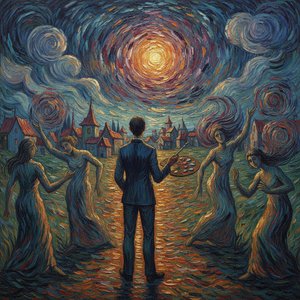
Beyond the Light: Capturing Emotion Through the Expressive Soul of Post-Impressionism
Explore the profound emotional depth of Post-Impressionism. Discover how masters like Van Gogh and Cézanne moved beyond light to capture raw feeling through color and texture. A journey into art history for the true connoisseur.
Ontdek kunstwerken georganiseerd op thema, stijl en kenmerk.

