


 Voorvertoning
 Verstuur
 Delen
Delen
 Details bekijken
 Gids
Gids

 Download
 Vergelijkbare items
 Röntgenonderzoek
 Diavoorstelling
 Statistieken
Head of Minerva
 Acrylic On Canvas
- WallArt
- High Renaissance
 1540
1540 280.0 x 197.0 cm
 Royal Collection
Witness the divine power of Minerva! Giulio Clovio's 1540 chalk masterpiece captures the Roman goddess with exquisite detail & timeless elegance. A Renaissance treasure awaits!
 Lees meer
Giulio Clovio (1498-1578) was de grootste illuminator van de Hoogrenaissance, beroemd om zijn complexe miniaturen en het versmelten van schilderstijlen in manuscriptkunst. Ontdek meesterwerken zoals de Farnese Hours!
Giclée / Kunstafdrukken
Giclée- of canvasafdruk van museumkwaliteit met een snelle productie en flexibele afwerkingsmogelijkheden. ( Bestel handgeschilderde reproductie Schakel over naar digitale afbeeldingen)




P118B €10

P118H €10

P118W €10

P438Z €10

P508JH €12

P508YH €12

P805H €10

P805Z €10

P919BZ €10

P919G €10

P919XJ €10

P959ZH €10

P968JZ €12

W106C €8

W218G €10

W218JH €8

W218Y €10

W307PJ €10

W316G €10

W316PJ €8

W316Y €10

W398PJ €8

W4111J €10

W500HY €15

W500JH €15

W692G €12

W849H €8

W940BG €15

W953PJ €8




Standaardformaat
op maat gemaakt
CM
INCH
Kies uit onze vooraf ingestelde maten die overeenkomen met de originele verhoudingen van het kunstwerk.
Loading sizes...

breedte
hoogte
Voer de gewenste breedte en hoogte in, passend bij uw lijst of muur. Een afdruk kan alleen worden ingekort en nooit groter worden gemaakt dan het origineel; een formaat met andere verhoudingen zal daarom een deel van de afbeelding verliezen. Wij sturen u een digitaal mockup ter goedkeuring voordat we tot drukwerk overgaan. De afbeelding op deze pagina toont niet de werkelijke uitsnede — dit is alleen te zien op het mockup.
Wereldwijde levering () binnen 2 weken in plaats van de standaard 4/5 weken. (28 oktober)

Gratis wereldwijde expressverzending

Hoogwaardig linnen canvas

Volledige verzendverzekering

Garantie op terugbetaling van invoerrechten

Garantie op exacte kleurweergave

Retourbeleid van 100 dagen (alleen bij defecten)

100% Geld-terug-garantie

Korting bij meerdere afnames
 De optie voor glas is alleen beschikbaar bij een formaat kleiner dan 110 cm.

Head of Minerva
Giclée / Kunstafdrukken
Afmetingen reproductie
-


Eindtotaal
€ 62
Giulio Clovio’s “Head of Minerva”: A Renaissance Masterpiece of Wisdom and Divine Grace
Within the meticulously preserved collection of the Royal Collection Trust resides a captivating miniature by Giulio Clovio, a work that transcends its diminutive scale to offer an extraordinary glimpse into the artistic sensibilities of the Italian High Renaissance. Known as “Head of Minerva,” this chalk drawing, created around 1540, is not merely a portrait; it’s a carefully constructed meditation on Roman mythology, classical ideals, and the very essence of wisdom itself. Clovio, a Croatian illuminator who rose to prominence in Italy, possessed an unparalleled ability to marry the delicate precision of manuscript illumination with the burgeoning dynamism of Renaissance painting, establishing himself as arguably the greatest miniaturist of his era.
The subject is unmistakably Minerva, the Roman goddess associated with wisdom, strategic warfare, and the arts. Clovio’s depiction departs subtly from straightforward iconography, however, incorporating elements that hint at a deeper understanding of her multifaceted nature. The figure is presented in profile, gazing downwards with an expression of serene contemplation – a pose reminiscent of Michelangelo's idealized portraits, particularly those conceived for Tommaso de' Cavalieri. This connection speaks to Clovio’s ambition to elevate the miniature into a form of art comparable to painting and sculpture, demonstrating his mastery of capturing human likeness and emotion within a remarkably small format.
The Art of Chalk: Technique and Detail
Clovio’s choice of chalk as the primary medium is crucial to understanding the artwork's unique character. Unlike oil paints, which offer rich color saturation and blending capabilities, chalk provides a luminous, almost ethereal quality. The delicate lines, meticulously rendered with astonishing precision, create an illusion of depth and texture that belies the material’s limitations. The subtle shading achieved through layering and varying pressure demonstrates Clovio's exceptional control – he masterfully manipulates the chalk to suggest form, volume, and even the sheen of armor. The use of white chalk against a dark ground creates a dramatic contrast, further emphasizing the figure’s presence and highlighting the intricate details of her attire.
The level of detail is breathtaking. The helmet, adorned with an imaginative depiction of a battle scene – perhaps referencing Minerva's role as a warrior goddess – features complex geometric patterns and stylized elements that showcase Clovio’s technical skill. The folds of the garment are rendered with remarkable accuracy, while the delicate curls of her hair cascade down her neck, conveying a sense of regal bearing. The overall effect is one of astonishing realism achieved through a deceptively simple medium.
Symbolism and Historical Context
Beyond its aesthetic qualities, “Head of Minerva” is rich in symbolic meaning. The helmet’s depiction of a battle scene underscores the goddess's strategic prowess – she wasn’t simply a patron of the arts but also a protector of Rome during times of conflict. The inclusion of a winged creature or cherub at the top of the helmet, a common motif associated with divinity and victory, further reinforces this association. The artwork was likely commissioned by Cardinal Marino Grimani around 1535-1540, reflecting the patronage that fueled Clovio’s career and allowed him to explore his artistic vision.
Furthermore, the drawing's resemblance to Michelangelo’s portrait studies—particularly those for Tommaso de’ Cavalieri—highlights a significant influence. Clovio was deeply immersed in the artistic currents of Florence, absorbing the innovations of the Renaissance masters while simultaneously forging his own distinctive style. The “Head of Minerva” stands as a testament to this dynamic interplay between tradition and innovation.
A Timeless Masterpiece: Reproduction and Legacy
Today, reproductions of “Head of Minerva” are available through platforms like TopImpressionists.com, offering art lovers the opportunity to own a piece of history and experience the beauty of Clovio’s masterpiece firsthand. The meticulous attention to detail, combined with the artwork's rich symbolism and historical context, makes it a truly captivating addition to any collection. As a work created in 1540, “Head of Minerva” continues to inspire awe and admiration, serving as a poignant reminder of the enduring power of Renaissance art.
Veelgestelde vragen
In welke periode van de carrière van Giulio Clovio valt "Head of Minerva"?
"Head of Minerva" vertegenwoordigt de High Renaissance van Giulio Clovio.
Wat zijn de techniek en de afmetingen van "Head of Minerva" door Giulio Clovio?
"Head of Minerva" is vervaardigd in Acrylic On Canvas en heeft in zijn originele vorm de afmetingen 280 x 197 cm.
Is "Head of Minerva" verkrijgbaar als fine art print?
Om een print van "Head of Minerva" door Giulio Clovio te bestellen, kunt u terecht op de Fine Art Print pagina: een fine art print op katoenen canvas of archiefwaardig canvaspapier.
Biografie kunstenaar
Een Kroatische Lichtstraal van de Italiaanse Renaissance
Giulio Clovio, geboren als Juraj Julije Klović in 1498 te midden van de glooiende heuvels van Grižane, Kroatië, staat als een cruciaal figuur die de laatgotische traditie van manuscriptverluchting verbindt met de opkomende Hoogrenaissance. Hoewel zijn wortels in het Koninkrijk Kroatië lagen, was het in Italië dat Clovio’s artistieke genie werkelijk tot bloei kwam, wat hem de reputatie opleverde als wellicht de grootste verluchter van zijn tijd en de laatste belangrijke meester in een stamboom die eeuwen terugreikt. Zijn verhaal is er een van uitzonderlijk talent, vindingrijk mecenaat en een onwankelbare toewijding aan het transformeren van de miniatuur tot een adembenemend verfijnde kunstvorm.
De vroege jaren van Clovio’s leven blijven gehuld in mysterie. Men vermoedt dat hij zijn eerste artistieke training heeft genoten binnen monastieke kringen nabij Rijeka, maar op achttienjarige leeftijd leidde zijn ambitie hem naar Italië. De intrede in het huishouden van kardinaal Marino Grimani bleek een keerpunt; hier, onder de begeleiding van de kardinaal, verfijnde Clovancio zijn vaardigheden als schilder en begon hij de minutieuze techniek te ontwikkelen die zijn carrière zou definiëren. Hij absorbeerde invloeden van de vooraanstaande kunstenaars van die tijd—Giulio Romano en Girolamo dai Libri speelden beiden een rol in de vorming van zijn stijl—maar hij vond al snel zijn eigen pad, waarbij hij een uitzonderlijk vermogen toonde om de grandeur van de Renaissance-schilderkunst te vertalen naar een miniatuurformaat.
De Kunst van de Miniatuur: Een Synthese van Stijlen
Clovio’s kunstenaarschap ging niet enkel over het kopiëren van bestaande stijlen; het draaide om het versmelten ervan. Hij slaagde er meesterlijk in om de delicate precisie van de Noord-Europese verluchting te combinerende met de dynamische composities en levendige kleurenpaletten die zo kenmerkend waren voor de Italiaanse Renaissance-meesters zoals Rafaël, Michelangelo en Tiziaan. Deze fusie is bijzonder zichtbaar in zijn verluchte manuscripten, waar figuren een sculpturale kwaliteit bezitten, landschappen vervagen in atmosferisch perspectief en elk detail—van de plooien in de draperie tot de schittering van juwelen—met verbazingwekkende nauwkeurigheid is weergegeven.
Zijn werk voor kardinaal Domenico Grimani, waaronder het uiterst gedetailleerde commentaar op de Brief van Paulus aan de Romeinen (nu ondergebracht in het Sir John Soane's Museum), toonde zijn ontluikende talent en vestigde zijn reputatie. De miniaturen in dit manuscript zijn niet louter illustraties; het zijn miniatuurschilderijen op zich, doordrenkt met narratieve kracht en emotionele diepgang. De bekering van Sint Paulus wordt afgebeeld met een dramatische intensiteit die zelden wordt gezien in verluchte manuscripten.
Mecenaat, Reizen en Artistieke Bloei
Clovio’s carrière was onlosmakelijk verbonden met de machtige beschermheren die zijn uitzonderlijke gaven herkenden. Na zijn tijd bij de familie Grimani diende hij aan het Hongaarse hof van koning Lodewijk II, waar hij werken schiep zoals “De Uitspraak van Paris” en “Lucretia”. De voortijdige dood van de koning tijdens de Slag bij Mohács dreef Clovio terug naar Rome, waar hij erin slaagde om voortdurend invloedrijke steunzoekers aan zich te binden.
Zijn band met kardinaal Alessandro Farnese bleek bijzonder vruchtbaar. Het was voor Farnese dat Clovio zijn magnum opus creëerde: de Farnese Hours, een weelderig verlucht getijdenboek dat in 1546 werd voltooid na negen jaar onvermoeibaar werk. Dit meesterwerk, dat nu deel uitmaakt van de Morgan Library in New York, bevat achtentwintig miniaturen die scènes uit zowel het Oude als het Nieuwe Testament uitbeelden, met als hoogtepunt een spectaculaire dubbelpagina die de processie van Corpus Christi in Rome verbeeldt. De Farnese Hours is niet alleen een getuigenis van Clovio’s technische bekwaamheid, maar ook een reflectie van zijn diepe begrip van de iconografie en de theologische thema's van de Renaissance.
Een Verlicht Erfgoed
De invloed van Clovio reikte verder dan het domein van de manuscriptverluchting. Hij was een gerespecteerd figuur in artistieke kringen en sloot vriendschap met kunstenaars als Pieter Bruegel de Oude—die zelfs een miniatuur bijdroeg aan een van Clovio’s werken—en El Greco, die verschillende portretten van de meester-verluchter schilderde. In deze portretten plaatste El Greco hem naast Michelangelo, Rafaël en Tiziaan als zijn eigen grote invloeden. Deze portretten dienen als krachtige visuele verklaringen van Clovio’s status binnen de kunstgemeenschap.
Hoewel hij voornamelijk in het miniatuurformaat werkte, was de impact van Clovio op de Renaissance-kunst aanzienlijk. Hij verhief de status van verluchting van een ambacht naar een schone kunst, waarmee hij de potentie voor expressieve kracht en technische virtuositeit bewees. Zijn vermogen om de geest van de Hoogrenaissance te vangen binnen de beperkingen van een klein formaat verzekerde hem een plaats als een van de meest gevierde kunstenaars van zijn tijd—een Kroatische lichtstraal wiens nalatenschap de wereld van de kunst tot op de dag van vandaag blijft verlichten.

Giulio Clovio
1498 - 1578 , Kroatië
Belangrijkste feiten
- Artistic Movement Or Style: Hoogrenaissance
- Artists Or Movements Influenced By This Artist: ['El Greco']
- Artists Who Influenced This Artist:
- Giulio Romano
- Girolamo dai Libri
- Date Of Birth: 1498
- Date Of Death: 1578
- Full Name: Giulio Clovio
- Nationality: Kroatisch-Italiaans
- Notable Artworks:
- Farnese Hours
- Towneley Lectionary
- Soane Manuscript
- Place Of Birth: Grižane, Kroatië
Gerelateerde artikelen
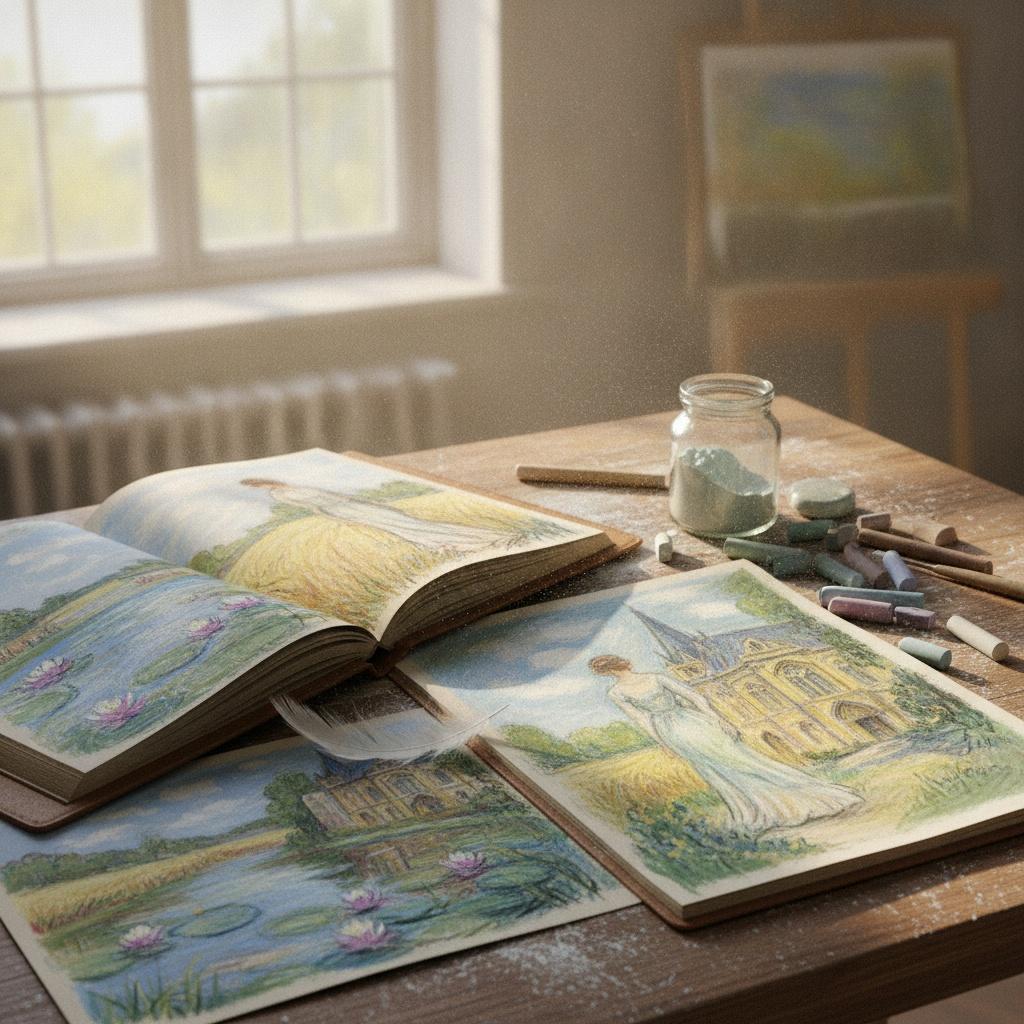
The Soft Magic of Chalk: Capturing Light, Texture, and the Ethereal Soul of Impressionist Masterpieces
Discover the ethereal beauty of pastel and chalk art. Explore how Impressionist masters like Van Gogh and Degas captured light and texture to create timeless, soulful masterpieces for the discerning collector.

The Soul of the Line: Discovering the Timeless Beauty and Emotional Depth of Graphite Art
Explore the profound beauty of graphite art. From the alchemy of carbon to the emotional depth of monochrome landscapes, discover how master artists use the eloquent line to capture light and soul in timeless pencil drawings.

The Soul of Shadows: Mastering Depth, Texture, and Emotional Resonance in the Art of Graphite
Explore the profound artistry of graphite drawing. Discover how masters use chiaroscuro, texture, and light to evoke deep emotion, bridging classical precision with Impressionist soul. A guide for true art lovers seeking technical mastery and historical depth.