


 Bekijk op ware grootte
 Verstuur
 Delen
Delen
 Details bekijken
 Gids voor studentenkunstwerken

 Download
 Vergelijkbare items
 Röntgenonderzoek
 Diavoorstelling
 Statistieken
Holy Trinity


A celestial vision of the Holy Trinity unfolds through God, Jesus, and the Holy Spirit amidst angelic hosts in this 1620 Flemish Baroque masterpiece by Hendrik van Balen I, inviting you to bring divine grace into your home.
 Lees meer
Hendrick van Balen I (1575-1632) was een Vlaamse barokschilder bekend om zijn betoverende mythologische & allegorische taferelen en als invloedrijke leraar van Anthony van Dyck.
Handgemaakte olieverfreproductie
Met de hand geschilderd in olieverf op canvas in uw gewenste maat en lijst, op bestelling gemaakt door onze kunstenaars. ( Schakel over naar print Schakel over naar digitale afbeeldingen)




P118B €10

P118H €10

P118W €10

P438Z €10

P508JH €12

P508YH €12

P805H €10

P805Z €10

P919BZ €10

P919G €10

P919XJ €10

P959ZH €10

P968JZ €12

W106C €8

W218G €10

W218JH €8

W218Y €10

W307PJ €10

W316G €10

W316PJ €8

W316Y €10

W398PJ €8

W4111J €10

W500HY €15

W500JH €15

W692G €12

W849H €8

W940BG €15

W953PJ €8




Standaardformaat
op maat gemaakt
CM
INCH
Kies uit onze vooraf ingestelde maten die overeenkomen met de originele verhoudingen van het kunstwerk.
Loading sizes...

breedte
hoogte
Voer de breedte en de hoogte in die u nodig heeft, passend bij uw lijst of uw muur. Dit is handgeschilderd, dus bij een afmeting met een andere vormverhouding kan de kunstenaar iets meer rondom het schilderij schilderen of juist iets meer weglaten — u kiest zelf. Wij sturen u een digitaal mockup ter goedkeuring voordat het schilderwerk begint. De afbeelding die op deze pagina wordt getoond, is niet het uiteindelijke resultaat — alleen de mockup geeft dit weer.
Voorbeelden van wat aangepast kan worden: Vervang het gezicht met een eigen foto; Voeg een huisdier toe (bijv. vervang de kat door een hond); Verwerk een verborgen boodschap in de achtergrond; Wijzig het landschap of andere elementen in de achtergrond.
Na de bestelling zal het team van TopImpressionists.com per e-mail contact opnemen met de klant voor instructies en een mockup-voorbeeld sturen.
Na de bestelling zal het team van TopImpressionists.com per e-mail contact opnemen met de klant voor instructies en een mockup-voorbeeld sturen.
Wereldwijde levering () binnen 3 tot 4 weken in plaats van de standaard 5 weken. (23 oktober). Zonder concessies aan de kwaliteit.

Gratis wereldwijde expressverzending

Hoogwaardig linnen canvas

Volledige verzendverzekering

Garantie op terugbetaling van invoerrechten

Garantie op exacte kleurweergave

Retourbeleid van 100 dagen (alleen bij defecten)

100% Geld-terug-garantie

Korting bij meerdere afnames
 De optie voor glas is alleen beschikbaar bij een formaat kleiner dan 110 cm.

Holy Trinity
Reproductiemethode
Formaat reproductie
-


Totaalprijs
€ 236
A Celestial Vision in Baroque Splendor
In the vast, swirling expanse of the seventeenth-century Flemish sky, few images command the soul with as much reverence as Hendrik van Balen I’s Holy Trinity. Painted around 1620, this masterpiece serves as a profound window into the spiritual heights of the Baroque era. The composition unfolds within a breathtaking celestial realm, where the boundaries between the earthly and the divine dissolve amidst billowing, luminous clouds. At the heart of this cosmic drama sits the Holy Trinity: God the Father, Jesus Christ, and the Holy Spirit, arranged in a triad of divine unity. The scene is not merely a religious depiction but a choreographed movement of light and grace, where the figures emerge from the heavens to offer a glimpse of eternal peace to the viewer below.
The artistry of van Balen I shines through his meticulous command of detail and his ability to weave complex allegorical layers into a single, cohesive vision. As a master who influenced even the great Anthony van Dyck, van Balen brings a sophisticated elegance to the piece. Surrounding the central figures is a host of celestial attendants—angels whose presence adds both movement and weight to the composition. Some angels are depicted with the solemnity of guardians, wielding swords and shields, while others drift with a weightless grace. A solitary bird soars above the assembly, acting as a subtle yet powerful symbol of the Holy Spirit’s descent, bridging the gap between the high heavens and the natural world visible in the distant, verdant trees.
Symbolism and the Mastery of Light
Every element within this painting is imbued with deep theological significance, designed to guide the observer toward contemplation. The arrangement of the Father, Son, and Spirit creates a triangular stability that reflects the concept of divine perfection. The interplay of light and shadow—a hallmark of the Baroque style—serves to sculpt the figures out of the ether, giving them a tangible, almost sculptural presence despite their heavenly nature. This technique, known as chiaroscuro, directs the eye toward the central mystery of the Trinity, ensuring that the viewer’s gaze is constantly drawn back to the source of light and life.
For the discerning collector or interior designer, this artwork offers more than just historical value; it provides a profound emotional anchor for any space. The painting’s palette, rich with the soft tones of a breaking dawn and the deep, earthy greens of the background landscape, creates an atmosphere of serene majesty. Whether placed in a grand library, a formal dining hall, or a quiet sanctuary, a high-quality reproduction of this work brings a sense of timelessness and spiritual depth. It is a piece that invites long periods of study, rewarding the viewer with new discoveries of texture, light, and meaning with every glance, making it an incomparable centerpiece for those who appreciate the intersection of fine art and profound devotion.
Vragen & Antwoorden
Wat is het kleurenpalet van "Holy Trinity" door Hendrick van Balen I?
"Holy Trinity" door Hendrick van Balen I maakt gebruik van een Earthy palet, met Espresso (#402c20) als dominante kleur.
In welk jaar en binnen welke stroming werd "Holy Trinity" gemaakt?
"Holy Trinity" werd gemaakt in 1620, binnen de Baroque-stroming.
Waar is "Holy Trinity" door Hendrick van Balen I tegenwoordig te zien?
Het originele werk "Holy Trinity" is te bewonderen in Sint-Jacobskerk, Antwerpen, België.
Biografie van de kunstenaar
Een Meester van Mythe en Miniature: Het Wereldbeeld van Hendrick van Balen I
Hendrick van Balen I, een naam die wellicht niet direct dezelfde herkenning geniet als die van zijn tijdgenoten Rubens of Van Dijck, bekleedt niettemin een cruciale positie in het bruisende artistieke landschap van 17e-eeuws Antwerpen. Geboren rond 1575 in een welvarende koopmansfamilie, profiteerde van Balen van een opvoeding die zowel intellectuele nieuwsgierigheid als artistieke aanleg stimuleerde. Deze gelukkige combinatie stelde hem in staat om een rigoureuze opleiding te volgen, aanvankelijk onder Adam van Noort – een schilder doordrenkt van de Manieristische traditie – en mogelijk ook bij Marten de Vos. Deze vroege invloeden legden de basis voor een carrière die gekenmerkt werd door minutieuze details, elegante composities en een voorkeur voor mythologische en allegorische onderwerpen. De financiële stabiliteit van zijn familie bood hem kansen die verder gingen dan louter technische vaardigheid; hij ontwikkelde taalkundige bekwaamheden die later van waarde zouden blijken tijdens zijn reizen en samenwerkingen. Van Balen was niet slechts een ambachtsman, maar een humanist geleerd in de klassieke verhalen die veel Barokke kunst voedden.Van Altaarstukken tot Intieme Visies
Van Balens artistieke reis begon met grootschalige religieuze werken, altaarstukken die de krachtige Romanistische stijl weerspiegelden die hij van zijn leermeester, Adam van Noort, had geërfd. Deze vroege stukken tonen een solide beheersing van anatomie en dramatische compositie, maar het was in het domein van kleinere kabinetstukjes dat hij werkelijk zijn stem vond. Rond 1595 ondernam hij een artistieke pelgrimstocht naar Italië – een reis die niet definitief gedocumenteerd is, maar blijkt uit zijn latere lidmaatschap van de Gilde der Romanisten bij zijn terugkeer in Antwerpen. Dit verblijf exposeerde hem aan de opkomende Barokstijl en het werk van kunstenaars als Annibale Carracci en Palma Giovane, wat leidde tot een verschuiving naar verfijndere kleurenpaletten en sierlijke figurenarrangementen. Hij werd meester in de Antwerpse Sint-Lucasgilde in 1592-93, klom op in de rangen en werd meerdere malen decaan – een bewijs van zijn status binnen de kunstgemeenschap. Zijn werkplaats bloeide op en werd een centrum voor beginnende schilders, met name Anthony van Dijck, die cruciale vroege training ontving onder Van Balens begeleiding.Een Collaboratieve Geest en de Guirlandeschildering
Van Balen was geen kunstenaar die geïsoleerd werkte. Samenwerking stond centraal in zijn praktijk, met name met Jan Brueghel de Oude, een meester in het stilleven. Samen pionierden ze in het genre van de guirlandeschildering – een unieke Vlaamse innovatie die devotionele of mythologische beelden combineerde met weelderige bloemstukken. Deze werken waren niet louter decoratief; ze waren doordrenkt van symbolische betekenis, wat de religieuze vurigheid en artistieke verfijning van het Habsburgse hof weerspiegelde. De opdracht van kardinaal Federico Borromeo voor een guirlandeschildering rond 1607-1608 staat als een mijlpaal in dit genre – een bewijs van hun gecombineerde vaardigheid en innovatieve geest. Brueghels minutieuze weergave van bloemen en vruchten bood een levendig kader voor Van Balens sierlijke figuren, waardoor een harmonische synthese ontstond van naturalisme en idealisme. Naast Brueghel werkte hij vaak samen met andere kunstenaars zoals Joos de Momper, Abraham Govaerts en Frans Snyders, wat zijn aanpassingsvermogen en bereidheid om diverse artistieke perspectieven te omarmen aantoont.Nalatenschap en Blijvende Invloed
De invloed van Hendrick van Balen I reikte verder dan de grenzen van zijn werkplaats. Zijn nadruk op verfijnde techniek, elegante compositie en mythologische thematiek resoneerde met een generatie Vlaamse kunstenaars. Anthony van Dijck, misschien wel zijn meest gevierde leerling, nam veel over van de benadering van zijn meester ten aanzien van figuren schilderen en compositorische principes. Van Balens kabinetstukjes – vaak uitgevoerd op koperen platen – werden zeer gewild bij verzamelaars, geprezen om hun intieme schaal en exquise details. Hoewel hij misschien niet dezelfde wijdverspreide bekendheid verwierf als Rubens of Van Dijck, speelde van Balen een vitale rol bij het revitaliseren van de Vlaamse schilderkunst in de vroege 17e eeuw. Hij overbrugde de kloof tussen Manierisme en Barok, en smeedde een kenmerkende stijl die klassieke idealen combineerde met Vlaams realisme. Zijn nalatenschap leeft voort door zijn bewaard gebleven werken – getuigenissen van een meesterambachtsman die mythe en allegorie tot leven bracht met ongeëvenaarde gratie en kunstzinnigheid. Zijn bijdrage ligt niet in grandioze uitspraken, maar in de stille perfectie van miniatuurwerelden.
Hendrick van Balen I
1575 - 1632 , België
Snelle feiten
- Artistic Movement Or Style: Barok
- Artists Or Movements Influenced By This Artist:
- Anthony van Dyck
- Frans Snyders
- Artists Who Influenced This Artist:
- Adam van Noort
- Maerten de Vos
- Date Of Birth: ca. 1575
- Date Of Death: 1632
- Full Name: Hendrick van Balen I
- Nationality: Vlaams
- Notable Artworks:
- Moses Striking the Rock
- A Bacchic Procession
- Place Of Birth: Antwerpen, België
Gerelateerde artikelen
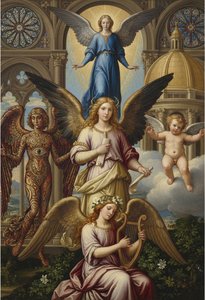
Divine Beauty: A Curated Guide to the Celestial Majesty of Angelic Figures in Art History
Explore the profound beauty of angelic figures in art history. From Renaissance masterpieces to celestial symbolism, our expert guide offers a sophisticated journey through the divine imagery of the Old Masters for discerning collectors and art enthusiasts.

Celestial Messengers: Angels in Painting – A Historical & Artistic Exploration
Explore the captivating history of angels in painting! Discover symbolism, iconic Renaissance & Byzantine masterpieces, and renowned artists. Expert insights for art lovers & collectors at TopImpressionists.

Mastering Drama and Light: A Definitive Guide to the Flemish Baroque Art Movement
Explore the dramatic brilliance of the Flemish Baroque movement. Discover how masters like Peter Paul Rubens utilized chiaroscuro and dynamic composition to redefine art history through light, shadow, and unparalleled emotion.

Barokke Pracht: Kunst die Grootsheid in Huis Brengt
Ontdek de barokke pracht! Leer over de geschiedenis, kenmerken en toepassingen van deze weelderige kunststijl in uw interieur. Laat u inspireren door meesters en breng grootsheid in huis.

Celestial Messengers: A Comprehensive Exploration of Angelic Representation in Art History
Explore the captivating history of angels in art! Discover symbolism, iconic Renaissance masterpieces & renowned artists. Expert insights for art lovers & collectors at TopImpressionists.