


 Voorvertoning
 Verstuur
 Delen
Delen
 Details bekijken
 Gids
Gids

 Download
 Vergelijkbare items
 Röntgenonderzoek
 Diavoorstelling
 Statistieken
Girl at a Table


Hermann Max Pechstein's 'Girl at a Table,' painted in 1910, showcases bold colors and expressive lines. Featuring Lotte Kaprolat as his model, this masterpiece embodies Pechstein’s refined artistic sensibilities.
 Lees meer
Ontdek de expressionistische kunst van Hermann Max Pechstein (1881-1955). Als kernlid van Die Brücke tonen zijn schilderijen felle kleuren, naakten en landschappen uit het Duitsland van na de Eerste Wereldoorlog. Ontdek zijn nalatenschap!
Giclée / Kunstafdrukken
Giclée- of canvasafdruk van museumkwaliteit met een snelle productie en flexibele afwerkingsmogelijkheden. ( Bestel handgeschilderde reproductie Schakel over naar digitale afbeeldingen)




P118B €10

P118H €10

P118W €10

P438Z €10

P508JH €12

P508YH €12

P805H €10

P805Z €10

P919BZ €10

P919G €10

P919XJ €10

P959ZH €10

P968JZ €12

W106C €8

W218G €10

W218JH €8

W218Y €10

W307PJ €10

W316G €10

W316PJ €8

W316Y €10

W398PJ €8

W4111J €10

W500HY €15

W500JH €15

W692G €12

W849H €8

W940BG €15

W953PJ €8




Standaardformaat
op maat gemaakt
CM
INCH
Kies uit onze vooraf ingestelde maten die overeenkomen met de originele verhoudingen van het kunstwerk.
Loading sizes...

breedte
hoogte
Voer de gewenste breedte en hoogte in, passend bij uw lijst of muur. Een afdruk kan alleen worden ingekort en nooit groter worden gemaakt dan het origineel; een formaat met andere verhoudingen zal daarom een deel van de afbeelding verliezen. Wij sturen u een digitaal mockup ter goedkeuring voordat we tot drukwerk overgaan. De afbeelding op deze pagina toont niet de werkelijke uitsnede — dit is alleen te zien op het mockup.
Wereldwijde levering () binnen 2 weken in plaats van de standaard 4/5 weken. (28 oktober)

Gratis wereldwijde expressverzending

Hoogwaardig linnen canvas

Volledige verzendverzekering

Garantie op terugbetaling van invoerrechten

Garantie op exacte kleurweergave

Retourbeleid van 100 dagen (alleen bij defecten)

100% Geld-terug-garantie

Korting bij meerdere afnames
 De optie voor glas is alleen beschikbaar bij een formaat kleiner dan 110 cm.

Girl at a Table
Giclée / Kunstafdrukken
Afmetingen reproductie
-


Eindtotaal
€ 62
A Portrait of Confidence: Exploring Hermann Max Pechstein’s ‘Girl at a Table’
Hermann Max Pechstein (1881–1955), a pivotal figure in German Expressionism, produced countless canvases that grapple with themes of modernity and psychological depth. Among his most celebrated works is “Girl at a Table,” painted in 1910 – a piece that transcends mere representation to embody the spirit of its time and Pechstein’s distinctive artistic vision. This essay delves into the intricacies of this painting, examining its stylistic elements, technical innovations, historical significance, and enduring emotional resonance.- Style & Context: “Girl at a Table” firmly establishes itself within the Expressionist movement, rejecting Impressionistic ideals for a bold embrace of emotion and distortion. Born in Zwickau, Pechstein’s formative years were marked by poverty and hardship – experiences that profoundly influenced his artistic sensibilities. The painting emerged during a period of intense social upheaval following World War I, mirroring anxieties about societal change and the fragility of human existence. It reflects the broader Expressionist preoccupation with portraying inner turmoil alongside external realities.
- Composition & Technique: Pechstein’s masterful use of color is immediately striking. He employs vibrant hues—primarily reds and yellows—to imbue the scene with an energetic dynamism that contrasts sharply with the muted tones characteristic of earlier artistic traditions. The painting utilizes thick impasto, applying paint directly onto the canvas in textured layers, creating a palpable physicality that conveys both visual richness and emotional intensity. This technique is particularly evident in the depiction of the table cloth and highlights Pechstein’s commitment to conveying tactile sensations.
- Subject Matter & Symbolism: The central figure—a young woman seated at a table—commands immediate attention. Her gaze directs outwards, suggesting contemplation and perhaps even defiance. The inclusion of two bowls on the table adds subtle symbolic layers, hinting at nourishment and reflection – concepts crucial to understanding Pechstein’s artistic concerns. Furthermore, the woman's posture exudes confidence and composure, mirroring the broader Expressionist desire to portray individuals confronting existential dilemmas with courage and conviction.
- Historical Significance: “Girl at a Table” stands as a testament to Pechstein’s engagement with contemporary social issues. It captures the anxieties of a generation grappling with disillusionment after the horrors of war, yet simultaneously celebrates beauty and vitality. The painting's stylistic innovations—particularly its bold color palette and expressive brushwork—challenged prevailing artistic conventions and paved the way for subsequent developments in Expressionist art.
- Emotional Impact: Ultimately, “Girl at a Table” succeeds in conveying a profound sense of psychological complexity. Pechstein’s ability to capture subtle nuances of emotion – trust, contemplation, and perhaps even vulnerability—elevates the painting beyond mere visual spectacle. It invites viewers to contemplate themes of identity, resilience, and the human condition, ensuring its enduring relevance as an artwork that speaks to our deepest sensibilities.
The Folkwang Museum’s acquisition of this masterpiece underscores its importance within German art history.
Veelgestelde vragen
Wat is de luminantie van "Girl at a Table" door Hermann Max Pechstein?
De vastgestelde luminantie voor "Girl at a Table" door Hermann Max Pechstein is Gentle Luminance.
Wat stelt "Girl at a Table" voor en welke sfeer straalt het uit?
"Girl at a Table" toont woman, table, chair, bowl, smile, red lips, painting en de vastgelegde stemming is Elegant.
Zijn de kleuren van "Girl at a Table" door Hermann Max Pechstein levendig of gedempt?
"Girl at a Table" door Hermann Max Pechstein is vastgelegd met een Clear Color Presence verzadiging en een Vivid intensiteit.
Vergelijkbare kunstwerken


Biografie kunstenaar
De Levendige Hartslag van het Duits Expressionisme
Geboren in het industriële hart van Zwickau in 1881, kwam Hermann Max Pechstein voort uit een arbeidersmilieu om uit te groeien tot een van de meest dominante figuren van de vroeg-twintigste-eeuwse avant-garde. Zijn reis naar de ziel van de moderne kunst begon niet met grootse academische pretentie, maar door een diepgewortelde verbinding met vakmanschap en de rauwe texturen van het leven. Als zoon van een textielarbeider werden Pechsteins vroege gevoelens gevormd door de ritmische, tastbare wereld van de industrie, een fundament dat zich later zou manifesteren in zijn gedurfde, onbevangen gebruik van lijn en kleur. Zijn formele opleiding aan de Koninklijke Academie voor Toegepaste Kunsten en de Koninklijke Academie voor Schone Kunsten in Dresden bood hem een technische strengheid die hem onderscheidde van veel van zijn tijdgenoten; hij was uniek genoeg het enige lid van de legendarische Die Brücke-groep dat zo'n uitgebreide academische training had ondergaan.
De koers van Pechsteins carrière veranderde onherroepelijk in 1906, toen een toevallige ontmoeting tijdens een tentoonstelling in Dresden hem introduceerde bij Erich Heckel en het opkomende collectief dat bekend zou staan als Die Brucht. Deze groep kunstenaars streefde ernaar de kloof tussen het verleden en een nieuwe, viscerale moderniteit te overbruggen, waarbij ze de beleefde vernislaag van het academisme afstripten om de onderliggende emotionele waarheid te onthullen. Het werk van Pechstein begon tijdens deze periode te vibreren met een nieuwe energie, waarbij hij de resterende decoratieve invloeden van de Art Nouveau losliet ten gunste van iets veel primitievers. Zijn reizen door Italië en Frankrijk fungeerden als een krachtige katalysator, waar de zonovergoten paletten van de Fauvisten en de structurele helderheid van de meesters uit de Renaissance in zijn geest versmolten, wat resulteerde in een stijl die werd gekenmerkt door vereenvoudigde vormen en een intense, ongemengde toepassing van pigment.
Een Erfenis Gesmeed in Kleur en Conflict
Naarmate zijn reputatie groeide, werden de doeken van Pechstein vensters naar de veranderende geest van het Duitsland na de Eerste Wereldoorlog. Zijn kunst was nooit louter decoratief; het was een diepgaande verkenning van het menselijk bestaan, vastgelegd in scènes van levendige dansers, rustige landschappen en intieme portretten. In werken zoals Meisje aan een tafel kan men zijn meesterschap van expressieve lijnen en een verfijnd kleurgebruik getuigen dat leven blaast in het onderwerp, waarbij hij vaak modellen zoals Lotte Kaprolat gebruikte om zijn visionaire abstracties te verankeren in menselijke warmte. Zijn vermogen om de vitaliteit van het dagelijks leven vast te leggen—van de ritmische beweging in zijn Dansers-serie tot de levendige, zonovergoten sferen van zijn eilandscènes—bevestigde zijn status als een meester van de expressionistische taal.
De briljantie van Pechsteins visie werd echter geconfronteerd met diepe duisternis tijdens de opkomst van het nazi-regime. Zijn toewijding aan emotionele eerlijkheid en formele experimenten leidde ertoe dat de staat zijn werk bestempelde als Entartete Kunst (ontaarde kunst). Tijdens deze periode van vervolging werden meer dan 300 van zijn schilderijen verwijderd uit Duitse musea, een verwoestende klap voor zowel de kunstenaar als het culturele weefsel van zijn natie. Ondanks deze systematische poging om zijn bijdrage uit te wissen, bleef Pechsteins geest ongeschonden. Hij bleef schilderen door de turbulentie van oorlog en politieke onrust heen, en liet een nalatenschap na die dient als een getuigenis van de veerkracht van de creatieve impuls. Vandaag de dag erkennen we Max Pechstein niet alleen als een schilder, maar als een pionier die durfde kleur te gebruiken als een taal van bevrijding, waardoor de levendige hartslag van het Duits Expressionisme blijft resoneren door de gangen van de kunstgeschiedenis.

Hermann Max Pechstein
1881 - 1955
Belangrijkste feiten
- Artistic Movement Or Style: Cubisme, Surrealisme
- Artists Or Movements Influenced By This Artist: ['Georges Braque']
- Artists Who Influenced This Artist:
- Paul Cézanne
- Afrikaanse kunst
- Date Of Birth: 25 oktober 1881
- Date Of Death: 8 april 1973
- Full Name: Pablo Diego José Francisco de Paula Juan Nepomuceno María de los Remedios Cipriano de la Santísima Trinidad Ruiz y Picasso
- Nationality: Spaans
- Notable Artworks:
- Guernica
- Les Demoiselles d’Avignon
- De huilende vrouw
- Meisje voor de spiegel
- Place Of Birth: Málaga, Spanje
Gerelateerde artikelen

Top 10 Expressionistische Meesterwerken: Kunst die de Ziel Raakt | TopImpressionists
Ontdek de 10 meest iconische Expressionistische meesterwerken! Duik in de emotionele wereld van Kirchner, Kandinsky & Nolde. Museumkwaliteit kunst reproducties voor uw interieur. Exploreer de collectie op TopImpressionists.com.

Top 10 Cubistische Expressionistische Meesterwerken: Kunst voor uw Interieur
Ontdek de 10 baanbrekende meesterwerken van het Cubisme & Expressionisme! Leer over Picasso, Braque en Kandinsky. Vind museumkwaliteit kunst reproducties voor uw interieur op TopImpressionists.com.
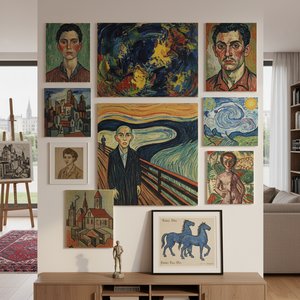
Top 10 Expressionistische Meesterwerken: Kunst die Échte Emotie Spreekt | TopImpressionists.nl
Ontdek de 10 meest iconische Expressionistische meesterwerken! Van Munch's 'De Schreeuw' tot Kandinsky's abstractie. Leer over de kunstenaars, technieken & emoties achter deze beweging. Museumkwaliteit reproducties op TopImpressionists.com.

Top 10 Kunstwerken die Durf Uitstralen | TopImpressionists
Ontdek 10 iconische kunstwerken die durf en expressie belichamen! Van Van Gogh tot Picasso, leer over de verhalen achter krachtige schilderijen & vind museumkwaliteit reproducties voor jouw interieur. Explore the full collection on TopImpressionists.com

Egon Schiele's Top 25 Meesterwerken: Kunstprints voor een Unieke Woonstijl
Ontdek de 25 meest iconische werken van Egon Schiele! Duik diep in zijn expressionistische wereld vol intense portretten en emotionele kracht. Vind museumkwaliteit reproducties & unieke wanddecoratie op TopImpressionists.com. Exploreer de collectie online!
Ontdek kunstwerken georganiseerd op thema, stijl en kenmerk.
