


 Bekijk op ware grootte
 Verstuur
 Delen
Delen
 Details bekijken
 Gids voor studentenkunstwerken

 Download
 Vergelijkbare items
 Röntgenonderzoek
 Diavoorstelling
 Statistieken
Sadko
 Oil On Canvas
- WallArt
- Romanticism
 1876
1876- 19th Century
 323.0 x 230.0 cm
Explore Repin’s ‘Sadko,’ a mesmerizing Romantic masterpiece! Dive into an underwater world of mermaids & mythic beauty. A luminous, symbolic painting by a Russian icon.
 Lees meer
Ilya Repin (1844-1930): De Russische meester van het realisme, bekend om werken als 'De Volga-sleeplieders'. Zijn kunst toont de ziel van Rusland en sociale thema's.
Handgemaakte olieverfreproductie
Met de hand geschilderd in olieverf op canvas in uw gewenste maat en lijst, op bestelling gemaakt door onze kunstenaars. ( Schakel over naar print Schakel over naar digitale afbeeldingen)




P118B €10

P118H €10

P118W €10

P438Z €10

P508JH €12

P508YH €12

P805H €10

P805Z €10

P919BZ €10

P919G €10

P919XJ €10

P959ZH €10

P968JZ €12

W106C €8

W218G €10

W218JH €8

W218Y €10

W307PJ €10

W316G €10

W316PJ €8

W316Y €10

W398PJ €8

W4111J €10

W500HY €15

W500JH €15

W692G €12

W849H €8

W940BG €15

W953PJ €8




Standaardformaat
op maat gemaakt
CM
INCH
Kies uit onze vooraf ingestelde maten die overeenkomen met de originele verhoudingen van het kunstwerk.
Loading sizes...

breedte
hoogte
Voer de breedte en de hoogte in die u nodig heeft, passend bij uw lijst of uw muur. Dit is handgeschilderd, dus bij een afmeting met een andere vormverhouding kan de kunstenaar iets meer rondom het schilderij schilderen of juist iets meer weglaten — u kiest zelf. Wij sturen u een digitaal mockup ter goedkeuring voordat het schilderwerk begint. De afbeelding die op deze pagina wordt getoond, is niet het uiteindelijke resultaat — alleen de mockup geeft dit weer.
Voorbeelden van wat aangepast kan worden: Vervang het gezicht met een eigen foto; Voeg een huisdier toe (bijv. vervang de kat door een hond); Verwerk een verborgen boodschap in de achtergrond; Wijzig het landschap of andere elementen in de achtergrond.
Na de bestelling zal het team van TopImpressionists.com per e-mail contact opnemen met de klant voor instructies en een mockup-voorbeeld sturen.
Na de bestelling zal het team van TopImpressionists.com per e-mail contact opnemen met de klant voor instructies en een mockup-voorbeeld sturen.
Wereldwijde levering () binnen 3 tot 4 weken in plaats van de standaard 5 weken. (21 oktober). Zonder concessies aan de kwaliteit.

Gratis wereldwijde expressverzending

Hoogwaardig linnen canvas

Volledige verzendverzekering

Garantie op terugbetaling van invoerrechten

Garantie op exacte kleurweergave

Retourbeleid van 100 dagen (alleen bij defecten)

100% Geld-terug-garantie

Korting bij meerdere afnames
 De optie voor glas is alleen beschikbaar bij een formaat kleiner dan 110 cm.

Sadko
Reproductiemethode
Formaat reproductie
-


Totaalprijs
€ 366
A Dream Beneath the Waves: Repin's "Sadko"
Ilya Repin’s “Sadko,” completed in 1876, is not merely a depiction of a fantastical tale; it’s an immersion into a world where myth and reality intertwine. This monumental canvas, measuring 323 x 230 cm, captures the essence of Russian folklore – the legend of the Volga boatman Sadko, who traded his riches for three beautiful daughters with the Sea King. The scene unfolds as a vibrant, almost overwhelming, tableau of mermaids, a central male figure adorned in opulent attire, and an atmosphere thick with enchantment and a subtle melancholy.
- Romanticism’s Embrace: “Sadko” firmly establishes Repin within the Romantic movement. The emphasis isn't on precise realism but rather on evoking powerful emotions – wonder, longing, and a profound connection to nature’s beauty. This is evident in the swirling waters, the luminous figures, and the overall sense of dreamlike unreality.
- A Crowded Narrative: Repin masterfully employs a dense composition, layering figures and details to create a feeling of mystery and abundance. The sheer number of mermaids contributes to the artwork’s captivating energy, drawing the viewer into this submerged world.
Technique and Artistic Vision
Repin's technical prowess is immediately apparent in the meticulous brushwork and the masterful layering of colors. He utilizes a technique that builds up luminosity through multiple applications of paint, creating shimmering effects on the water’s surface and illuminating the figures with an ethereal glow. The fluid lines mimic the movement of water, while the rougher textures applied to the garments and scales add depth and tactile quality. The color palette – dominated by deep blues and greens punctuated by gold and pink – isn't simply decorative; it reinforces the otherworldly atmosphere and evokes a sense of magic.
- Flattened Perspective: The slightly flattened perspective contributes to the dreamlike quality, further distancing the viewer from a strictly realistic representation.
- Detailed Brushwork: Repin’s attention to detail is remarkable, particularly in rendering the intricate scales of the mermaids and the folds of the central figure's clothing.
Symbolism and Narrative Depth
Beyond its surface beauty, “Sadko” is rich with symbolic meaning. The mermaids, archetypal figures of feminine allure and mystery, represent a potent force – perhaps a temptation or a reflection of human longing. The central male figure, often interpreted as Sadko himself, embodies the themes of sacrifice, desire, and the pursuit of unattainable beauty. The entire scene speaks to the timeless struggle between humanity and the untamed forces of nature, a core concern within Russian art and literature.
- Mythic Resonance: The artwork draws directly from Russian folklore, offering a visual interpretation of a beloved legend.
- Emotional Undertones: Despite its fantastical elements, “Sadko” carries a subtle melancholic tone, hinting at the fleeting nature of beauty and happiness.
Historical Context and Legacy
Completed in 1876, "Sadko" reflects a pivotal moment in Russian art history – the rise of Realism alongside Romantic tendencies. Repin’s work bridges these movements, offering a visually stunning and emotionally resonant interpretation of a traditional tale. This painting solidified Repin's reputation as one of Russia’s most important artists, influencing generations of painters to come. A hand-painted reproduction offers an unparalleled opportunity to experience the full power and beauty of this iconic masterpiece in your own space.
Vragen & Antwoorden
Bij welke kunststroming behoort "Sadko" door Ilja Repin?
"Sadko" door Ilja Repin behoort tot de Romanticism-stroming. Deze stroming biedt de stilistische context van het werk.
Wat is de emotionele toon van "Sadko" door Ilja Repin?
"Sadko" roept een Melancholic gevoel op. De emotionele toon beschrijft de indruk die het werk achterlaat.
Is "Sadko" door Ilja Repin een licht of een donker kunstwerk?
De vastgestelde waarden voor "Sadko" door Ilja Repin zijn: deep_shadow helderheid, Dark luminantie.
Biografie van de kunstenaar
Early Life and the Seeds of Realism
Ilya Yefimovich Repin, a name that resonates deeply within the heart of Russian art, was born in 1844 in the unassuming Ukrainian town of Chuguev. His origins were far removed from the opulent circles often associated with artistic patronage; his father, a former soldier who traded horses, and his mother, rooted firmly in local traditions, instilled in young Ilya a profound connection to the land and its people – a connection that would become the very foundation of his artistic vision. This early immersion into rural life—its hardships, its vibrant spirit, and its unwavering resilience—shaped his perspective in ways he could scarcely have imagined as a boy. Formal education began at a local school where his mother served as teacher, but a brief period followed at a military cantonist school, an experience he later recalled with a touch of wryness. Yet, even within the regimented structure of military life, his innate talent for drawing blossomed, hinting at the extraordinary artist he would become. At sixteen, he made a pivotal decision: to apprentice himself to Ivan Bunakov, an icon painter, embarking on a rigorous training in religious art that honed his skills in meticulous detail and compositional precision. These formative years weren’t merely exercises in technical proficiency; they represented a crucial immersion into the visual language of Russian culture—a deep understanding of symbolism, color, and form—laying the groundwork for his later explorations of national identity and social commentary. Through restoring ancient icons and fulfilling portrait commissions, Repin began to observe and capture the essence of human character – a skill he would master with remarkable insight throughout his illustrious career.St. Petersburg and the Embrace of Social Consciousness
Driven by an unyielding ambition, Repin journeyed to St. Petersburg in 1863, seeking admission to the prestigious Imperial Academy of Arts. Initial rejection didn’t deter him; instead, he diligently audited classes, immersing himself completely in the city's vibrant artistic milieu. It was here that he encountered Ivan Kramskoi, a towering figure within the Peredvizhniki movement – a collective of realist artists who boldly rejected the rigid conventions of academic art and sought to depict Russian life with unflinching honesty and social awareness. Kramskoi became Repin’s mentor, guiding him towards a more politically engaged approach to his work. The influence of critic Vladimir Stasov was also profoundly significant, encouraging Repin to focus on contemporary themes—the lives of ordinary Russians, the injustices they faced, and the struggles for social change. Repin's talent quickly flourished, earning recognition and prestigious awards – including gold medals for works like “Job and His Friends” in 1869 and "The Raising of Jairus’ Daughter" in 1871. These early successes signaled the arrival of a powerful new voice in Russian art—one that would challenge established norms and capture the spirit of a rapidly changing nation. A particularly formative experience was his journey to the Volga River in 1870, sketching the arduous lives of barge haulers – laborers who dragged boats upstream against the current. This encounter ignited within him a deep empathy for the working class and provided the inspiration for what would become his most celebrated masterpiece: *Barge Haulers on the Volga*.Masterpieces of Realism and Historical Drama
Repin’s name became inextricably linked with realism through works that unflinchingly portrayed the realities of Russian society. “Barge Haulers on the Volga” (1873), a monumental canvas depicting eleven exhausted laborers dragging boats upstream, shocked and captivated audiences. It wasn't merely a depiction of physical hardship; it was a searing indictment of social injustice—a powerful testament to human endurance in the face of exploitation. This painting launched Repin into national prominence and firmly established him as a leading voice for the marginalized. He continued to explore themes of Russian life with both sensitivity and critical insight, producing works such as *“Religious Procession in Kursk Province”* (1883), which offered a nuanced portrayal of faith, superstition, and social hierarchy; and *“Ivan the Terrible and His Son Ivan”* (1885), a psychologically intense depiction of a father’s rage and his son's tragic demise. The latter painting caused a scandal upon its unveiling, but it remains one of Repin’s most enduring masterpieces—a chilling exploration of power, guilt, and the devastating consequences of violence. Perhaps his most celebrated work is *“Reply of the Zaporozhian Cossacks”* (1880-91), a vibrant and dynamic scene capturing the defiant spirit of Ukrainian Cossacks composing a satirical letter to the Ottoman Sultan – a bold symbol of resistance and national pride. These paintings were not simply historical recreations; they were imbued with psychological depth, emotional intensity, and a profound understanding of human nature, bringing the past vividly to life for viewers.Legacy and Enduring Influence
Throughout his long and prolific career, Repin continued to paint portraits of prominent figures—Leo Tolstoy, Modest Mussorgsky, Pavel Tretyakov—capturing their personalities with remarkable insight and empathy. He also served as a teacher at the Imperial Academy of Arts in St. Petersburg, shaping the artistic sensibilities of generations of young painters. His commitment to realism and social commentary resonated deeply within Russia and beyond, establishing him as a major figure in European art. While he initially embraced the February Revolution of 1917, Repin was profoundly disillusioned by the subsequent violence and terror unleashed by the Bolsheviks following the October Revolution. He retreated to his estate, Penates, in Kuokkala (now part of Finland), where he continued to paint until his death in 1930. Repin’s legacy extends far beyond his individual paintings—his work profoundly influenced the development of Russian art and continues to inspire artists today. His ability to capture the human condition with both empathy and unflinching honesty ensures that he will remain one of Russia's most important cultural figures, a testament to the power of art as a force for social change and artistic expression. Penates, his beloved country estate, now stands as a museum—a poignant reminder of the life and work of this extraordinary artist.
Ilja Repin
1844 - 1930 , Rusland
Snelle feiten
- Artistic Movement Or Style: Realisme
- Artists Or Movements Influenced By This Artist: ['Peredvizhniki']
- Artists Who Influenced This Artist:
- Kramskoi
- Stasov
- Date Of Birth: 1844
- Date Of Death: 1930
- Full Name: Ilya Yefimovich Repin
- Nationality: Russisch
- Notable Artworks:
- Barge Haulers
- Cossacks
- Ivan Terrible
- Place Of Birth (City And Country): Chuguev, Rusland
Gerelateerde artikelen

Ilya Repin: Realism, Revolution & the Russian Soul – A Comprehensive Exploration of Life and Legacy
Explore the life & legacy of Ilya Repin, Russia's leading realist painter. Discover his iconic works like 'Barge Haulers on the Volga,' social commentary, and profound portraits. A comprehensive guide for art enthusiasts.
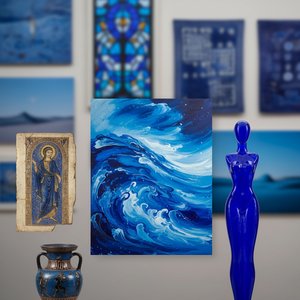
The Allure of Azure: Exploring the Symbolic & Aesthetic Depths of Blue in Art History
Explore the rich history of blue in art! Discover its symbolism, from ancient pigments to modern masterpieces by Kandinsky & Seurat. Uncover the psychological impact and cultural meanings behind this captivating hue.

Top 10 Meesterwerken gedomineerd door 'Slate Blue': Kunst voor uw interieur
Ontdek 10 beroemde schilderijen gedomineerd door de prachtige tint 'Slate Blue'. Van Monet tot Van Gogh, leer over kunstgeschiedenis & techniek. Museumkwaliteit reproducties voor uw interieur op TopImpressionists.com! Ontdek de collectie online.

Victor Vasnetsov: Myth, Nationalism & the Revival of Russian Fairy Tale Painting
Explore the captivating world of Victor Vasnetsov, a co-founder of Russian folklorist painting. Discover his iconic works, influence on national identity, and lasting legacy in this expert guide.

Ivan Bilibin: A Synthesis of Folklore, Modernism & National Identity in Russian Illustration
Explore the enchanting world of Ivan Bilibin, a master Russian illustrator who synthesized folklore, Art Nouveau & national identity. Discover his iconic fairy tale illustrations and legacy with TopImpressionists.
Ontdek kunstwerken georganiseerd op thema, stijl en kenmerk.


