

 Voorvertoning
 Verstuur
 Delen
Delen
 Details bekijken
 Gids
Gids

 Download
 Vergelijkbare items
 Röntgenonderzoek
 Diavoorstelling
 Vraag & antwoord
 Statistieken
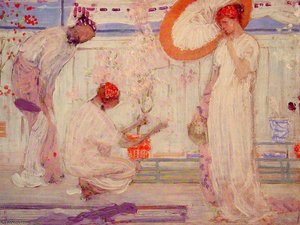
The Violet Note

- 18.0 x 26.0 cm


 Lees meer
Ontvang een bestand dat klaar is voor drukwerk en de kwaliteit van het online voorbeeld ver overstijgt. Elke digitale afbeelding die wij verkopen, is afkomstig van een high-resolution master uit onze database — meestal tussen de 5.000 en 15.000 pixels breed — zodat u met vertrouwen groot kunt afdrukken, nauwkeurig kunt bijsnijden of fijne details kunt reproduceren.
Geen enkel bestand verlaat ons atelier onbewerkt. Een digitaal expert controleert de kleuren aan de hand van het originele schilderij en corrigeert deze indien nodig, om vervolgens de helderheid en details te verbeteren met professionele retoucheertechnieken — waarbij de penseelstreek en stijl van de kunstenaar altijd strikt worden gerespecteerd. Het resultaat is een afbeelding die oogt als het schilderij zelf, en niet als een gescande foto met een filter.
U keurt de afbeelding goed voordat de bestelling wordt afgerond: onze expert stuurt u binnen 72 uur een e-mail ter beoordeling. Niet tevreden? Vraag om aanpassingen of correcties, of vraag een terugbetaling aan als de kwaliteit niet aan de verwachtingen voldoet.
Dit is de kwaliteit waarop uitgevers, designstudio's, galeries en drukkerijen vertrouwen.
Digitale afbeeldingen
Download een bestand met hoge resolutie voor persoonlijke weergave, afdrukken en creatieve projecten. ( Schakel over naar print Bestel handgeschilderde reproductie)
Inbegrepen bij elke bestelling van een digitale afbeelding
Professionele digitale levering, gegarandeerd
Wanneer u kiest voor TopImpressionists.com, ontvangt u niet alleen een afbeelding – u krijgt een professioneel verbeterd digitaal kunstwerk, met precisie vervaardigd en voorzien van een tevredenheidsgarantie. Dit is alles wat automatisch bij uw bestelling is inbegrepen:

Snelle levering per e-mail
Uw hoogwaardige digitale afbeeldingsbestand wordt binnen 72 uur na bestelling naar u gemaild – klaar voor direct gebruik.

AI-verbeterd digitaal bestand
Uw kunstwerk wordt professioneel geoptimaliseerd met behulp van geavanceerde AI-tools en handmatige bewerkingen, waardoor maximale details, helderheid en kleurnauwkeurigheid worden gegarandeerd.

Gratis levenslange herlevering van digitale bestanden
Je bestand per ongeluk verwijderd of kwijtgeraakt? Geen zorgen – we sturen het u op elk gewenst moment gratis opnieuw toe.

Geen invoerkosten – nooit
Geniet direct van uw kunstwerk zonder invoerrechten, belastingen of verzendkosten – digitale downloads zijn altijd belastingvrij.

Garantie op kleurgetrouwheid
Met behulp van professionele hulpmiddelen en kleurbeheer zorgen wij ervoor dat uw digitale afbeelding de originele kleuren zo nauwkeurig mogelijk weergeeft.

100 dagen tevredenheidsgarantie
Mocht u niet tevreden zijn met uw digitale afbeelding, dan passen wij deze aan of storten wij 100% terug binnen 100 dagen – zonder vragen te stellen.

100% Geld-terug-garantie
Niet tevreden? Ontvang een volledige terugbetaling binnen 100 dagen na ontvangst van uw digitale bestand – zonder vragen te stellen.

Korting bij grote bestellingen
Koop 3 afbeeldingen, bespaar 10% - Koop 5, bespaar 15% - Koop 10+, bespaar 20%. Ideaal voor creatieve projecten, galerieën en bureaus.
A Moment of Quiet Anticipation: Unpacking “The Violet Note”
James Abbott McNeill Whistler’s "The Violet Note," painted in 1886, isn't a grand statement of narrative or dramatic action; it’s a carefully constructed tableau of quiet contemplation and the subtle poetry of everyday life. This intimate portrait captures a woman, her back turned to the viewer, engaged in the seemingly simple act of preparing for travel – a moment frozen in time that speaks volumes about Whistler’s core aesthetic philosophy: “art for art’s sake.” The painting immediately draws us in with its muted palette dominated by blues and greens, creating an atmosphere of subdued elegance and a sense of veiled mystery. It's a deliberate departure from the prevailing Victorian obsession with grand historical scenes or emotionally charged portraits, reflecting Whistler’s commitment to capturing the essence of beauty through form, color, and light rather than storytelling.
The Language of Form and Color: Whistler’s Aesthetic Vision
Whistler was deeply influenced by Japanese prints – particularly *ukiyo-e* – which emphasized flattened perspectives, bold outlines, and a focus on decorative elements. This influence is evident in the painting's composition; the figures are rendered with a sense of detachment, almost as if viewed through a slightly removed lens. The use of color is equally deliberate. Whistler favored a technique he called “tonal harmony,” prioritizing subtle gradations of tone over bright, saturated hues. Notice how the violet – hinted at in the title and subtly reflected in the arrangement of objects – acts as a unifying element, grounding the scene and lending it an air of sophisticated restraint. The careful placement of each object—the vase, the potted plant, the books—contributes to a carefully balanced visual rhythm, suggesting a considered aesthetic rather than a spontaneous one.
Symbolism in the Details: A Journey Within
Beyond its formal qualities, “The Violet Note” is rich with symbolic potential. The woman’s posture, leaning on her suitcase, immediately evokes travel and departure – but it's not a joyous or celebratory departure. There’s a hint of melancholy in her stance, suggesting perhaps a bittersweet farewell or the quiet solitude of a journey undertaken alone. The suitcase itself, placed squarely on the floor, is a potent symbol of both practicality and vulnerability. The books, stacked neatly together, could represent knowledge, experience, or even a longing for intellectual stimulation during her travels. Even the vase with its single bloom – a violet, no doubt – speaks to beauty, fragility, and the transient nature of life. Whistler wasn’t simply depicting a scene; he was layering it with subtle suggestions and inviting the viewer to project their own interpretations onto the canvas.
Historical Context: The Rise of Aestheticism
“The Violet Note” emerged during a pivotal moment in art history – the height of the Aesthetic movement. Whistler, along with figures like Oscar Wilde, rejected the didactic and moralistic tendencies of much 19th-century art, arguing that art should exist solely for its own beauty and pleasure. This philosophy challenged the established conventions of the time, leading to considerable controversy and criticism. Whistler’s work was often dismissed as “mere decoration,” but his insistence on prioritizing formal qualities over narrative content paved the way for modernism and profoundly influenced subsequent generations of artists. Understanding this context illuminates why "The Violet Note" is not a painting about *what* is happening, but rather about *how* it's being seen – a testament to Whistler’s dedication to capturing the essence of visual experience.
Bringing “The Violet Note” Home: A Reproduction for Your Space
TopImpressionists.com offers meticulously crafted hand-painted reproductions of "The Violet Note," allowing you to bring this evocative masterpiece into your own home or office. Our skilled artisans replicate Whistler’s tonal harmony and subtle details with exceptional precision, ensuring that the painting's atmosphere and symbolic depth are faithfully preserved. Whether you appreciate Whistler’s pioneering aestheticism or simply admire its quiet beauty, a reproduction of “The Violet Note” is a timeless addition to any collection – a reminder of the power of art to evoke emotion and inspire contemplation.
Veelgestelde vragen
Hoe verbindt "The Violet Note" door James Abbott McNeill Whistler (James Whistler) Aestheticism and Symbolism met het geboorteland van de kunstenaar?
"The Violet Note" werd gecreëerd door James Abbott McNeill Whistler (James Whistler), geboren in Verenigde Staten van Amerika, binnen de Aestheticism and Symbolism-stroming. De herkomst van de kunstenaar verbindt het werk met Aestheticism and Symbolism, zoals beoefend door kunstenaars uit Verenigde Staten van Amerika.
Hoe verhoudt het onderwerp van "The Violet Note" zich tot de gebruikelijke thema's van James Abbott McNeill Whistler (James Whistler)?
De terugkerende thema's van James Abbott McNeill Whistler (James Whistler) omvatten aestheticism, european avant-garde, sensibility, mood, atmosphere, travel, preparation, journey; "The Violet Note" richt zich op woman, travel, packing, suitcase, vase, books, anticipation.
Waar kan ik een gids vinden voor "The Violet Note"?
Er is een Informatieblad pagina beschikbaar voor "The Violet Note" door James Abbott McNeill Whistler (James Whistler): een printbaar informatieblad over het kunstwerk, ontworpen voor studenten en gebruik in de klas.
Vergelijkbare kunstwerken



Kunstenaarsbiografie
James Abbott McNeill Whistler: Een Leven Gedefinieerd door Esthetiek
James Abbott McNeill Whistler, geboren in Lowell, Massachusetts in 1834, was een figuur die voortdurend tegen conventies aanleunde – een schilder die “kunst voor kunst’s rekening” verdedigde tijdens een tijdperk dat bezeten was van moraliserende narratieven. Zijn vroege leven, gekenmerkt door frequente vertier vanwege zijn vader's spoorweg engineering carrière, stelde hem in staat om zich aan te passen en verschillende omgevingen te ervaren. Een kort, ongelukkig verblijf op West Point bleek ongeschikt voor zijn artistieke temperament, gevolgd door werk bij de Amerikaanse kust en geodesische survey dat, hoewel vertraging veroorzaakte, zijn groeiende passie voor kunst niet uitstikte. Deze vroege jaren waren gekenmerkt door een innige talent voor tekenen en een vastberaden wens om een baan te vinden als professionele kunstenaar, een streven dat hem uiteindelijk leidde over de Atlantische Oceaan en in het hart van de Europese avant-garde. De zaden van Whistler’s artistieke opstandeling waren vroeg geplant, gevoed door een geest die conformiteit weerstond en esthetische verkenning boven alles prefereerde.Parisiennes Beginningen en Cultivatie van Stijl
De cruciale gebeurtenis in Whistler's artistieke reis vond plaats met zijn overgang naar Parijs in 1855. Hier, onder de begeleiding van Sébastien Bouré, verdiepte hij zich in olieverftechniek, aquarel en gravure, opname van invloeden van Franse Realisme en de Barbizon School schilders. Whistler overtrof echter snel simpelweg imitatie, ontwikkelde een kenmerkende stijl gekenmerkt door tonale harmonieën en atmosferische effecten. Hij was niet geïnteresseerd in het reproduceren van realiteit; eerder zocht hij de *essentie*, de vluchtige stemmingen en subtiele nuances ervan vast te leggen. Deze periode markeerde een cruciale verschuiving van representatieve nauwkeurigheid naar een verkenning van zuiver esthetische vorm. Zijn vroege werken gaven al aan de delicate balans tussen observatie en abstractie die zijn volwassen stijl zou definiëren. Het was in Parijs dat Whistler begon om te articuleren dat kunst beoordeeld moest worden op basis van haar esthetische kwaliteiten, vrij van didactische of moraliserende beperkingen – een filosofie die de hoeksteen van zijn artistieke praktijk vormde en een kenmerkend aspect van de Esthetische beweging werd.Nocturnes, Portretten en het Streven naar Harmonie
Whistler’s artistieke visie kwam tot uiting in verschillende sleutelthema's en stijlelementen. Hij verdedigde het concept van “kunst voor kunst’s rekening”, waarbij hij narratieven afwees die geladen waren met moraal of sociale commentaar. Zijn werk werd een oefening in het vastleggen van subtiele nuances van licht, kleur en atmosfeer – een streven dat leidde tot zijn iconische *Nocturnes*. Deze atmosferische schilderijen van schemeringscènes, vaak de Thames River bij nacht weergeven, waren niet bedoeld als letterlijke weergaven maar eerder als evocatieve impressies, studies in tonale harmonie en stemming. Hij gebruikte vaak beperkte paletten en delicate penseelstreken, waardoor een etherische schoonheid en rustige contemplatie ontstond. Portretten namen ook een centrale plaats in zijn praktijk in, hoewel hij ze met een unieke gevoeligheid benaderde. Whistler was niet geïnteresseerd in het vastleggen van perfecte gelijkenissen; eerder richtte hij zich op compositie en tonale relaties, waarbij hij zijn onderwerpen als elementen van een zorgvuldig geconstrueerde esthetische kader beschouwde. Werken zoals *Arrangement in Grey and Black No. 1* – beter bekend als *Whistler’s Mother* – illustreren dit benadering perfect, waardoor een gezinsportret wordt getransformeerd tot een iconisch beeld van Victoriaanse moederschap door middel van zijn meesterlijke gebruik van vorm en toon.Controverse, Invloed en Erfgoed
Whistler’s carrière was niet zonder controverse. De beruchte rechtszaak tegen hem aangespannen door criticus John Ruskin in 1878, voortvloeiend uit *Nocturne in Black and Gold – The Falling Rocket*, werd een mijlpaal in kunstgeschiedenis. Whistler verdedigde succesvol zijn artistieke autonomie, waarbij hij stelde dat zijn schilderijen niet bedoeld waren als letterlijke weergaven maar eerder als esthetische arrangementen van kleur en vorm. Deze zaak verhoogde zijn profiel en ontketende belangrijke debatten over de aard van kunstkritiek en artistieke vrijheid. Naast deze rechtszaak had Whistler een grote invloed. Hij werd diep beïnvloed door Japanse prints (ukiyo-e), die zijn compositieprincipes en nadruk op decoratieve patronen vormden, evenals de tonale meesterschap van Spaanse schilders zoals Velázquez. Zijn pleidooi voor “kunst voor kunst’s rekening” had een diepgaande impact op de Esthetische beweging in Engeland en Amerika, waardoor de weg vrijkwam voor modernisme en conventionele ideeën over artistieke doelstellingen uitdaagde. Hij liet een onuitwisbare stempel achter op de Amerikaanse kunst, waardoor generaties kunstenaars geïnspireerd werden om formele benaderingen te omarmen en het expressieve potentieel van kleur en compositie te verkennen.- Bekende Werken: *The Forge* (1861), *Portret van Charles Lang Freer* (1873), *Brown and Gold: The Gold Girl—Connie Gilchrist* (1876-77), *Arrangement in Grey and Black No. 1 (Whistler’s Mother)* (1871), *Nocturne in Black and Gold – The Falling Rocket* (1875).
- Invloeden: Japanse prints, Velázquez.

James Abbott McNeill Whistler (James Whistler)
1834 - 1903 , Verenigde Staten van Amerika
Belangrijkste feiten
- Artistic Movement Or Style: Tonalisme, Esthetiek
- Artists Or Movements Influenced By This Artist:
- Esthetiek
- Modernisme
- Artists Who Influenced This Artist:
- Velázquez
- Japanse prints
- Date Of Birth: 10 juli 1834
- Date Of Death: 17 juli 1903
- Full Name: James Abbott McNeill Whistler
- Nationality: Amerikaans
- Notable Artworks:
- Moeder Whistler
- Nocturne Zilver & Blauw
- Place Of Birth: Lowell, USA