


 Voorvertoning
 Verstuur
 Delen
Delen
 Details bekijken
 Gids
Gids

 Download
 Vergelijkbare items
 Röntgenonderzoek
 Diavoorstelling
 Q&A
Q&A Statistieken
Cat and Lobster
 Indian Modernism
 1900
1900- Modern
 397.0 x 275.0 cm
 National Gallery of Modern Art
A bold and charming white cat holds a lobster in its jaws in this vibrant folk-inspired masterpiece by Jamini Nath Roy from 1900, inviting you to explore the essence of Indian modern art for your collection.
 Lees meer
Ontdek Jamini Roy (1887-1972), een cruciale Indiase modernist. Verken zijn gedurfde, volkskunst-geïnspireerde stijl, levendige kleuren & thema's van het landleven, mythologie & portretten. Een sleutelfiguur in de Indiase kunst.
De kunstwerken die op deze pagina worden weergegeven, zijn beschermd door de auteursrechtwetgeving, wat betekent dat het ons wettelijk niet is toegestaan om identieke reproducties te maken of te verkopen. Deze bescherming wordt gehandhaafd onder internationale overeenkomsten zoals de Conventie van Bern en door nationale wetgeving, waaronder de bepalingen van de Amerikaanse auteurswet - Titel 17. Alle rechten voorbehouden. Reproduceren of distribueren van afbeeldingen is niet toegestaan zonder uitdrukkelijke schriftelijke toestemming van WahooArt.com en de rechthebbenden.
Deze methode voldoet volledig aan de auteursrechtwetgeving, omdat het niet gaat om het kopiëren of dupliceren van het beschermde kunstwerk. In plaats daarvan is er sprake van een creatieve herinterpretatie — een nieuw schilderij dat door het origineel wordt geïnspireerd, maar er niet identiek aan is.
Giclée / Kunstafdrukken
Giclée- of canvasafdruk van museumkwaliteit met een snelle productie en flexibele afwerkingsmogelijkheden. ( Bestel handgeschilderde reproductie Schakel over naar digitale afbeeldingen)




P118B €10

P118H €10

P118W €10

P438Z €10

P508JH €12

P508YH €12

P805H €10

P805Z €10

P919BZ €10

P919G €10

P919XJ €10

P959ZH €10

P968JZ €12

W106C €8

W218G €10

W218JH €8

W218Y €10

W307PJ €10

W316G €10

W316PJ €8

W316Y €10

W398PJ €8

W4111J €10

W500HY €15

W500JH €15

W692G €12

W849H €8

W940BG €15

W953PJ €8




Standaardformaat
op maat gemaakt
CM
INCH
Kies uit onze vooraf ingestelde maten die overeenkomen met de originele verhoudingen van het kunstwerk.
Loading sizes...

breedte
hoogte
Voer de gewenste breedte en hoogte in, passend bij uw lijst of muur. Een afdruk kan alleen worden ingekort en nooit groter worden gemaakt dan het origineel; een formaat met andere verhoudingen zal daarom een deel van de afbeelding verliezen. Wij sturen u een digitaal mockup ter goedkeuring voordat we tot drukwerk overgaan. De afbeelding op deze pagina toont niet de werkelijke uitsnede — dit is alleen te zien op het mockup.
Wereldwijde levering () binnen 2 weken in plaats van de standaard 4/5 weken. (31 oktober)

Gratis wereldwijde expressverzending

Hoogwaardig linnen canvas

Volledige verzendverzekering

Garantie op terugbetaling van invoerrechten

Garantie op exacte kleurweergave

Retourbeleid van 100 dagen (alleen bij defecten)

100% Geld-terug-garantie

Korting bij meerdere afnames
 De optie voor glas is alleen beschikbaar bij een formaat kleiner dan 110 cm.

Cat and Lobster
Giclée / Kunstafdrukken
Afmetingen reproductie
-


Eindtotaal
€ 62
A Vision of Folk Modernism
In the captivating realm of Indian modernism, few works resonate with as much playful charm and cultural defiance as Jamini Nath Roy’s Cat and Lobster. This masterpiece serves as a profound testament to an artist who dared to turn his back on the polished traditions of European Academic Realism to embrace the raw, rhythmic soul of Bengal. The painting presents a striking, stylized feline, rendered with bold, and sweeping lines that eschew naturalistic detail in favor of a universal essence. As the cat holds its prize—a vibrant lobster—within its jaws, the viewer is transported into a world where simplicity is not merely a technique, but a powerful statement of identity. The composition, characterized by its flat planes and energetic contours, captures a moment of pure, unadulterated glee, making it an irresistible centerpiece for any collection that values character and narrative depth.
The stylistic lineage of this work is deeply rooted in the Kalighat patua tradition, a folk art form that inspired Roy to strip away the unnecessary and focus on the fundamental geometry of life. By drawing inspiration from the terracotta reliefs of ancient Bengal temples and the rhythmic patterns of village scrolls, Roy achieved a visual language that feels both ancient and strikingly contemporary. The technique, executed in tempera on canvas, allows for a saturated, matte finish that emphasizes the bold color palette. The stark contrast between the white form of the cat and its deep blue background creates a luminous effect, ensuring that the subject commands attention from across a room. For the discerning interior designer, this piece offers a sophisticated way to introduce a sense of movement and cultural heritage into a modern space.
The Spirit of Rebellion and Identity
Beyond its aesthetic brilliance, Cat and Lobster carries a weight of historical significance that elevates it from a charming animal study to a symbol of decolonization. Created during an era when Indian artists were navigating the complexities of colonial influence, Roy’s evolution represents one of the most profound transformations in twentieth-century art. Initially trained in the sophisticated traditions of the Bengal School under Abanindranath Tagore, Roy eventually underwent a radical aesthetic rebellion. He turned his gaze away from Western conventions, finding a deeper truth in the local craftsmanship of his homeland. This departure was not merely a stylistic choice but a spiritual homecoming, as he sought to reclaim the artistic identity of his nation through the celebration of the common man and the village life that forms the heartbeat of Indian culture.
To gaze upon this masterpiece is to witness a masterful command over simplicity and rhythm. The cat is devoid of all traces of naturalism; instead, it is painted in a bold, charming way, portraying an energetic creature that holds its lobster with great glee. This deliberate rejection of three-dimensional shading in favor of flat, impactful shapes allows the emotional resonance of the piece to shine through. For collectors and enthusiasts, owning a reproduction of such a work means bringing into one's home a fragment of a larger movement—a movement that sought to find beauty in the essential and strength in the ancestral.
Veelgestelde vragen
Waar kan ik de afbeelding van "Cat and Lobster" door Jamini Nath Roy downloaden?
Er is een download beschikbaar voor "Cat and Lobster": de Downloaden pagina van het kunstwerk biedt de mogelijkheid om een digitale afbeelding in hoge resolutie om te downloaden.
In welk jaar en binnen welke stroming werd "Cat and Lobster" gemaakt?
"Cat and Lobster" door Jamini Nath Roy dateert uit 1900 en behoort tot de Indian Modernism.
Uit welke fase van de carrière van Jamini Nath Roy is "Cat and Lobster"?
Binnen de carrière van Jamini Nath Roy valt "Cat and Lobster" in de Mature Period. Deze fase helpt om het werk te vergelijken met andere werken van de kunstenaar.
Biografie kunstenaar
Jamini Roy was een vooraanstaande Indiase schilder, geboren op 11 april 1887 in Belaitore, West-Bengalen. Hij wordt beschouwd als een van de meest cruciale figuren binnen de moderne Indiase kunst. De artistieke stijl van Roy werd gekenmerende door eenvoud, elegantie en een diepgewortelde verbinding met de Indiase volkskunst.
Vroege jaren en opleiding
Roy werd geboren in een bescheiden welvarende familie van landeigenaren. Hij groeide op in een gemiddeld middenklassehuishouden met een grote liefde voor kunst, wat zijn toekomstige keuzes diepgaand zou beïnvloeden. Op de leeftijd van 16 jaar verhuisde hij naar Kolkata om te studeren aan het Government College of Art, waar hij les kreeg van Abanindranath Tagore, een prominente Indiase kunstenaar en pedagoog.Artistieke stijl en invloeden
De artistieke stijl van Roy werd sterk beïnvloed door de Kalighat-schilderkunst, een vorm van Indiase volkskunst. Hoewel hij ook werd geïnspireerd door de Europese moderne kunst, verwierp hij uiteindelijk de westerse tradities om zich volledig te concentreren op zijn eigen culturele erfgoed. De schilderijen van Roy kenmerken zich door hun eenvoud, vlakheid en het gebruik van krachtige, gedurfde kleuren. Enkele van zijn meest opmerkelijke werken omvatten:- Portrait of a Young Girl, waarin hij zijn vermogen toont om de essentie van de Indiase volkskunst te vangen.
- Buste de Francoise, een schilderij dat zijn meesterschap in de portretkunst demonstreert.
- Painter and His Model, een werk dat zijn interesse in het verkennen van de relatie tussen de kunstenaar en het onderwerp benadrukt.
Prijzen en erkenning
In 1954 werd Roy onderscheiden met de Padma Bhushan, een van de hoogste burgerlijke eerbewijzen van India. Daarnaast was hij lid van de Lalit Kala Akademi, een prestigieuze kunstinstelling in India.Nalatenschap en impact
De bijdrage van Roy aan de moderne Indiase kunst is onmeetbaar. Zijn toewijding aan het behoud van de tradities van de Indiase volkskunst heeft generaties kunstenaars geïnspireerd. Vandaag de dag zijn zijn schilderijen te vinden in musea en privécollecties over de hele wereld, waaronder het Nationaal Museum van Korea en het Government College of Art. Voor meer informatie over het leven en werk van Jamini Roy kunt u terecht op TopImpressionists.com of Wikipedia. Zijn schilderijen blijven kunstliefhebbers en wetenschappers inspireren en bieden een uniek venster op de wereld van de moderne Indiase kunst.
Jamini Nath Roy
1887 - 1972 , India
Belangrijkste feiten
- Artistic Movement Or Style: Bengali Volkskunst
- Artists Or Movements Influenced By This Artist: ['Kalighat-schilderkunst']
- Artists Who Influenced This Artist: ['Abanindranath Tagore']
- Date Of Birth: 11 april 1887
- Date Of Death: 1972
- Full Name: Jamini Roy
- Nationality: Indiaas
- Notable Artworks:
- Portret van een jong meisje
- Buste de Françoise
- Schilder en zijn model
- Place Of Birth: Belaitore, India
Gerelateerde artikelen
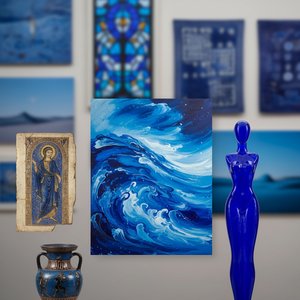
The Allure of Azure: Exploring the Symbolic & Aesthetic Depths of Blue in Art History
Explore the rich history of blue in art! Discover its symbolism, from ancient pigments to modern masterpieces by Kandinsky & Seurat. Uncover the psychological impact and cultural meanings behind this captivating hue.

Roy Lichtenstein's Top 25 Meesterwerken: Pop Art voor uw Interieur | TopImpressionists
Ontdek de 25 meest iconische werken van Roy Lichtenstein! Duik in de wereld van Pop Art, stripkunst & Ben-Day dots. Vind museumkwaliteit reproducties en inspiratie voor uw interieurdecoratie op TopImpressionists.com.

Top 10 Witte Meesterwerken: Kunstgeschiedenis & Interieurinspiratie
Ontdek de top 10 witte meesterwerken uit de kunstgeschiedenis! Van Monet tot Mondriaan, bewonder abstracte vormen & serene kleuren. Vind museumkwaliteit reproducties en interieurinspiratie op TopImpressionists.com.

Top 10 Kunstwerken die Durf Uitstralen | TopImpressionists
Ontdek 10 iconische kunstwerken die durf en expressie belichamen! Van Van Gogh tot Picasso, leer over de verhalen achter krachtige schilderijen & vind museumkwaliteit reproducties voor jouw interieur. Explore the full collection on TopImpressionists.com

Top 10 Meesterwerken gedomineerd door 'Slate Blue': Kunst voor uw interieur
Ontdek 10 beroemde schilderijen gedomineerd door de prachtige tint 'Slate Blue'. Van Monet tot Van Gogh, leer over kunstgeschiedenis & techniek. Museumkwaliteit reproducties voor uw interieur op TopImpressionists.com! Ontdek de collectie online.