


 Bekijk op ware grootte
 Verstuur
 Delen
Delen
 Details bekijken
 Gids voor studentenkunstwerken

 Download
 Vergelijkbare items
 Röntgenonderzoek
 Diavoorstelling
 Statistieken
Flora

 Lees meer
Giclée / Kunstafdrukken
Giclée- of canvasafdruk van museumkwaliteit met een snelle productie en flexibele afwerkingsmogelijkheden. ( Koop handgeschilderd kunstwerk Schakel over naar digitale afbeeldingen)




P118B $10

P118H $10

P118W $10

P438Z $10

P508JH $12

P508YH $12

P805H $10

P805Z $10

P919BZ $10

P919G $10

P919XJ $10

P959ZH $10

P968JZ $12

W106C $8

W218G $10

W218JH $8

W218Y $10

W307PJ $10

W316G $10

W316PJ $8

W316Y $10

W398PJ $8

W4111J $10

W500HY $15

W500JH $15

W692G $12

W849H $8

W940BG $15

W953PJ $8




Standaardformaat
op maat gemaakt
CM
INCH
Kies uit onze vooraf ingestelde maten die overeenkomen met de originele verhoudingen van het kunstwerk.
Loading sizes...

breedte
hoogte
U kunt uw eigen afmetingen opgeven om in een specifieke lijst of ruimte te passen. Als de door u gekozen maat niet overeenkomt met de proporties van het originele kunstwerk, zullen wij de afbeelding bijsnijden of uitbreiden met een gespiegelde of effen rand. Een digitaal mockup wordt ter goedkeuring naar u verzonden voordat de productie begint.
Houd er rekening mee dat de preview op het scherm de werkelijke bijsneding of uitbreiding niet weergeeft. Alleen de mockup toont de uiteindelijke compositie nauwkeurig.
Hoewel aangepaste maten beschikbaar zijn, raden wij aan een afmeting uit de vooraf bepaalde lijst te kiezen om de originele proporties te behouden.
Wereldwijde levering () binnen 2 weken in plaats van de standaard 4/5 weken. (26 september)

Gratis wereldwijde expressverzending

Hoogwaardig linnen canvas

Volledige verzendverzekering

Garantie op terugbetaling van invoerrechten

Garantie op exacte kleurweergave

Retourbeleid van 100 dagen (alleen bij defecten)

100% Geld-terug-garantie

Korting bij meerdere afnames
 De optie voor glas is alleen beschikbaar bij een formaat kleiner dan 110 cm.

Flora
Giclée / Kunstafdrukken
Formaat reproductie
-


Totaalprijs
$ 70
A Delicate Brushstroke: Jean-Antoine Watteau’s Flora – An Exploration of Rococo Elegance
Jean-Antoine Watteau (1684–1721), a pivotal figure in the burgeoning Rococo movement, gifted us with “Flora,” a preparatory sketch that encapsulates the spirit of his era and foreshadows the grandeur of his larger canvases. More than just an image, it’s a glimpse into Watteau's artistic process—a testament to his meticulous observation and masterful command of line and tone—that continues to resonate with audiences today. This artwork isn’t merely decorative; it speaks volumes about the cultural values of Louis XV’s France, prioritizing refined leisure and idealized beauty.Composition and Technique: Capturing Movement Within Stillness
The sketch depicts a reclining female figure seated upon what appears to be a woven basket or mat—a motif frequently employed in Watteau's fêtes galantes, theatrical gatherings designed to celebrate aristocratic life. The artist’s deliberate choice of perspective subtly flattens the scene, prioritizing form and gesture over realistic depth. Lines dominate the composition; bold strokes delineate the contours of drapery and torso, while delicate, feathery marks suggest fabric folds and subtle shifts in light. Charcoal or silverpoint—the mediums Watteau favored—produce a surface texture that is both immediate and expressive, reflecting the artist’s hand and conveying a palpable sense of spontaneity. The diffused lighting contributes to an overall softness, enhancing the figure's graceful posture and inviting contemplation.Rococo Ideals Embodied: Symbolism and Aesthetic Sensibility
“Flora” embodies the core tenets of Rococo art—a reaction against the Baroque’s dramatic grandeur—emphasizing delicacy, ornamentation, and emotional nuance. The female subject is presented as an idealized vision of feminine beauty, reflecting the prevailing fascination with pastoral themes and mythological narratives. Watteau's meticulous attention to detail captures not just physical form but also psychological state; her gaze directed off to the side suggests introspection and a quiet awareness of the surroundings. The basket or mat serves as a grounding element, anchoring the figure within a tranquil landscape—a deliberate contrast to the turbulent emotions often depicted in Baroque art.Beyond Reproduction: Understanding Watteau’s Legacy
While this sketch may seem unassuming compared to Watteau's finished masterpieces like “The Country Dance,” it reveals an artist deeply invested in capturing fleeting moments of beauty and emotion. It exemplifies his innovative technique—direct drawing without extensive erasing—and underscores his profound influence on subsequent generations of painters. A high-quality reproduction allows viewers to appreciate the subtle nuances of Watteau’s artistry, transporting them back to a time when art served as a conduit for aristocratic pleasure and intellectual refinement. Consider framing your print in a neutral hue to best honor Watteau's original vision—a celebration of understated elegance that continues to inspire admiration centuries later.Biografie van de kunstenaar
A Delicate Brushstroke: The Life and Art of Jean-Antoine Watteau
Jean-Antoine Watteau, a name synonymous with the blossoming Rococo style, emerged from the northern French city of Valenciennes in 1684. His brief but incandescent career irrevocably altered the course of eighteenth-century painting, shifting its focus from the grandeur and drama of the Baroque to an intimate world of elegance, leisure, and subtle emotion. Unlike many artists who followed a clearly defined path, Watteau’s journey was marked by initial struggles for recognition within the established art institutions of Paris. Born into a family of modest means—his father a master roofer—young Jean-Antoine displayed an early aptitude for drawing, initially sketching the colorful characters and bustling scenes of his hometown streets. This formative experience instilled in him a keen eye for observation and a fascination with everyday life, themes that would permeate his later work. His initial training under local artists Jacques-Albert Gérin and Julien provided a foundation, but it was his move to Paris around 1702 that truly ignited his artistic development.From Theatrical Scenes to *Fêtes Galantes*
In the vibrant heart of Paris, Watteau entered the workshop of Claude Gillot, a painter specializing in theatrical designs and the popular genre of *fêtes galantes*—depictions of aristocratic outdoor entertainments. This apprenticeship proved pivotal. Gillot’s influence exposed Watteau to the world of commedia dell'arte, with its masked characters and playful narratives, which would become a recurring motif throughout his oeuvre. However, Watteau’s artistic sensibilities didn’t neatly align with the rigid categories favored by the Académie Royale de Peinture et de Sculpture. His genre paintings were deemed unsuitable for official recognition, leading to initial rejection when he attempted to compete for the prestigious Prix de Rome. Undeterred, and demonstrating a remarkable resilience, Watteau persevered, eventually gaining acceptance as a *maître amateur* in 1717—a status that allowed him to exhibit his work independently. This period marked a crucial turning point, allowing him to fully develop his unique style characterized by luminous colors, delicate brushwork, and an air of wistful melancholy. He began to move away from direct theatrical representation towards more poetic and evocative scenes, inventing the *fête galante* as a distinct genre—idyllic gatherings in park-like settings where aristocratic figures engaged in flirtatious pursuits and refined pastimes.The Essence of Rococo: Style and Masterpieces
Watteau’s paintings are instantly recognizable for their distinctive qualities. He possessed an unparalleled ability to capture the elegance and refinement of aristocratic life, not through bombastic displays of power or wealth, but through subtle gestures, nuanced expressions, and a masterful use of light and color. His figures exude a poetic grace and a delicate emotional depth that sets them apart from the more formal portraits of his predecessors. The Country Dance (1718-1721), perhaps one of his most celebrated works, exemplifies this perfectly—a vibrant scene depicting carefree rustic life with exquisite detail and an underlying sense of longing. Other masterpieces such as Ceres (Summer) (1705) demonstrate his skill in portraying the beauty of nature and the human form, while The Embarkation for Cythera (1717) and its companion piece, Pilgrimage to Cythera, are iconic depictions of mythological journeys to the island of love, imbued with a sense of mystery and romantic yearning. Even his theatrical portraits, like Gilles (1719), possess an enigmatic quality that invites contemplation. Watteau’s technique was equally innovative; he employed a feathery brushstroke and a delicate layering of colors to create a shimmering effect, capturing the fleeting beauty of light and atmosphere.Influences and Development
Watteau's artistic lineage is complex, drawing inspiration from diverse sources. He deeply admired Venetian Renaissance masters like Titian and Veronese, particularly their rich color palettes and dynamic compositions. The influence of Flemish artists such as Rubens is also evident in his energetic brushwork and sensuous figures. However, Watteau didn’t simply imitate these predecessors; he synthesized their influences into something entirely new and uniquely his own—a style that became the hallmark of Rococo painting. His early training under Jacques-Albert Gérin exposed him to the theatrical world, while his time with Claude Gillot fostered a fascination with *fêtes galantes*. He was also influenced by the works of artists like Nicolas Poussin, whose use of light and color he adopted for his own compositions. Despite facing initial rejection from the Académie Royale de Peinture et de Sculpture, Watteau continued to develop his style independently, experimenting with different techniques and subject matter until his acceptance as a *maître amateur* in 1717 provided him with the freedom to fully express his artistic vision.Legacy and Enduring Influence
Watteau's artistic lineage is complex, drawing inspiration from diverse sources. He deeply admired Venetian Renaissance masters like Titian and Veronese, particularly their rich color palettes and dynamic compositions. The influence of Flemish artists such as Rubens is also evident in his energetic brushwork and sensuous figures. However, Watteau didn’t simply imitate these predecessors; he synthesized their influences into something entirely new and uniquely his own—a style that became the hallmark of Rococo painting. Despite a tragically short life—he succumbed to tuberculosis in 1721 at the age of just thirty-seven—Watteau left an indelible mark on art history. His work profoundly influenced generations of artists, including Fragonard and Boucher, who further developed the themes and techniques he pioneered. He redefined genre painting, elevating it to a level of artistic sophistication previously reserved for historical or religious subjects. Today, his paintings are treasured in major museums worldwide—from the National Gallery of Art in Washington D.C. to the Museo del Prado in Madrid—continuing to captivate audiences with their beauty, grace, and enduring appeal, solidifying his place as one of the most important and beloved artists of the Rococo period.
Jean-Antoine Watteau
1684 - 1721 , Frankrijk
Snelle feiten
- Artistic Movement Or Style: Rocococo
- Artists Or Movements Influenced By This Artist:
- Fragonard
- Boucher
- Artists Who Influenced This Artist:
- Titian
- Veronese
- Rubens
- Date Of Birth: 1684
- Date Of Death: 1721
- Full Name: Jean-Antoine Watteau
- Nationality: Frans
- Notable Artworks:
- Het Dansfeest
- Ceres (Zomer)
- De Huwelijksovereenkomst
- Place Of Birth: Valenciennes, Frankrijk
Gerelateerde artikelen
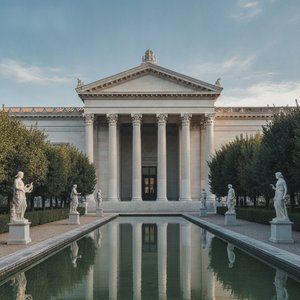
Neoclassicism Unveiled: Discovering the Timeless Elegance and Rational Order of Classical Art
Unveil the timeless elegance of Neoclassicism. Journey through an era defined by reason, order, and the revival of Greco-Roman ideals. Our expert exploration offers a sophisticated look at the transition from Rococo excess to classical precision for the true art enthusiast.

The Elegance of Rococo: A Journey Through Pastel Dreams and Ornate Splendor
Embark on an elegant journey through the Rococo era. Discover the delicate beauty of pastel masterpieces, the intricate artistry of 18th-century French masters, and how this era of ornate splendor continues to inspire timeless luxury in fine art collecting.

The Elegance of Rococo: A Journey Through Ornament, Light, and the Art of Refined Pleasure
Discover the exquisite world of Rococo art. Explore the delicate beauty of 18th-century French elegance, from Watteau's light-drenched scenes to ornate rocaille motifs. Perfect for collectors seeking museum-quality, hand-painted oil reproductions and bespoke art commissions.

The Timeless Elegance of Academic Classicism: A Journey Through Order, Precision, and the Pursuit of Perfection
Explore the profound beauty of Academic Classicism. Discover how masters used order, precision, and classical ideals to achieve timeless perfection in art history, from Neoclassical portraits to the pursuit of ideal beauty.

The Elegance of Rococo Portraiture: A Journey Through Grace, Soft Light, and Pastel Dreams
Discover the exquisite world of Rococo portraiture. Explore the delicate beauty of 18th-century French art, from pastel light to graceful asymmetry, and learn how to bring this era of elegance into your home through masterfully hand-painted oil reproductions.
Ontdek kunstwerken georganiseerd op thema, stijl en kenmerk.


