


 Bekijk op ware grootte
 Verstuur
 Delen
Delen
 Details bekijken
 Gids voor studentenkunstwerken

 Download
 Vergelijkbare items
 Röntgenonderzoek
 Diavoorstelling
 Statistieken
PATINEURS


An impressionistic winter scene of skaters and a windmill by Johan Barthold Jongkind captures the chilly atmosphere of the Dutch landscape, inviting you to bring this timeless moment of frozen beauty into your home.
 Lees meer
Johan Jongkind (1819-1891): Een vroege invloedrijke Nederlandse impressionist, bekend om zijn levendige schetsen van de Seine en Parijs. Beïnvloedde Monet met zijn atmosfeerrijke stijl.
Giclée / Kunstafdrukken
Giclée- of canvasafdruk van museumkwaliteit met een snelle productie en flexibele afwerkingsmogelijkheden. ( Koop handgeschilderd kunstwerk Schakel over naar digitale afbeeldingen)




P118B €10

P118H €10

P118W €10

P438Z €10

P508JH €12

P508YH €12

P805H €10

P805Z €10

P919BZ €10

P919G €10

P919XJ €10

P959ZH €10

P968JZ €12

W106C €8

W218G €10

W218JH €8

W218Y €10

W307PJ €10

W316G €10

W316PJ €8

W316Y €10

W398PJ €8

W4111J €10

W500HY €15

W500JH €15

W692G €12

W849H €8

W940BG €15

W953PJ €8




Standaardformaat
op maat gemaakt
CM
INCH
Kies uit onze vooraf ingestelde maten die overeenkomen met de originele verhoudingen van het kunstwerk.
Loading sizes...

breedte
hoogte
Voer de breedte en de hoogte in die u nodig heeft, passend bij uw lijst of uw muur. Een afdruk kan alleen worden ingekort, nooit groter worden gemaakt dan het origineel, waardoor een formaat met een andere verhouding een deel van de afbeelding verliest. Wij sturen u een digitaal mockup ter goedkeuring voordat we iets drukken. De afbeelding op deze pagina toont niet de werkelijke uitsnede — dit is alleen te zien op het mockup.
Wereldwijde levering () binnen 2 weken in plaats van de standaard 4/5 weken. (24 oktober)

Gratis wereldwijde expressverzending

Hoogwaardig linnen canvas

Volledige verzendverzekering

Garantie op terugbetaling van invoerrechten

Garantie op exacte kleurweergave

Retourbeleid van 100 dagen (alleen bij defecten)

100% Geld-terug-garantie

Korting bij meerdere afnames
 De optie voor glas is alleen beschikbaar bij een formaat kleiner dan 110 cm.

PATINEURS
Giclée / Kunstafdrukken
Formaat reproductie
-


Totaalprijs
€ 61
A Frozen Moment in Time
In the quiet, frost-bitten expanse of PATINEURS, the viewer is transported into a quintessential Dutch winter, where the world seems held in a delicate, icy breath. The scene unfolds across a vast, frozen landscape, populated by figures gliding gracefully across an uneven sheet of ice. A majestic windmill stands as a sentinel in the heart of the composition, its vertical presence anchoring the horizontal sprawl of the wintry plain. In the distance, the ghostly silhouette of a sailboat rests upon the periphery, suggesting a world that continues to move even when the waters are stilled by the cold. This is not merely a depiction of a landscape; it is an invitation to experience the biting chill and the serene stillness of a season in repose.
The emotional resonance of the piece lies in its subtle interplay between movement and stasis. While the skaters provide a rhythmic pulse of human activity, the overarching atmosphere is one of profound tranquility and perhaps a touch of winter melancholy. The muted color palette—a sophisticated arrangement of greys, whites, and deep blues—evokes the overcast, heavy skies typical of a northern winter. There is a certain poetic resilience suggested by the windmill, standing firm against the elements, serving as a symbol of endurance amidst the fleeting, ephemeral nature of the skating season.
The Impressionistic Vision of Johan Barthold Jongkind
As a vital precursor to the Impressionist movement, Johan Barthold Jongkind utilizes a technique that prioritizes atmosphere over rigid anatomical or architectural precision. The painting is characterized by loose, suggestive brushwork that captures the fleeting essence of light and weather. Rather than defining every crack in the ice or every blade of frozen grass, Jongkind employs an alla prima approach, applying paint directly to the canvas to create a tactile, textured surface. This method allows the viewer's eye to complete the scene, finding movement in the sketchy lines and depth in the soft, diffused light.
For the discerning collector or interior designer, this artwork offers a masterclass in atmospheric perspective. The way distant elements fade into a pale, indistinct haze creates an immense sense of scale, making the frozen landscape feel infinite. The lighting is intentionally flat and even, mimicking the soft glow of a cloudy day, which prevents harsh shadows from disrupting the cohesive, wintry mood. This piece serves as a magnificent focal point for any space, offering a sophisticated blend of historical Dutch tradition and the modern, emotive freedom of early Impressionism. It is an evocative acquisition for those who seek to bring the quiet, contemplative beauty of the natural world into their curated environments.
Vragen & Antwoorden
Wat deelt "PATINEURS" met het overige werk van Johan Barthold Jongkind?
"PATINEURS" behoort tot het Impressionism-werk van Johan Barthold Jongkind, waarvan de bekende thema's onder meer dutch landscape tradition, impressionist light studies, atmospheric nature observation, precursor to impressionism, focus on water and light omvatten.
Wie verkoopt handgeschilderde reproducties van "PATINEURS" door Johan Barthold Jongkind?
"PATINEURS" is verkrijgbaar als een met de hand geschilderde olieverfreproductie op linnen canvas. De bestelling kan worden geplaatst op de Met de hand geschilderde reproductie pagina, met een keuze uit verschillende formaten.
Stelt het auteursrecht van "PATINEURS" door Johan Barthold Jongkind reproducties toe?
"PATINEURS" door Johan Barthold Jongkind, onderdeel van de collectie van Louvre, is bevindt zich in het publiek domein - de auteursrechten zijn verlopen. Deze status bepaalt of er reproducties van de afbeelding mogen worden gemaakt.
Biografie van de kunstenaar
A Forerunner of Light: The Life and Art of Johan Barthold Jongkind
Johan Barthold Jongkind, a name perhaps less immediately recognizable than those of Monet or Renoir, occupies a pivotal position in the story of Impressionism. Born on June 3, 1819, in Lattrop, a small town in the Netherlands, Jongkind’s artistic journey was one marked by both profound talent and personal struggle. His early life unfolded amidst the tranquil landscapes of Overijssel province, a region that would deeply inform his lifelong fascination with water, light, and atmosphere. Though initially employed as a clerk, his inherent artistic inclinations led him to The Hague in 1837, where he began formal training under Andreas Schelfhout, a respected landscape painter steeped in the Dutch tradition. This foundation proved crucial, instilling in Jongkind a meticulous observation of nature and a mastery of technique that would later be infused with a distinctly modern sensibility. It was a period of learning the fundamentals, but also one of burgeoning ambition, prompting him to seek further artistic development in the vibrant heart of Paris.Parisian Encounters and Artistic Development
The move to Paris in 1846 proved transformative. Jongkind entered the studios of Eugène Isabey and François-Édouard Picot, immersing himself in the French art scene. He quickly gained recognition, exhibiting at the Salon as early as 1848, earning praise from influential critics like Charles Baudelaire and Émile Zola. These were years of promise, yet shadowed by a growing internal turmoil. Jongkind battled with bouts of depression and alcoholism, challenges that would intermittently disrupt his career and personal life. Despite these struggles, he continued to paint prolifically, focusing on scenes of the Seine River, the bustling Parisian streets, and the atmospheric nuances of the surrounding countryside. His work during this period reveals a unique blend of Dutch realism and emerging French Romanticism, characterized by vigorous brushwork and a keen sensitivity to light effects. He wasn’t merely depicting landscapes; he was capturing their fleeting moods, their ephemeral beauty. This ability to convey atmosphere would become his signature style and a key influence on the artists who followed. He sought inspiration not just in the grand vistas of France but also in the intimate details of urban life, rendering the smoke-filled streets and the reflections on rain-slicked cobblestones with remarkable precision.A Mentor to Monet: The Seeds of Impressionism
Jongkind's return to the Netherlands in 1855 was temporary. He eventually settled back in Paris in 1861, where his artistic path intersected with that of a young Claude Monet. This encounter proved profoundly significant for both artists. Jongkind became a mentor to Monet, sharing his knowledge of *plein air* painting – working outdoors directly from nature – and encouraging him to embrace a more spontaneous and expressive approach. Monet himself credited Jongkind with providing the “definitive education” of his eye, recognizing in the older artist’s work a freedom and sensitivity that resonated deeply with his own artistic aspirations. Jongkind's influence can be seen in Monet’s early landscapes, particularly those depicting scenes along the Seine, where the emphasis on light, atmosphere, and fleeting impressions is strikingly similar. He wasn’t simply teaching technique; he was imparting a philosophy of seeing, a way of capturing the essence of a moment in time. The two artists often spent hours together by the river, observing the changing light and discussing their artistic visions – a collaboration that laid the groundwork for Monet's revolutionary approach to painting.Legacy and Lasting Influence
Though Jongkind never fully achieved the widespread fame enjoyed by some of his contemporaries, his contribution to the development of Impressionism is undeniable. His paintings, often characterized by their loose brushwork, dramatic skies, and evocative use of color, paved the way for a new approach to landscape painting. He demonstrated that capturing the subjective experience of light and atmosphere was as important as accurately representing physical reality. He wasn’t a revolutionary in the same way as Monet or Renoir, but his quiet dedication to capturing the beauty of the natural world, combined with his willingness to experiment with new techniques, secured his place as a vital figure in 19th-century art history. His work can be found in prominent museums such as the Van Gogh Museum in Amsterdam and the Musée d'Orsay in Paris, testaments to his enduring artistic merit.- Notable Works: *Moonlight on the Canal*, numerous paintings of the Seine near Notre-Dame Cathedral.
- Influence: A key influence on Claude Monet and a forerunner of Impressionism.
- Final Years: Jongkind passed away on February 9, 1891, in Saint-Égrève, France, leaving behind a legacy that continues to inspire artists and art enthusiasts today.

Johan Barthold Jongkind
1819 - 1891 , Nederland
Snelle feiten
- Artistic Movement Or Style: Voorloper Impressionisme
- Artists Or Movements Influenced By This Artist:
- Monet
- Impressionisme
- Artists Who Influenced This Artist:
- Eugène Isabey
- Schelfhout
- Date Of Birth: 3 juni 1819
- Date Of Death: 9 februari 1891
- Full Name: Johan Barthold Jongkind
- Nationality: Nederlands
- Notable Artworks:
- Maanschilderij kanaal
- Schilderijen Seine
- Place Of Birth: Lattrop, Nederland
Gerelateerde artikelen
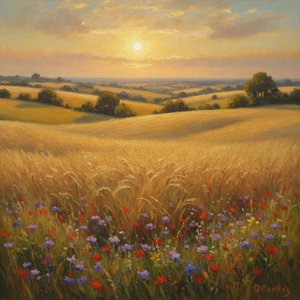
Golden Fields & Sun-Drenched Meadows: Capturing the Soul of Impressionist Landscapes
Immerse yourself in the luminous world of Impressionist landscapes. Discover how masters like Monet and Gauguin captured ephemeral light through plein air painting, and learn to bring the soul of sun-drenched meadows into your home with exquisite, hand-painted oil reproductions.

Capturing the Soul: The Most Emotionally Moving Impressionist and Post-Impressionist Masterpieces
Discover the profound emotional depth of Impressionist and Post-Impressionist masterpieces. Explore how legends like Monet, Van Gogh, and Gauguin captured light and soul through evocative landscapes and vibrant brushwork for a timeless connection to art history.

Beyond the Light: Capturing Raw Emotion and Subjective Vision in Post-Impressionist Landscapes
Explore the profound emotional depth of Post-Impressionist landscapes. Discover how masters like Van Gogh moved beyond light to capture raw human feeling through vibrant color and expressive texture in this expert art history retrospective.

Capturing the Light of Amsterdam: A Journey Through Impressionist Masterpieces of the Dutch Canals
Embark on a visual journey through the luminous Amsterdam canals. Discover how Impressionist masters captured the fleeting light of the Dutch landscape through evocative brushwork and color. Explore the timeless beauty of these masterpieces for your private art collection.

Golden Light & Dutch Skies: The Timeless Magic of Dutch Golden Age Landscapes
Discover the breathtaking beauty of Dutch Golden Age landscapes. Explore the mastery of light, chiaroscuro, and 17th-century realism through an expert art history lens, celebrating the enduring legacy of the Dutch Masters for discerning collectors and art lovers.