Voorvertoning
 Verstuur
 Delen
Delen
 Details bekijken
 Gids
Gids

 Download
 Vergelijkbare items
 Röntgenonderzoek
 Diavoorstelling
 Statistieken
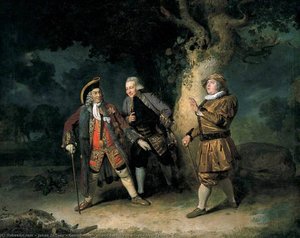
David Garrick
 Oil On Canvas
- WallArt
- Baroque Rococo Fusion
 1763
1763- Early Modern
 75.0 x 63.0 cm
 Het Ashmolean Museum van Kunst en Oudheden
Admire Johann Zoffany's iconic portrait of David Garrick alongside Eva Maria Veigel, capturing the theatrical spirit of Georgian England at The Ashmolean Museum.
 Lees meer
"meta_description": "Johann Zoffany (1733-1810): Een Duits-Engels kunstschilder beroemd om zijn levendige 'conversatieportretten' en schilderijen van het Uffizi, die een uniek inzicht bieden in de Britse samenleving van de 18e eeuw."
Giclée / Kunstafdrukken
Giclée- of canvasafdruk van museumkwaliteit met een snelle productie en flexibele afwerkingsmogelijkheden. ( Bestel handgeschilderde reproductie Schakel over naar digitale afbeeldingen)




P118B €10

P118H €10

P118W €10

P438Z €10

P508JH €12

P508YH €12

P805H €10

P805Z €10

P919BZ €10

P919G €10

P919XJ €10

P959ZH €10

P968JZ €12

W106C €8

W218G €10

W218JH €8

W218Y €10

W307PJ €10

W316G €10

W316PJ €8

W316Y €10

W398PJ €8

W4111J €10

W500HY €15

W500JH €15

W692G €12

W849H €8

W940BG €15

W953PJ €8




Standaardformaat
op maat gemaakt
CM
INCH
Kies uit onze vooraf ingestelde maten die overeenkomen met de originele verhoudingen van het kunstwerk.
Loading sizes...

breedte
hoogte
Voer de gewenste breedte en hoogte in, passend bij uw lijst of muur. Een afdruk kan alleen worden ingekort en nooit groter worden gemaakt dan het origineel; een formaat met andere verhoudingen zal daarom een deel van de afbeelding verliezen. Wij sturen u een digitaal mockup ter goedkeuring voordat we tot drukwerk overgaan. De afbeelding op deze pagina toont niet de werkelijke uitsnede — dit is alleen te zien op het mockup.
Wereldwijde levering () binnen 2 weken in plaats van de standaard 4/5 weken. (27 oktober)

Gratis wereldwijde expressverzending

Hoogwaardig linnen canvas

Volledige verzendverzekering

Garantie op terugbetaling van invoerrechten

Garantie op exacte kleurweergave

Retourbeleid van 100 dagen (alleen bij defecten)

100% Geld-terug-garantie

Korting bij meerdere afnames
 De optie voor glas is alleen beschikbaar bij een formaat kleiner dan 110 cm.

David Garrick
Giclée / Kunstafdrukken
Afmetingen reproductie
-


Eindtotaal
€ 61
A Theatrical Soul Captured in Oil
In the quiet halls of The Ashmolean Museum of Art and Archaeology, there exists a portrait that does more than merely record a likeness; it breathes with the very essence of the eighteenth-century stage. Johann Zoffany’s 1763 masterpiece, David Garrick, is an evocative window into the heart of Enlightenment England. At first glance, we encounter the commanding presence of Garrick, the most celebrated actor of his era, rendered with a profound sense of dignity and intellectual depth. Zoffny does not present us with a mere performer in costume, but with a man whose very existence was intertwined with the dramatic arts. The composition is intimate yet grand, focusing on Garrick from the chest up against a somber, dark background that pushes his luminous features toward the viewer, demanding an immediate and visceral connection.
The technique employed by Zoffany is nothing short of masterful, showcasing the meticulous precision characteristic of the finest oil-on-canvas works of the period. Through subtle tonal gradations and a sophisticated command of light, the artist breathes life into the textures of the subject's attire—the crisp white collar contrasting sharply against the deep black of his formal coat. This interplay of light and shadow, or chiaroscuro, serves to sculpt Garrick’s face, highlighting a contemplative gaze that seems to look beyond the frame, perhaps lost in thought regarding a recent performance or a future script. For the discerning collector or interior designer, this painting offers a profound sense of classical elegance, making it an ideal centerpiece for spaces that value historical gravity and sophisticated drama.
The Dual Faces of Drama
Beyond the physical representation of a legendary actor, Zoffany weaves a complex tapestry of symbolism into the very fabric of the portrait. Floating near Garrick’s face are two iconic theatrical masks: the smiling visage of Comedy and the furrowed, mournful brow of Tragedy. These are not mere decorative elements; they are the dual pillars of the human experience that Garrick mastered on stage. The presence of these masks transforms the portrait from a standard biographical study into a profound meditation on the nature of performance and emotion. It suggests that behind the dignified gentleman lies the capacity for both joyous exuberance and profound sorrow, mirroring the duality of the human condition itself.
This symbolic layer adds an intellectual richness that elevates the artwork, making it much more than a decorative piece. It invites the viewer to contemplate the boundaries between reality and artifice, between the man and the persona. For those looking to adorn a home or gallery with a reproduction of this caliber, the painting provides a continuous source of conversation and inspiration. It embodies a period where art, intellect, and social status converged in a beautiful, theatrical display. To possess such a work is to hold a fragment of history—a moment frozen in 1763, where the spirit of the theatre remains eternally vibrant and hauntingly beautiful.
Veelgestelde vragen
Wat voegt "David Garrick" door Johann Zoffany toe aan een interieur?
"David Garrick" door Johann Zoffany heeft een Elegant atmosfeer en wordt aanbevolen voor de Living Room. De stemming bepaalt wat het werk toevoegt aan de omringende ruimte.
Voor welke ruimte wordt "David Garrick" door Johann Zoffany aanbevolen?
"David Garrick" door Johann Zoffany wordt aanbevolen voor een Living Room. Deze suggestie is gebaseerd op het onderwerp, de kleuren en de sfeer van het werk.
Kan "David Garrick" door Johann Zoffany, onderdeel van de collectie van Het Ashmolean Museum van Kunst en Oudheden, op legale wijze worden gereproduceerd?
Het originele "David Garrick" bevindt zich in Het Ashmolean Museum van Kunst en Oudheden en het werk is bevindt zich in het publiek domein - de auteursrechten zijn verlopen.
Biografie kunstenaar
Early Life and Artistic Foundations
Johann Zoffany, geboren Johannes Josephus Zaufallij in 1733 in Freiburg im Breisgau, Duitsland, was een kunstenaar wiens naam vooral in Engeland en Italië bekendheid verwierf. De details van zijn jeugd blijven relatief schaars, maar het is duidelijk dat hij al op jonge leeftijd artistieke training ontving. Hij begon zijn carrière als leerling van een beeldhouwer, waarschijnlijk Melchior Paulus in Ellwangen, en verdiepte zich verder in de kunst bij Martin Speer in Regensburg. Deze vroege periodes legden de basis voor zijn latere werk en ontwikkelde zijn artistieke visie.
Reis naar Italië en Engeland
In 1750 verliet Zoffany Duitsland en reisde hij naar Rome, waar hij in dienst trad van Agostino Masucci. Daar verdiepte hij zich verder in de Italiaanse kunsttraditie, een invloed die zijn latere werk zou bepalen. In 1760 vestigde hij zich vervolgens in Engeland, waar hij aanvankelijk zijn brood verdiende door decoratieve ontwerpen te maken voor klokken van Stephen Rimbault. Deze periode markeerde een cruciale wending in zijn carrière: hij begon contacten aan te knopen en werd steeds meer erkend binnen de kunstscene van Londen.
Koninklijke Patronage en Artistieke Ontwikkeling
Zoffany trok snel de aandacht van Koning George III en Koningin Charlotte, die hem als hun favoriete portretschilder beschouwden. Zijn vermogen om informele momenten vast te leggen – zoals Queen Charlotte and Her Two Eldest Children (1765) – onderscheidde hem van meer formele hofschilders. Hij genoot ook de gunst van het Oostenrijkse keurvorstelijke huis en ontving in 1776 een baronia van het Heilige Roomse Rijk van Keizerin Maria Theresia. Deze koninklijke waardering gaf zijn carrière een enorme impuls.
De Meester van ‘Gespreksstukken’
Zoffany werd vooral bekend om zijn “gespreksstukken” – informele portretten die sociale bijeenkomsten en interacties vastlegden. Hij was uitstekend in het weergeven van de persoonlijkheden en dynamiek binnen deze scènes, vaak met prominente figuren uit de maatschappij, theater en literatuur. Werken zoals The Cope Family (1775) illustreren dit stijl, waardoor men een glimp opvangt van het leven van zijn opdrachtgevers. Deze stukken waren meer dan alleen portretten; ze waren sociale documenten die de sfeer en de relaties van de tijd vastlegden.
Belangrijke Prestaties en Bekende Werken
- Tribuna of the Uffizi (1772-1778): Zijn meest beroemde werk, een gedetailleerde weergave van de Tribuna in de Uffizi Gallery in Florence. Dit monumentale schilderij toont een gezelschap van kunstliefhebbers die de kunstwerken in de galerij bekijken, en is een bewijs van Zoffany’s technische vaardigheid en oog voor detail.
- Dr William Hunter Teaching Anatomy at the Royal Academy (1779): Een fascinerend portret dat het medische onderwijs en wetenschappelijke onderzoek toont. Het schilderij geeft een levendig beeld van de praktijk in de Royal Academy, waar anatomie werd onderwezen.
- George III (1771): Een koninklijk portret dat de macht en elegantie van de koning weerspiegelen. Dit werk is een belangrijk voorbeeld van Zoffany’s vermogen om de persoonlijkheid van zijn onderwerp vast te leggen.
- Colonel Mordaunt's Cock Match (1784-1786): Een levendige scène uit het koloniale India, die een unieke culturele gebeurtenis vastlegt. Het schilderij toont de opwinding en het enthousiasme van de deelnemers aan een cock match, een traditioneel gevecht tussen kalkoenmannetjes.
Jaren in India en Later Leven
Van 1783 tot 1789 woonde Zoffany in India, waar hij portretten maakte van prominente figuren zoals Warren Hastings en Asaf-ud-Daula. Zijn ervaringen daar beïnvloedden zijn artistieke stijl en het onderwerp van zijn werk. Een opmerkelijk verhaal uit deze periode gaat over een schipbreuk nabij de Andamanse Eilanden, waarbij overlevenden extreme maatregelen moesten nemen om te overleven.
Invloeden en Erfgoed
Zoffany’s werk weerspiegelt invloeden van zowel Duitse precisie als Italiaanse artistieke tradities. Hij werd beïnvloed door kunstenaars zoals Agostino Masucci en putte inspiratie uit de Baroktraditie. Zijn stijl, daarentegen, heeft een invloed gehad op latere generaties kunstenaars die geïnteresseerd waren in portretten en sociale commentaar. Hij was een belangrijke figuur in de geschiedenis van de kunst, bekend om zijn technische vaardigheid, zijn scherpe observaties en zijn unieke artistieke visie.
Historische Betekenis
Zoffany’s schilderijen bieden waardevolle inzichten in de sociale gebruiken, intellectuele leven en culturele waarden van zijn tijd. Zijn “gespreksstukken” geven intieme portretten van prominente individuen en hun wereld weer, terwijl zijn weergaven van India bijdragen aan ons begrip van koloniaal geschiedenis. Hij blijft een significant figuur in de kunstgeschiedenis, geëerd om zijn technische vaardigheid, zijn scherpe observaties en zijn unieke artistieke visie.

Johann Zoffany
1733 - 1810 , Duitsland
Belangrijkste feiten
- Artistic Movement Or Style:
- Neoclassicisme
- Realisme
- Artists Or Movements Influenced By This Artist: ['Hogarth']
- Artists Who Influenced This Artist:
- Masucci
- Speer
- Date Of Birth: 13 maart 1733
- Date Of Death: 11 november 1810
- Full Name: Johannes Josephus Zoffany
- Nationality: Duits
- Notable Artworks:
- Tribuna Uffizi
- William Hunter
- George III
- Cock Match
- Place Of Birth: Frankfurt, Duitsland
Gerelateerde artikelen

Johann Zoffany: Capturing Georgian Society with Brushstrokes of Cosmopolitan Flair
Explore the captivating world of Johann Zoffany, master portraitist of Georgian society. Discover his unique 'conversation pieces,' imperial commissions & lasting legacy. A guide for discerning collectors.

David Cox the Elder: Landscape, Light & the Romantic Vision of Rural England
Explore the captivating landscapes of David Cox the Elder, a pivotal figure in British Romanticism. Discover his masterful watercolour techniques, enduring legacy & find timeless art for your home at TopImpressionists.

Gerard David: Bridging Late Medieval Tradition with Early Renaissance Humanism
Explore the captivating world of Gerard David, a pivotal figure bridging late medieval artistry with the Early Renaissance. Discover his innovative techniques, religious masterpieces, and enduring legacy – a must-read for discerning art collectors.

Jacques-Louis David: Neoclassical Ideals & Revolutionary Witness
Explore the life & art of Jacques-Louis David, leading Neoclassical painter of the French Revolution. Discover iconic works like 'The Death of Marat' and his lasting impact on art history. Expert analysis & high-quality reproductions at TopImpressionists.

Thomas Rowlandson: Satire, Society & the Art of Caricature in Georgian England
Explore the witty world of Thomas Rowlandson, master Georgian caricaturist! Discover his satirical prints & insightful social commentary on 18th-century England. Learn about his life, techniques, and enduring influence.
Ontdek kunstwerken georganiseerd op thema, stijl en kenmerk.