

 Voorvertoning
 Verstuur
 Delen
Delen
 Details bekijken
 Gids
Gids

 Download
 Vergelijkbare items
 Röntgenonderzoek
 Diavoorstelling
 Q&A
Q&A Statistieken
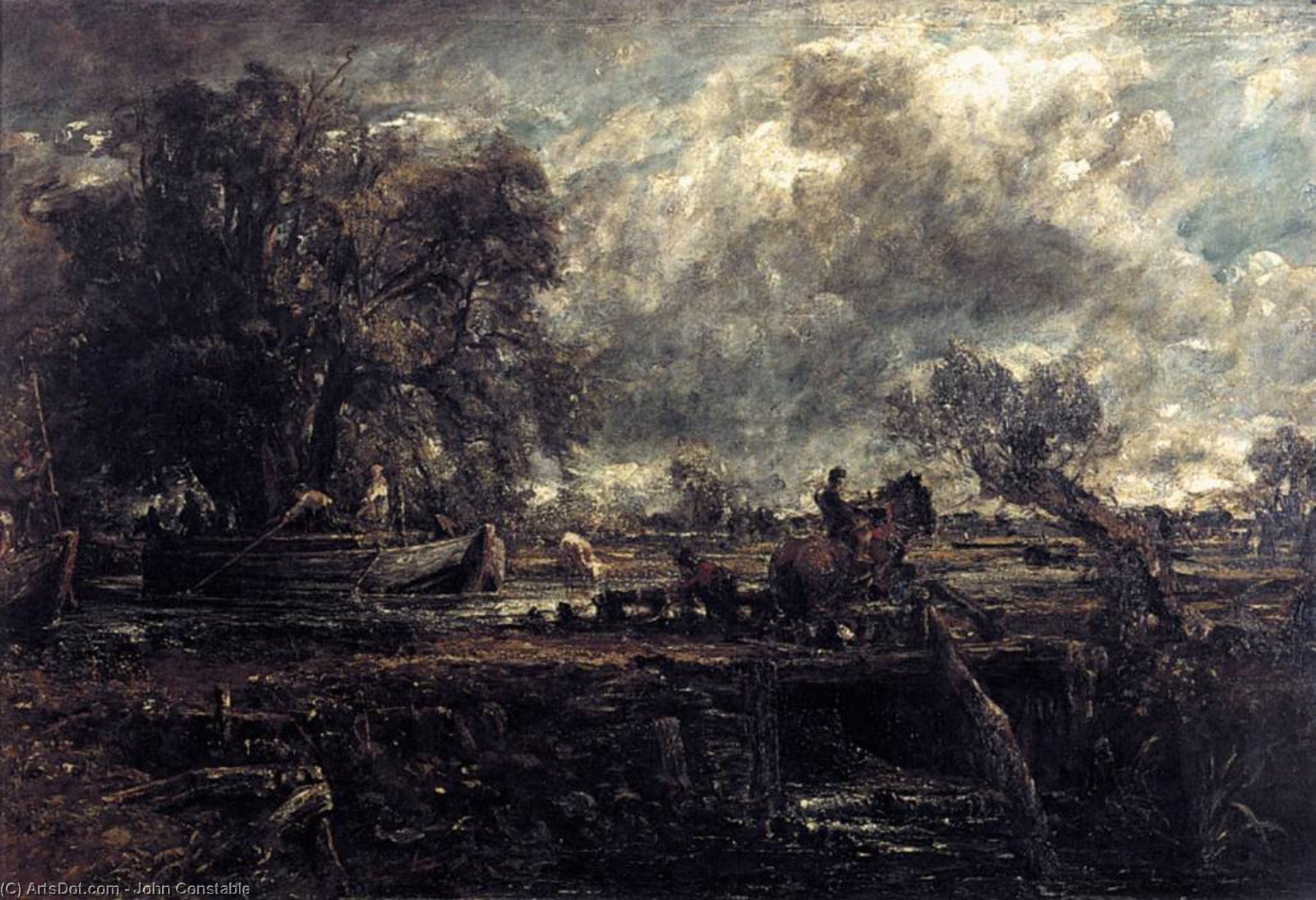
Sketch for The Leaping Horse
 Acrylic On Canvas
- WallArt
- Romantic Landscape
 1824
1824 129.0 x 188.0 cm
 Victoria and Albert Museum
 Lees meer
Ontvang een bestand dat klaar is voor drukwerk en de kwaliteit van het online voorbeeld ver overstijgt. Elke digitale afbeelding die wij verkopen, is afkomstig van een high-resolution master uit onze database — meestal tussen de 5.000 en 15.000 pixels breed — zodat u met vertrouwen groot kunt afdrukken, nauwkeurig kunt bijsnijden of fijne details kunt reproduceren.
Geen enkel bestand verlaat ons atelier onbewerkt. Een digitaal expert controleert de kleuren aan de hand van het originele schilderij en corrigeert deze indien nodig, om vervolgens de helderheid en details te verbeteren met professionele retoucheertechnieken — waarbij de penseelstreek en stijl van de kunstenaar altijd strikt worden gerespecteerd. Het resultaat is een afbeelding die oogt als het schilderij zelf, en niet als een gescande foto met een filter.
U keurt de afbeelding goed voordat de bestelling wordt afgerond: onze expert stuurt u binnen 72 uur een e-mail ter beoordeling. Niet tevreden? Vraag om aanpassingen of correcties, of vraag een terugbetaling aan als de kwaliteit niet aan de verwachtingen voldoet.
Dit is de kwaliteit waarop uitgevers, designstudio's, galeries en drukkerijen vertrouwen.
Digitale afbeeldingen
Download een bestand met hoge resolutie voor persoonlijke weergave, afdrukken en creatieve projecten. ( Schakel over naar print Bestel handgeschilderde reproductie)
Inbegrepen bij elke bestelling van een digitale afbeelding
Professionele digitale levering, gegarandeerd
Wanneer u kiest voor TopImpressionists.com, ontvangt u niet alleen een afbeelding – u krijgt een professioneel verbeterd digitaal kunstwerk, met precisie vervaardigd en voorzien van een tevredenheidsgarantie. Dit is alles wat automatisch bij uw bestelling is inbegrepen:

Snelle levering per e-mail
Uw hoogwaardige digitale afbeeldingsbestand wordt binnen 72 uur na bestelling naar u gemaild – klaar voor direct gebruik.

AI-verbeterd digitaal bestand
Uw kunstwerk wordt professioneel geoptimaliseerd met behulp van geavanceerde AI-tools en handmatige bewerkingen, waardoor maximale details, helderheid en kleurnauwkeurigheid worden gegarandeerd.

Gratis levenslange herlevering van digitale bestanden
Je bestand per ongeluk verwijderd of kwijtgeraakt? Geen zorgen – we sturen het u op elk gewenst moment gratis opnieuw toe.

Geen invoerkosten – nooit
Geniet direct van uw kunstwerk zonder invoerrechten, belastingen of verzendkosten – digitale downloads zijn altijd belastingvrij.

Garantie op kleurgetrouwheid
Met behulp van professionele hulpmiddelen en kleurbeheer zorgen wij ervoor dat uw digitale afbeelding de originele kleuren zo nauwkeurig mogelijk weergeeft.

100 dagen tevredenheidsgarantie
Mocht u niet tevreden zijn met uw digitale afbeelding, dan passen wij deze aan of storten wij 100% terug binnen 100 dagen – zonder vragen te stellen.

100% Geld-terug-garantie
Niet tevreden? Ontvang een volledige terugbetaling binnen 100 dagen na ontvangst van uw digitale bestand – zonder vragen te stellen.

Korting bij grote bestellingen
Koop 3 afbeeldingen, bespaar 10% - Koop 5, bespaar 15% - Koop 10+, bespaar 20%. Ideaal voor creatieve projecten, galerieën en bureaus.
A Moment Frozen in Time: John Constable’s ‘Sketch for The Leaping Horse’
This evocative black and white sketch, measuring 129 x 188 cm, offers a rare glimpse into the creative process of one of England's most beloved landscape painters, John Constable. Dating back to 1824, it transcends a simple preparatory study; instead, it embodies the very essence of Constable’s profound connection with the Suffolk countryside – a world he meticulously rendered not just with accuracy but with an intensely felt emotional resonance. The image captures a fleeting moment in a rural scene: horses grazing peacefully across a vast field, punctuated by the scattered figures of individuals engaged in their daily routines. A small boat rests near the left edge, hinting at the proximity of human activity to the natural world, suggesting a harmonious coexistence that was increasingly rare during this period.
Constable’s artistic journey began not with formal training but within the familiar embrace of his family's estate in Dedham Vale. His father, a successful merchant, possessed both land and mills along the River Stour – providing an unparalleled opportunity for observation and inspiration. This intimate relationship with the landscape shaped Constable’s entire approach to painting. He wasn’t simply recording what he saw; he was attempting to capture the *feeling* of a place, its light, its atmosphere, and the subtle shifts in color that defined its character. The ‘Sketch for The Leaping Horse’ exemplifies this deeply personal engagement with nature, revealing an artist wholly absorbed in his subject.
The Language of Line and Light: Technique and Style
Executed with remarkable economy and precision, the sketch is a testament to Constable's mastery of line. He employs a loose, expressive charcoal technique, prioritizing tonal variation over meticulous detail. Notice how he uses rapid, broken strokes to suggest movement – particularly in the bodies of the horses – while simultaneously creating a sense of atmospheric depth through subtle gradations of gray. The absence of color forces the viewer to focus entirely on these nuances of line and value, highlighting the artist’s keen eye for capturing light and shadow. This technique is characteristic of Constable's early work, reflecting his desire to represent the ephemeral qualities of natural light with immediacy and spontaneity.
The composition itself is deceptively simple yet powerfully effective. The arrangement of figures and horses within the expansive field creates a sense of scale and openness, drawing the eye into the distance. Constable’s use of aerial perspective – diminishing details and colors in the background to suggest depth – further enhances this effect, immersing the viewer in the vastness of the Suffolk landscape. The placement of the boat adds an element of narrative, inviting speculation about the lives and activities unfolding within this rural setting.
Symbolism and the English Countryside
More than just a depiction of a pastoral scene, ‘Sketch for The Leaping Horse’ speaks to broader themes of rural life, human connection with nature, and the changing social landscape of early 19th-century England. The horses themselves are potent symbols – representing both industry (the agricultural economy) and freedom. Their leisurely grazing suggests a world largely untouched by the rapid industrialization that was transforming Britain at this time. The presence of people tending to them underscores the continued importance of agriculture, while also hinting at the enduring value placed on traditional rural skills.
The sketch’s inherent tranquility reflects Constable's own deeply held appreciation for the beauty and stability of the English countryside. He saw himself as a guardian of this landscape, striving to capture its essence before it was irrevocably altered by progress. This sentiment is powerfully conveyed in ‘Sketch for The Leaping Horse,’ offering a poignant reminder of a time when nature reigned supreme and the rhythms of rural life held an unparalleled allure.
Bringing Constable’s Vision Home: A Reproduction
TopImpressionists offers meticulously crafted, hand-painted reproductions of this extraordinary sketch. Each reproduction is created by skilled artists who have painstakingly studied Constable's original techniques, ensuring that every detail – from the subtle nuances of line to the atmospheric depth – is faithfully reproduced. Whether you’re an art collector, a design enthusiast, or simply seeking to infuse your home with a touch of timeless beauty, this reproduction provides a stunning and authentic representation of one of England’s greatest landscape painters. Imagine this evocative scene adorning your walls, transporting you to the serene fields of Suffolk and allowing you to experience the profound emotional impact of Constable's art.
Veelgestelde vragen
Zijn de kleuren van "Sketch for The Leaping Horse" door John Constable verzadigd of gedempt?
De kleuren van "Sketch for The Leaping Horse" door John Constable hebben een Muted verzadiging. Verzadiging beschrijft hoe levendig of gedempt de kleuren zijn.
Hoe verhoudt het onderwerp van "Sketch for The Leaping Horse" zich tot de gebruikelijke thema's van John Constable?
"Sketch for The Leaping Horse" verbeeldt horses, rural life, landscape, england, constable, sketch, pastoral, terwijl de bekende thema's van John Constable claude lorrain’s landscape ideals, english rural life depiction, dedham vale inspiration source, light, atmosphere study”, “early career exploration” zijn. Een vergelijking tussen beide laat zien hoe het werk zich verhoudt tot de gebruikelijke onderwerpen van de kunstenaar.
Welk palet en welke emotie komen samen in "Sketch for The Leaping Horse"?
"Sketch for The Leaping Horse" door John Constable combineert een Earthy palet met een Tranquil toon.
Kunstenaarsbiografie
A Life Rooted in the English Landscape
John Constable, geboren in 1776 in het idyllische Suffolk dorp East Bergholt, was niet zomaar een schilder van landschappen; hij was een dichter van het land, de subtiele stemmingen en blijvende schoonheid ervan op doek met onverwachte emotionele diepte vertalend. Zijn vader, een welvarende graanhandelaar die zowel Dedham Vale als molens langs de River Stour bezat, bood niet alleen financiële zekerheid maar ook het onderwerp dat Constables artistieke leven zou definiëren. Deze vroege onderdompeling in de plattelandswereld – de rustige ritme van landbouwleven, het steeds veranderende licht op velden en water, de intieme details van de natuur – werd onlosmakelijk in zijn gevoeligheid gegrift. Hoewel aanvankelijk bestemd om zijn vader in de handel te volgen, leidde een groeiende passie voor kunst, gekoesterd door lokale patrons zoals George Beaumont die hem introduceerde tot het werk van Claude Lorrain, hem uiteindelijk op een andere weg. Constables artistieke reis was niet onmiddellijk; het was een geleidelijk ontvouwen, gevormd door zorgvuldige observatie en een voortdurende wens om niet alleen *wat* hij zag, maar ook *hoe* het voelde om aanwezig te zijn in de landschap.Breaking with Convention: A New Vision of Nature
Constables artistieke ontwikkeling werd gekenmerkt door een bewuste afwijzing van heersende academische conventies. Voldoende met de geïdealiseerde en vaak theatrale landschappen die door de Royal Academy werden verfijnd, zocht hij in plaats daarvan een eerlijke weergave van de natuur, doordrenkt van persoonlijke gevoelens. Hij was niet geïnteresseerd in grote historische narratieven of mythologische scènes; zijn focus bleef onwrikbaar op het bekende landschap rondom hem. Deze toewijding aan het weergeven van alledaagse onderwerpen – hooigrachten, boerderijen, dorpsleven – werd aanvankelijk afgewezen door critici die zijn werk te gewoon en ontoereikend vonden. Toch bleef Constable volharden, gedreven door de overtuiging dat schoonheid in het alledaagse lag. Hij legde een techniek van *plein air* schilderen aan, waarbij hij naar buiten ging om licht en weer direct te observeren en vast te leggen. Deze directe betrokkenheid met de natuur stelde hem in staat zijn doeken met immediateheid en vitaliteit te vullen, iets wat nog nooit eerder in het Britse landschap kunst was voorgekomen. Zijn penseelwerk werd steeds losser en expressiever, waarbij hij dikke lagen verf gebruikte – *impasto* – om textuur te creëren en een gevoel van beweging en sfeer over te brengen. Hij registreerde niet alleen wat hij zag; hij vertaalde zijn emotionele reactie op de landschap in visuele vorm.Iconic Works and Lasting Influence
Constables meest beroemde werken staan als getuigenis van zijn unieke visie. The Hay Wain (1821), misschien zijn bekendste schilderij, toont een kenmerkende plattelands scène aan de River Stour, die de rust en harmonie van het landbouwleven vastlegt. Hadleigh Castle (1829) laat zien zijn dramatische gebruik van licht en atmosferische effecten, waardoor een vervallen ruïne wordt omgetoverd tot een krachtig symbool van de tijdgevoel. De serie schilderijen die Salisbury Cathedral from the Meadows (1831) weergeven, demonstreert zijn vermogen om verschillende stemmingen en tijden van de dag te oproepen, waarbij de kathedraal als integraal onderdeel van het natuurlijke landschap wordt gepresenteerd. Netley Abbey (1824), met zijn evocatieve weergave van architectonische grandeur in de aanraking van wilde schoonheid, illustreert zijn vaardigheid om menselijke creatie te combineren met de wildernis van het landschap. Ondanks aanvankelijk moeilijke erkenning in Engeland, bereikte Constable aanzienlijke bekendheid in Frankrijk, waar zijn innovatieve technieken en emotionele diepte resoneren met kunstenaars die op zoek waren naar een meer realistische benadering van landschapsschilderkunst. Hij heeft de Barbizon School beïnvloed, een groep Franse schilders die zijn toewijding aan *plein air* schilderen en directe observatie van de natuur deelden.Personal Life & Final Years
Constables persoonlijke leven werd gekenmerkt door zowel vreugde als verdriet. Hij trouwde in 1816 met Maria Bicknell, en ze kregen zeven kinderen, zij het dat er van hen niet veel overleefden. Zijn huwelijk bood hem emotionele steun maar ook financiële druk. Hij werd in 1829 lid van de Royal Academy, maar bleef tegenslag ondervinden van kritiek vanuit sommige kringen, met name met betrekking tot zijn onconventionele technieken. Zijn latere jaren werden overschaduwd door Maria's achteruitgang en haar uiteindelijke dood in 1828, een gebeurtenis die hem diep trof. Ondanks deze moeilijkheden bleef Constable toegewijd aan zijn kunst, waarbij hij schilderde tot zijn eigen overlijden op 31 maart 1837. Hij heeft een rijke artistieke nalatenschap achtergelaten – een getuigenis van zijn onwrikbare toewijding om de schoonheid en emotionele resonantie van het Engelse landschap vast te leggen. Zijn schilderijen blijven krachtige evocaties van een vervlogen tijd, die kijkers uitnodigen om het landschap door zijn uniek gevoelige ogen te ervaren.Influences
Constable’s artistic development was profoundly influenced by several key figures and movements. He deeply admired the Dutch masters of the Golden Age, particularly Jacob van Ruysdael, for their ability to capture light and atmosphere with remarkable precision. Claude Lorrain, a French landscape painter who worked in Rome, also exerted a significant influence on Constable’s style, inspiring him to depict natural settings with a sense of drama and grandeur. The Romantic movement, which emphasized emotion, imagination, and the sublime beauty of nature, provided a broader context for Constable's artistic endeavors. He was particularly drawn to the ideas of William Wordsworth, who advocated for a more direct and personal approach to art, rejecting what he called “poetic diction.”Key Achievements
* **Pioneer of *Plein Air* Painting:** Constable was one of the first British artists to regularly paint outdoors, directly observing nature and capturing its fleeting effects. * **Elevation of Ordinary Subjects:** He elevated everyday rural scenes – hay wains, farm buildings, village life – to the level of fine art. * **Revolutionizing Landscape Painting:** His innovative use of light, color, and brushwork transformed the genre of landscape painting in Britain. * **Influence on the Barbizon School:** Constable’s techniques and approach inspired a generation of French landscape painters.
John Constable
1776 - 1837 , Verenigd Koninkrijk
Belangrijkste feiten
- Artistic Movement Or Style: Romantiek
- Artists Or Movements Influenced By This Artist: ['Barbizon School']
- Artists Who Influenced This Artist:
- Claude Lorrain
- Ruisdael
- Date Of Birth: 11 juni 1776
- Date Of Death: 31 maart 1837
- Full Name: John Constable
- Nationality: Britse kunstenaar
- Notable Artworks:
- The Hay Wain
- Salisbury Cathedral
- Hadleigh Castle
- Place Of Birth: East Bergholt, VK