


 Voorvertoning
 Verstuur
 Delen
Delen
 Details bekijken
 Gids
Gids

 Download
 Vergelijkbare items
 Röntgenonderzoek
 Diavoorstelling
 Q&A
Q&A Statistieken
Lord Hugh Seymour
 Oil On Canvas
- WallArt
- Neoclassical Portraiture
 1799
1799 96.0 x 83.0 cm
 National Maritime Museum
Admire John Hoppner's striking portrait of Lord Hugh Seymour, a distinguished naval officer and socialite from 1799. A captivating glimpse into Georgian England.
 Lees meer
John Hoppner (1758-1810) was een bekroonde Engelse portretschilder die bekend stond om zijn levendige kleuren en afbeeldingen van Britse koninkelijkheid, vrouwen en kinderen. Ontdek zijn meesterwerken en nalatenschap bij TopImpressionists.!
Handgemaakte olieverfreproductie
Met de hand geschilderd in olieverf op canvas in uw gewenste maat en lijst, op bestelling gemaakt door onze kunstenaars. ( Schakel over naar print Schakel over naar digitale afbeeldingen)




P118B €10

P118H €10

P118W €10

P438Z €10

P508JH €12

P508YH €12

P805H €10

P805Z €10

P919BZ €10

P919G €10

P919XJ €10

P959ZH €10

P968JZ €12

W106C €8

W218G €10

W218JH €8

W218Y €10

W307PJ €10

W316G €10

W316PJ €8

W316Y €10

W398PJ €8

W4111J €10

W500HY €15

W500JH €15

W692G €12

W849H €8

W940BG €15

W953PJ €8




Standaardformaat
op maat gemaakt
CM
INCH
Kies uit onze vooraf ingestelde maten die overeenkomen met de originele verhoudingen van het kunstwerk.
Loading sizes...

breedte
hoogte
Voer de breedte en hoogte in die u nodig heeft, passend bij uw lijst of uw muur. Omdat dit handgeschilderd is, kan de kunstenaar bij een afmeting met een andere beeldverhouding iets meer rondom het schilderij schilderen of juist iets meer weglaten — u kiest zelf. Wij sturen u een digitaal mockup ter goedkeuring voordat het schilderwerk begint. De afbeelding die op deze pagina wordt getoond, is niet het uiteindelijke resultaat — alleen de mockup geeft dit weer.
Voorbeelden van aanpassingen: Vervang het gezicht met een eigen foto; Voeg een huisdier toe (bijv. vervang de kat door een hond); Verwerk een verborgen boodschap in de achtergrond; Wijzig het landschap of andere elementen in de achtergrond.
Na de bestelling zal het team van TopImpressionists.com per e-mail contact opnemen met de klant voor instructies en een mockup-voorbeeld sturen.
Na de bestelling zal het team van TopImpressionists.com per e-mail contact opnemen met de klant voor instructies en een mockup-voorbeeld sturen.
Wereldwijde levering () binnen 3 tot 4 weken in plaats van de standaard 5 weken. (29 oktober). Zonder concessies aan de kwaliteit.

Gratis wereldwijde expressverzending

Hoogwaardig linnen canvas

Volledige verzendverzekering

Garantie op terugbetaling van invoerrechten

Garantie op exacte kleurweergave

Retourbeleid van 100 dagen (alleen bij defecten)

100% Geld-terug-garantie

Korting bij meerdere afnames
 De optie voor glas is alleen beschikbaar bij een formaat kleiner dan 110 cm.

Lord Hugh Seymour
Druktechniek
Afmetingen reproductie
-


Eindtotaal
€ 237
A Portrait of Command and Courtly Intrigue: John Hoppner’s Lord Hugh Seymour
John Hoppner's 1799 portrait of Vice-Admiral Lord Hugh Seymour is more than just a likeness; it’s a meticulously crafted tableau of naval authority, aristocratic grace, and the subtle currents of Georgian London society. Painted during a period of intense political and military upheaval – the twilight years of the American War of Independence and the burgeoning threat of revolutionary France – the canvas captures a man at the apex of his career, yet subtly hinting at the complexities beneath the surface of his public persona.
Hoppner, a master of colour and light, demonstrates his exceptional skill in rendering Seymour’s imposing figure. The admiral is depicted in full-dress uniform, a rich tapestry of gold braid, scarlet cloth, and dark blue velvet, signifying his rank and status within the Royal Navy. Note the careful attention to detail – the precise folds of the fabric, the glint of metal on the medals adorning his chest, and the subtle sheen of the polished boots beneath him. Hoppner’s use of light is particularly striking; it highlights Seymour's face, drawing the viewer’s eye to his expression—a mixture of dignified composure and a hint of shrewd intelligence.
The Context of Power: Naval Authority and Georgian Society
Lord Hugh Seymour’s life was inextricably linked to both naval service and the intricacies of London high society. Born into a wealthy family with deep ties to the aristocracy, he initially pursued a career in the Navy, quickly rising through the ranks due to his competence and charisma. His involvement in key battles during the American War, including the relief of Gibraltar – an event that earned him a commemorative medal – cemented his reputation as a courageous officer. However, Seymour’s life was also marked by scandal and social intrigue; he cultivated a notorious reputation for his dissolute lifestyle, frequenting gambling dens and engaging in affairs with women of high standing.
Hoppner's decision to paint Seymour in this formal portrait reflects the societal pressures of the time. The aristocracy placed immense value on appearances, and a well-executed portrait was essential for projecting an image of wealth, power, and social legitimacy. Yet, even within the confines of this carefully constructed representation, Hoppner subtly hints at the contradictions inherent in Seymour’s character. The admiral's gaze is direct and unwavering, suggesting confidence and authority, but there’s also a certain weariness in his eyes—a subtle acknowledgment of the burdens of command and the complexities of navigating the treacherous waters of Georgian society.
Symbolism and Artistic Technique
Beyond the straightforward depiction of a naval officer, Hoppner employs several symbolic elements to enrich the portrait’s meaning. The epaulettes adorning Seymour's uniform, for instance, are not merely decorative; they represent his rank and authority within the Navy—a deliberate statement of his position as a Vice-Admiral. The inclusion of two figures in the background – one on the left and another on the right – adds depth to the composition, suggesting the presence of other individuals and hinting at the social circles in which Seymour moved. The muted tones of the wall behind him create a sense of formality and restraint, contrasting with the vibrant colours of his uniform.
Hoppner’s technique is characterized by its masterful use of colour and light. He employs a rich palette of reds, blues, and golds to capture the textures and reflections of Seymour's clothing and accessories. His brushwork is loose and expressive, creating a sense of movement and dynamism within the portrait. The subtle gradations of tone and shadow contribute to the overall illusion of depth and realism, drawing the viewer into the scene.
A Legacy of Colour and Intrigue
Lord Hugh Seymour’s portrait remains a captivating work of art—a testament to John Hoppner's artistic skill and his ability to capture both the outward appearance and the underlying complexities of human character. It offers a glimpse into the world of Georgian London, where naval authority intersected with aristocratic privilege and social intrigue. Today, this painting stands as a reminder that even within the most formal representations, there is always room for nuance, ambiguity, and a touch of captivating mystery.
Veelgestelde vragen
Op welke fase in de carrière van John Hoppner komt de datum uit 1799 van "Lord Hugh Seymour" overeen?
Gezien de datering uit 1799, valt "Lord Hugh Seymour" binnen de Mature Period van John Hoppner.
Wat is het formaat van "Lord Hugh Seymour"?
"Lord Hugh Seymour" door John Hoppner heeft een Portrait-formaat. Het formaat beschrijft de verhoudingen van de compositie.
Voor welke ruimte wordt "Lord Hugh Seymour" door John Hoppner aanbevolen?
De aanbevolen ruimte voor "Lord Hugh Seymour" door John Hoppner is een Living Room. Dit advies kan uiteraard worden aangepast aan uw interieur.
Biografie kunstenaar
een leven van kunstzinnigheid en koninklijk mecenaat
john hoppner, een vooraanstaande Engelse portretschilder, liet een onuitwisbare indruk achter in de kunstwereld met zijn levendige kleurenpalet. Geboren in whitechapel, Londen, in 1758 als zoon van Duitse ouders, werd het leven van hoppner gekenmerend door koninklijk mecenaat en artistieke genialiteit.vroege jaren en opleiding
- op jonge leeftijd werd hoppner koorknaap in de royal chapel, maar zijn aanleg voor kunst leidde ertoe dat hij in 1775 de royal academy betrad.
- in 1778 ontving hij een zilveren medaille voor tekenen naar het leven, en in 1782 de gouden medaille voor historische schilderkunst met zijn werk over king lear.
opkomst naar roem en befaamde werken
De portretten van vrouwen en kinderen van john hoppner werden door deskundige critici beschouwd als zijn meest succesvolle werken. Zijn toets, gekenmerkt door breedte en vrijheid, gaf zijn schilderijen een subtiele reflectie van de charme van reynolds. Tot zijn meest opmerkelijke werken behoren:- mrs jordan als viola in 'twelfth night', tegenwoordig te vinden bij english heritage (londense, verenigd koninkrijk), die zijn meesterschap in de portretkunst tentoonstelt.
- zijn portretten van de prince of wales, de duke en duchess of york, lord rodney en lord nelson, die werden opgehangen in de staatsvertrekken van st james's palace, getuigen van zijn hoge maatschappelijke connecties.
nalatenschap en latere leven
Het leven van john hoppner werd getekend door een chronische leverziekte. Hij overleed op 23 januari 1810. Ondanks dit tragische einde blijft zijn nalatenschap voortbestaan door zijn levendige portretten die kunstliefhebbers nog steeds weten te betoveren.- ontdek meer van de werken van john hoppner op https://TopImpressionists.com/@/johnhoppner.
- ontdek de bredere context van de Britse kunst via https://en.wikipedia.org/wiki/art_of_the_united_kingdom.
verdere lectuur en verkenning
voor een diepere duik in de wereld van de Britse kunst, kunt u het volgende overwegen:- het ontdekken van de kunstwerken van dyrham park, verenigd koninkrijk
- sir edwin landseer lutyens, een Engelse architect bekend om zijn verbeeldingsrijke adaptaties.

John Hoppner
1758 - 1810 , Verenigd Koninkrijk
Belangrijkste feiten
- Artistic Movement Or Style: Portraiture
- Artists Who Influenced This Artist: ['Joshua Reynolds']
- Date Of Birth: April 4, 1758
- Date Of Death: January 23, 1810
- Full Name: John Hoppner
- Nationality: British
- Notable Artworks:
- Mrs. Jordan as Viola
- Prince of Wales
- Duke of York
- Lord Rodney
- Lord Nelson
- Place Of Birth: Whitechapel, London
Gerelateerde artikelen

Sir William Beechey: Portraiture, Patronage & Shaping Georgian Society
Explore the life & art of Sir William Beechey, a leading British portraitist of the Georgian era. Discover his royal commissions, aristocratic subjects, and lasting influence on 18th-century painting. Learn more at TopImpressionists.

Kantoor Kunst: Productiviteit & Welzijn Versterken – Een Trend Forecast voor Tech Startups
Ontdek hoe strategisch gekozen kantoor kunst de productiviteit en het welzijn van uw team verhoogt. Expert tips & trends voor een inspirerende werkplek.

John Hoppner: Portraiture, Patronage & British Identity in the Late Georgian Era
Explore the life & work of John Hoppner, a leading Georgian portraitist. Discover his vibrant style, influential patrons, and lasting impact on British art history. Expert insights for collectors.

Allen Ramsay: Portraiture, Patronage & Shaping Georgian Identity
Explore the life & work of Allen Ramsay, pivotal portraitist to George III. Discover his Rococo style, influence on Georgian society, and lasting legacy in British art history. Learn about his key works & patronage.
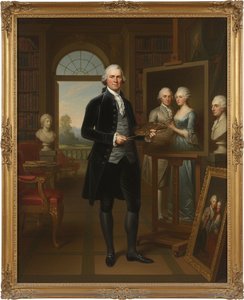
Sir Nathaniel Dance-Holland: Portraiture, Patronage & Georgian Identity
Explore the life & art of Sir Nathaniel Dance-Holland, a leading Georgian portraitist. Discover his masterful technique, influential patrons, and lasting impact on 18th-century British society. A guide for discerning collectors.
Ontdek kunstwerken georganiseerd op thema, stijl en kenmerk.

