


 Bekijk op ware grootte
 Verstuur
 Delen
Delen
 Details bekijken
 Gids voor studentenkunstwerken

 Download
 Vergelijkbare items
 Röntgenonderzoek
 Diavoorstelling
 Statistieken
Orange Branch
 Oil On Canvas
- WallArt
- American Colorism & Japonisme
 1883
1883- 19th Century
 138.0 x 30.0 cm
 Metropolitan Museum of Art
Experience the vibrant Japonisme of John La Farge's 1883 Orange Branch, a luminous study of color and light you will adore.
 Lees meer
John La Farge (1835-1910): Amerikaanse kunstenaar & glazenmaker, bekend om zijn levendige murals en baanbrekende technieken. Verken zijn Japanse invloeden & artistieke nalatenschap.
Giclée / Kunstafdrukken
Giclée- of canvasafdruk van museumkwaliteit met een snelle productie en flexibele afwerkingsmogelijkheden. ( Koop handgeschilderd kunstwerk Schakel over naar digitale afbeeldingen)




P118B €10

P118H €10

P118W €10

P438Z €10

P508JH €12

P508YH €12

P805H €10

P805Z €10

P919BZ €10

P919G €10

P919XJ €10

P959ZH €10

P968JZ €12

W106C €8

W218G €10

W218JH €8

W218Y €10

W307PJ €10

W316G €10

W316PJ €8

W316Y €10

W398PJ €8

W4111J €10

W500HY €15

W500JH €15

W692G €12

W849H €8

W940BG €15

W953PJ €8




Standaardformaat
op maat gemaakt
CM
INCH
Kies uit onze vooraf ingestelde maten die overeenkomen met de originele verhoudingen van het kunstwerk.
Loading sizes...

breedte
hoogte
Voer de breedte en de hoogte in die u nodig heeft, passend bij uw lijst of uw muur. Een afdruk kan alleen worden ingekort, nooit groter worden gemaakt dan het origineel, waardoor een formaat met een andere verhouding een deel van de afbeelding verliest. Wij sturen u een digitaal mockup ter goedkeuring voordat we iets drukken. De afbeelding op deze pagina toont niet de werkelijke uitsnede — dit is alleen te zien op het mockup.
Wereldwijde levering () binnen 2 weken in plaats van de standaard 4/5 weken. (24 oktober)

Gratis wereldwijde expressverzending

Hoogwaardig linnen canvas

Volledige verzendverzekering

Garantie op terugbetaling van invoerrechten

Garantie op exacte kleurweergave

Retourbeleid van 100 dagen (alleen bij defecten)

100% Geld-terug-garantie

Korting bij meerdere afnames
 De optie voor glas is alleen beschikbaar bij een formaat kleiner dan 110 cm.

Orange Branch
Giclée / Kunstafdrukken
Formaat reproductie
-


Totaalprijs
€ 62
A Symphony of Color and Japonisme
In the quiet brilliance of John La Farge’s 1883 masterpiece, "Orange Branch," viewers are invited into a world where nature and artistry converge in perfect harmony. This exquisite work is far more than a mere botanical study; it is a profound exploration of light, texture, and the delicate dance between Eastern influence and Western Impressionism. At first glance, the eye is immediately drawn to the vibrant, sun-drenched oranges that cling to a slender branch, their golden hues radiating a warmth that seems to pulse from within the canvas itself. La Farge captures not just the fruit, but the very essence of ripeness, inviting a sense of serene contemplation that transcends the boundaries of a simple landscape.
The painting serves as a breathtaking testament to Japonisme, the late 19th-century fascination with Japanese aesthetics that swept through the American art scene. Following the opening of Japan to Western trade, artists like La Farge found profound inspiration in the flattened perspectives and organic compositions of sumi-e ink paintings. In "Orange Branch," this influence is palpable in the way the branch extends diagonally across the frame, creating a balanced yet dynamic movement that guides the viewer’s gaze through the composition. The soft, ethereal blue background acts as a tranquil stage, providing an understated counterpoint to the vivid warmth of the fruit and ensuring that every leaf and citrus orb commands the spotlight.
Mastery of Light and Luminous Technique
To behold "Orange Branch" is to witness the technical virtuosity of a true master of color. La Farge employed a sophisticated technique of layering glazes—applying thin, translucent washes of oil paint over successive layers—to achieve a depth and luminosity that few could replicate. This meticulous process allows light to penetrate the surface of the paint, reflecting back with a brilliance that mimics the natural glow of sunlight filtering through foliage. The oranges possess a tactile quality, their skins rendered with such precision that one can almost sense the subtle variations in texture and the weight of the fruit.
Complementing this luminous fruit is La Farge’s masterful depiction of the surrounding greenery. Through delicate, rhythmic brushstrokes, he creates a textured surface that breathes life into the leaves, capturing the fleeting effects of light and shadow with an Impressionist sensibility. This focus on the ephemeral—the way a leaf catches a glint of sun or how a shadow softens at the edge of a branch—imbues the work with a sense of living, breathing reality. For the discerning collector or interior designer, this painting offers a sophisticated interplay of color and form that can anchor a room, providing both a focal point of intense energy and a source of quiet, natural grace.
An Enduring Legacy for the Modern Collector
Beyond its technical brilliance, "Orange Branch" carries an emotional resonance that remains deeply relevant in our modern, fast-paced world. It offers a moment of stillness, a window into a period of intense cultural exchange and artistic innovation. The painting’s ability to evoke both the vitality of nature and the sophisticated intellect of the Gilded Age makes it a timeless piece of art history. Whether displayed in a sunlit gallery or as a centerpiece in a curated residential space, this work continues to inspire awe through its harmonious balance of color, light, and historical depth.
For those seeking to bring the prestige of American Impressionism into their personal collections, a high-quality reproduction of this work provides an unparalleled opportunity. It allows the rich textures and radiant golds of La Farge’s vision to transform an environment, offering a touch of 19th-century elegance and a profound connection to the enduring beauty of the natural world.
Vragen & Antwoorden
Is "Orange Branch" typerend voor wat John La Farge gewoonlijk creëerde?
"Orange Branch" verbeeldt orange blossoms, floral painting, american art, john la farge, japanese influence, late 19th century, landscape detail, terwijl de bekende thema's van John La Farge japanese aesthetic vision, coloristic exploration, symbolism, american landscape tradition, floral imagery & beauty, la farge’s artistic legacy zijn. Een vergelijking tussen beide laat zien hoe het werk zich verhoudt tot de gebruikelijke onderwerpen van de kunstenaar.
Kan ik "Orange Branch" door John La Farge onder ander licht bekijken?
De röntgenweergave van "Orange Branch" door John La Farge is te vinden op de Röntgenanalyse-pagina van het kunstwerk: een interactieve verkenning van het beeld door middel van elf optische lagen.
Waar en voor welk doel wordt "Orange Branch" aanbevolen?
"Orange Branch" wordt aanbevolen voor Accent, en de ideale ruimte hiervoor is een Living Room.
Gerelateerde kunstwerken


Biografie van de kunstenaar
A Luminary of American Art: The Life and Legacy of John La Farge
John La Farge, geboren in New York City in 1835 tot een welvarende Franse familie, groeide uit tot een sleutelfiguur in de evolutie van de Amerikaanse kunst van het laat-19e en vroege 20e eeuw. Zijn leven was een voortdurend zoektocht naar innovatie en verkenning, strekkend over schilderkunst, muurschildering, glazenierstijl, interieurdecoratie en inzichtelijke schrijfsels over zijn reizen – met name die naar Azië. Opgegroeid tweetalig, werd La Farge’s opvoeding gekenmerkt door een kosmopolitische gevoeligheid die zijn artistieke visie diepgaand zou vormen. Hij begon aanvankelijk aan juridisch onderzoek, maar bevond zich al snel in de wereld van de kunst, waarbij hij eerst studeerde aan Mount St. Mary’s University en vervolgens aan St. John’s College (nu Fordham University). Een cruciale periode volgde met een opleiding onder Thomas Couture in Parijs, waar hij Europese artistieke tradities verinnerlijkte terwijl hij tegelijkertijd een uniek Amerikaans esthetisch gevoel ontwikkelde. Deze vroege blootstelling aan Old World meesterschap en zijn eigen opkomende originaliteit legden de basis voor een carrière gekenmerkt door baanbrekende technieken en een kenmerkende stijl.Pionierend Innoveren Over Disciplines
La Farge’s artistieke productie was buitengewoon divers, maar consequent gekenmerkt door een intense focus op kleur en licht. Hij begon aan populariteit te winnen met zijn illustraties en landschappen, maar het was in de wereld van muurschildering dat hij aanvankelijk aanzienlijke indruk maakte. Commissies voor kerken zoals Trinity Church in Boston (1873) en de Church of the Ascension in New York toonden zijn vermogen om lichte, spiritueel evocatieve ruimtes te creëren. Echter, La Farge’s meest blijvende nalatenschap ligt in zijn revolutionaire werk met glazenierkunst. Teleurgesteld in de conventionele methoden van die tijd, ontwikkelde hij een techniek waarbij hij meerdere lagen gekleurd glas over elkaar heen legde – een proces waarvoor hij in 1880 een patent ontving. Deze innovatie stelde hem in staat om onvoorstelbare rijkdom en diepte van kleur te bereiken, waardoor glazenierkunst werd getransformeerd tot een krachtig medium voor artistieke expressie. Zijn glazenierwerk was niet alleen een representatie; het waren meeslepende ervaringen van licht en kleur. Naast deze kerndisciplines excelleerde La Farge ook in interieurdecoratie, waarbij hij harmonieuze omgevingen creëerde die zijn schilderijen, muurschilderingen en decoratieve kunst integreerden.De Invloed van het Oosten en een Zoektocht naar Nieuwe Vormen
Een kenmerkend aspect van La Farge’s artistieke ontwikkeling was zijn fascinatie met Japanse kunst en cultuur. Zijn reizen naar Azië, beginnend in de jaren 1880, beïnvloedden zijn esthetische gevoeligheid diepgaand. Hij documenteerde zorgvuldig zijn waarnemingen in schriften en integreerde elementen van Japanse ontwerp – zoals asymmetrie, platte perspectieven en een verfijnd gevoel voor kleur – in zijn eigen werk. Deze omhelzing van Oostelijke esthetiek was niet alleen imitatie; La Farge synthetiseerde deze invloeden met zijn bestaande artistieke vocabulaire om iets radicaals nieuws te creëren. Zijn atelier aan 51 West 10th Street in Greenwich Village werd een centrum voor kunstenaars die geïnteresseerd waren in het verkennen van niet-westerse kunstvormen, waardoor een geest van experimenteren en culturele uitwisseling ontstond. Hij was zeker niet de enige die dit nastreefde – kunstenaars als James McNeill Whistler werden ook gefascineerd door Japanse esthetiek – maar La Farge onderscheidde zich door zijn vermogen om deze invloeden naadloos in zijn diverse artistieke praktijk te integreren. De heilige boomgaard, een bosrijke omgeving in Rhode Island waar hij vele mythische scènes schilderde, werd een persoonlijke stilteplek die zijn spirituele en artistieke verkenningen weerspiegelde.Een Duurzaam Vermogen op het Veld van de Kunst
John La Farge’s bijdragen gingen verder dan zijn individuele kunstwerken; hij was ook een toegewijde pleitbezorger voor de kunsten en een kritische stem tegen academische conservativiteit. Hij co-stichtte in 1877 de American Artists Society als alternatief voor de rigide structuur van de National Academy of Design, waarbij hij artistieke vrijheid en innovatie promootte. Zijn invloed is te zien in het werk van latere generaties kunstenaars, met name die verbonden zijn aan de Arts and Crafts-beweging en Symbolisme. La Farge’s nadruk op vakmanschap, zijn verkenning van spirituele thema's en zijn innovatieve gebruik van kleur resoneerden met kunstenaars die streefden naar een afstappen van traditionele conventies. Hij was docent aan de Metropolitan Museum of Art Schools, waar hij jonge talenten begeleidde en zijn kennis en passie voor kunst doorgaf. Hoewel hij tegenslagen bleef ondervinden – waaronder een langdurige rechtszaak met Louis Comfort Tiffany over glazenierpatentten – bleef La Farge toegewijd aan zijn artistieke visie tot zijn dood in 1910. Zijn nalatenschap duurt voort als een getuigenis van innovatie, de schoonheid van kleur en de blijvende invloed van culturele uitwisseling.Buiten het Doek: Schriften en Familie
- Literatuur bijdragen: La Farge was niet alleen een visuele kunstenaar, maar ook een begaafd schrijver. Zijn reisverslagen, met name *An Artist’s Letters from Japan* (1897), boden inzichtelijke observaties over Japanse cultuur en kunst, waardoor een groeiende Westerse waardering voor Oostelijke esthetiek ontstond.
- Familieerbeid: De La Farge-familie droeg voortaan bij aan de kunsten en de geesteswetenschappen. Zijn zoon, Oliver Hazard Perry La Farge II, werd een gerenommeerde antropoloog en schrijver, die een Pulitzer Prize won voor zijn roman *Laughing Boy* (1929).
- Laatste jaren: In zijn latere jaren bleef La Farge productief werken, waarbij hij muurschilderingen creëerde tot in de zeventiger jaren. Hij overleed in Butler Hospital in Providence, Rhode Island, en liet een oeuvre achter dat nog steeds het publiek inspireert en betovert.
- Zijn begrafenis vindt plaats op Green-Wood Cemetery in Brooklyn, New York.

John La Farge
1835 - 1910 , Verenigde Staten van Amerika
Snelle feiten
- Artistic Movement Or Style: Symbolisme, Craftsman
- Artists Or Movements Influenced By This Artist: ['Dewing Maria']
- Artists Who Influenced This Artist: ['Couture Thomas']
- Date Of Birth: 31 mrt 1835
- Date Of Death: 14 nov 1910
- Full Name: John La Farge
- Nationality: Amerikaans
- Notable Artworks:
- The Sacred Grove
- Muren Trinity
- Ch Ascension
- Place Of Birth: New York City, USA
Gerelateerde artikelen

Eternal Bonds in Dappled Light: Capturing the Tender Warmth of Family Gatherings in Impressionist Masterpieces
Step into a world of dappled sunlight and tender connections. Explore how Impressionist masters like Renoir captured the warmth of family life. At TopImpressionists.com, we transform your cherished memories into exquisite, hand-painted oil masterpieces that celebrate eternal bonds.

Capturing the Soul: The Most Emotionally Moving Impressionist and Post-Impressionist Masterpieces
Discover the profound emotional depth of Impressionist and Post-Impressionist masterpieces. Explore how legends like Monet, Van Gogh, and Gauguin captured light and soul through evocative landscapes and vibrant brushwork for a timeless connection to art history.
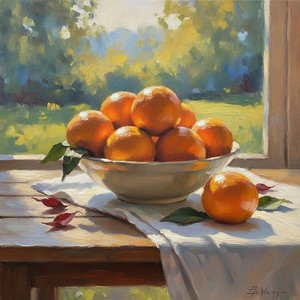
Sun-Drenched Citrus: The Vibrant Beauty of Oranges in Impressionist Masterpieces
Embark on a sensory journey through Impressionist masterpieces. Discover how Renoir and Cézanne captured the vibrant light and luscious textures of sun-drenched oranges in exquisite still life paintings designed to inspire and transform your home.

Modern Soul, Timeless Light: Bringing the Magic of Impressionist Masterpieces into Contemporary Interiors
Discover how to infuse contemporary spaces with the luminous magic of Impressionism. From Monet's light to Renoir's warmth, learn expert tips for styling hand-painted masterpieces and custom art reproductions in your modern home.

The Luminous Hallway: Transforming Your Home with the Ethereal Magic of Impressionist Masterpieces
Transform your hallways with the luminous beauty of Impressionist masterpieces. Discover expert tips on selecting Monet-inspired palettes and multi-panel landscapes to create a breathtaking, light-filled gallery walk in your home. Elevate your space with timeless, hand-painted elegance.