Atelier — Gratis verzending wereldwijd — Levertijd 2–6 weken
Verlanglijstje Winkelwagen
Bestel schilderij Bestel schilderijKoop afbeelding in hoge resolutie Koop afbeelding in hoge resolutie VerstuurVerstuur
Details bekijkenDetails bekijken Toevoegen aan favorieten Toevoegen aan favorieten DownloadDownload Vergelijkbare werkenVergelijkbare werken RöntgenonderzoekRöntgenonderzoek DiavoorstellingDiavoorstelling

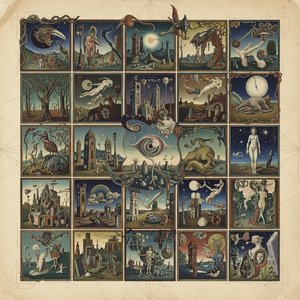
The bay

Discover Marc Chagall’s ‘The Bay,’ a dreamy pastel drawing of a bird in flight. Explore Expressionist & Surrealist elements in this evocative, melancholic work.

Ontdek Marc Chagall (1887-1985), een Russische kunstenaar die bekend staat om zijn droomachtige schilderijen, thema's uit het Joodse folklore en prachtige kleurrijke glaswerkkunst. Een artistieke erfenis die blijft inspireren!

Giclée / Kunstafdruk

Giclée- of canvasafdruk van museumkwaliteit met snelle productie en flexibele afwerkingsopties.

Standard
custom
CM
INCH

Kies uit onze vooraf ingestelde maten die overeenkomen met de originele verhoudingen van het kunstwerk.

breedte
hoogte

U kunt uw eigen afmetingen opgeven om in een specifieke lijst of ruimte te passen. Als de door u gekozen maat niet overeenkomt met de proporties van het originele kunstwerk, zullen wij de afbeelding bijsnijden of uitbreiden met een gespiegelde of effen rand. Een digitaal mockup wordt ter goedkeuring naar u verzonden voordat de productie begint.
Houd er rekening mee dat de preview op het scherm de werkelijke bijsneding of uitbreiding niet weergeeft. Alleen de mockup toont de uiteindelijke compositie nauwkeurig.
Hoewel aangepaste maten beschikbaar zijn, raden wij aan een afmeting uit de vooraf bepaalde lijst te kiezen om de originele proporties te behouden.

Wereldwijde levering () binnen 2 weken in plaats van de standaard 4/5 weken. (21 juli)

why_choose_icon
Gratis wereldwijde expressverzending
why_choose_icon
Hoogwaardig linnen canvas
why_choose_icon
Volledige verzendverzekering
why_choose_icon
Garantie op terugbetaling van invoerrechten
why_choose_icon
Garantie op exacte kleurweergave
why_choose_icon
60 dagen retourbeleid (alleen bij defecten)
why_choose_icon
100% Geld-terug-garantie
why_choose_icon
Korting bij meerdere afnames

Totaalprijs

-

reproduction

The bay

Giclée / Kunstafdruk

Afmetingen reproductie

-

Eindtotaal

-

Snelle feiten

  • influences: Jewish folklore, Cubism, Symbolism
  • year: 1962
  • notable elements: Dreamlike atmosphere, layered technique, loose expressive lines, flattened perspective
  • title: The bay
  • artist: Marc Chagall
  • style: Expressionism, Surrealism

Kunstquiz

Er is slechts één correct antwoord op elke vraag.

Vraag 1:
In what year was Marc Chagall's 'The Bay' created?
Vraag 2:
Which artistic movements are most evident in the style of 'The Bay'?
Vraag 3:
What is a dominant element within the composition of 'The Bay'?
Vraag 4:
The description notes that the artwork evokes a particular feeling. Which best describes it?
Vraag 5:
What drawing technique is primarily used in 'The Bay'?

Beschrijving verzamelobject

A Dreamscape of Flight: Exploring Marc Chagall’s “The Bay” (1962)

This captivating pastel drawing, “The Bay,” offers a glimpse into the whimsical and deeply personal world of Marc Chagall. Created in 1962, this work exemplifies his unique ability to blend memory, folklore, and emotion into visually arresting compositions. The artwork isn’t merely a depiction of a scene; it's an evocation of a feeling – a nostalgic reverie suspended between reality and imagination.

Subject & Composition: A Bird’s-Eye View of Memory

The composition is dominated by a large bird in dynamic flight, positioned diagonally across the frame. This central figure immediately draws the eye, symbolizing freedom, aspiration, or perhaps even the artist's own soaring spirit. Below, a simplified landscape unfolds – water reflecting an unseen light, small boats suggesting human presence, and distant buildings hinting at civilization. The arrangement isn’t geographically precise; rather, it feels like a composite of remembered places and imagined vistas. Chagall often populated his works with recurring motifs from his childhood in Vitebsk, Belarus, and while “The Bay” doesn't explicitly depict that location, the overall atmosphere resonates with its spirit. Subtle human figures are integrated into this landscape, adding to the surreal quality of the scene.

Style & Technique: Expressionism Meets Surrealism

“The Bay” showcases Chagall’s distinctive style – a harmonious blend of Expressionism and Surrealism. The loose, expressive lines and pastel palette create a dreamlike atmosphere. He eschews precise outlines in favor of short, broken strokes that suggest movement and form. This technique lends the artwork a sense of spontaneity and emotional immediacy. Layering is key; colors overlap and blend, creating depth and texture without relying on traditional perspective. The flattened perspective further enhances the two-dimensional quality, emphasizing the work’s imaginative nature rather than its representational accuracy.

Historical Context & Artistic Influences

Born in 1887, Marc Chagall navigated a period of immense artistic upheaval. While he engaged with movements like Cubism and Symbolism early in his career, he ultimately forged his own path – one deeply rooted in personal experience and Jewish folklore. By the time “The Bay” was created in 1962, Chagall had already established himself as a major figure in modern art. His work often reflects themes of love, loss, memory, and spirituality. The post-war era saw a renewed interest in subjective experience, and Chagall’s emotionally resonant paintings resonated deeply with audiences seeking meaning and solace.

Symbolism & Emotional Impact

The symbolism within “The Bay” is open to interpretation, which is characteristic of Chagall's work. The bird, as mentioned, represents freedom and transcendence. Water often symbolizes the subconscious or the flow of life. The buildings suggest a connection to humanity, but their distance implies a sense of detachment or longing. Overall, the artwork evokes a feeling of wistful melancholy – a beautiful sadness that speaks to the ephemeral nature of memory and the enduring power of imagination. It’s a piece that invites contemplation and allows viewers to project their own emotions onto its evocative imagery.

For Collectors & Designers

“The Bay” is an excellent example of Chagall's mature style, offering both artistic merit and emotional depth. Its pastel palette and dreamlike quality make it a versatile piece for interior design – complementing a range of styles from modern to bohemian.
  • Its whimsical nature adds a touch of magic to any space.
  • The muted colors create a calming atmosphere.
  • A high-quality reproduction captures the essence of Chagall’s technique and emotional impact, bringing a piece of art history into your home or office.

Biografie van de kunstenaar

A Life Painted in Dreams: The World of Marc Chagall

Marc Chagall, born Moishe Shagal in 1887 in the small Belarussian town of Liozna near Vitebsk, wasn’t merely a painter; he was a poet of color, a weaver of dreams, and a chronicler of memory. His life, spanning nearly a century, mirrored the tumultuous currents of the twentieth century, yet his art remained steadfastly rooted in a deeply personal vision—one infused with the folklore of his Hasidic Jewish upbringing and an unwavering belief in the power of imagination. Vitebsk itself was more than just a birthplace; it became the emotional core of his artistic universe, a recurring motif populated by flying figures, whimsical animals, and the vibrant hues of remembered landscapes. The town’s unique blend of cultures—Russian Orthodox churches alongside bustling Jewish marketplaces—forged an aesthetic sensibility that would defy easy categorization throughout his long career. Though he sought formal training first with a local sign painter and later in St. Petersburg under Léon Bakst, and then in Paris at the Académie de la Grande Chaumière, Chagall never fully embraced any single artistic movement. He absorbed elements of Cubism, Symbolism, and Fauvism, but always filtered them through his own intensely personal lens, creating a style that was uniquely, unmistakably Chagall.

Early Influences and Artistic Beginnings

Chagall’s formative years were marked by the traditions of Vitebsk’s Jewish community—a vibrant tapestry woven with religious rituals, folk tales, and ancestral memories. These influences would permeate his artistic vision throughout his life, informing his use of symbolism and his fascination with biblical narratives. His initial training was modest, focusing on practical skills as a sign painter – a craft that instilled in him an appreciation for visual communication and meticulous attention to detail. However, he quickly recognized the limitations of realism and sought inspiration in the expressive techniques championed by Impressionists like Léon Bakst, whose theatrical productions captivated him with their bold colors and dynamic compositions. This exposure to avant-garde aesthetics broadened his artistic horizons and propelled him toward experimentation with new forms of expression. His early canvases—such as I and the Village (1911)—already demonstrated his ability to distill complex emotions into simplified visual language, prioritizing feeling over precise representation. The village isn’t rendered realistically but as a fragmented collection of recollections, imbued with symbolic meaning – a technique that would become central to his distinctive style.

The Symbolism of Flight and Memory

Chagall's artistic breakthrough arrived in the wake of World War I, during which he served briefly in the Russian army. This experience instilled in him a profound awareness of human suffering and loss—themes that would recur throughout his oeuvre. His paintings from this period are characterized by an ethereal quality, achieved through masterful use of color and perspective. Figures float effortlessly against backgrounds of luminous hues, defying gravity and logic – a deliberate departure from traditional artistic conventions. This fascination with flight symbolizes liberation from earthly constraints and represents Chagall’s yearning for transcendence—a recurring motif that appears in numerous works throughout his career. Equally important is his preoccupation with memory—the way in which past experiences shape our perceptions of the present. Landscapes are often depicted as dreamlike visions, blending elements of reality with fantastical imagery – reflecting Chagall's belief that art can capture the elusive essence of human experience.

Exploring Formal Movements and Personal Vision

Despite rejecting rigid artistic doctrines, Chagall remained attuned to developments in European modernism. He experimented with Cubist techniques—particularly in his early portraits—to dissect forms and explore multiple viewpoints simultaneously. However, he quickly abandoned this approach in favor of a more expressive style that prioritized emotional impact over intellectual rigor. His embrace of Fauvist color palettes – bold splashes of pigment divorced from naturalistic representation – further solidified his artistic identity. Yet, Chagall’s true genius lay in his ability to synthesize these influences into a wholly original vision—one rooted in his Jewish heritage and informed by the spiritual traditions of Vitebsk. He sought to convey not just what he saw but what he felt—a quest for beauty and truth that permeated every aspect of his artistic practice.

Later Years and Legacy

The Russian Revolution profoundly impacted Chagall’s life, returning him to Vitebsk where he established an art school dedicated to fostering creativity and cultural exchange. This period was marked by both artistic productivity and political disillusionment—a tension that would continue to shape his creative output. Following the outbreak of World War II, Chagall fled occupied France for New York City, where he found refuge amidst a thriving artistic community. During his time in America, he produced some of his most ambitious canvases – monumental works that explored themes of exile and displacement. He received numerous prestigious commissions, including the ceiling of the Paris Opera (1964), which showcased his unparalleled mastery of color and form—a testament to his enduring influence on subsequent generations of artists. Chagall’s stained glass windows for Jerusalem's Hadassah Hebrew University Medical Center synagogue stand as a poignant reminder of his commitment to Jewish faith and culture. His art continues to inspire awe and wonder, inviting viewers to contemplate the mysteries of existence and celebrating the transformative power of imagination. Marc Chagall died in 1985 at the age of 97, leaving behind an unparalleled legacy—a body of work that transcends stylistic boundaries and speaks directly to the human spirit.
Marc Chagall

Marc Chagall

1887 - 1985 , Belarus

Belangrijkste feiten

  • Artistic Movement Or Style: Modernisme, Cubisme
  • Artists Or Movements Influenced By This Artist:
    • Surrealisme
    • Kunstenaars
  • Artists Who Influenced This Artist:
    • Bakst
    • Delaunay
    • Borovikovsky
  • Date Of Birth: 6 juli 1887
  • Date Of Death: 28 maart 1985
  • Full Name: Marc Chagall
  • Nationality: Russisch, later Frans
  • Notable Artworks:
    • I en het dorp
    • Over Vitebsk
    • Het witte kruis
  • Place Of Birth: Liozna, Belarus
Ontdek kunstwerken georganiseerd op thema's, stijlen en kenmerken.
© TopImpressionists.com — Alle rechten voorbehouden  ·  100% Met de hand geschilderd · Tevredenheid gegarandeerd · Gratis wereldwijde verzending
VISA MASTERCARD