

 Voorvertoning
 Verstuur
 Delen
Delen
 Details bekijken
 Gids
Gids

 Download
 Vergelijkbare items
 Röntgenonderzoek
 Diavoorstelling
 Vraag & antwoord
 Statistieken
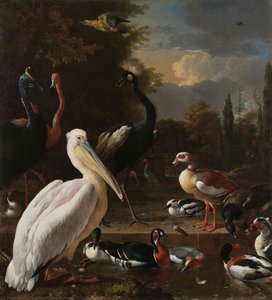
The Floating Feather

- 159.0 x 144.0 cm


A vibrant collection of exotic bird species gathers around a pond in this 1680 Baroque masterpiece by Melchior De Hondecoeter and you can bring this exquisite piece of Dutch Golden Age history into your home.
 Lees meer
Explore Melchior de Hondecoetter’s exquisite bird paintings! Dutch animalier known for dynamic compositions of exotic birds & landscapes, a Baroque master.
Giclée / Kunstafdrukken
Giclée- of canvasafdruk van museumkwaliteit met een snelle productie en flexibele afwerkingsmogelijkheden. ( Bestel handgeschilderde reproductie Schakel over naar digitale afbeeldingen)




P118B €10

P118H €10

P118W €10

P438Z €10

P508JH €12

P508YH €12

P805H €10

P805Z €10

P919BZ €10

P919G €10

P919XJ €10

P959ZH €10

P968JZ €12

W106C €8

W218G €10

W218JH €8

W218Y €10

W307PJ €10

W316G €10

W316PJ €8

W316Y €10

W398PJ €8

W4111J €10

W500HY €15

W500JH €15

W692G €12

W849H €8

W940BG €15

W953PJ €8




Standaardformaat
op maat gemaakt
CM
INCH
Kies uit onze vooraf ingestelde maten die overeenkomen met de originele verhoudingen van het kunstwerk.
Loading sizes...

breedte
hoogte
Voer de gewenste breedte en hoogte in, passend bij uw lijst of muur. Een afdruk kan alleen worden ingekort en nooit groter worden gemaakt dan het origineel; een formaat met andere verhoudingen zal daarom een deel van de afbeelding verliezen. Wij sturen u een digitaal mockup ter goedkeuring voordat we tot drukwerk overgaan. De afbeelding op deze pagina toont niet de werkelijke uitsnede — dit is alleen te zien op het mockup.
Wereldwijde levering () binnen 2 weken in plaats van de standaard 4/5 weken. (5 november)

Gratis wereldwijde expressverzending

Hoogwaardig linnen canvas

Volledige verzendverzekering

Garantie op terugbetaling van invoerrechten

Garantie op exacte kleurweergave

Retourbeleid van 100 dagen (alleen bij defecten)

100% Geld-terug-garantie

Korting bij meerdere afnames
 De optie voor glas is alleen beschikbaar bij een formaat kleiner dan 110 cm.

The Floating Feather
Giclée / Kunstafdrukken
Afmetingen reproductie
-


Eindtotaal
€ 62
Melchior De Hondecoeter's The Floating Feather is a captivating oil on canvas painting that showcases the artist's exceptional skill in capturing the beauty and diversity of nature. Created in 1680, this masterpiece is housed at the Rijksmuseum Amsterdam, Netherlands.
A Vivid Depiction of Nature
The painting measures 159 x 144 cm and presents a lively scene of various bird species gathered around a water basin. At least 13 different bird species are depicted, each with its unique features and colors. Some birds stand on rocks or branches, while others perch on the ground, creating an interactive atmosphere. In addition to the birds, a person is present in the painting, observing the flock from a distance. This human presence adds an element of interaction between humans and nature, enhancing the natural beauty and charm of the scene.Artistic Significance
Melchior De Hondecoeter was renowned for his bird paintings, and The Floating Feather is one of his most celebrated works. The painting demonstrates his ability to capture the intricate details of birds and their natural habitats. The artist's use of oil on canvas allows for a rich and vibrant color palette, bringing the scene to life.Other Works by Melchior De Hondecoeter
Melchior De Hondecoeter created several other notable paintings, including A Pelican and other Birds near a Pool, Known as ‘The Floating Feather’, which is also housed at the Rijksmuseum Amsterdam. Another significant work is Ducks, measuring 93 x 116 cm.Reproductions Available
For art enthusiasts and collectors, TopImpressionists offers high-quality, handmade oil painting reproductions of Melchior De Hondecoeter's works. Visit https://TopImpressionists.com to explore these beautiful pieces and bring a touch of history into your home.- The Floating Feather by Melchior De Hondecoeter
- A Pelican and other Birds near a Pool, Known as ‘The Floating Feather’ by Melchior De Hondecoeter
- Ducks by Melchior De Hondecoeter
Veelgestelde vragen
Is "The Floating Feather" een van de meest populaire werken van Melchior De Hondecoetter?
"The Floating Feather" door Melchior De Hondecoetter heeft een populariteitsniveau van Iconic. Deze classificatie weerspiegelt hoe breed het werk wordt erkend.
Welke afmeting moet ik kiezen voor de print van "The Floating Feather" in mijn kamer?
Voor een Living Room is de aanbevolen afmeting voor de print van "The Floating Feather" door Melchior De Hondecoetter Large.
In welke periode van de carrière van Melchior De Hondecoetter valt "The Floating Feather"?
Binnen de carrière van Melchior De Hondecoetter valt "The Floating Feather" in de Mature Period. Deze fase helpt om het werk te vergelijken met andere werken van de kunstenaar.
Biografie kunstenaar
The Avian Majesty of Melchior de Hondecoeter
In the golden twilight of the Dutch Golden Age, few artists captured the vibrant pulse of the natural world as vividly as Melchior de Hondecoeter. A master of the Baroque era, his brush possessed a rare alchemy, capable of transforming mere pigment into the iridescent sheen of a peacock’s plume or the delicate, translucent down of a songbird. Born in Utrecht around 1636, Hondecoetter emerged not merely as a painter of animals, but as a storyteller of the exotic and the magnificent. His work serves as a window into a century defined by global exploration, where the arrival of rare species from distant lands ignited a profound fascination with the wonders of the natural order.
The foundation of his extraordinary talent was laid through rigorous discipline and an unwavering commitment to anatomical truth. Apprenticeship under the esteemed Willem van Royen provided him with the technical scaffolding necessary to master the complexities of light and shadow. Yet, Hondecoetter’s genius lay in his ability to transcend mere scientific documentation. While he approached his subjects with the precision of a naturalist—studying musculature and skeletal structure with almost clinical devotion—he infused every composition with a theatrical energy characteristic of the Baroque movement. His canvases are never static; they are stages where birds interact, preen, and take flight amidst lush, atmospheric landscapes.
A Symphony of Color and Motion
To gaze upon a Hondecoeter masterpiece is to experience a sensory deluge. He rejected the muted, somber palettes that often characterized much of Dutch genre painting, opting instead for a bold, expressive use of color that commands the viewer's attention. His technique was a sophisticated balance of precise observation and expressive bravura. Through masterful rendering of texture, he could differentiate between the heavy, waxy surface of a waterfowl’s wing and the soft, airy lightness of a forest dweller. This tactile quality creates an immersive experience, pulling the observer into a world where the rustle of feathers feels almost audible.
The development of his style saw him move toward increasingly complex and dynamic compositions. He became renowned for his ability to arrange multiple subjects within a single frame, creating a sense of organized chaos that mirrors the untamed beauty of nature. These works often featured:
- Exoticism: The inclusion of rare, brightly colored birds that symbolized wealth, discovery, and the expanding horizons of the Dutch Republic.
- Dramatic Lighting: A use of chiaroscuro that highlighted the intricate details of plumage while casting deep, mysterious shadows in the surrounding foliage.
- Narrative Depth: Scenes that suggested a larger story, whether it be a moment of predatory tension or a peaceful interlude in a sun-drenched garden.
Legacy and Historical Significance
Melchior de Hondecoeter’s influence extended far beyond the borders of the Netherlands. As an animalier, he helped establish a specialized genre that would captivate collectors across Europe, from the courts of kings to the homes of wealthy merchants. His ability to marry scientific accuracy with high art ensured that his work was valued both for its aesthetic splendor and its contribution to the era's burgeoning interest in natural history.
Though his life ended in 1695, his artistic footprint remains indelible. He did not simply paint birds; he elevated them to subjects of profound dignity and drama. In an age of discovery, Hondecoeter acted as a visual chronicler of the earth's splendor, leaving behind a legacy of canvases that continue to breathe with life, color, and an eternal sense of wonder. His work remains a testament to the power of art to bridge the gap between the observed world and the human imagination.
Melchior De Hondecoetter
1636 - 1695
Belangrijkste feiten
- Full Name: Melchior de Hondecoetter
- Nationality: Dutch
- Date Of Birth: 1636
- Date Of Death: 1695
- Place Of Birth: Utrecht, Netherlands
- Notable Artworks:
- A Cock
- The Menagerie
- Birds, Butterflies and a Frog Among Plants and Fungi
- Artistic Movement Or Style: Baroque
- Artists Who Influenced This Artist: ['None Known']
- Artists Or Movements Influenced By This Artist: ['William Hendrik Wilhemus van Royen']
Gerelateerde artikelen

Top 10 Nederlandse Barok Meesterwerken: Kunstgeschiedenis voor uw Interieur
Ontdek de 10 meest iconische meesterwerken van de Nederlandse Barok! Leer over Rembrandt, Vermeer en andere Hollandse meesters. Prachtige reproducties voor uw interieur op TopImpressionists.com – museumkwaliteit kunstprints & decoratie.

Top 10 Meesterwerken van de Gouden Eeuw: Kunst voor uw interieur | TopImpressionists.nl
Ontdek de 10 meesterwerken van de Gouden Eeuw! Leer over Rembrandt, Vermeer & andere Hollandse schilders. Prachtige kunst reproducties voor uw interieur. Museumkwaliteit prints op TopImpressionists.com.

Golden Age Reflections: Dutch Baroque Painting & Cultural Innovation
Explore the Dutch Golden Age of painting! Discover key artists like Vermeer & ter Borch, their innovative techniques, and the rich cultural context behind these Baroque masterpieces. Learn about collecting & appreciating this iconic art period.

Illuminating Realism: Exploring the Dutch Golden Age of Painting (1600-1700)
Explore the Dutch Golden Age of painting (1600-1700) with TopImpressionists. Discover Rembrandt, Vermeer & other masters. Learn about techniques, history & find museum-quality reproductions.

Illuminating Innovation: Exploring the Dutch Golden Age of Painting
Explore the Dutch Golden Age of painting with TopImpressionists. Discover Rembrandt, Vermeer & other Masters. Learn about key characteristics, iconic artworks, and lasting influence. Expert insights for collectors & enthusiasts.