


 Voorvertoning
 Verstuur
 Delen
Delen
 Details bekijken
 Gids
Gids

 Download
 Vergelijkbare items
 Röntgenonderzoek
 Diavoorstelling
 Q&A
Q&A Statistieken
Tafel voor het raam
 Acryl op canvas
- Wanddecoratie
- Cubisme Synthetique
 1919
1919- Moderne tijd
 31.0 x 22.0 cm
Een dynamische collage van Picasso die de essentie van het zien vangt, niet noodzakelijk hoe iets is. Ontdek zijn stijl en invloed!
 Lees meer
Pablo Picasso (1881-1973) was een revolutionaire Spaanse schilder en beeldhouwer, medeoprichter van het kubisme en meester van diverse stijlen. Bekend om iconische werken zoals Guernica, blijft zijn nalatenschap inspireren.
De kunstwerken die op deze pagina worden weergegeven, zijn beschermd door de auteursrechtwetgeving, wat betekent dat het ons wettelijk niet is toegestaan om identieke reproducties te maken of te verkopen. Deze bescherming wordt gehandhaafd onder internationale overeenkomsten zoals de Conventie van Bern en door nationale wetgeving, waaronder de bepalingen van de Amerikaanse auteurswet - Titel 17. Alle rechten voorbehouden. Reproduceren of distribueren van afbeeldingen is niet toegestaan zonder uitdrukkelijke schriftelijke toestemming van WahooArt.com en de rechthebbenden.
Deze methode voldoet volledig aan de auteursrechtwetgeving, omdat het niet gaat om het kopiëren of dupliceren van het beschermde kunstwerk. In plaats daarvan is er sprake van een creatieve herinterpretatie — een nieuw schilderij dat door het origineel wordt geïnspireerd, maar er niet identiek aan is.
Giclée / Kunstafdrukken
Giclée- of canvasafdruk van museumkwaliteit met een snelle productie en flexibele afwerkingsmogelijkheden. ( Bestel handgeschilderde reproductie Schakel over naar digitale afbeeldingen)




P118B €10

P118H €10

P118W €10

P438Z €10

P508JH €12

P508YH €12

P805H €10

P805Z €10

P919BZ €10

P919G €10

P919XJ €10

P959ZH €10

P968JZ €12

W106C €8

W218G €10

W218JH €8

W218Y €10

W307PJ €10

W316G €10

W316PJ €8

W316Y €10

W398PJ €8

W4111J €10

W500HY €15

W500JH €15

W692G €12

W849H €8

W940BG €15

W953PJ €8




Standaardformaat
op maat gemaakt
CM
INCH
Kies uit onze vooraf ingestelde maten die overeenkomen met de originele verhoudingen van het kunstwerk.
Loading sizes...

breedte
hoogte
Voer de gewenste breedte en hoogte in, passend bij uw lijst of muur. Een afdruk kan alleen worden ingekort en nooit groter worden gemaakt dan het origineel; een formaat met andere verhoudingen zal daarom een deel van de afbeelding verliezen. Wij sturen u een digitaal mockup ter goedkeuring voordat we tot drukwerk overgaan. De afbeelding op deze pagina toont niet de werkelijke uitsnede — dit is alleen te zien op het mockup.
Wereldwijde levering () binnen 2 weken in plaats van de standaard 4/5 weken. (29 oktober)

Gratis wereldwijde expressverzending

Hoogwaardig linnen canvas

Volledige verzendverzekering

Garantie op terugbetaling van invoerrechten

Garantie op exacte kleurweergave

Retourbeleid van 100 dagen (alleen bij defecten)

100% Geld-terug-garantie

Korting bij meerdere afnames
 De optie voor glas is alleen beschikbaar bij een formaat kleiner dan 110 cm.

Tafel voor het raam
Giclée / Kunstafdrukken
Afmetingen reproductie
-


Eindtotaal
€ 62
Table in Front of Window by Pablo Picasso – A Fragmented Symphony of Light and Life
Pablo Picasso’s “Table in Front of Window,” painted in 1919, isn't merely a depiction of an interior scene; it’s a vibrant, almost frantic exploration of form, color, and the very nature of perception. Created during his pivotal period of Synthetic Cubism, this collage-like painting embodies the movement’s radical departure from traditional representation, inviting viewers to actively participate in constructing meaning rather than passively receiving it. The artwork, measuring a modest 31 x 22 centimeters, belies its small scale with an astonishing density of imagery – a man playing the guitar, a woman seated gracefully, a boat sailing on a distant horizon, and fragments of other objects all vying for attention within a shallow, almost claustrophobic space. It’s a scene brimming with life, yet simultaneously imbued with a sense of unsettling dislocation. The heart of Picasso's Synthetic Cubism lies in its deliberate fragmentation and reassembly of recognizable forms. He doesn’t attempt to create a single, unified image; instead, he breaks down objects into their geometric components – planes, angles, and lines – and then reconstructs them in an abstract manner. The guitar player, for instance, is rendered as a collection of overlapping triangles and rectangles, while the woman's figure dissolves into a series of fragmented shapes. This technique wasn’t born from a desire to distort reality but rather to capture its essence—the way we *see* things, not necessarily how they *are*. Picasso was fascinated by the simultaneous presentation of multiple viewpoints, as if he were offering us a fractured glimpse into a single moment in time. The inclusion of a window itself is crucial; it acts as a portal, framing the scene and suggesting an external reality that remains tantalizingly out of reach. The color palette further contributes to the painting’s dynamic energy. Picasso employs a bold, vibrant range of hues – blues, greens, yellows, and reds – often applied in flat, unmodulated blocks. This contrasts sharply with the muted tones typically associated with earlier Cubist works. The colors aren't used realistically; they are employed expressively, to heighten the emotional impact of the scene and create a sense of visual excitement. Notice how the blues dominate the background, creating a feeling of depth and distance, while warmer colors – reds and yellows – are concentrated in the foreground, drawing the viewer’s eye towards the central figures. This strategic use of color guides our gaze and shapes our interpretation of the composition. The historical context surrounding “Table in Front of Window” is inextricably linked to Picasso's engagement with Paul Cézanne’s late works. Cézanne’s emphasis on geometric forms and multiple perspectives profoundly influenced Picasso, encouraging him to explore ways of representing three-dimensional space on a two-dimensional surface. However, unlike Cézanne, who sought to capture the underlying structure of objects, Picasso deliberately distorted and fragmented these forms, creating an entirely new visual language. The painting also reflects the broader artistic currents of the time – the rise of Dadaism and Surrealism, which challenged traditional notions of representation and explored the subconscious mind. It’s a pivotal work demonstrating the artist's evolution towards abstraction while retaining elements of recognizable imagery. Beyond its formal innovations, “Table in Front of Window” possesses a powerful emotional resonance. The scene evokes a sense of domestic tranquility juxtaposed with an underlying tension—a feeling that something is about to happen or has already happened. The figures seem caught in a moment of contemplation, their gazes directed towards the distant horizon. The inclusion of the boat, sailing on the water, suggests themes of travel, adventure, and perhaps even longing. Picasso’s masterful use of color and composition creates a dynamic interplay between these elements, generating a complex and layered emotional experience for the viewer. It's a painting that invites us to linger, to observe, and to interpret its fragmented beauty—a testament to Picasso’s genius and his enduring legacy as one of the most influential artists of the 20th century.Pablo Picasso – A Biographical Sketch
Born in Málaga, Spain, in 1881, Pablo Ruiz y Picasso (later known simply as Picasso) was a prodigious talent from an early age. His father, José Ruiz y Blasco, a respected art teacher and painter, recognized his son’s exceptional abilities and provided him with rigorous training in drawing and painting. Picasso's childhood was marked by both artistic success and personal tragedy – the loss of his sister at the age of seven profoundly impacted his life and work. He moved to Barcelona and later Paris, immersing himself in the vibrant art scene of the early 20th century. Throughout his illustrious career, Picasso experimented with a vast array of styles and techniques, constantly pushing the boundaries of artistic expression. He is considered a pioneer of Cubism, alongside Georges Braque, developing this revolutionary movement that shattered traditional notions of perspective and representation. His work spanned numerous periods – from the early Blue Period characterized by melancholic blues and monochromatic tones to the vibrant Rose Period depicting circus performers and harlequins, and culminating in his groundbreaking explorations of Synthetic Cubism, Surrealism, and beyond. Picasso’s prolific output—over 13,500 paintings, prints, sculptures, ceramics, and other works—solidifies his position as one of history's most celebrated artists.Additional Insights – A Deeper Dive
The painting’s construction reveals a meticulous process of layering and collage. Picasso often worked directly on the canvas, applying paint with broad brushstrokes and using techniques such as *alla prima* (wet-on-wet) to create spontaneous effects. However, he also employed collage elements—fragments of newspaper, fabric, and other materials—to add texture and visual interest to his compositions. This practice was particularly prevalent during his period of Synthetic Cubism, where he sought to integrate diverse sources of imagery into a single artwork. Furthermore, Picasso’s use of perspective is deliberately ambiguous. He avoids creating a clear sense of depth or spatial relationships, instead opting for a flattened, almost theatrical presentation of the scene. This technique contributes to the painting's overall feeling of disorientation and invites viewers to question their own assumptions about how things are represented in art. The influence of Cézanne’s emphasis on geometric forms is evident in Picasso’s use of simplified shapes and planes, but he departs from Cézanne’s more restrained approach by employing a bolder color palette and incorporating collage elements.- Key Influences: Paul Cézanne, Impressionism, Post-Impressionism
- Movement: Synthetic Cubism
- Materials: Oil paint, collage elements (newspaper, fabric)
Where to Find Reproductions and Explore Further
High-quality reproductions of “Table in Front of Window” are readily available through various art dealers and online retailers. For a deeper understanding of Picasso’s artistic process and the context surrounding this painting, we recommend exploring these resources:- WikiArt: Table in front of window, 1919 - Pablo Picasso - WikiArt.org
- TopImpressionists.com: Pablo Picasso
- Wikipedia: Pablo Picasso
Veelgestelde vragen
Tot welke stijl behoort "Tafel voor het raam"?
De kunststroming die verbonden is aan "Tafel voor het raam" door Pablo Picasso is Cubisme Synthetique. Deze classificatie plaatst het werk binnen een context van verwante kunstenaars en kunstwerken.
Uit welke periode stamt "Tafel voor het raam"?
"Tafel voor het raam" door Pablo Picasso dateert uit de Moderne tijd-periode. Deze classificatie plaatst het werk binnen de kunstgeschiedenis.
Uit welk land komt het Cubisme Synthetique werk "Tafel voor het raam"?
Het Cubisme Synthetique-werk "Tafel voor het raam" is vervaardigd door een kunstenaar uit Spanje.
Biografie kunstenaar
De Vroege Jaren en Fundamenten: Málaga tot Barcelona
Pablo Ruiz Picasso, een naam die onlosmakelijk verbonden is met de revolutie in de kunstwereld, zag het levenslicht op 25 oktober 1881 in het bruisende Málaga, Spanje. Vanaf zijn vroegste jeugd leek hij voorbestemd tot een creatief bestaan; er gaat zelfs de legende dat zijn eerste woorden “piz, piz” waren, een poging om ‘potlood’ te zeggen. Deze vroege aanleg werd met zorg gekoesterd door zijn vader, José Ruiz y Blasco, zelf een schilder en kunstleraar die Pablo de basisvaardigheden bijbracht. Al snel bleek echter dat de leerling zijn meester overtrof, met een opmerkelijke begaafdheid voor naturalistisch weergeven die de uitzonderlijke talenten van de jonge Picasso verraadde. De familie’s latere verhuizingen – eerst naar A Coruña en vervolgens Barcelona – werden gekenmerkt door persoonlijke tegenslagen, in het bijzonder het verlies van Picasso's zus, ervaringen die zijn latere werk subtiel zouden doordringen met thema’s als melancholie en sterfelijkheid. Zelfs tijdens zijn formele studies aan de School voor Schone Kunsten in Barcelona en een korte periode aan de Koninklijke Academie van San Fernando in Madrid botste Picasso op starre academische beperkingen, hij verkoos het zich onder te dompelen in het werk van meesters als Velázquez en Goya, waarmee hij zijn eigen pad naar artistieke vernieuwing insloeg.
De Blauwe en Roze Periodes: Emotie en Transformatie
Het begin van de 20e eeuw bracht twee duidelijke periodes voort in Picasso’s oeuvre: de Blauwe Periode (ongeveer 1901-1904) en de Roze Periode (1904-1906). De Blauwe Periode, geboren uit persoonlijke ontberingen en een scherp bewustzijn van sociaal lijden, wordt gekenmerkt door schilderijen die doordrenkt zijn van sombere tinten blauw en blauwgroen. Deze werken worden bevolkt door gemarginaliseerde figuren – bedelaars, blinden, prostituees – geschilderd met een aangrijpende empathie die spreekt over thema’s als isolatie en wanhoop. La Vie (1903) en The Old Guitarist (1903-1904) zijn treffende voorbeelden van deze emotioneel geladen fase. Een verschuiving in Picasso's persoonlijke leven, gecombineerd met een verhuizing naar Parijs, luidde het begin in van de Roze Periode. Het palet werd aanzienlijk warmer, met roze-, oranje- en rode tinten die een optimistischer perspectief weerspiegelden. Deze periode kenmerkte zich door fascinatie voor circusartiesten – harlekijnen, acrobaten en familiespelers – figuren die zowel kwetsbaarheid als veerkracht belichaamden. Family of Saltimbanques (1905) vat deze overgang prachtig samen, met een hint naar de stilistische ontdekkingen die nog zouden komen.
De Revolutie van het Cubisme: Een Nieuwe Visie op Realiteit
Het jaar 1907 markeerde een cruciaal moment in de kunstgeschiedenis met de creatie van Les Demoiselles d'Avignon. Geïnspireerd door Iberisch beeldhouwwerk en Afrikaanse maskers, brak dit baanbrekende schilderij met traditionele opvattingen over perspectief en representatie. Het was een radicale afwijking, een bewuste verwerping van eeuwenoude conventies die de weg vrijmaakte voor het Cubisme. In nauwe samenwerking met Georges Braque richtte Picasso deze revolutionaire beweging op, waarmee hij fundamenteel veranderde hoe kunstenaars de werkelijkheid waarnamen en weergafven. Analytisch Cubisme (1909-1912) omvatte de fragmentatie van objecten in geometrische vormen, geschilderd in gedempte kleuren, alsof de vorm zelf ontleed werd. Dit evolueerde naar Synthetisch Cubisme (1912-1919), dat collage-elementen – krantenknipsels, stoffresten – integreerde, waardoor textuur en nieuwe lagen van visuele complexiteit ontstonden. Picasso was niet tevreden met het simpelweg representeren van de wereld; hij zocht naar manieren om deze te deconstrueren en op eigen voorwaarden te reconstrueren.
Neoclassicisme, Surrealisme en de Echo’s van Oorlog
In de jaren twintig experimenteerde Picasso kort met neoklassieke stijlen, waarbij hij monumentale figuren creëerde die klassieke vormen echoën terwijl ze toch een onderscheidende moderne gevoeligheid behielden. Tegelijkertijd raakte hij betrokken bij de opkomende surrealistische beweging, hoewel hij zich er nooit volledig mee identificeerde. Zijn werk uit deze periode combineerde eerdere stilistische invloeden met surrealistische beelden en vervormde perspectieven, waarmee hij zijn onophoudelijke experimenteerdrift demonstreerde. De verschrikkingen van de Spaanse Burgeroorlog hadden een diepgaande impact op Picasso, wat culmineerde in de creatie van Guernica (1937), een intense en emotioneel verwoestende reactie op het bombardement van Guernica. Dit monumentale werk werd een blijvend symbool van de gruwelen van oorlog, waarmee Picasso's rol als niet alleen kunstenaar maar ook krachtige stem voor vrede en sociale rechtvaardigheid verstevigd werd. Gedurende de jaren vijftig en zestig bleef hij grenzen verleggen, met onvermoeibare nieuwsgierigheid en vaardigheid keramiek, beeldhouwwerk en grafische kunst verkennend. Zijn huwelijk met Jacqueline Roque in 1961 bracht een nieuwe dimensie aan zijn persoonlijke leven en artistieke expressie.
Een Onmeetbare Erfenis
Pablo Picasso overleed op 8 april 1973 in Mougins, Frankrijk, en liet een verbazingwekkend oeuvre achter – geschat op meer dan 50.000 stukken – dat nog steeds boeit en inspireert. Zijn artistieke ontwikkeling werd gevormd door een diverse reeks invloeden, van Spaanse meesters als Velázquez en Goya tot Iberisch beeldhouwwerk, Afrikaanse kunst en de levendige kleurenpaletten van Henri Matisse. Zijn impact op de kunst van de 20e eeuw is onmeetbaar. Hij richtte het Cubisme op, was een pionier in collage en geconstrueerd beeldhouwwerk, en daagde voortdurend artistieke conventies uit. Picasso’s meedogenloze experimenteerdrift herdefinieerde de moderne kunst, waarmee hij een onuitwisbare stempel drukte op generaties kunstenaars en zijn positie als een van de belangrijkste en invloedrijkste figuren in de geschiedenis verstevigde. Zijn nalatenschap reikt verder dan het canvas, resoneert in talloze aspecten van de hedendaagse cultuur en herinnert ons aan de transformerende kracht van artistieke visie.

Pablo Picasso
1881 - 1973 , Spanje
Belangrijkste feiten
- Artistic Movement Or Style:
- Cubisme
- Surrealisme
- Artists Or Movements Influenced By This Artist:
- Cubisme
- Moderne kunst
- Artists Who Influenced This Artist:
- Velázquez
- Goya
- Matisse
- Date Of Birth: 25 oktober 1881
- Date Of Death: 8 april 1973
- Full Name: Pablo Diego José Ruiz Picasso
- Nationality: Spaans
- Notable Artworks:
- Les Demoiselles d'Avignon
- Guernica
- The Old Guitarist
- La Vie
- Family of Saltimbanques
- Place Of Birth: Málaga, Spanje
Gerelateerde artikelen

Pablo Picasso: A Revolutionary Vision – Cubism, Symbolism & Enduring Legacy
Explore the revolutionary art of Pablo Picasso with TopImpressionists.com. Discover Cubism's origins, symbolism in his masterpieces & investment insights for collectors. Expert appraisal & custom reproductions available.

Deconstructing Reality: A Comprehensive Exploration of Synthetic Cubism's Evolution & Impact
Explore the revolutionary world of Synthetic Cubism! Discover its origins, key artists like Picasso & Braque, techniques, and lasting impact on modern art. A comprehensive guide for enthusiasts.

Deconstructing Reality: Cubism's Revolutionary Impact on 20th-Century Art
Explore the revolutionary world of Cubism with TopImpressionists. Discover Picasso & Braque's groundbreaking techniques, its philosophical roots, and lasting impact on modern art. Expert insights for collectors.

Cubism Unveiled: How Picasso and Braque Redefined Reality Through Geometric Abstraction
Explore the revolutionary world of Cubism. Discover how masters Pablo Picasso and Georges Braque dismantled reality through geometric abstraction to redefine modern art history.
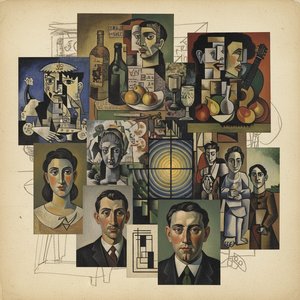
Top 10 Cubistische Meesterwerken: Kunstgeschiedenis voor aan de Muur | TopImpressionists
Ontdek de 10 meest invloedrijke kubistische meesterwerken van Picasso, Braque & meer. Leer over kunstgeschiedenis en technieken achter deze iconische werken. Museumkwaliteit reproducties op TopImpressionists.com!
Ontdek kunstwerken georganiseerd op thema, stijl en kenmerk.


