


 Bekijk op ware grootte
 Verstuur
 Delen
Delen
 Details bekijken
 Gids voor studentenkunstwerken

 Download
 Vergelijkbare items
 Röntgenonderzoek
 Diavoorstelling
 Statistieken
The Black Marble Clock
 Oil On Canvas
- WallArt
- Post-Impressionism
 1870
1870- Modern
 55.0 x 74.0 cm
Paul Cézanne's 'The Black Marble Clock' (1870) is a seminal still life, showcasing his innovative geometric approach & bridging Impressionism to Cubism. Explore its rich details and artistic significance with TopImpressionists’s hand-painted reproductions.
 Lees meer
De Evolutie van een Stijl</h2>
Cézannes vroege werk weerspiegelde vaak de dramatische
Giclée / Kunstafdrukken
Giclée- of canvasafdruk van museumkwaliteit met een snelle productie en flexibele afwerkingsmogelijkheden. ( Koop handgeschilderd kunstwerk Schakel over naar digitale afbeeldingen)




P118B €10

P118H €10

P118W €10

P438Z €10

P508JH €12

P508YH €12

P805H €10

P805Z €10

P919BZ €10

P919G €10

P919XJ €10

P959ZH €10

P968JZ €12

W106C €8

W218G €10

W218JH €8

W218Y €10

W307PJ €10

W316G €10

W316PJ €8

W316Y €10

W398PJ €8

W4111J €10

W500HY €15

W500JH €15

W692G €12

W849H €8

W940BG €15

W953PJ €8




Standaardformaat
op maat gemaakt
CM
INCH
Kies uit onze vooraf ingestelde maten die overeenkomen met de originele verhoudingen van het kunstwerk.
Loading sizes...

breedte
hoogte
Voer de breedte en de hoogte in die u nodig heeft, passend bij uw lijst of uw muur. Een afdruk kan alleen worden ingekort, nooit groter worden gemaakt dan het origineel, waardoor een formaat met een andere verhouding een deel van de afbeelding verliest. Wij sturen u een digitaal mockup ter goedkeuring voordat we iets drukken. De afbeelding op deze pagina toont niet de werkelijke uitsnede — dit is alleen te zien op het mockup.
Wereldwijde levering () binnen 2 weken in plaats van de standaard 4/5 weken. (21 oktober)

Gratis wereldwijde expressverzending

Hoogwaardig linnen canvas

Volledige verzendverzekering

Garantie op terugbetaling van invoerrechten

Garantie op exacte kleurweergave

Retourbeleid van 100 dagen (alleen bij defecten)

100% Geld-terug-garantie

Korting bij meerdere afnames
 De optie voor glas is alleen beschikbaar bij een formaat kleiner dan 110 cm.

The Black Marble Clock
Giclée / Kunstafdrukken
Formaat reproductie
-


Totaalprijs
€ 61
Paul Cézanne’s Timeless Still Life: The Black Marble Clock
Paul Cézanne's The Black Marble Clock, painted around 1870, isn’t merely a depiction of objects; it’s a carefully constructed meditation on time, form, and the quiet beauty of everyday life. This remarkable work, housed in a private collection, exemplifies Cézanne’s pivotal role as a bridge between Impressionism and the burgeoning movements that would reshape 20th-century art. It's a painting that invites prolonged contemplation, revealing layers of meaning through its deceptively simple arrangement.
Cézanne, deeply influenced by the Romantic landscape painters who preceded him, initially sought to capture fleeting moments of light and atmosphere – a characteristic of Impressionism. However, he soon began to move beyond mere representation, driven by an intense desire to understand the underlying structure of reality. He meticulously studied the solidity of objects, their geometric forms, and how they interacted with space. This pursuit led him to develop a unique style characterized by flattened perspectives, bold outlines, and a deliberate manipulation of color—a departure from the Impressionists’ focus on capturing transient effects.
Composition and the Language of Form
The painting itself is remarkably restrained in its palette – primarily muted grays, whites, and blacks punctuated by the vibrant yellow of the oranges. Against this subdued backdrop, Cézanne presents a carefully orchestrated still life: a gleaming black marble clock dominates the center, flanked by a delicate porcelain cup, a simple bowl, a vase holding what appears to be a single flower (though details are deliberately obscured), a book, and two perfectly ripe oranges. Notice how he doesn’t simply place these objects; he arranges them with an almost architectural precision, creating a sense of balance and harmony that feels both formal and deeply natural.
Cézanne's innovative approach to composition is key to understanding the painting’s significance. He breaks away from traditional perspective by depicting multiple viewpoints simultaneously—a technique that anticipates Cubism. The clock, for instance, appears to be viewed from several angles at once, suggesting a simultaneous awareness of time and space. The objects themselves are rendered with simplified forms, almost as if Cézanne is distilling them down to their essential geometric shapes. This deliberate reduction emphasizes the underlying structure of the scene rather than its superficial appearance.
A Reflection of Artistic Philosophy
The Black Marble Clock isn’t just a beautiful object; it's a manifesto for Cézanne’s artistic philosophy. He wasn’t interested in simply recording what he saw, but in exploring how he *perceived* the world. His work represents a shift from capturing fleeting impressions to constructing a more enduring and intellectually rigorous representation of reality. This painting is considered a cornerstone in the development of modern art, laying the groundwork for movements like Cubism by challenging traditional notions of perspective and form.
Symbolic Resonance and Enduring Appeal
While Cézanne himself rarely offered explicit interpretations of his paintings, The Black Marble Clock resonates with themes of time, mortality, and the beauty of the mundane. The black marble clock, a symbol of measured time, contrasts sharply with the vibrant oranges, representing life’s fleeting pleasures. The arrangement suggests a quiet contemplation—a moment to pause and appreciate the simple elegance of everyday objects. It's this ability to evoke such profound emotion from a seemingly straightforward subject that makes Cézanne’s work so enduringly captivating.
For art enthusiasts seeking a glimpse into the evolution of modern art, or for those looking to incorporate a touch of timeless elegance into their homes, TopImpressionists.com offers exceptional hand-painted reproductions of The Black Marble Clock by Paul Cézanne. Explore our collection today and bring this masterpiece into your space.
- The Black Marble Clock by Paul Cézanne on TopImpressionists.com.
- Sugar Bowl, Pears and Blue Cup by Paul Cézanne on TopImpressionists.com.
- Paul Cézanne on Wikipedia.
Vragen & Antwoorden
Hoe intens zijn de kleuren van "The Black Marble Clock"?
De kleur van "The Black Marble Clock" heeft een verzadiging van Muted en een intensiteit van Monochromatic.
Hoe oud was Paul Cézanne bij het creëren van "The Black Marble Clock" in 1870?
Toen "The Black Marble Clock" werd gemaakt in 1870, was Paul Cézanne - geboren in 1839 - 31 jaar oud.
Welke afmeting moet ik kiezen voor de print van "The Black Marble Clock" in mijn kamer?
De aanbevolen combinatie voor "The Black Marble Clock" door Paul Cézanne: een afdruk van Medium in een Living Room.
Gerelateerde kunstwerken


Biografie van de kunstenaar
Een Revolutionaire Visie: Het Leven en Werk van Paul Cézanne
Paul Cézanne, geboren in Aix-en-Provence in 1839, staat als een monumentale figuur die de kloof overbrugt tussen de vluchtige impressies van het Impressionisme en de gefragmenteerde vormen van het Kubisme. Zijn weg was er geen van onmiddellijke erkenning; eerder was het een langzaam smeulen van artistieke exploratie, gekenmerkt door periodes van zelfvertwijfeling en kritische afwijzing, die uiteindelijk culmineerde in een nalatenschap die de loop van de moderne kunst voorgoed zou veranderen. Geboren in een welvarende familie – zijn vader aanvankelijk hoedenmaker, later bankier – genoot Cézanne een financiële zekerheid die ongebruikelijk was voor beginnende kunstenaars, waardoor hij zich zonder de directe druk van commercieel succes aan zijn passie kon wijden. Hoewel aanvankelijk gestuurd in de richting van een juridische carrière door de ambities van zijn vader, bleek de aantrekkingskracht van artistieke expressie te sterk en verliet hij uiteindelijk het recht om zich toe te leggen op schilderen, een beslissing die zijn leven zou definiëren. Vroege invloeden waren onder meer het Romantisme dat in zijn jeugd heerste en de toewijding van de Barbizonschool aan het landschap, maar juist door ontmoetingen met kunstenaars als Paul Gauguin en Georges Seurat, en hun innovatieve benaderingen van kleur en vorm, begon Cézanne zijn eigen unieke pad te smeden.Van Duisternis tot Structuur: De Evolutie van een Stijl
Cézannes vroege werk weerspiegelde vaak de dramatische, emotioneel geladen thema's die kenmerkend waren voor het Romantische schilderij – donkere paletten en expressieve penseelstreken domineerden zijn doeken. Deze eerste fase was echter slechts een opstapje naar een veel analytischere en baanbrekende benadering. Ontevreden met het eenvoudig vastleggen van vluchtige impressies van licht, zoals de Impressionisten dat graag deden, begon Cézanne aan een zoektocht om de onderliggende structuur van objecten zelf te begrijpen en weer te geven. Hij zocht niet alleen *wat* hij zag, maar *hoe* hij de fundamentele vormen die de werkelijkheid vormden waarnam. Dit leidde hem ertoe natuurlijke vormen af te breken tot hun geometrische equivalenten – kegels, cilinders, sferen – en zo decennia voor het materialiseren van de Kubistische revolutie een voorsprong te nemen. Zijn techniek kenmerkte zich door kleine, repetitieve penseelstreken, minutieus gelaagd om complexe velden van kleur en textuur op te bouwen, waardoor een gevoel van soliditeit en diepte ontstond dat voorheen onbekend was in de schilderkunst. Hij was niet geïnteresseerd in illusionistische ruimte; in plaats daarvan presenteerde hij vaak objecten vanuit meerdere standpunten tegelijkertijd, waarmee hij traditionele opvattingen over perspectief uitdaagde en de kijker dwong om actief betrokken te raken bij de geconstrueerde aard van zijn composities. Deze bewuste vervorming was niet willekeurig, maar eerder een poging om een completer begrip van vorm over te brengen, waarbij niet slechts één moment in de tijd werd weergegeven, maar een synthese van waarneming.Landschappen, Stille levens en de Menselijke Vorm: Sleutelwerken en Terugkerende Motieven
Cézannes oeuvre is opmerkelijk divers, omvattende landschappen, stille levens, portretten en afbeeldingen van baders, maar ze zijn allemaal verenigd door zijn unieke benadering van vorm en kleur. De Vijver bij Jas de Bouffan, geschilderd in 1880, is een voorbeeld van zijn landschapswerk, waarin hij zijn vermogen laat zien om de essentie van de natuur vast te leggen door middel van een zorgvuldige ordening van vormen en tonen. Portret van Émile Zola, gemaakt in 1866, onthult zijn ontwikkelende stijl en biedt een overtuigende blik op de intellectuele intensiteit van zijn nauwe vriend en medeschrijver. Zijn stille levens, zoals die met appels en ander fruit, zijn niet slechts representaties van objecten, maar eerder exploraties van volume, licht en ruimtelijke relaties. De Mont Sainte-Victoire serie werd een obsessie voor Cézanne, een terugkerend motief dat hem decennialang in staat stelde om vorm en perspectief meedogenloos te onderzoeken. Deze schilderijen zijn niet simpelweg afbeeldingen van een berg; het zijn studies naar hoe we diepte, volume en het samenspel van licht en schaduw waarnemen. Ten slotte vertegenwoordigen zijn serie Baders, met naakte figuren in idyllische landschappen, een diepgaande verkenning van de menselijke vorm en haar verbinding met de natuur, vaak doordrenkt van een gevoel van tijdloosheid en stille contemplatie.Een Nalatenschap Gesmeed in Innovatie: Cézannes Invloed op de Moderne Kunst
De impact van Paul Cézanne op latere generaties kunstenaars is onmeetbaar. Hij wordt algemeen beschouwd als de “vader van de moderne kunst” vanwege zijn baanbrekende bijdragen aan de picturale taal, die de weg vrijmaakte voor veel van de belangrijkste artistieke bewegingen van de 20e eeuw. Pablo Picasso en Georges Braque waren diep in het schuld aan Cézannes nadruk op geometrische vormen en meervoudige perspectieven, die centrale pijlers werden van het Kubisme. Zijn gedurfde gebruik van kleur inspireerde ook de Fauvisten, onder leiding van kunstenaars als Henri Matisse, die levendige, on-naturalistische tinten omarmden. Zelfs surrealistische kunstenaars vonden weerklank in Cézannes verkenning van subjectieve waarneming en psychologische diepte. Voorbij specifieke bewegingen bevrijdde Cézannes nadruk op de persoonlijke visie van de kunstenaar en zijn afwijzing van traditionele academische beperkingen generaties schilders om nieuwe vormen van expressie te verkennen. Hij daagde de definitie van representatie uit, waarbij hij de focus verlegde van het nabootsen van de werkelijkheid naar het construeren van een visuele ervaring op basis van onderliggende structuur en subjectieve waarneming. Zijn dood in 1906 markeerde niet een einde, maar een begin – de dageraad van een nieuw tijdperk in de kunstgeschiedenis, diepgaand gevormd door zijn revolutionaire visie.
Paul Cézanne
1839 - 1906 , Frankrijk
Snelle feiten
- Artistic Movement Or Style: Postimpressionisme
- Artists Or Movements Influenced By This Artist:
- Kubisme
- Fauvisme
- Surrealisme
- Artists Who Influenced This Artist:
- Romanticisme
- Barbizon school
- Paul Gauguin
- Georges Seurat
- Date Of Birth: 19 januari 1839
- Date Of Death: 23 oktober 1906
- Full Name: Paul Cézanne
- Nationality: Frans
- Notable Artworks:
- The Pond at Jas de Bouffan
- Portrait of Émile Zola
- Mont Sainte-Victoire series
- The Bathers
- Place Of Birth: Aix-en-Provence, Frankrijk
Gerelateerde artikelen
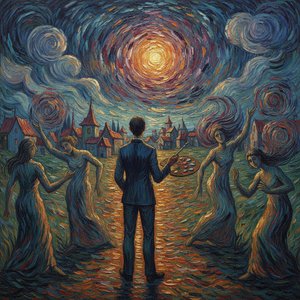
Beyond the Light: Capturing Emotion Through the Expressive Soul of Post-Impressionism
Explore the profound emotional depth of Post-Impressionism. Discover how masters like Van Gogh and Cézanne moved beyond light to capture raw feeling through color and texture. A journey into art history for the true connoisseur.
Ontdek kunstwerken georganiseerd op thema, stijl en kenmerk.


