


 Bekijk op ware grootte
 Verstuur
 Delen
Delen
 Details bekijken
 Gids voor studentenkunstwerken

 Download
 Vergelijkbare items
 Röntgenonderzoek
 Diavoorstelling
 Statistieken
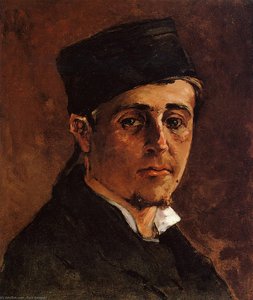
Self Portrait
 Acrylic On Canvas
- WallArt
- British Impressionism
 1920
1920 74.0 x 59.0 cm
 Fitzwilliam College
Philip Wilson Steer's "The President Woodrow Wilson House" captures a contemplative man in a suit, showcasing his signature Impressionistic style and masterful use of light & shadow. Explore this evocative portrait.
 Lees meer
Philip Wilson Steer (1860-1942) was een Brits impressionistisch kunstschilder, bekend om zijn prachtige landschappen en zeegezichten in een zilverachtige, doorzichtige licht. Hij werd beïnvloed door Manet & Whistler en staat bekend om werken in Tate & Uffizi.
Giclée / Kunstafdrukken
Giclée- of canvasafdruk van museumkwaliteit met een snelle productie en flexibele afwerkingsmogelijkheden. ( Koop handgeschilderd kunstwerk Schakel over naar digitale afbeeldingen)




P118B €10

P118H €10

P118W €10

P438Z €10

P508JH €12

P508YH €12

P805H €10

P805Z €10

P919BZ €10

P919G €10

P919XJ €10

P959ZH €10

P968JZ €12

W106C €8

W218G €10

W218JH €8

W218Y €10

W307PJ €10

W316G €10

W316PJ €8

W316Y €10

W398PJ €8

W4111J €10

W500HY €15

W500JH €15

W692G €12

W849H €8

W940BG €15

W953PJ €8




Standaardformaat
op maat gemaakt
CM
INCH
Kies uit onze vooraf ingestelde maten die overeenkomen met de originele verhoudingen van het kunstwerk.
Loading sizes...

breedte
hoogte
U kunt uw eigen afmetingen opgeven om in een specifieke lijst of ruimte te passen. Als de door u gekozen maat niet overeenkomt met de proporties van het originele kunstwerk, zullen wij de afbeelding bijsnijden of uitbreiden met een gespiegelde of effen rand. Een digitaal mockup wordt ter goedkeuring naar u verzonden voordat de productie begint.
Houd er rekening mee dat de preview op het scherm de werkelijke bijsneding of uitbreiding niet weergeeft. Alleen de mockup toont de uiteindelijke compositie nauwkeurig.
Hoewel aangepaste maten beschikbaar zijn, raden wij aan een afmeting uit de vooraf bepaalde lijst te kiezen om de originele proporties te behouden.
Wereldwijde levering () binnen 2 weken in plaats van de standaard 4/5 weken. (7 oktober)

Gratis wereldwijde expressverzending

Hoogwaardig linnen canvas

Volledige verzendverzekering

Garantie op terugbetaling van invoerrechten

Garantie op exacte kleurweergave

Retourbeleid van 100 dagen (alleen bij defecten)

100% Geld-terug-garantie

Korting bij meerdere afnames
 De optie voor glas is alleen beschikbaar bij een formaat kleiner dan 110 cm.

Self Portrait
Giclée / Kunstafdrukken
Formaat reproductie
-


Totaalprijs
€ 60
A Portrait of Quiet Intensity: Philip Wilson Steer’s “The President Woodrow Wilson House”
Philip Wilson Steer's "The President Woodrow Wilson House," painted in 1920, isn’t merely a depiction of a building; it’s a carefully constructed tableau brimming with subtle symbolism and imbued with the melancholic beauty characteristic of the artist. This oil-on-canvas work, measuring 74 x 59 cm, transports us to a moment suspended between formality and introspection – a visual poem reflecting on leadership, memory, and the quiet dignity of American history. Steer, a pivotal figure in British Impressionism, masterfully employs a muted palette dominated by greys, blues, and browns, creating an atmosphere of subdued light and contemplative stillness. The composition itself is deliberately restrained, focusing intently on the imposing façade of the Wilson House in Washington D.C., rendered with a remarkable sensitivity to texture and light.
The Impressionist’s Lens: Technique and Style
Steer's approach aligns closely with the tenets of Impressionism, yet he transcends simple replication. He doesn’t strive for photographic accuracy but rather captures an *impression* – a fleeting moment imbued with feeling. Notice how he utilizes broken brushstrokes to suggest the play of light on the stone walls and the subtle shifts in shadow. The artist's layering technique is particularly evident in the rendering of the building’s surface, where individual strokes coalesce to create a sense of depth and volume. Steer was deeply influenced by John Constable and J.M.W. Turner, artists known for their atmospheric landscapes and masterful use of light and color. This influence is palpable in Steer's ability to evoke a specific mood through his manipulation of tone and texture – a feeling of quiet contemplation and perhaps even a touch of wistful nostalgia.
Symbolism Within the Frame: Leadership and Reflection
The choice of subject matter—the Wilson House—is rich in symbolic potential. Woodrow Wilson, the 28th President of the United States, was a complex figure – lauded for his leadership during World War I but also criticized for his handling of racial issues at home. Steer’s painting doesn't offer a straightforward portrait of Wilson himself, instead focusing on the building that housed him and, by extension, representing the weight of responsibility and the enduring legacy of power. The muted colors and the solitary nature of the scene suggest a reflection on leadership itself – its burdens, its triumphs, and its inevitable passage of time. The composition’s stillness invites viewers to contemplate the unseen narratives contained within those walls.
A Legacy of Light: Steer's Influence and Artistic Context
Philip Wilson Steer was a significant figure in British art, bridging the gap between Impressionism and a more traditional English style. His work gained recognition during his time as a painting tutor at the Slade School of Fine Art, where he profoundly influenced generations of young artists. His exploration of coastal scenes, particularly those along the Suffolk coast, cemented his reputation for capturing the ethereal beauty of the British landscape. “The President Woodrow Wilson House” stands as a testament to Steer’s ability to imbue seemingly simple subjects with profound emotional resonance. It's a poignant reminder that even in grand architectural settings, moments of quiet contemplation and subtle symbolism can hold immense artistic value. Reproductions of this piece offer a captivating glimpse into the artist’s world and invite viewers to engage with the complexities of American history through the lens of Impressionist artistry.
Vragen & Antwoorden
In welke fase van de carrière van Philip Wilson Steer behoort "Self Portrait" (1920)?
De datum uit 1920 plaatst "Self Portrait" in de Late Period van de ontwikkeling van Philip Wilson Steer.
Op welke leeftijd maakte Philip Wilson Steer "Self Portrait"?
Toen "Self Portrait" werd gemaakt in 1920, was Philip Wilson Steer - geboren in 1860 - 60 jaar oud.
Welke techniek en stijl kenmerken "Self Portrait" door Philip Wilson Steer?
"Self Portrait" is vervaardigd in Acrylic On Canvas, in de British Impressionism-stijl.
Welke stemming straalt "Self Portrait" door Philip Wilson Steer uit binnen British Impressionism?
De Reflective emotie van "Self Portrait" gaat samen met de British Impressionism stijl.
In welk jaar werd "Self Portrait" door Philip Wilson Steer gemaakt?
"Self Portrait" door Philip Wilson Steer werd gemaakt in 1920.
Aan welke kunstenaar wordt "Self Portrait" toegeschreven?
De kunstenaar achter "Self Portrait" is Philip Wilson Steer. Het werk is gecatalogiseerd onder de naam van Philip Wilson Steer.
Bij welke kunststroming behoort "Self Portrait" door Philip Wilson Steer?
"Self Portrait" is een werk uit de British Impressionism. De stroming geeft de artistieke traditie aan waartoe het werk behoort.
Gerelateerde kunstwerken


Biografie van de kunstenaar
De Vroege Jaren en Artistieke Opleiding van Philip Wilson Steer
Philip Wilson Steer, geboren in Birkenhead in 1860, groeide op in een artistiek gezin; zijn vader was zowel portretschilder als toegewijd kunstleraar. Deze vroege blootstelling aan de kunsten bleek cruciaal voor zijn ontwikkeling, en voedde een gevoeligheid die zijn levenspad zou bepalen. Een verhuizing naar Whitchurch nabij Monmouth toen hij slechts drie jaar oud was, wekte een sterke band met het Britse platteland op, een connectie die in al zijn werk terugkomt. Zijn formele opleiding begon aan de Hereford Cathedral School, waar hij een solide basis legde voordat hij zich volledig aan zijn artistieke ambities wijdde. Steer vervolgde zijn studie aan de Gloucester School of Art en de South Kensington Drawing Schools, maar het was zijn verblijf in Parijs tussen 1880 en 1884 dat werkelijk transformatief bleek. Aan de Académie Julian en later onder Alexandre Cabanel aan de École nationale supérieure des beaux-arts kwam hij terecht in een wereld vol nieuwe ideeën en benaderingen van schilderen.De Omarming van het Impressionisme en een Eigen Stijl
Parijs werd een smeltkroes voor Steers artistieke ontwikkeling. Hij was diep onder de indruk van het werk van Édouard Manet en James McNeill Whistler, en absorbeerde hun innovatieve technieken om licht, kleur en sfeer vast te leggen. Deze ervaring ontketende een passie voor het Impressionisme in hem, maar hij kopieerde de stijl nooit slaafs. Steer wist deze Franse invloeden op meesterlijke wijze te combineren met zijn eigen Engelse gevoeligheden, waardoor hij een unieke stijl creëerde. Zijn schilderijen worden gekenmerkt door een opmerkelijk vermogen om vluchtige momenten vast te leggen – het spel van zonlicht op water, de vergankelijke kwaliteit van zeelucht. Hij gebruikte losse penseelstreken en levendige kleuren niet alleen om scènes af te beelden, maar ook om emoties op te roepen en een meeslepende indruk van directheid te creëren. Terugkerende thema’s in zijn werk zijn strandscènes en zeegezichten, vaak gehuld in zilverachtig, doorschijnend licht, wat zijn beheersing toont van het weergeven van de frisheid en helderheid van deze omgevingen. Vroege werken zoals The Music Room tonen al zijn groeiende vaardigheid in compositie en licht, terwijl stukken als Girls Running: Walberswick Pier barsten van energie en levendigheid, typerend voor een Suffolkse kustplaats.Een Voorvechter van Moderne Kunst en de Invloed van Étaples
Steer was meer dan alleen een schilder; hij speelde een actieve rol in het vormgeven van het artistieke landschap van Groot-Brittannië. Hij was medeoprichter van de New English Art Club, een organisatie die zich toelegde op het promoten van moderne kunstuitingen – een gedurfde stap in een tijd waarin traditionele smaken nog steeds de overhand hadden. Door dit platform en regelmatige tentoonstellingen bij de Royal Academy, waaronder deelname aan de baanbrekende London Impressionist Exhibition van 1889, hielp hij nieuwe ideeën te introduceren en conventionele normen uit te dagen. Zijn tijd in de kunstenaarskolonie van Étaples in 1887 verfijnde zijn artistieke visie verder. Deze levendige gemeenschap van kunstenaars bood een stimulerende omgeving voor experimenten en samenwerking, waardoor hij zijn vermogen om licht en sfeer met toenemende nuance en vaardigheid vast te leggen werd verstevigd. Steer liet zich inspireren door uiteenlopende meesters – John Constable, J.M.W. Turner en zelfs François Boucher – maar filterde deze invloeden altijd door zijn eigen unieke perspectief.Nalatenschap, Erkenning en Blijvende Invloed
Philip Wilson Steer bleef tot 1940 productief schilderen, toen gezondheidsproblemen hem dwongen te stoppen. Hij overleed twee jaar later op 81-jarige leeftijd. Zijn bijdragen werden tijdens zijn leven breed erkend, culminerend in een Order of Merit. Vandaag de dag bevinden zijn werken zich in prestigieuze collecties wereldwijd, waaronder de Tate Gallery en zelfs de Uffizi Gallery – een bewijs van zijn internationale faam. Naast zijn schilderijen strekt Steers nalatenschap zich uit tot zijn lange carrière als schilderdocent aan de Slade School of Art. Gedurende vele jaren beïnvloedde hij generaties jonge kunstenaars, en gaf hen niet alleen technische vaardigheden mee, maar ook een diepe waardering voor observatie en artistieke integriteit. Zijn bijdrage aan de ontwikkeling en acceptatie van het Impressionisme in Groot-Brittannië is onmiskenbaar, waardoor zijn plaats als een belangrijke figuur in de Britse kunstgeschiedenis is verzekerd – een schilder die erin slaagde de kloof tussen traditie en moderniteit te overbruggen, en een blijvende stempel drukte op het landschap van de Britse kunst. Werken zoals Convalescent, met zijn rijke texturen en evocatieve blik, en The Teme at Ludlow, die serene schoonheid en meesterlijk penseelwerk uitstraalt, blijven ook vandaag de dag het publiek boeien, wat de tijdloze kwaliteit van zijn artistieke visie aantoont.
Philip Wilson Steer
1860 - 1942 , Verenigd Koninkrijk
Snelle feiten
- Artistic Movement Or Style: Impressionisme
- Artists Or Movements Influenced By This Artist: ['British Impressionisme']
- Artists Who Influenced This Artist:
- Manet
- Whistler
- Date Of Birth: 28 december 1860
- Date Of Death: 18 maart 1942
- Full Name: Philip Wilson Steer
- Nationality: Brits
- Notable Artworks:
- The Music Room
- Girls Running
- Place Of Birth: Birkenhead, UK
Gerelateerde artikelen

Beyond the Light: Discovering the Soul and Emotional Depth of Post-Impressionism
Embark on a cultural journey through Post-Impressionism. Discover the profound emotional depth of masters like Van Gogh and Cézanne, exploring how they moved beyond light to capture the very soul of human experience through vibrant color and symbolic form.

Capturing the Light: A Journey Through the Ethereal Magic of Impressionism and Post-Impressionism
Embark on a cultural journey through the luminous world of Impressionism. Discover the profound beauty of Monet, Van Gogh, and Cézanne through expert art history insights and explore how to bring these timeless masterpieces into your home with museum-quality hand-painted reproductions.
Ontdek kunstwerken georganiseerd op thema, stijl en kenmerk.
