

 Voorvertoning
 Verstuur
 Delen
Delen
 Details bekijken
 Gids
Gids

 Download
 Vergelijkbare items
 Röntgenonderzoek
 Diavoorstelling
 Vraag & antwoord
 Statistieken
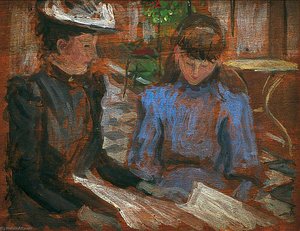
The Worktable

- 21.0 x 26.0 cm


Admire 'The Worktable' by Philip Wilson Steer (1894). An exquisite oil on panel portrait of a woman sewing, showcasing Impressionist light & detail. Hand-painted reproduction available.
 Lees meer
Philip Wilson Steer (1860-1942) was een Brits impressionistisch kunstschilder, bekend om zijn prachtige landschappen en zeegezichten in een zilverachtige, doorzichtige licht. Hij werd beïnvloed door Manet & Whistler en staat bekend om werken in Tate & Uffizi.
Ontvang een bestand dat klaar is voor drukwerk en de kwaliteit van het online voorbeeld ver overstijgt. Elke digitale afbeelding die wij verkopen, is afkomstig van een high-resolution master uit onze database — meestal tussen de 5.000 en 15.000 pixels breed — zodat u met vertrouwen groot kunt afdrukken, nauwkeurig kunt bijsnijden of fijne details kunt reproduceren.
Geen enkel bestand verlaat ons atelier onbewerkt. Een digitaal expert controleert de kleuren aan de hand van het originele schilderij en corrigeert deze indien nodig, om vervolgens de helderheid en details te verbeteren met professionele retoucheertechnieken — waarbij de penseelstreek en stijl van de kunstenaar altijd strikt worden gerespecteerd. Het resultaat is een afbeelding die oogt als het schilderij zelf, en niet als een gescande foto met een filter.
U keurt de afbeelding goed voordat de bestelling wordt afgerond: onze expert stuurt u binnen 72 uur een e-mail ter beoordeling. Niet tevreden? Vraag om aanpassingen of correcties, of vraag een terugbetaling aan als de kwaliteit niet aan de verwachtingen voldoet.
Dit is de kwaliteit waarop uitgevers, designstudio's, galeries en drukkerijen vertrouwen.
Digitale afbeeldingen
Download een bestand met hoge resolutie voor persoonlijke weergave, afdrukken en creatieve projecten. ( Schakel over naar print Bestel handgeschilderde reproductie)
Inbegrepen bij elke bestelling van een digitale afbeelding
Professionele digitale levering, gegarandeerd
Wanneer u kiest voor TopImpressionists.com, ontvangt u niet alleen een afbeelding – u krijgt een professioneel verbeterd digitaal kunstwerk, met precisie vervaardigd en voorzien van een tevredenheidsgarantie. Dit is alles wat automatisch bij uw bestelling is inbegrepen:

Snelle levering per e-mail
Uw hoogwaardige digitale afbeeldingsbestand wordt binnen 72 uur na bestelling naar u gemaild – klaar voor direct gebruik.

AI-verbeterd digitaal bestand
Uw kunstwerk wordt professioneel geoptimaliseerd met behulp van geavanceerde AI-tools en handmatige bewerkingen, waardoor maximale details, helderheid en kleurnauwkeurigheid worden gegarandeerd.

Gratis levenslange herlevering van digitale bestanden
Je bestand per ongeluk verwijderd of kwijtgeraakt? Geen zorgen – we sturen het u op elk gewenst moment gratis opnieuw toe.

Geen invoerkosten – nooit
Geniet direct van uw kunstwerk zonder invoerrechten, belastingen of verzendkosten – digitale downloads zijn altijd belastingvrij.

Garantie op kleurgetrouwheid
Met behulp van professionele hulpmiddelen en kleurbeheer zorgen wij ervoor dat uw digitale afbeelding de originele kleuren zo nauwkeurig mogelijk weergeeft.

100 dagen tevredenheidsgarantie
Mocht u niet tevreden zijn met uw digitale afbeelding, dan passen wij deze aan of storten wij 100% terug binnen 100 dagen – zonder vragen te stellen.

100% Geld-terug-garantie
Niet tevreden? Ontvang een volledige terugbetaling binnen 100 dagen na ontvangst van uw digitale bestand – zonder vragen te stellen.

Korting bij grote bestellingen
Koop 3 afbeeldingen, bespaar 10% - Koop 5, bespaar 15% - Koop 10+, bespaar 20%. Ideaal voor creatieve projecten, galerieën en bureaus.
A Moment Frozen in Light: Philip Wilson Steer’s “The Worktable”
Philip Wilson Steer's "The Worktable," painted in 1894, isn't merely a depiction of a woman engaged in domestic activity; it’s a carefully constructed tableau vivant—a snapshot of Victorian life imbued with an exquisite sense of light and atmosphere. The painting immediately draws the viewer into a quiet, intimate scene within a modestly furnished room. A woman, her features softened by the diffused afternoon light, sits at a simple wooden table, her hands deftly manipulating fabric – likely engaged in sewing or embroidery. The composition is remarkably restrained, focusing entirely on this single, compelling interaction. There’s no grand gesture, no dramatic narrative; instead, Steer masterfully captures a fleeting moment of focused concentration and quiet industry.
Steer's style leans heavily into the tenets of Impressionism, yet he transcends simple replication of visual effects. He employs loose, broken brushstrokes—particularly noticeable in the rendering of the fabrics and the play of light on the table surface—to create a shimmering, almost ethereal quality. The palette is muted, dominated by soft blues, greens, and browns, reflecting the natural light filtering through an unseen window. This deliberate restraint allows the subtle nuances of color and texture to take precedence, contributing significantly to the painting’s overall mood.
The Context of a Changing Era
To fully appreciate “The Worktable,” it's crucial to understand the historical context in which it was created. The late 19th century witnessed significant social and economic shifts in Britain, marked by rapid industrialization and urbanization. Traditional rural life was giving way to new urban realities, and domestic roles were undergoing subtle transformations. Steer’s painting reflects this evolving landscape, portraying a scene of quiet productivity within the confines of the home—a space increasingly valued as a sanctuary from the pressures of modern life. The inclusion of books and papers on the table suggests an intellectual engagement alongside the practical tasks at hand, hinting at the multifaceted roles women played in Victorian society.
Furthermore, Steer’s work aligns with the broader artistic currents of his time. He was a key figure in the British Impressionist movement, influenced by artists like Monet and Whistler. However, unlike some of his contemporaries who embraced purely optical effects, Steer sought to capture not just the appearance of light but also its emotional impact—the sense of warmth, tranquility, and domestic comfort that permeated Victorian interiors.
Symbolism and Emotional Resonance
Beyond its surface details, “The Worktable” is rich in symbolic meaning. The woman’s posture – her hands resting gently on the table – conveys a sense of contentment and self-sufficiency. She's not presented as a passive figure but rather as an active participant in shaping her own world. The unfinished task at hand—the fabric being worked upon—represents both labor and creativity, highlighting the value placed on domestic skills during this period. The clock hanging on the wall subtly underscores the passage of time, reminding us that this moment is fleeting, a precious fragment captured for posterity.
Ultimately, “The Worktable” evokes a powerful sense of nostalgia—a longing for simpler times and a connection to traditional values. It’s a painting that invites contemplation, prompting viewers to reflect on the beauty of everyday moments and the enduring significance of human connection. Its quiet elegance and subtle emotional depth make it a truly remarkable example of Victorian art.
Useful Links:
- The Worktable art print by Philip Wilson Steer (1860–1942) | Custom ...
- Robert Wilson
- Philip Wilson Steer: Capturing Modern Life & British Impressionism's Essence
Veelgestelde vragen
In welke oriëntatie staat "The Worktable" door Philip Wilson Steer?
"The Worktable" door Philip Wilson Steer heeft een Landscape-formaat. Het formaat beschrijft de verhoudingen van de compositie.
Zijn de kleuren van "The Worktable" levendig of gedempt?
De kleuren van "The Worktable" door Philip Wilson Steer vertonen een Subtle Color verzadiging met een Monochromatic intensiteit.
Wat zijn de reproductierechten van "The Worktable" in Het Ashmolean Museum van Kunst en Oudheden?
De auteursrechtstatus van "The Worktable" door Philip Wilson Steer is duidelijk: het werk is bevindt zich in het publiek domein - de auteursrechten zijn verlopen. De aanwezigheid ervan in Het Ashmolean Museum van Kunst en Oudheden verandert die status niet.
Vergelijkbare kunstwerken




Kunstenaarsbiografie
De Vroege Jaren en Artistieke Opleiding van Philip Wilson Steer
Philip Wilson Steer, geboren in Birkenhead in 1860, groeide op in een artistiek gezin; zijn vader was zowel portretschilder als toegewijd kunstleraar. Deze vroege blootstelling aan de kunsten bleek cruciaal voor zijn ontwikkeling, en voedde een gevoeligheid die zijn levenspad zou bepalen. Een verhuizing naar Whitchurch nabij Monmouth toen hij slechts drie jaar oud was, wekte een sterke band met het Britse platteland op, een connectie die in al zijn werk terugkomt. Zijn formele opleiding begon aan de Hereford Cathedral School, waar hij een solide basis legde voordat hij zich volledig aan zijn artistieke ambities wijdde. Steer vervolgde zijn studie aan de Gloucester School of Art en de South Kensington Drawing Schools, maar het was zijn verblijf in Parijs tussen 1880 en 1884 dat werkelijk transformatief bleek. Aan de Académie Julian en later onder Alexandre Cabanel aan de École nationale supérieure des beaux-arts kwam hij terecht in een wereld vol nieuwe ideeën en benaderingen van schilderen.De Omarming van het Impressionisme en een Eigen Stijl
Parijs werd een smeltkroes voor Steers artistieke ontwikkeling. Hij was diep onder de indruk van het werk van Édouard Manet en James McNeill Whistler, en absorbeerde hun innovatieve technieken om licht, kleur en sfeer vast te leggen. Deze ervaring ontketende een passie voor het Impressionisme in hem, maar hij kopieerde de stijl nooit slaafs. Steer wist deze Franse invloeden op meesterlijke wijze te combineren met zijn eigen Engelse gevoeligheden, waardoor hij een unieke stijl creëerde. Zijn schilderijen worden gekenmerkt door een opmerkelijk vermogen om vluchtige momenten vast te leggen – het spel van zonlicht op water, de vergankelijke kwaliteit van zeelucht. Hij gebruikte losse penseelstreken en levendige kleuren niet alleen om scènes af te beelden, maar ook om emoties op te roepen en een meeslepende indruk van directheid te creëren. Terugkerende thema’s in zijn werk zijn strandscènes en zeegezichten, vaak gehuld in zilverachtig, doorschijnend licht, wat zijn beheersing toont van het weergeven van de frisheid en helderheid van deze omgevingen. Vroege werken zoals The Music Room tonen al zijn groeiende vaardigheid in compositie en licht, terwijl stukken als Girls Running: Walberswick Pier barsten van energie en levendigheid, typerend voor een Suffolkse kustplaats.Een Voorvechter van Moderne Kunst en de Invloed van Étaples
Steer was meer dan alleen een schilder; hij speelde een actieve rol in het vormgeven van het artistieke landschap van Groot-Brittannië. Hij was medeoprichter van de New English Art Club, een organisatie die zich toelegde op het promoten van moderne kunstuitingen – een gedurfde stap in een tijd waarin traditionele smaken nog steeds de overhand hadden. Door dit platform en regelmatige tentoonstellingen bij de Royal Academy, waaronder deelname aan de baanbrekende London Impressionist Exhibition van 1889, hielp hij nieuwe ideeën te introduceren en conventionele normen uit te dagen. Zijn tijd in de kunstenaarskolonie van Étaples in 1887 verfijnde zijn artistieke visie verder. Deze levendige gemeenschap van kunstenaars bood een stimulerende omgeving voor experimenten en samenwerking, waardoor hij zijn vermogen om licht en sfeer met toenemende nuance en vaardigheid vast te leggen werd verstevigd. Steer liet zich inspireren door uiteenlopende meesters – John Constable, J.M.W. Turner en zelfs François Boucher – maar filterde deze invloeden altijd door zijn eigen unieke perspectief.Nalatenschap, Erkenning en Blijvende Invloed
Philip Wilson Steer bleef tot 1940 productief schilderen, toen gezondheidsproblemen hem dwongen te stoppen. Hij overleed twee jaar later op 81-jarige leeftijd. Zijn bijdragen werden tijdens zijn leven breed erkend, culminerend in een Order of Merit. Vandaag de dag bevinden zijn werken zich in prestigieuze collecties wereldwijd, waaronder de Tate Gallery en zelfs de Uffizi Gallery – een bewijs van zijn internationale faam. Naast zijn schilderijen strekt Steers nalatenschap zich uit tot zijn lange carrière als schilderdocent aan de Slade School of Art. Gedurende vele jaren beïnvloedde hij generaties jonge kunstenaars, en gaf hen niet alleen technische vaardigheden mee, maar ook een diepe waardering voor observatie en artistieke integriteit. Zijn bijdrage aan de ontwikkeling en acceptatie van het Impressionisme in Groot-Brittannië is onmiskenbaar, waardoor zijn plaats als een belangrijke figuur in de Britse kunstgeschiedenis is verzekerd – een schilder die erin slaagde de kloof tussen traditie en moderniteit te overbruggen, en een blijvende stempel drukte op het landschap van de Britse kunst. Werken zoals Convalescent, met zijn rijke texturen en evocatieve blik, en The Teme at Ludlow, die serene schoonheid en meesterlijk penseelwerk uitstraalt, blijven ook vandaag de dag het publiek boeien, wat de tijdloze kwaliteit van zijn artistieke visie aantoont.
Philip Wilson Steer
1860 - 1942 , Verenigd Koninkrijk
Belangrijkste feiten
- Artistic Movement Or Style: Impressionisme
- Artists Or Movements Influenced By This Artist: ['British Impressionisme']
- Artists Who Influenced This Artist:
- Manet
- Whistler
- Date Of Birth: 28 december 1860
- Date Of Death: 18 maart 1942
- Full Name: Philip Wilson Steer
- Nationality: Brits
- Notable Artworks:
- The Music Room
- Girls Running
- Place Of Birth: Birkenhead, UK